Fire in the bones and the cross: Jer 20, Rom 12 and the logic of discipleship in Mt 16
By Prof. Dr. Daniel C. Afonso · Updated
Qui enim voluerit animam suam salvam facere, perdet eam.
Mt 16:25
“Fire in the bones”: the Twenty-Second Sunday in Ordinary Time, Year A, brings together three texts around the paradoxical logic of following God: losing in order to gain, suffering in order to live, wanting to keep silent but being unable to. Jer 20:7-9 presents Jeremiah in crisis: the Lord has seduced him, and he cannot keep silent about the word, even though it brings him derision. Rom 12:1-2 invites us to offer the body as a living sacrifice and to be transformed by the renewal of the mind, refusing conformity with this age.
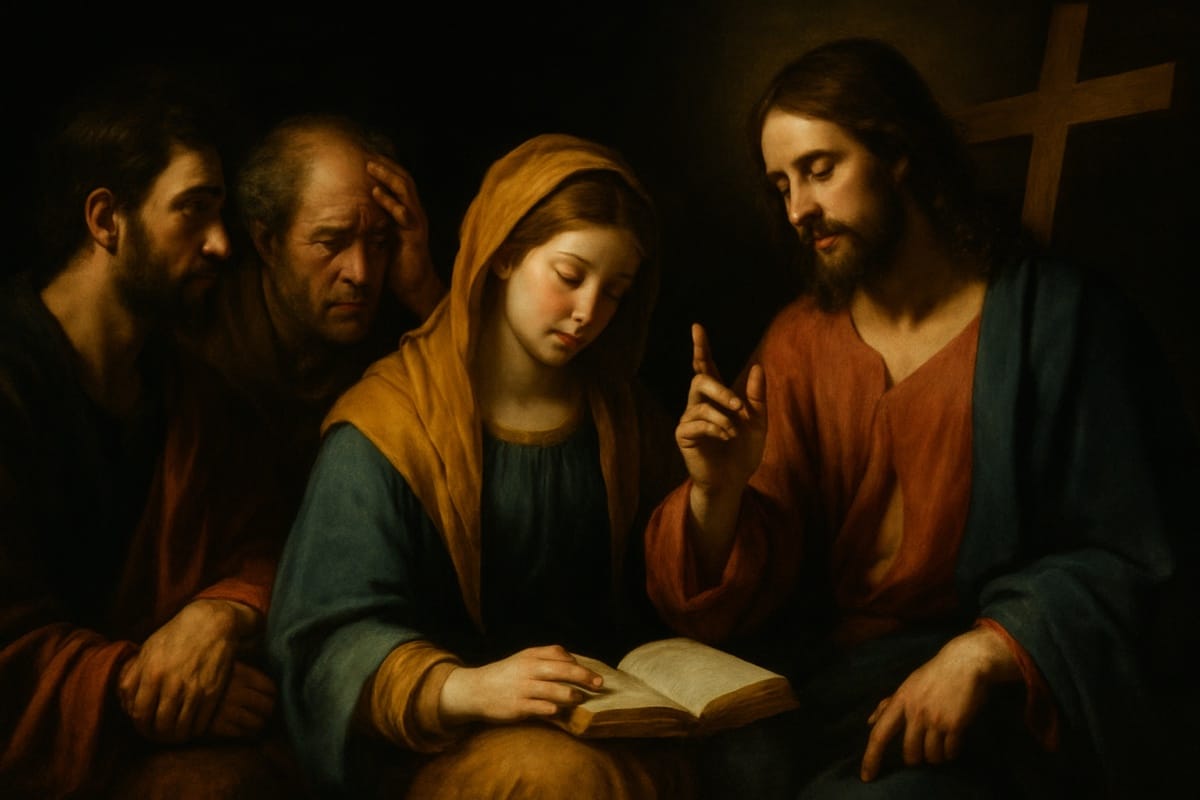
Mt 16:21-27 narrates the first prediction of the Passion and Jesus’ response to Peter’s reaction: “Get behind me, Satan.” And the invitation to deny oneself, to take up the cross and to follow, because whoever wishes to save his life will lose it, and whoever loses it for the love of Christ will find it. The three texts describe the same grammar of divine love: it is a love that costs, that spares neither the prophet nor the apostle nor the disciple, but that transforms what costs into life.

I. The first reading: Jer 20:7-9
Jeremiah addresses God with an accusation that shocks by its honesty: “You seduced me, Lord, and I let myself be seduced. You were stronger than I, and you prevailed” (Jer 20:7). The prophet feels deceived: he did not foresee the price. The result is derision: “I am a laughingstock all day long; everyone mocks me” (v. 7). He resolves to keep silent, to speak no more in the name of the Lord.
But he cannot: “I feel in my heart something like a burning fire shut up in my bones. I strive to hold it in, but I cannot” (v. 9). The fire of God cannot be held in: it comes out. Jeremiah is not a voluntarist hero: he is a man who tried to resist his vocation and could not. His confession is at once lament and praise: the love of God is stronger than the fear of derision, stronger than the will to spare oneself.
II. The second reading: Rom 12:1-2
Paul formulates the fundamental imperative of the Christian life: “I urge you, brothers, by the mercy of God, to offer your bodies as a living sacrifice, holy and pleasing to God: this is your spiritual worship” (Rom 12:1). The body, which Hellenistic culture devalued, is the place of sacrifice. Not a sacrifice of death, but of life: the offered body remains alive, continues to act in the world, but according to the logic of God and not of this age.
The condition: “Do not be conformed to this age, but be transformed by the renewal of your mind, so that you may discern what is the will of God: what is good, what is pleasing to him, what is perfect” (v. 2). The renewal of the mind is the condition for discernment: whoever thinks according to this age cannot recognize what God wants. Jeremiah’s fire and Paul’s renewal of the mind describe the same process: the inner transformation that makes a person capable of bearing what costs and of wanting what sets free.
III. Gospel: Mt 16:21-27
Immediately after Peter’s confession, Jesus begins to reveal what that confession implies: “From that day, Jesus Christ began to show his disciples that he must go to Jerusalem, suffer greatly at the hands of the elders, the chief priests and the scribes, be killed and rise on the third day” (Mt 16:21). Peter, who had just received the keys of the Kingdom, rebukes the Master: “May this not happen to you, Lord!” (v. 22). Jesus turns to Peter: “Get behind me, Satan! You are a stumbling block to me, because you are not thinking as God does, but as men do” (v. 23).
The harshness is proportionate to the danger: Peter is trying to divert Jesus from the Father’s will, like Satan in the desert. And Jesus opens up the paradox: “If anyone wishes to come after me, let him deny himself, take up his cross and follow me” (v. 24). The logic is inverted: “Whoever wishes to save his life will lose it. Whoever loses his life for my sake will find it” (v. 25). And the question that cuts deep: “What profit is there for a man to gain the whole world if he loses his soul?” (v. 26).
IV. Mary and the living sacrifice
Simeon said to Mary: “A sword will pierce your soul” (Lk 2:35). This sentence is the Mariological parallel to Jeremiah’s fire in the bones: something that burns within, that cannot be held in, that transforms the one who experiences it. Mary did not choose the sorrow of Calvary as one chooses a voluntary suffering: she was led there, as Jeremiah was led to derision. But just as Jeremiah could not silence the fire in his bones, Mary could not fail to be at the foot of the Cross: she stayed. Rom 12:1 asks that bodies be offered as a living sacrifice.
Patristic and medieval theology saw in this offering the type of Mary’s participation in the sacrifice of the Son: her body, which bore Him, nourished Him, raised Him and followed Him, stood beneath the Cross in the silent oblation with which she united herself to the sacrifice of the Head. “Whoever loses his life for my sake will find it” (Mt 16:25): Mary lost her Son in the death of Calvary and received Him back in the Resurrection and in the Assumption, finding life in its fullness. The logic of the Gospel was fulfilled first in her.
Postgraduate Program in Mariology
Would you like to deepen your formation in Mariology? Discover the Postgraduate Program in Mariology of Locus Mariologicus – an academic formation that unites theological rigor, spiritual life and the living tradition of the Church.
To read the passages: Jeremiah 20, Romans 12 and Matthew 16, in the Ave-Maria Bible.
Responses