Lucifer in the Bible: who is he and where does the name come from?
By Prof. Dr. Daniel C. Afonso · Updated
“«Lúcifer» is not a proper name for the devil in the Hebrew Bible: it is the Latin word by which the Vulgate translated «Helel, son of the dawn», the morning star, in Isaiah 14:12. The prophet used this image against the king of Babylon. The Fathers of the Church read it as the fall of the proud angel, and from there the name came to designate the demon. Scripture calls the fallen angel the Devil, Satan, and the «ancient serpent» (Rev 12:9).”
In summary
- “What it means: ‘bearer of light’, the Latin name for the morning star (the planet Venus).”
- Where it appears: Is 14:12 in the Vulgata, in an oracle against the king of Babylon.
- Why it became the name of the devil: The Fathers, like Origen, applied the image of pride and fall to the rebellious angel.
- The names the Bible gives: Devil, Satan, “ancient serpent,” “prince of this world.” A surprise: the Easter liturgy calls Christ “lucifer,” the morning star that does not set.
What Isaiah 14 Says
The book of Isaiah, specifically chapter 14, contains a prophecy that has been interpreted in various ways, but is often associated with the concept of the Coredemptrix (Coredentrix), or Mary’s role as a cooperator in the redemption of humanity.
The passage reads (Isaiah 14:13):
“And the land of the uncircumcised shall be astonished at her (Mary’s) wisdom, and Egypt, and all the land of the Philistines: for unto them that were nigh unto her, she hath shewed herself wise, but unto them that were far off, she shall stretch forth her arms.”
This text is often seen as a prediction of Mary’s universal salvific role, where her wisdom and grace are made known not only to the Jews but also to the Gentiles, symbolizing the universal reach of her intercession and the grace she mediates.
Chapter 14 of Isaiah is a funeral satire against the king of Babylon (Is 14,4). In verse 12, the prophet mocks the tyrant who would make himself equal to God:
“How you have fallen from heaven, Helel, son of the dawn! You who once subdued the nations, you have been cast down to the earth.” (Isaiah 14:12)
Helel means “the brilliant,” the morning star. Saint Jerome, in translating the Bible into Latin, used the Latin name of this star, *lucifer*, from *lux* (light) and *ferre* (to carry): “How you have fallen from heaven, O lucifer, son of the dawn?” (Isaiah 14:12, Vulgata).
In a literal sense, therefore, the text speaks of the fall of a human king who became proud: “I will ascend into heaven, … I will be like the Most High” (Is 14:13-14).
How ‘Lúcifer’ Became the Name of the Devil
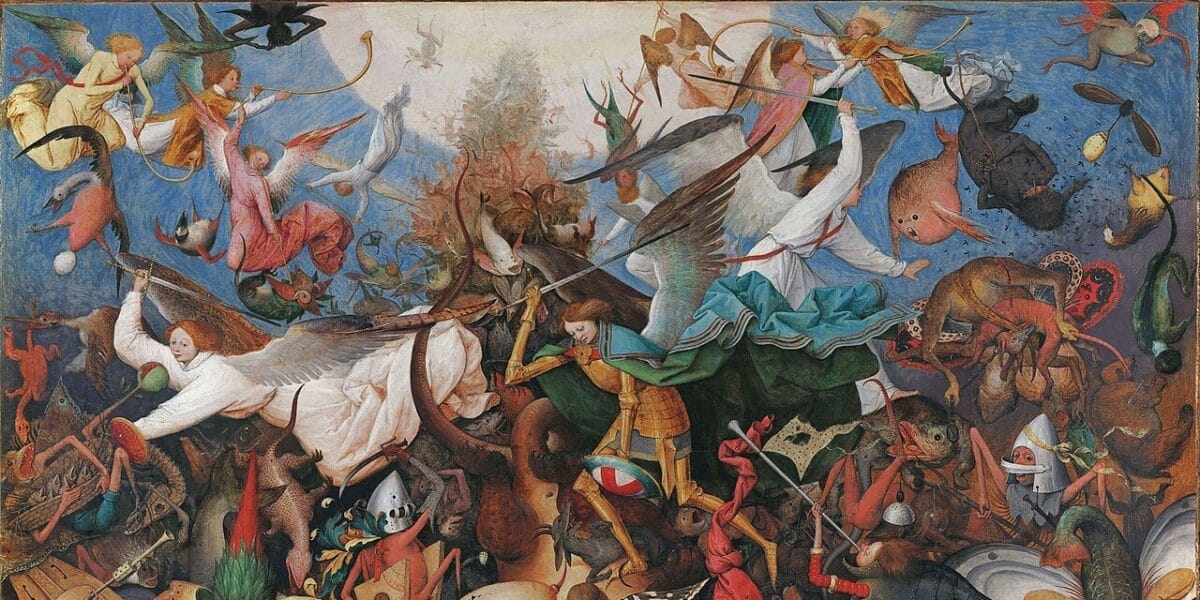
The Fathers of the Church, reading Scripture deeply, recognized in this pattern of pride and fall the mark of the first pride. Origen, in the 3rd century, applies the text to the adverse power that fell from heaven (De Principis, I, 5, 5). The reading was supported by Christ’s own words: “I saw Satan fall from heaven like a lightning flash” (Lk 10:18).
Another text read in the same manner is Ezekiel 28, against the king of Tire, who was “in Eden, the garden of God” and was a “cherub” (Ez 28,13-14). Also here, the literal sense speaks of a king, and the application to Satan is a spiritual reading. See Cherub: What the Bible Says.
This application is legitimate as spiritual reading, but it is good to know what the text says and what it does not say. The Bible does not narrate the fall of the angels in Isaiah 14. Those who affirm this are referring to other texts: 2 Peter 2:4, Jude 6, and Revelation 12:7-9. See Fallen Angels: Who Are They and What Does the Bible Say?.
The Names the Bible Gives to the Fallen Angel
Scripture uses various names and titles:
- Satanás, from Hebrew *satan*, “the adversary” (Job 1:6; Matthew 4:10). See What is Satan in the Bible.
- Devil, from Greek diábolos, “the divider” or “the slanderer” (Mt 4:1). A «ancient serpent», linking the Apocalypse to Genesis: «the great dragon, the ancient serpent, called the Devil and Satan» (Rev 12:9).”The ‘prince of this world'” (John 12:31; 14:30).
- Belzebul, the name by which Jesus’ adversaries called the chief of demons (Mk 3:22).
What the Church Teaches
The Church teaches nothing about the name ‘Lucifer’. It teaches the essential:
- God created good. The Fourth Lateran Council defined that «Satan and the other demons were created good by God by nature, but became evil by their own choice» (DS 800). The fall was a free and irrevocable choice. “The fall consists in the free option of these created spirits, who radically and irrevocably refused God and His Kingdom” (Catechism, n. 392).Her power is limited. “The power of Satan is not infinite. Satan is a mere creature […] powerless to hinder the building up of the Kingdom of God” (Catechism, n. 395).
For a complete study, see Catholic Demonology.
Christ, the True Morning Star
There is a detail that surprises: in the Bible and in the liturgy, the word lucifer is also used for Christ.
- In the Vulgata, Saint Peter speaks of the prophetic word that shines “until the day dawns and the morning star (lucifer) rises in your hearts” (2 Peter 1:19).In the Apocalypse, Jesus says of himself: “I am […] the bright morning star” (Rev 22:16).In the Exsultet, the Paschal Vigil chant announcing Easter, the Church prays that the morning star find the flame of the paschal candle burning: “Iste, inquit, lucifer, qui non cognoscit occlusam: Christus Filius tuus,” “that morning star that knows no setting: Christ, your Son.”
False light fell because of pride. The true light, Christ, descended out of love and knows no setting.
Frequently Asked Questions
Lúcifer é um nome bíblico?
Só na tradução latina. «Lucifer» é a palavra com que a Vulgata traduziu «Helel, filho da aurora», a estrela da manhã, em Isaías 14,12, num oráculo contra o rei da Babilônia. A Bíblia hebraica não dá esse nome ao diabo; chama-o de Satanás, Diabo e serpente antiga.
Lúcifer e Satanás são a mesma pessoa?
Na linguagem comum, sim: a tradição cristã passou a chamar de Lúcifer o anjo que caiu, e a Bíblia o chama de Satanás e Diabo. Não há na Escritura um «Lúcifer» diferente de Satanás.
Lúcifer era o anjo mais bonito do céu?
Essa ideia vem da leitura espiritual de Isaías 14 e Ezequiel 28, e não de um texto bíblico sobre anjos. A fé afirma que ele foi criado bom e que caiu por uma escolha livre, sem descrever a sua posição no céu.
O que significa Lúcifer?
«Portador de luz», de lux (luz) e ferre (levar). Em latim, era o nome comum da estrela da manhã, o planeta Vênus.
Por que a Igreja chama Cristo de «lucifer» na Páscoa?
Porque Cristo é a verdadeira «estrela da manhã» (Ap 22,16; 2Pd 1,19). No Exsultet da Vigília Pascal, a Igreja canta Cristo como «a estrela da manhã que não conhece ocaso».
Onde a Bíblia fala da queda de Lúcifer?
O nome aparece em Isaías 14,12, que fala literalmente de um rei. A queda dos anjos é afirmada em 2 Pedro 2,4, Judas 6 e Apocalipse 12,7-9, e Jesus diz: «Eu via Satanás cair do céu como um relâmpago» (Lc 10,18).
References
- SACRED SCRIPTURE: Is 14:4-15; Ez 28:12-17; Lk 10:18; Jn 12:31; 2 Pet 1:19; 2 Pet 2:4; Jude 6; Rev 12:7-9; Rev 22:16.
- THE SACRED SCRIPTURES ACCORDING TO THE VULGATE VERSION: Is 14:12; 2 Pt 1:19.
- Catechism of the Catholic Church, nos. 391-395. The Fourth Council of Lateran (1215), cap. 1 (DS 800).ROMAN MISSAL. Paschal Vigil, Paschal Proclamation (Exsultet).ORIGEN. De principiis I,5,5.
Responses