Paul VI – Proclamation of Mary, Mother of the Church (November 21, 1964)
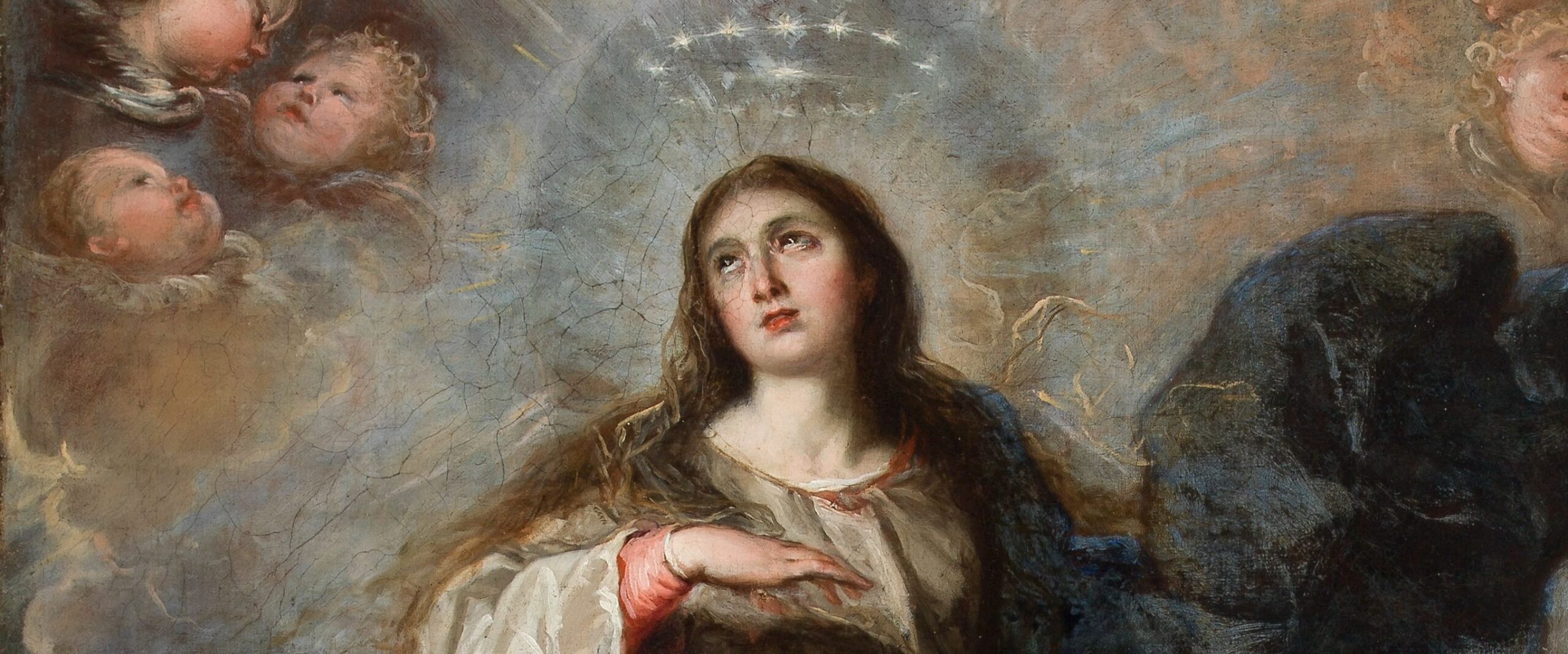
November 21, 1964, at the closing session of the third period of the Second Vatican Council, is one of the most important dates of conciliar mariology. Immediately after promulgating the Dogmatic Constitution Lumen Gentium (whose chapter VIII is devoted to Mary), Blessed Paul VI solemnly proclaimed Mary Most Holy “Mater Ecclesiae”, Mother of the Church. This is one of the few new Marian titles solemnly proclaimed by a Pope in the twentieth century.
| Collection | Enchiridion Vaticanum vol. 1, paragraphs 305*-312* |
| Pope | Blessed Paul VI |
| Date | November 21, 1964 (close of the third period of Vatican II) |
| Act | Solemn proclamation of Mary as Mater Ecclesiae |
Context: the schema “De Beata Maria virgine”
During Vatican II there was intense discussion about how to treat Mary. Two positions confronted each other:
- The “christotypical” position (minority): Mary should have a separate conciliar document, on account of her singularity and her closeness to Christ.
- The “ecclesiotypical” position (majority): Mary should be integrated into the document on the Church (Lumen Gentium), because her motherhood is inseparable from the Church.
In a close vote on October 29, 1963, the integration of Mary into Lumen Gentium prevailed by 1114 votes to 1074. Paul VI, sensing that the “christotypical” position had not been sufficiently honored, made a point of publicly proclaiming the title Mater Ecclesiae at the moment of the promulgation of Lumen Gentium, so as to honor both the ecclesiological integration and Marian singularity.
Text of the address of November 21, 1964
n. 305*: The reflection on these close relations of Mary with the Church, so clearly established by today’s Conciliar Constitution, leads Us to regard this as the most solemn and most fitting moment to fulfill a desire which, having been suggested by Us at the end of the preceding conciliar period, very many Council Fathers made their own, insistently asking for an explicit declaration, during this Council, of the maternal office that the Virgin exercises over the Christian people.
n. 306*, THE PROCLAMATION: For the glory therefore of the Virgin and for our comfort, We proclaim Mary Most Holy “Mother of the Church,” that is, of the whole people of God, of the faithful as well as of the Pastors, who call her most loving Mother, and We desire that with this most sweet title the Virgin be from now on still more honored and invoked by the whole Christian people.
English translation
n. 305: The reflection on these close relations of Mary with the Church, so clearly established by today’s Conciliar Constitution, leads Us to regard this as the most solemn and most fitting moment to fulfill a desire which, having been suggested by Us at the end of the preceding conciliar period, very many Council Fathers made their own, insistently asking for an explicit declaration, during this Council, of the maternal office that the Virgin exercises over the Christian people.
n. 306, THE PROCLAMATION: For the glory therefore of the Virgin and for our comfort, We proclaim Mary Most Holy “Mother of the Church,” that is, of the whole people of God, of the faithful as well as of the Pastors, who call her most loving Mother, and We desire that with this most sweet title the Virgin be from now on still more honored and invoked by the whole Christian people.
Theological justification, n. 308
As indeed the divine motherhood is the foundation of the special relationship with Christ and of her presence in the economy of salvation wrought by Jesus Christ, so too it constitutes the principal foundation of Mary’s relations with the Church, since she is the Mother of Him who from the first instant of the Incarnation in her virginal womb united to Himself as Head His Mystical Body which is the Church. Mary, therefore, as Mother of Christ, is also Mother of the faithful and of all the Pastors, that is, of the Church.
English: For just as the divine motherhood is the foundation of the special relationship with Christ and of her presence in the economy of salvation accomplished by Christ Jesus, so too it constitutes the principal foundation of Mary’s relations with the Church, Mary being the Mother of Him who, from the first instant of the Incarnation in her virginal womb, united to Himself as Head His Mystical Body which is the Church. Mary, therefore, as Mother of Christ, is also Mother of all the faithful and Pastors, that is, of the Church.
The concept articulated, nn. 311-314
As we entered the conciliar hall at the invitation of Pope John XXIII, on October 11, 1962, together “cum Maria, Matre Iesu”, so at the end of the third period we leave this same temple in the most holy and most sweet name of Mary Mother of the Church.
As a sign of gratitude for her loving assistance lavished during this last conciliar period, let each of you, venerable Brothers, commit yourselves to keeping high among the Christian people the name and the honor of Mary, to pointing to her as the model of faith and of full correspondence to every call of God, the model of full assimilation of the teaching of Christ and of His charity, so that all the faithful, united in the name of the common Mother, may feel ever more firm in faith and in adherence to Jesus Christ, and together fervent in charity toward their brethren.
Historical significance
The proclamation of the title Mater Ecclesiae has a manifold historical significance:
- Conclusion of the christotypical/ecclesiotypical debate: the two mariological perspectives are synthesized. Mary is Mother of Christ (christotypical) and Mother of the Church (ecclesiotypical) at the same time.
- Continuity with tradition: Paul VI stresses that the title is not new: it had always been used by the Christian people, but now it becomes a title proclaimed by the Magisterium.
- Inauguration of conciliar mariology: from this proclamation onward, post-conciliar mariology will have the title Mater Ecclesiae as its central axis.
- Liturgical feast: on February 11, 2018, Pope Francis instituted the obligatory memorial of “Mary Mother of the Church” on the Monday after Pentecost, giving liturgical form to what Paul VI proclaimed in 1964.
Connection with Lumen Gentium VIII
The title Mater Ecclesiae is the conclusive synthesis of chapter VIII of Lumen Gentium. Reading these two documents together, the Dogmatic Constitution and its oral proclamation by the Pope, is the fundamental hermeneutical key of conciliar mariology.
Further reading
Lumen Gentium ch. VIII | Marialis Cultus | Redemptoris Mater | Signum Magnum | Enchiridion Vaticanum (index)
Postgraduate Program in Mariology
Would you like to deepen your formation in Mariology? Discover the Postgraduate Program in Mariology of Locus Mariologicus, an academic formation that unites theological rigor, spiritual life, and the living tradition of the Church.
See also: How to study the Marian Magisterium systematically – the complete Locus guide
Would you like to study Mariology seriously?
This article draws on the works in the library of Locus Mariologicus. The Postgraduate Program in Mariology brings you to the same source, with academic guidance: Scripture, the Fathers of the Church, and the Magisterium, from the first dogma to contemporary questions.



Responses