From the Sin of Adam to the Victory of Christ: Gen 3, Rom 5, and the Temptations in Mt 4
Ductus est Iesus in desertum a Spiritu, ut temptaretur a diabolo.
Mt 4:1
The First Sunday of Lent, Year A, sets side by side three texts that describe the drama of human freedom before God. Gen 2:7-9; 3:1-7 recounts the creation of man shaped from clay, animated by the divine breath, placed in the garden, and the fall through the seduction of the serpent. Rom 5:12-19 interprets that fall: through the sin of one man alone, death entered the world. Through the gift of one alone, grace and life overflowed upon all. Mt 4:1-11 presents Jesus being tempted in the desert for forty days: hunger, power, glory. In each temptation, Jesus answers with the Word of God. The three texts describe two opposite movements: that of Adam, who preferred his own will to God’s, and that of Christ, who was faithful to the will of the Father to the end.
I. The First Reading: Gen 2:7-9; 3:1-7
The Lord God formed man from the dust of the ground and breathed into his nostrils the breath of life (Gen 2:7). Man becomes a living being through the breath of God, not by his own nature. Placed in the garden, he had access to every tree except the tree of the knowledge of good and evil. The serpent, the most cunning of all the animals, questions the woman: “Did God say that you may not eat from any tree of the garden?” (Gen 3:1). The question is already a distortion: God had forbidden only one tree. The serpent goes on: “You will not die. God knows that when you eat, your eyes will be opened and you will be like gods” (vv. 4-5). The seduction has three elements: the promise of impunity, the suspicion that God is withholding something good, and the offer of becoming autonomous. The woman saw that the tree was good for food, beautiful to the eye, and desirable for gaining wisdom (v. 6). The fall passes through the eyes before it passes through the hands. They ate, their eyes were opened, they realized that they were naked, they sewed fig leaves. Paradise was lost not in the transgression but in the rupture of trust: they preferred their own judgment to God’s.
II. The Second Reading: Rom 5:12-19
Paul interprets Gen 3 in the light of Christ. “As sin entered the world through one man, and death through sin, so death spread to all men, because all sinned” (Rom 5:12). Adam is not merely an individual: he is the representative of the whole of humanity. His choice affected everyone. But Paul does not stop at the diagnosis: “If by the trespass of one many died, much more did the grace of God and the gift by the grace of one man, Jesus Christ, overflow upon many” (v. 15). The contrast is asymmetrical: the sin of Adam brought death, but the gift of Christ brings life in excess. Paul concludes: “As by the disobedience of one all were made sinners, so by the obedience of one all will be made righteous” (v. 19). Lent is the time to travel through this contrast: to recognize in oneself the pattern of Adam and to open oneself to the pattern of Christ.
III. Evangelium: Mt 4:1-11
Jesus is led by the Spirit into the desert to be tempted by the devil. Forty days and forty nights of fasting: a recapitulation of the forty years of Israel in the desert, but with a different outcome. The first temptation: “If you are the Son of God, command that these stones become bread” (Mt 4:3). Jesus answers: “Man does not live by bread alone, but by every word that comes from the mouth of God” (v. 4; Deut 8:3). The temptation to make material sustenance the ultimate criterion of life is refused by fidelity to the Word. The second temptation: the devil places Him on the highest point of the temple and suggests that He throw Himself down, citing Psalm 91. Jesus answers: “You shall not put the Lord your God to the test” (v. 7; Deut 6:16). God is not an instrument of demonstration. The third temptation: all the kingdoms of the world in exchange for an act of prostration. Jesus answers: “You shall worship the Lord your God and serve Him alone” (v. 10; Deut 6:13). In each temptation, the devil offers something that seems good: bread, security, power. In each temptation, Jesus refuses the apparent good in the name of the real good: fidelity to the Father. The angels came and ministered to Him (v. 11).
IV. Mary and the New Eve
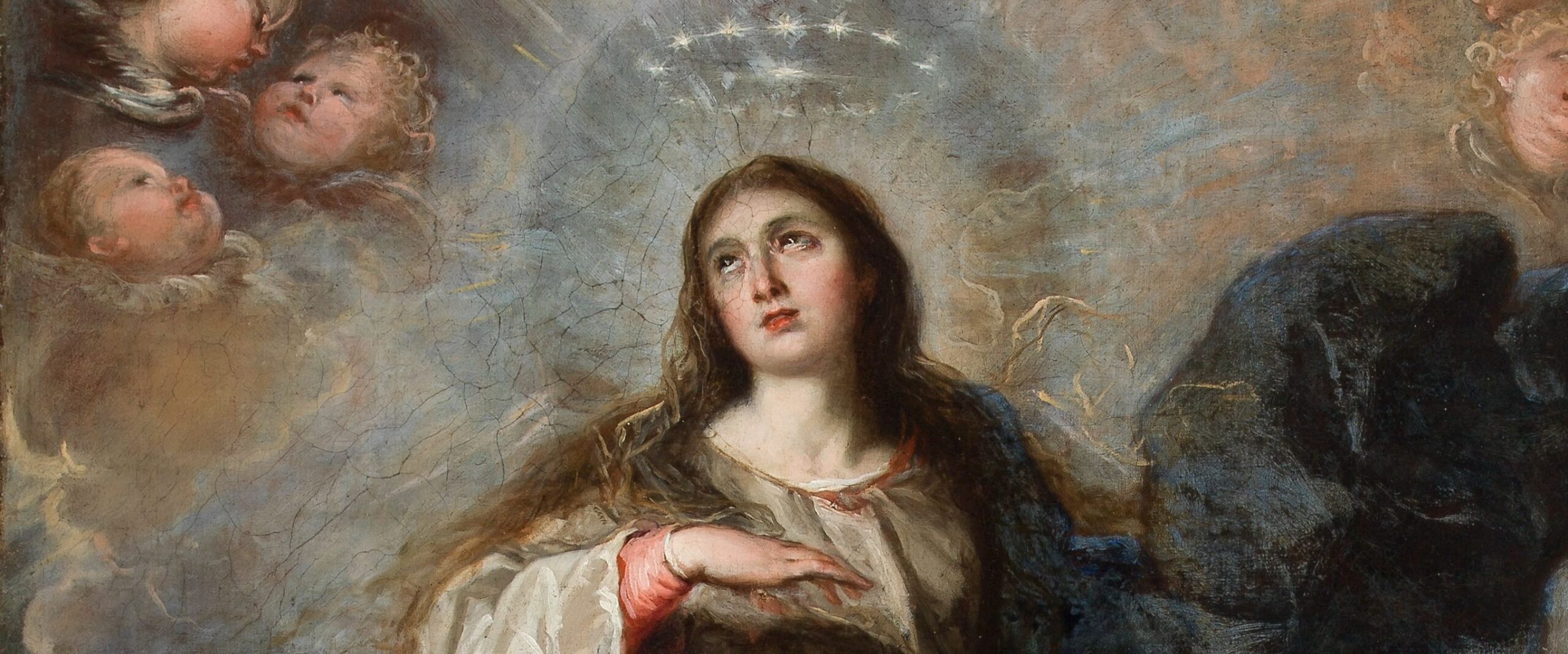
Gen 3:15 records the promise of enmity between the serpent and the woman, between her offspring and the offspring of the serpent. Christian tradition saw in this verse the protoevangelium, the first announcement of redemption: the woman and her offspring will conquer the serpent. Mary is the New Eve: where Eve yielded to seduction, Mary responded with the total fidelity of the fiat. Where Eve wished to be like God through disobedience, Mary consented to be the handmaid of the Lord through obedience. Rom 5 says that where sin abounded, grace superabounded. Mary is the creature in whom that superabundance of grace is most visible: full of grace from the first instant, not because she had no need of redemption, but because the redemption of Christ reached her in a singular and anticipated way. Mt 4 shows Jesus conquering every temptation with the Word of God. Mary lived in the same way: there is not one moment in the whole Gospel in which Mary prefers her own judgment to God’s. Lent invites the disciple to learn from Christ and from Mary what Eve did not know how to do: to trust God more than herself, to choose the Word when the fruit seems appetizing, to worship the Lord and serve Him alone.
Postgraduate Program in Mariology
Would you like to deepen your formation in Mariology? Discover the Postgraduate Program in Mariology of Locus Mariologicus — an academic formation that unites theological rigor, spiritual life, and the living tradition of the Church.
Would you like to study demonology methodically?
This article grows out of the works in the Locus Mariologicus library. Demonology is one of the disciplines of the Postgraduate Program in Mariology, studied with the rigor of the sources (Scripture, the Fathers of the Church, and the Magisterium) and not with sensationalism.




Responses