Theotokos: Mary, Mother of God, at the Council of Ephesus (431)
Theotokos, which in Greek means “God-bearer” or “Mother of God,” is the oldest and most precise title given to the Virgin Mary by Christian tradition. Defined dogmatically at the Council of Ephesus (AD 431), this title is not primarily a statement about Mary, but about Jesus Christ: to affirm that Mary is the Mother of God is to affirm that He who was born of her is true God and true man, a single divine Person.
Θεοτόκος: Greek etymology, the Latin deipara, and the personal unity of Christ
The Greek term Theotokos (Θεοτόκος) is composed of theos (God) and tikto (to beget, to give birth). In the Eastern tradition, the title is also expressed as Богородица in Slavonic (Bogoroditsa, Mother of God) and Deipara in Latin. Its force lies precisely in the affirmation of the personal unity of Christ: since the human being born of Mary is the same eternal Son of God, Mary is truly the Mother of God in the strictly theological and ontological sense.
This affirmation does not imply that Mary is prior to God or that she generated the divine nature. It means that the divine Person of the Word assumed human nature in her womb, in such a way that she is the mother of this singular Person. As the Catechism of the Catholic Church (§495) teaches: “Mary is truly Mother of God, because she is the mother of the eternal Son of God made man, who is God Himself.”
The Nestorian controversy and the Council of Ephesus (431)
The title Theotokos stood at the center of one of the greatest Christological controversies of antiquity. Nestorius, patriarch of Constantinople from 428, preferred the title Christotokos (“Mother of Christ”), arguing that Mary had generated only the human nature of Christ and not His divine Person. This position, which tended to separate the two natures in Christ as if they were two distinct subjects, was condemned by the Council of Ephesus in 431.
The Council of Ephesus, presided over by Saint Cyril of Alexandria, defined that in Christ there exists a single divine Person in two natures. Consequently, Mary is truly Theotokos: mother of the Person of the incarnate Word. The reception of this definition was enthusiastic: according to the historical accounts, the people of Ephesus celebrated the conciliar decision with torchlight processions through the night. No other Marian title has a dogmatic definition so explicit and so central to Christology.
From Chalcedon (451) to Lumen Gentium §53: Theotokos in the councils and in the Magisterium
The title Theotokos was confirmed and deepened in all the great later Christological councils. The Council of Chalcedon (451) reaffirmed the twofold nature of Christ and, with it, the legitimacy of the title Theotokos. The Second Vatican Council, in the constitution Lumen Gentium §53, declares: “The Virgin Mary, who at the message of the angel received the Word of God in her heart and in her body and gave Life to the world, is acknowledged and venerated as truly the Mother of God and Mother of the Redeemer.”
Pope John Paul II devoted an entire encyclical to this theme: Redemptoris Mater (1987). In it, the Pope meditated deeply on Mary’s divine motherhood as the foundation of all Marian Theology. This encyclical, studied in academic Mariology, has become one of the reference documents for understanding the relationship between Mary and the mystery of the Redemption.
Theotokos in the Catholic, Orthodox, and Anglican traditions: the one Marian title of ecumenical consensus
The title Theotokos is one of the few Marian elements shared by the Catholic and Orthodox traditions and by some Anglican and Lutheran currents. The Orthodox Church maintains a most profound devotion to the Theotokos, who occupies a place of first importance in its liturgical calendar. For ecumenical dialogue, this title represents a basis of understanding: all the traditions that accept the Council of Ephesus recognize Mary as the Mother of God.
From the perspective of the Mariology of apparitions, it is noteworthy that in many of these manifestations Our Lady presents herself precisely as Mother of God and Mother of the Church, confirming the title Theotokos in the spiritual experience of the Christian people. Rigorous academic formation on this theme is available in the Postgraduate Program in Mariology of the Locus Mariologicus Institute.
From the mosaics of Ravenna (6th century) to the Byzantine icons: Theotokos in Eastern iconography and liturgy
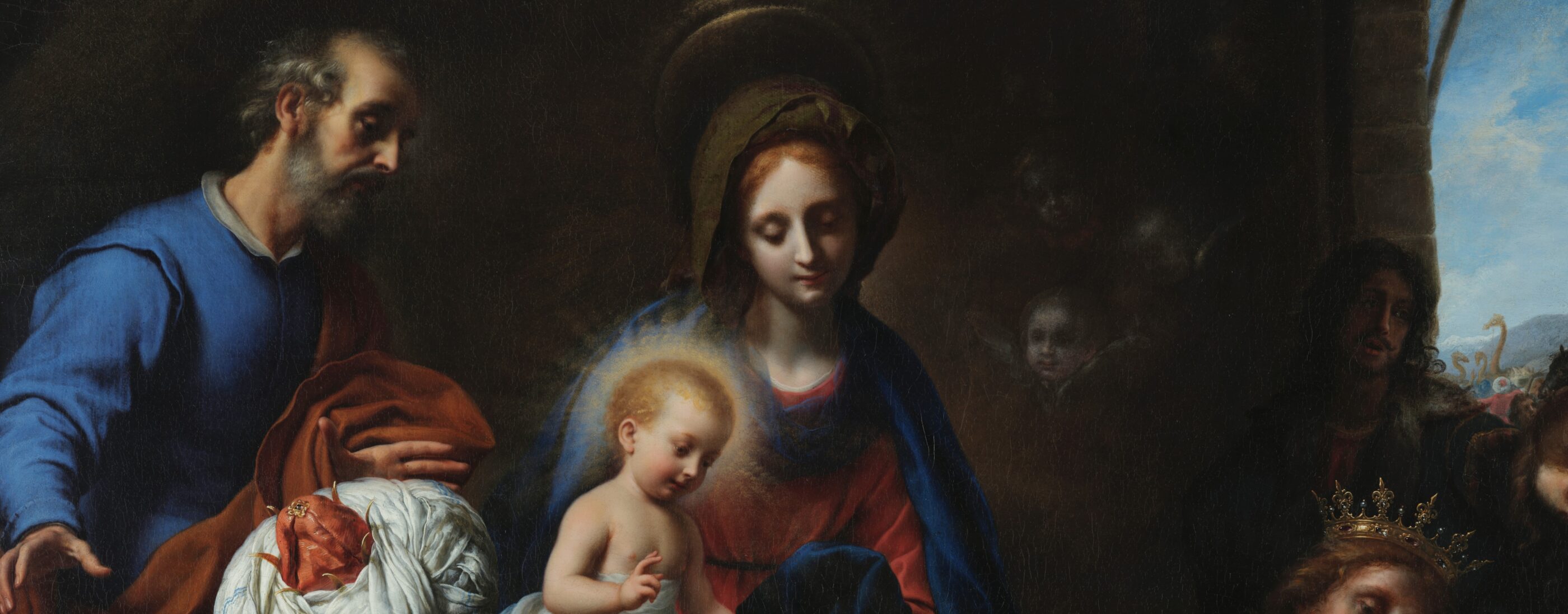
The title Theotokos profoundly shaped Christian art and liturgy. Eastern Marian iconography, from the mosaics of Ravenna (sixth century) to the Byzantine icons, frequently represents Mary as Theotokos, seated on the throne with the Child Jesus on her lap, underscoring at once her human and her divine motherhood. In the West, the image of the Virgin in Majesty (Maestà) fulfills a similar function.
In the Latin liturgy, the Roman Canon (Eucharistic Prayer I) invokes Mary as “the glorious ever-Virgin Mary, Mother of our God and Lord, Jesus Christ.” The praying of the Angelus, three times a day, recites the words of the archangel Gabriel and recalls Mary’s divine motherhood. These liturgical forms are living expressions of the dogma defined at Ephesus, integrated into the daily prayer of the universal Church.
What does Theotokos mean?
Theotokos is a Greek title that means Mother of God or God-bearer. It was defined dogmatically at the Council of Ephesus (AD 431) in order to affirm that Jesus Christ is a single divine Person in two natures. Since the Person of the eternal Word was born of Mary, she is truly the Mother of God.
Why did the Council of Ephesus define the title Theotokos?
The Council of Ephesus (431) was convoked to respond to the Nestorian heresy, which tended to divide Christ into two distinct persons. In defining that Mary is Theotokos, the Council affirmed that Christ is a single Person, divine and human at the same time, and that Mary is the mother of this one Person.
Is the title Theotokos accepted by other Christian confessions?
Yes. The title Theotokos is accepted by the Catholic Church, by the Orthodox Church, and by many Anglican and Lutheran communities that recognize the Council of Ephesus. It is therefore a meeting point in ecumenical dialogue: all these traditions affirm that Mary is the Mother of God in the Christological sense defined at Ephesus.
Deepen your studies: explore Mariology, Marian Theology, Marian apparitions, and the Postgraduate Program in Mariology.
Postgraduate Program in Mariology
Would you like to deepen your formation in Mariology? Discover the Postgraduate Program in Mariology of Locus Mariologicus – an academic formation that unites theological rigor, spiritual life, and the living tradition of the Church.
See also: How to study the Marian Magisterium systematically – the complete Locus guide
See also: The 4 Marian Dogmas: what they are and what the Church defines
To go deeper: the conciliar sources
- The Council of Ephesus (431): the definition of the Theotokos
- Saint Siricius and Saint Celestine I: Ever-Virgin and Theotokos
- Saint Sixtus III and Saint Leo I: the Theotokos celebrated and preached
- Toledo XI and III Constantinople: theotokos aeiparthenos
- Holy Mary, Mother of God: a dogmatic-liturgical analysis
- The 4 Marian Dogmas: an overview
Frequently Asked Questions
What does Theotokos mean? “She who gives birth to God” – that is, Mother of God.
Where was it defined? At the Council of Ephesus, in 431, against Nestorius.
Is Mary the Mother of God or the Mother of Christ? Both – but “Mother of God” is more exact, because she gave birth to the Person who is God.
Is Theotokos a Marian or a Christological dogma? It is both: in affirming Mary to be the Mother of God, one confesses that Jesus is one single divine Person.
{“@context”:”https://schema.org”,”@type”:”FAQPage”,”mainEntity”:[{“@type”:”Question”,”name”:”O que significa Theotokos?”,”acceptedAnswer”:{“@type”:”Answer”,”text”:”«Aquela que gera Deus» – ou seja, Mãe de Deus.”}},{“@type”:”Question”,”name”:”Onde foi definido?”,”acceptedAnswer”:{“@type”:”Answer”,”text”:”No Concílio de Éfeso, em 431, contra Nestório.”}},{“@type”:”Question”,”name”:”Maria é Mãe de Deus ou Mãe de Cristo?”,”acceptedAnswer”:{“@type”:”Answer”,”text”:”As duas – mas «Mãe de Deus» é mais exata, porque gerou a Pessoa que é Deus.”}},{“@type”:”Question”,”name”:”Theotokos é um dogma mariano ou cristológico?”,”acceptedAnswer”:{“@type”:”Answer”,”text”:”É os dois: ao afirmar Maria Mãe de Deus, confessa-se que Jesus é uma só Pessoa divina.”}}]}
📖 Would you like to study this seriously? Discover the Postgraduate Program in Mariology at Locus, a rigorous academic formation for theologians, priests, religious, and laypeople.




Responses