Tota pulchra: Mary, all beautiful and without stain
“Tota pulchra es, amica mea, et macula non est in te” (Song 4:7), “You are all beautiful, my love, and there is no stain in you”
I. The beauty of the beloved: the Song of Songs as a Marian reading
The fourth chapter of the Song of Songs contains one of the most beautiful poetic descriptions in the history of Western literature. The bridegroom addresses the bride, praising her beauty with images that successive generations of readers have meditated on and contemplated: “How beautiful you are, my love, how beautiful you are! Your eyes are doves behind your veil, your hair like a flock of goats leaping down the slopes of Gilead” (Song 4:1). And it culminates in the verse that became the axis of an entire Mariological tradition: “You are all beautiful, my love, and there is no stain in you” (Song 4:7). Christian tradition, from the earliest centuries, read the Song of Songs as a symbolic work that describes at once the love between God and Israel, the love between Christ and the Church, and the love between God and the Christian soul. But progressively, particularly from the Middle Ages onward, a fourth reading took hold: the Song also speaks of the singular love between God and Mary, His mother and His daughter. And the expression “tota pulchra es,” applied to Mary, became one of the densest Mariological formulas, condensing into four words the content of what centuries later would be defined as the dogma of the Immaculate Conception.
II. Tota pulchra: the title and its Marian application
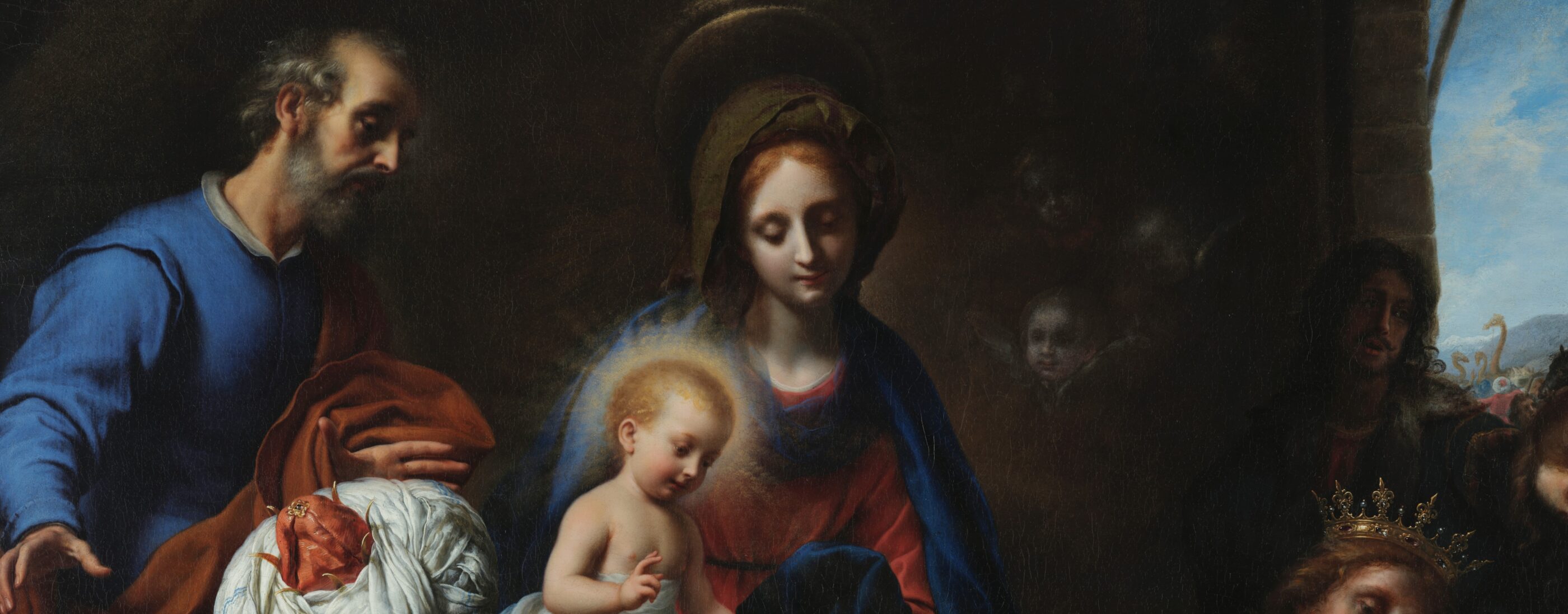
The Marian application of Song 4:7 begins in the patristic commentaries on the Song, particularly in Origen (third century), Gregory of Nyssa, and Ambrose (fourth century). But it is with Bernard of Clairvaux (twelfth century), in his eighty-six Sermons on the Song of Songs, that this reading is definitively systematized as a recognized Mariological tradition. Bernard articulated with particular delicacy the idea that the beauty of the Bride of the Song is not only that of the Church in general, but is also and singularly that of Mary, the perfect firstfruits of the Church. Western scholastic theology, with Albert the Great and Thomas Aquinas, took up this tradition and developed it. The medieval prayer Tota Pulchra es, Maria, attributed by some to Saint Bernard himself although its composition is probably later, definitively codified the title within the devotional patrimony. Christian iconography received the theme with particular success: the representations of the Immaculate Conception in the sixteenth and seventeenth centuries, especially in the Sevillian school with Francisco Pacheco and Murillo, were accompanied by Latin inscriptions with verses from the Song applied to Mary. The dogmatic definition of the Immaculate Conception in 1854 by Pope Pius IX, with the bull Ineffabilis Deus, explicitly cited the Song of Songs among the biblical texts that prefigure the doctrine. Tota Pulchra is thus at once a poetic epithet, a devotional title, a doctrinal formula, and a theological category.
III. Full of grace: the Gospel confirmation of Mary’s interior beauty
The Gospel of Luke that accompanies this meditation is the account of the Annunciation. The angelic greeting is particularly rich: “Rejoice, full of grace, the Lord is with you” (Lk 1:28). The Greek expression kecharitomene, “full of grace,” is a perfect passive participle that indicates a permanent state of full grace. Theology read this participle as the biblical confirmation of the Immaculate Conception: Mary did not receive grace at some moment of her life; she was full of grace from the beginning, even before the angelic announcement. And it is precisely this fullness of grace that constitutes Mary’s beauty. The beauty of which the Song speaks, applied to Mary, is not physical beauty in the common aesthetic sense: it is the ontological and spiritual beauty of a creature who was wholly filled with divine grace, leaving no room for the shadow of sin. “You are all beautiful, and there is no stain in you” is not a physical observation, it is a theological confession. The absence of stain in Mary is the reflection, on the human plane, of the absolute purity of the God who dwelt in her. And her beauty is the beauty of one who let herself be wholly formed by grace, without resistance or reserve.
IV. The theology of Marian beauty: aesthetics and orthodoxy
The category of Tota Pulchra inscribes at the heart of Mariology a dimension that contemporary theology has rediscovered with particular intensity: theological aesthetics. Hans Urs von Balthasar, in his monumental treatise Herrlichkeit, devoted decisive pages to beauty as a divine attribute and to the manifestation of that beauty in Mary as the perfect icon of redeemed humanity. Beauty is not, in Catholic theology, a decorative attribute of a reality that would already be complete without it. It is one of the three classical transcendentals (verum, bonum, pulchrum), and each of them requires the others. Truth that is not beautiful is not fully truth. Goodness that is not beautiful becomes moralism. And beauty that is neither true nor good becomes seduction. Mary, in her condition as a creature wholly penetrated by grace, is at once true (because she says yes to God in truth), good (because her obedience is active love), and beautiful (because her humanity fully reflects divine beauty without resistance). The title Tota Pulchra is, in this sense, the confession that beauty belongs to the core of God’s plan for humanity, and that Mary is the first perfect fruit of that plan. The Second Vatican Council, although it did not explicitly develop the aesthetic category, opened the way for this rediscovery by affirming that Mary is “the image and beginning of the Church” (LG 68). The Church is called to be beautiful as Mary is beautiful: not with superficial beauty nor with a luxury of appearances, but with the interior beauty that is born of the fullness of grace received without resistance. Tota Pulchra es, Maria, is a confession that continues to challenge the pilgrim Church concerning her own vocation to beauty.
Postgraduate Program in Mariology
Would you like to deepen your formation in Mariology? Discover the Postgraduate Program in Mariology of Locus Mariologicus – an academic formation that unites theological rigor, spiritual life, and the living tradition of the Church.
Would you like to study Mariology seriously?
This article is born of the works in the library of Locus Mariologicus. The Postgraduate Program in Mariology takes you to the same source, with academic guidance: Scripture, the Fathers of the Church, and the Magisterium, from the first dogma to contemporary questions.




Responses