The Virgin Mary at the Annunciation of the Lord
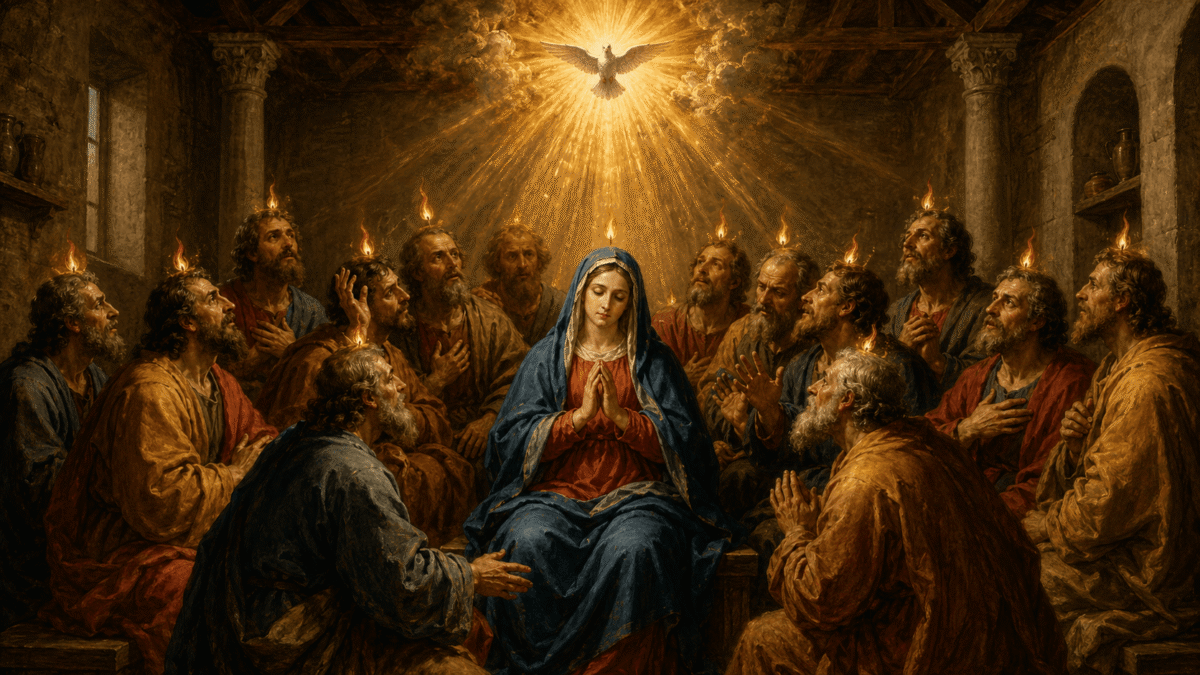
“Ecce concipies in utero et paries filium et vocabis nomen eius Iesum”. “Behold, you shall conceive in your womb and bring forth a son, and you shall give him the name Jesus”. (Lk 1:31)
I. The sign that God Himself chooses
The oracle of Isaiah to King Ahaz, proclaimed in the seventh chapter of the prophet’s book, is set at a moment of acute political crisis: the kingdom of Judah is threatened by an enemy coalition, and the king wavers between faith and diplomatic calculation. It is in this context of human frailty that God takes the initiative and offers a sign: “Ask the Lord, your God, for a sign, either in the depths of the abyss or in the heights of heaven” (Is 7:11). Ahaz’s refusal to ask for the sign is not religious humility but political subterfuge: the king does not want to depend on God because he wants to depend on Assyria. The divine response therefore goes beyond the contingency of the immediate situation and announces a sign that transcends all history: “The Lord himself will give you a sign: behold, the young woman shall conceive and bear a son, and she shall call his name Emmanuel” (Is 7:14).
Christian exegesis, from its very beginnings, recognized in this verse the prophetic anticipation of the virginal birth of Jesus. The name Emmanuel, “God with us”, is not a simple personal appellation: it is a theological definition of the mission that the child to be born will bring to the world. God will not limit Himself to sending a messenger or inspiring a prophet: He Himself will come, He Himself will dwell in the midst of His people, He Himself will be the living sign of His saving presence. Mary is the young woman of Isaiah’s oracle: the one who receives the word, the one who welcomes it in her womb, the one who gives to the world the fruit that history had awaited since Abraham. In her the prophecy becomes history. In her the announcement becomes presence.
II. From prophecy to encounter: the threshold of the Annunciation
Between Isaiah’s oracle and the Lucan account of the Annunciation lie seven centuries of history. Seven centuries during which Israel learned to read its crises in the light of the prophetic word, to keep hope when everything invited it to despair, to believe that the promised Emmanuel would arrive at the most improbable moment. The continuity between the two texts is not merely thematic: it is the continuity of a single divine action that grows more precise across the centuries, narrowing its announcement until it identifies the concrete woman, the concrete city, the concrete moment in which the promise will become reality. Nazareth in Galilee, a virgin named Mary, an angel sent by God: the historical precision of the Lucan account is the answer to the prophetic indeterminacy of Isaiah’s text. The promise has at last found its address.
The Annunciation is the moment in which the divine initiative and human freedom meet in their purest form. God does not act without human consent: He awaits Mary’s answer before the Word takes flesh. This divine waiting reveals the infinite dignity that God attributes to the freedom He Himself created. Mary is not a passive instrument, she is not a mere biological channel: she is a person endowed with intelligence and will, whose free assent is constitutive of the mystery of the Incarnation. Mary’s faith is, therefore, an essential element of the plan of salvation, not an accidental circumstance.
III. “Behold the handmaid of the Lord”
The account of the Annunciation in the first chapter of Luke is one of the densest and most beautiful pages in all of Scripture. The angel Gabriel appears to Mary with a greeting that concentrates within itself the whole Marian theology of the New Testament: “Rejoice, full of grace, the Lord is with you” (Lk 1:28). The expression “full of grace” translates the Greek kecharitomene, a perfect passive participle that indicates a lasting and permanent state, the result of a divine action that preceded this moment and shaped it. Mary does not receive grace in this instant: she already possesses it in its fullness, she is defined by it, she is what divine grace has made of her throughout her whole existence.
Mary’s disquiet before the angel’s greeting is not fear of the supernatural: it is the reverence of one who perceives that something absolutely new is happening. After the announcement of the virginal conception of the son who “will be called Son of the Most High” (Lk 1:32), Mary formulates her one question, not of disbelief but of a desire to understand: “How shall this be, since I know not man?” (Lk 1:34). The angel’s answer reveals the agent of the virginal generation: “The Holy Spirit will come upon you and the power of the Most High will overshadow you” (Lk 1:35). The language is that of the Old Testament Shekinah, of the cloud that covered the tabernacle with the divine presence. Mary will be the new tabernacle, the new ark, the new temple where the glory of God will dwell. And Mary’s answer closes the arc of history: “Behold the handmaid of the Lord. Let it be done to me according to your word” (Lk 1:38). This fiat is the turning point of the history of salvation: the human word that responds to the divine Word, the freedom that gives itself so that the Word may take flesh.
IV. Mary, icon of the faith that receives the word
The second Mass of the Collection of Masses of the Blessed Virgin Mary, devoted to the Annunciation of the Lord, presents Mary as the perfect model of the human relationship with the Word of God. The structure of the Annunciation is the structure of all authentic faith: God takes the initiative, man is called upon, human freedom responds with an assent that does not annul intelligence but transcends it. Mary does not assent out of ignorance or out of coercion: she assents because she understands, insofar as a creature can understand, the scope of what is asked of her, and she decides in complete freedom to offer herself as an instrument of the divine will.
The biblical Mariology that emerges from this Mass is a Mariology of faith. It is not primarily a Mariology of privileges, although these are present in the angelic greeting. It is a Mariology of the free response, of generous assent, of the fiat that reverberates through the centuries as the most perfect act of faith in all of human history. Elizabeth will confirm this reading when, on meeting Mary, she exclaims: Blessed is she who believed (Lk 1:45). Mary’s beatitude is not primarily that of biological motherhood, but that of the faith that welcomes the Word and lets it bear fruit. In this Mass the Church contemplates in Mary the most luminous face of the faith that receives the gift of God without resistance and without reserve, offering to the Word the only space He desired: a heart that would say yes.
Postgraduate Program in Mariology
Would you like to deepen your formation in Mariology? Discover the Postgraduate Program in Mariology of Locus Mariologicus – an academic formation that unites theological rigor, spiritual life, and the living tradition of the Church.
Would you like to study Mariology seriously?
This article is born of the works in the library of Locus Mariologicus. The Postgraduate Program in Mariology brings you to the same source, with academic guidance: Scripture, the Fathers of the Church, and the Magisterium, from the first dogma to contemporary questions.




Responses