The Voice of Silence and the Waters of Fear: 1 Kgs 19, Rom 9, and Mt 14
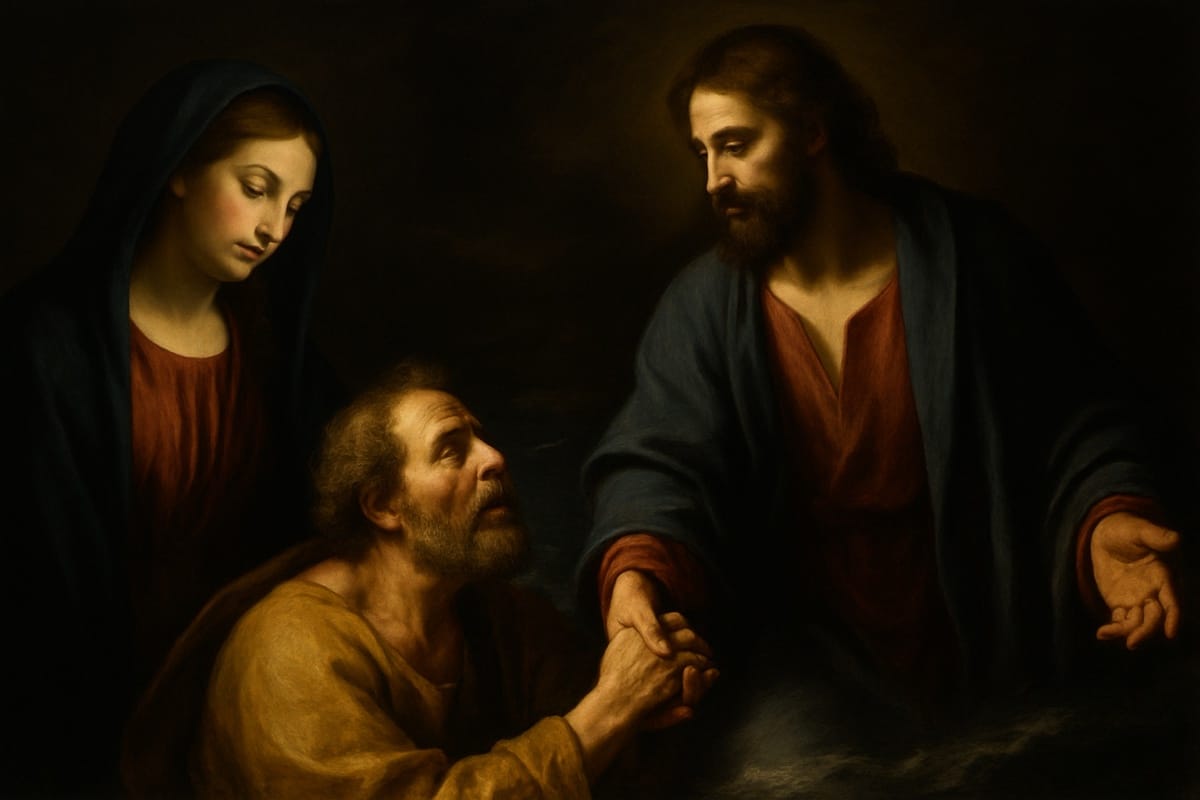
Domine, si tu es, iube me venire ad te super aquas.
Mt 14:28
The Nineteenth Sunday in Ordinary Time, Year A, brings together three texts centered on human frailty and on God’s discreet presence. 1 Kgs 19:9a, 11-13a recounts the theophany at Horeb: God is not in the devastating wind, nor in the earthquake, nor in the fire, but in a voice of delicate silence. Rom 9:1-5 presents Paul in unceasing sorrow for Israel, which received the greatest gifts of God and even so closed itself to the Messiah. Mt 14:22-33 tells how Jesus walks upon the waters and how Peter, who dares to go out to meet Him, sinks when fear takes hold of him. The three texts describe the same dynamic: God is present where He is least expected, faith grows in silence and not in spectacle, and fear is the temptation that makes the one who was already walking sink.
I. The First Reading: 1 Kgs 19:9a, 11-13a
Elijah fled from Jezebel and reached Horeb, the mountain of God, exhausted and disillusioned. The Lord says to him: “Go out and stand on the mountain before the Lord, for the Lord is about to pass by” (1 Kgs 19:11). First a strong and violent wind passes, shattering the rocks: “But the Lord was not in the wind.” Then an earthquake: “But the Lord was not in the earthquake.” Then fire: “But the Lord was not in the fire.” And after the fire: a voice of thin silence, a gentle breeze, a sound of delicate stillness. When Elijah heard it, he covered his face with his mantle. The theophany of Horeb corrects Elijah’s expectation: the prophet who had made fire come down from heaven (18:38) discovers that the Lord is not the God of spectacle, but the God of discreet presence. Mature faith does not look for impressive signs: it learns to recognize God in the voice that the noise of the world covers over.
II. The Second Reading: Rom 9:1-5
Paul makes a personal confession of great intensity: “I speak the truth in Christ, I do not lie; my conscience bears me witness in the Holy Spirit: I have great sorrow and unceasing pain in my heart” (Rom 9:1-2). The cause is Israel: his brothers according to the flesh. The list of what Israel received is impressive: “the adoption as sons, the glory, the covenants, the giving of the law, the worship, the promises” (v. 4), the patriarchs, and above all “from whom the Christ was born according to the flesh, who is above all things, God blessed forever” (v. 5). Paul does not condemn Israel: he weeps for it. Paul’s sorrow is not the despair of one who has lost faith: it is the love of one who sees his brothers close themselves to the gift they do not recognize. This pain challenges the disciple: how does one react on seeing others sink, like Peter in the Gospel?
III. Evangelium: Mt 14:22-33
After the multiplication of the loaves, Jesus makes the disciples get into the boat and goes up the mountain to pray. Alone. At the fourth watch of the night, He comes to them walking upon the sea. The disciples are terrified, thinking that it is a ghost. Jesus says: “Take courage, it is I. Do not be afraid” (Mt 14:27). Peter answers with a daring proposal: “Lord, if it is you, command me to come to you upon the waters” (v. 28). Jesus says: “Come.” Peter gets out of the boat and walks upon the waters. But on seeing the strong wind, he becomes afraid and begins to sink: “Lord, save me”! (v. 30). Jesus immediately stretches out His hand, takes hold of him, and says: “O man of little faith, why did you doubt”? (v. 31). When they get into the boat, the wind dies down. Those in the boat worship Him: “Truly you are the Son of God” (v. 33). Peter did not fail for lack of courage: he dared to ask the impossible and he dared to step out of the boat. He failed by shifting his gaze from Jesus to the wind. Fear did not come from outside: it came from within, when his attention moved.
IV. Mary and the Voice of Silence
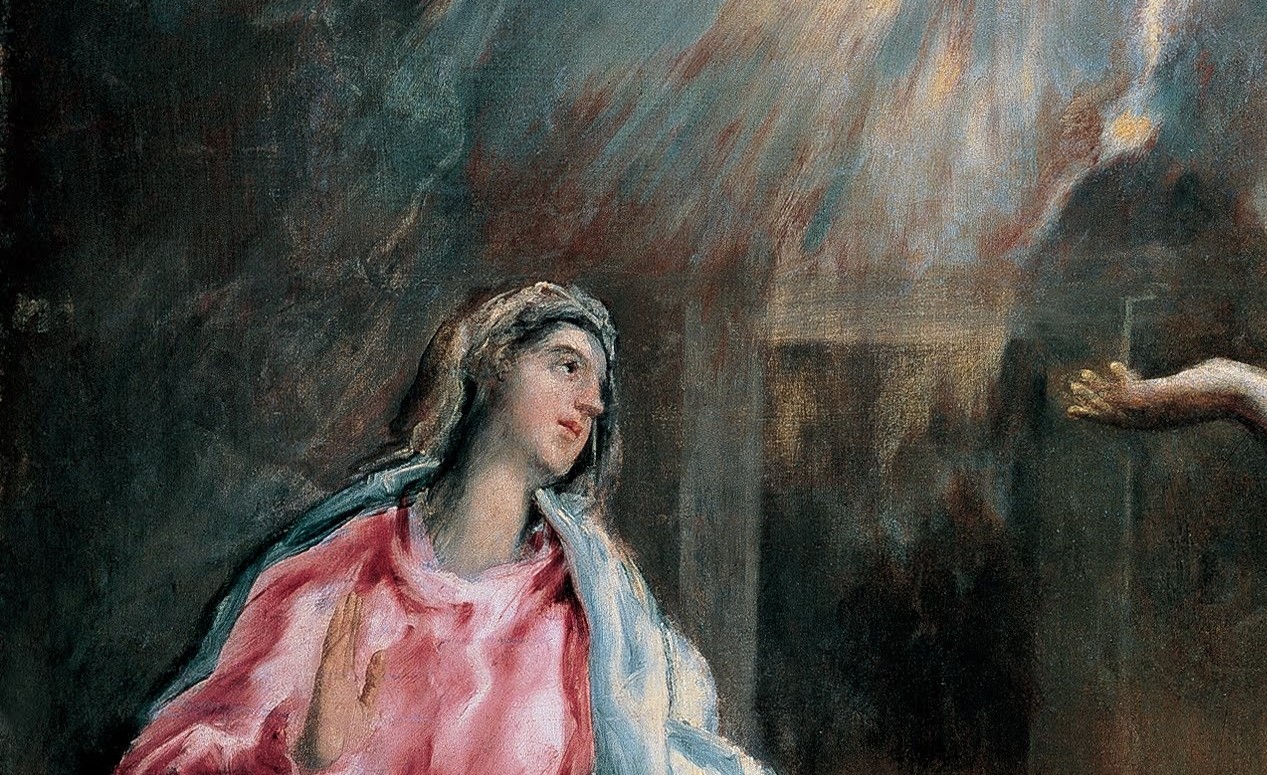
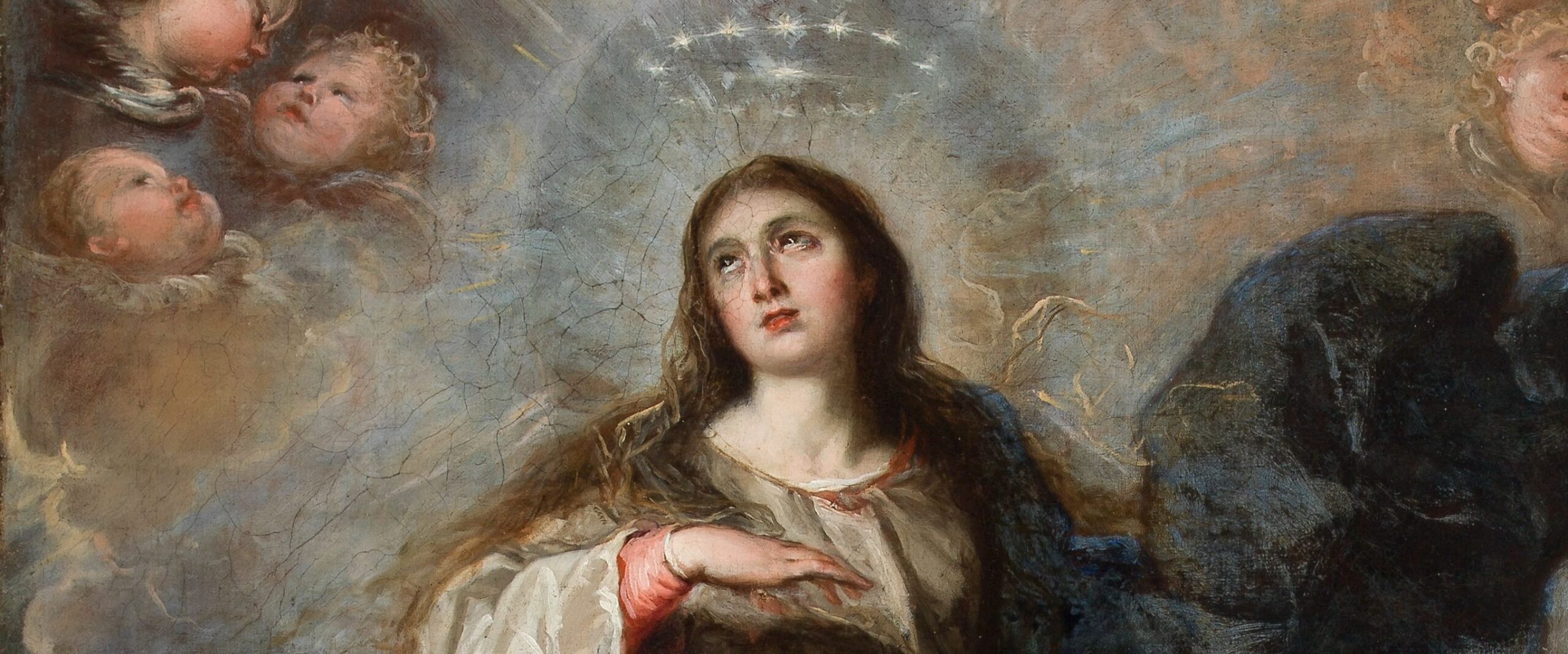
The theophany of 1 Kgs 19 takes place in silence: God is not in the wind, nor in the fire, but in the delicate breeze. Mary is, in the tradition, the figure of the silence in which God speaks. Luke twice repeats the same gesture: “Mary kept all these things, pondering them in her heart” (Lk 2:19; 2:51). Mary’s meditation is not passivity: it is the attentiveness that detects the voice of silence when the world is making noise. Peter sank when he looked at the wind: when he shifted his attention from the Lord to the spectacle. Mary never shifted her attention: not when the angel announced the impossible, nor when Joseph wished to divorce her, nor when Herod was persecuting her Son, nor when the Cross was drawing near. Mary’s faith is not the absence of fear: it is the refusal to let fear occupy the place that belongs to God. Paul weeps for Israel in Rom 9, and that pain is Mariological: Mary, a daughter of Israel, represents the response that Israel was called to give and that she gave in the name of all. Her yes at the Annunciation is the voice of silence that answered the voice of God’s silence.
Postgraduate Program in Mariology
Would you like to deepen your formation in Mariology? Discover the Postgraduate Program in Mariology of Locus Mariologicus — an academic formation that unites theological rigor, spiritual life, and the living tradition of the Church.



Responses