Unveiling the Nativity of Mary: An Enigma for Ecclesiastical Tradition
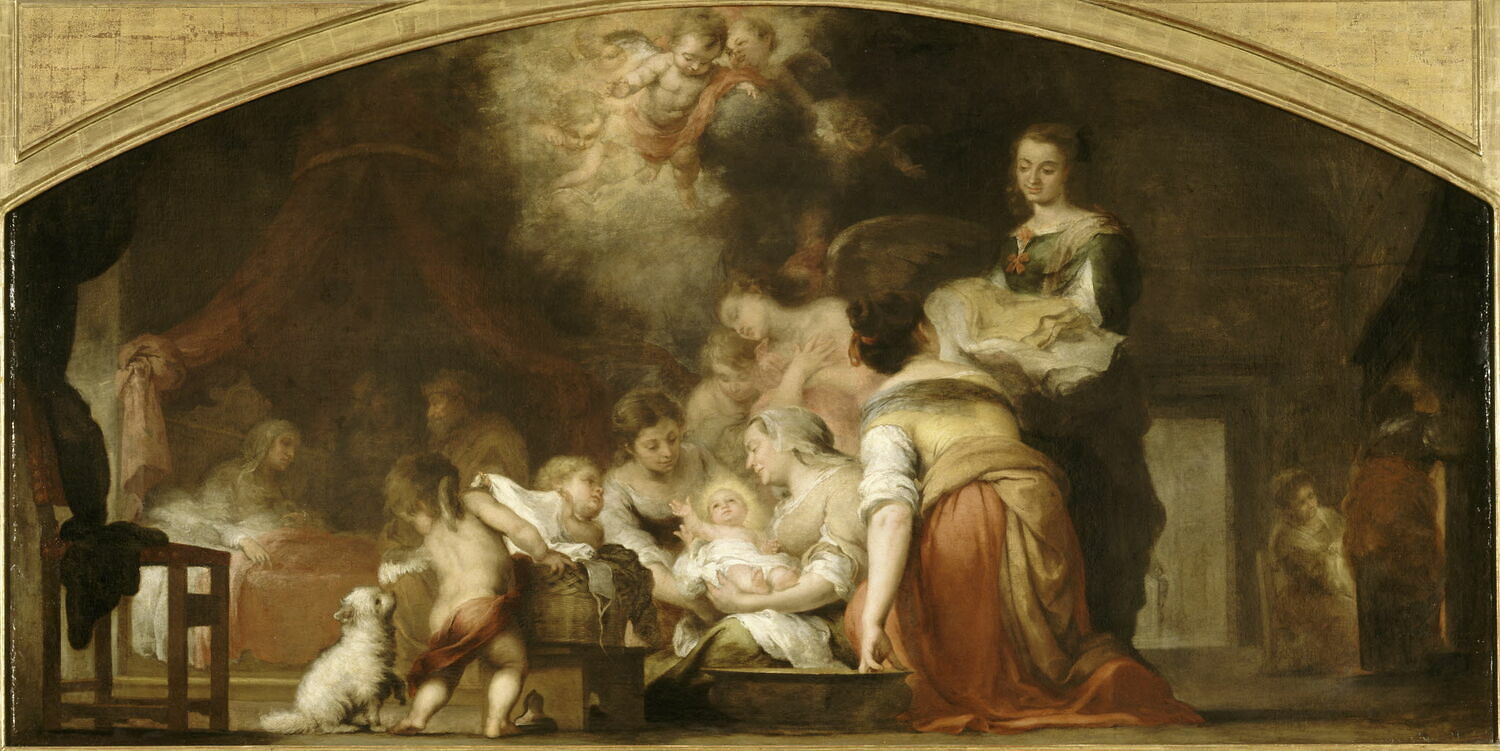
The reader will already have wondered: if Ecclesial Tradition did not exist for a moment, could we still speak about the Nativity of Mary? This question may seem bold, but it leads us to examine the history behind the birth of the Mother of Jesus.
Although the Nativity of Mary is not a biblical datum, it is a historical event that plays a crucial role in the history of humanity. If Jesus is truly man, this is due to His mother, Mary, and to her own history, which goes back to her birth.
This simple reflection challenges the typical question: where is that in the Bible? It reminds us that the Word of God and the history of salvation are intrinsically linked, and we often forget that biblical figures have a real history, a face, a journey, and a purpose.
The historical context of the Nativity of Mary
To understand the context of this theme, let us examine Jerusalem, the city of God for the Hebrews. In this sacred place, we see the connection between the old and the new Covenant, represented by the Temple and by the birth of the new Ark of God’s Covenant with men: Mary. Jerusalem is where typologies shape the feasts and the shrines, and it is where the Nativity of Mary finds its meaning.
How can we celebrate Mary’s death and her Assumption without celebrating her birth? It is logical to think that pilgrimage to the holy places would inspire liturgical celebrations in other parts of Western and Eastern Christianity.
The earliest evidence of the celebration of the Nativity of Mary goes back to the fifth century, when a hymn to the Nativity was composed by Romanos the Melodist, later introduced in Constantinople in 555. In the Latin Church, the feast was included in the liturgical calendar by Pope Theodore in the seventh century.
For the early Church, this liturgical feast was a memorial that celebrated the fulfillment of the messianic prophecies of the Prophets and the preparation of the old Covenant. As the liturgy developed, all the events that led to the Passover of Christ were celebrated, including Mary, the Apostles, and the Church of Jerusalem. The tradition of the figures of the Old Testament and of the oracles became part of the mystery of salvation that was celebrated.
Mary and the fulfillment of the biblical prophecies
For Jesus to be truly the fulfillment of the Scriptures, it was necessary that throughout His life He should demonstrate that the prophecies had been realized. Here the Nativity of Mary comes in, for Jesus is called the son of David because of His legal relationship with Joseph, although we do not know whether Mary was a descendant of David or of priestly lineage.
A relevant fact: historically, blessings were transmitted strictly through the male bloodline, but in the genealogy of Jesus we find four women. This suggests that, from the earliest centuries, Mary was seen mainly in her religious and spiritual aspect, whereas today we tend to explore her history and anthropology.
Mary’s birth may not be recorded in the written Word, but her ancestry and importance in the patriarchal and royal history of Israel connect her to the dawn of the new times.
When we examine the liturgy of the Nativity, we see how the readings from the Prophet Micah, the Letter to the Romans, and the Gospel of Matthew intertwine to show the fulfillment of the Scriptures and the preparation for the birth of the Savior.
The celebration of the Nativity of Mary is essential for understanding the journey of salvation and the link between the Old and the New Testament. The feast recalls that Mary played a vital role in the history of redemption and that her history is an indispensable link in salvation.
Archaeology also reveals the location of Mary’s birthplace, near the pool of Bethesda, which became a place of worship in the fifth century. This feast has its place in the liturgical calendar as part of the “Three Great Nativities”: Jesus on December 25, John the Baptist on June 24, and Mary, nine months after the Immaculate Conception, on September 8. This last date is particularly significant, for it marks the dawn of redemption and coincides with the dedication of the Basilica of the Nativity.
The Byzantine liturgical year begins on September 1, making Mary’s birth the starting point of a profound spiritual journey. The Pascha of the Theotokos on August 15, which closes the Byzantine liturgical year, prepares the ground for the Christmas-revelation cycle, which recalls that there is no Messiah without the Paschal Mystery, which is completed in Mary’s womb.
The Nativity of Mary in the patristic tradition
In this Mariological Memorial, I recall one of the Sermons of Saint Andrew of Crete, an eighth-century bishop, in which he explores the renewal that takes place in the Nativity of Mary, showing how Christ is the fulfillment of the law, transforming it from an oppressive yoke into spiritual freedom. Mary’s birth is the beginning of a series of events that will culminate in the union of the Word with the flesh, the incarnation of Christ. The Bishop emphasized in his Sermon that this feast is a meeting point between the Old and the New Testament.
The Nativity of Mary, although not directly recorded in the Bible, plays a crucial role in the history of salvation. It links us to the messianic promise, to the preparation of the old Covenant, and to the beginning of the new Covenant. This feast invites us to understand the Old and the New Testament and Mary’s role in the history of redemption. To celebrate the Nativity of Mary is to celebrate hope and the dawn of salvation for the whole world.
To deepen the study of Mary’s place in the history of salvation, we recommend reading the encyclical Redemptoris Mater by John Paul II.
Deepen your studies: explore Mariology, Marian Theology, Marian apparitions, and the Postgraduate Program in Mariology.
Daniel Cerqueira Afonso
Postgraduate Program in Mariology
Would you like to deepen your formation in Mariology? Discover the Postgraduate Program in Mariology of Locus Mariologicus, an academic formation that unites theological rigor, spiritual life, and the living tradition of the Church.
Would you like to study Mariology seriously?
This article grows out of the works in the Locus Mariologicus library. The Postgraduate Program in Mariology takes you to the same source, with academic guidance: Scripture, the Fathers of the Church, and the Magisterium, from the first dogma to contemporary questions.


Responses