Which Mariology for the Nativity Scene?
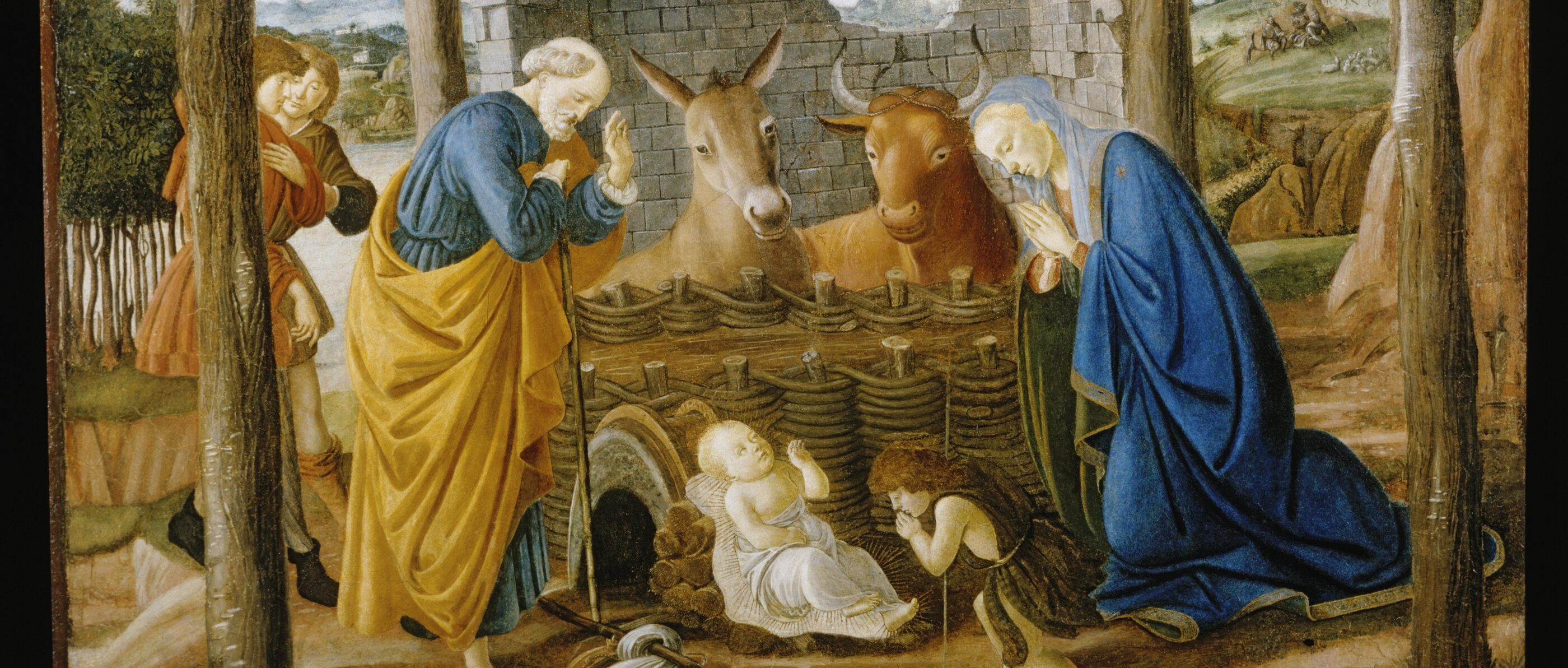
Among the many “languages” with which the Church confesses the Incarnation, the Nativity scene remains singular for a reason that is simple and theologically demanding: it does not merely speak of Christmas, but sets out a world that the viewer is invited to enter. The scene does not intend to satisfy archaeological curiosity. It seeks to awaken adoring recollection and to produce a kind of knowledge by participation: to see, to pause, to draw near, to reinterpret oneself.
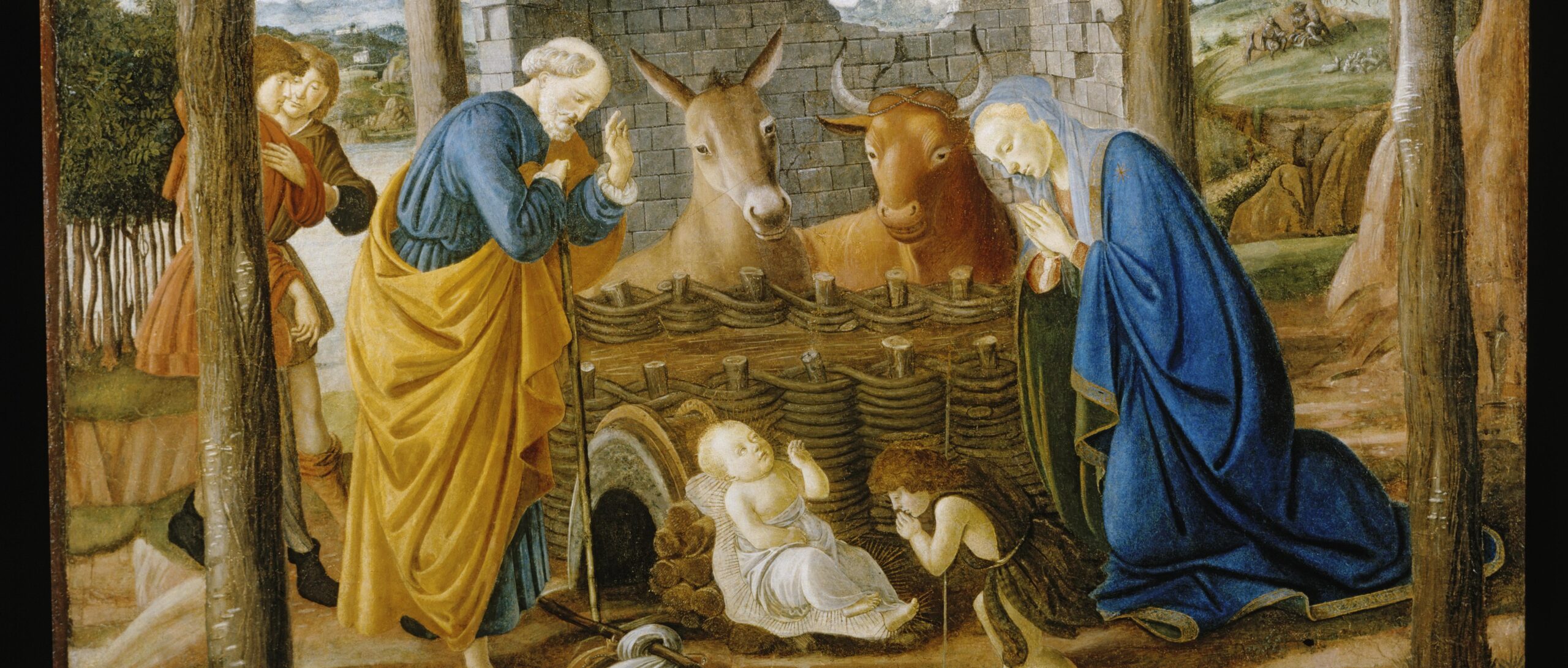
The Nativity scene is a small “architecture of the mystery”: a form that makes faith perceptible without reducing it to mere emotion.
Etymology and delimitation: what it is (and what it is not)
The etymology of praesēpium points us back to the woven basket used for feeding the animals. Praesēpe and its correlates in other languages originally designate above all the manger/crib in which the Child is laid. With the historical development of the custom, the term came to mean the three-dimensional staging of the events surrounding the birth of Jesus: movable figures, landscape or architecture of an illusionistic cast, set up in the season of Christmas as an expression of joy at the redemption that takes place in the humanity of the Word.
Here a conceptual distinction is in order, one that avoids frequent confusion:
- Nativity scene (in the strict sense): a seasonal setup tied to the Christmas cycle, with a primarily contemplative and devotional function.
- Permanent representations of the Nativity (in the broad sense): images or fixed groupings on altars or in devotional settings throughout the year. These may be a “nativity”, but they are not a “Nativity scene” in the strict sense (according to the logic of popular and liturgical custom).
The Nativity scene as a theology of presence
The Nativity scene “acts” upon the viewer in a way different from a two-dimensional image. Its three-dimensionality intensifies the impression of presence and, with it, an almost liturgical experience of “approach” and “distance”: one sees, but does not possess. One contemplates, but does not dominate.
To this is added the repertoire of sensible archetypes with which the Nativity scene works: greenery and moss, mountain and cave, stable, animals, light, angels, mother and child. It is not irrelevant that many of these elements belong to the symbolic grammar of the human: shelter, night, warmth, fragility, vigil. Thus the Nativity scene does not merely inform. It forms.
This “formation” is ambiguous and calls for discernment: the same mechanism that leads to adoration can degenerate into superficial sentimentalism. The point is not to abolish the affections, but to order them: affections that do not lead to the mystery become devotional noise.
The wisdom and the risk of fashion
There is a decisive spiritual fact here: building Nativity scenes is, for many, a practice of creative assimilation of the faith. The joy of work well done carries anthropological and spiritual weight: it bears witness that Christianity is not only doctrine, but also inhabiting the world according to a form.
The patristic tradition, in reading Prov 8:30 “then I was with him, and I was his architect. I was his delight every day, rejoicing before him at all times” (Wisdom “playing” before God) in a soteriological key, opens up a fruitful interpretation: the Nativity scene can be understood as a “playing along” with the economy of salvation, a way of entering, with freedom and seriousness, into the logic of the gift. It is not a matter of frivolity, but of a humble participation: the craftsman does not create the Redeemer, but lets himself be taught by Him.
It is common for the builder to identify with figures of the Nativity scene (the shepherds, for example). And this is theologically relevant: the Nativity scene does not intend to reproduce “how it was” in Bethlehem, but what Bethlehem means for history and for the life of the believer.
From the liturgical scene to the domestic church
The spread of the Nativity scene depended on transformations in Christian art: figures freeing themselves from the golden background and from the rigidity of the altarpiece, the emergence of a more affirmative sense of the human figure and of its representable dignity. When the humanity of Christ is venerated with full aesthetic consistency, it becomes natural to present the history of salvation in scenes.
In the post-Tridentine horizon, the religious image is valued as a means of instruction and of leading to piety, with a clear pastoral concern: images must avoid doctrinal ambiguity and must not lead simple people into error. In this context, it is plausible to understand the intensification of the Nativity scene (above all in Jesuit settings) as a catechetical and affective strategy: salvation “shown” and not merely “spoken”.
The Baroque, with its theatrical sensibility, expanded the settings and the “apparatus” to the point of allowing people to act within the sets, which explains the historical proximity between the Nativity scene, Christmas plays and para-liturgical forms of narration.
Enlightenment “sobriety” led in some places to prohibitions of Nativity scenes in churches. The response of the people was decisive: the Nativity scene migrated into homes. Pieces were preserved, hidden, adapted. When the prohibitions gave way, it returned with changes of style: from the theatrical to the idyllic. From the exuberant to the “welcoming”. From the Baroque universal to the regional (the snow Nativity scene), with the permanent danger that domestic emotion might smother the theological content.
Mariology of the Nativity scene: Mary at the heart of Christmas
If the Nativity scene means to say “what Bethlehem means”, then the arrangement of the Holy Family is dogmatically charged. Not because the Nativity scene is a treatise on Mariology, but because the Incarnation is intrinsically Marian. The Word does not “pass” through Mary as through a neutral channel; He takes flesh from her and, with her, inscribes Himself in time.
The figure of Joseph, in many compositions, appears as the guardian of the mystery: a discreet presence that protects the event without placing itself at the center, a kind of pedagogy of reverence. But it is Mary who, in the Nativity scene, sets the spiritual temperature of the whole. The scriptural text enumerates decisive iconographic variations, each one functioning as an “interpretation” of the mystery:
- Mary contemplative (hands in her lap): a Lucan reading: “she kept and pondered” (Lk 2:19). Here the center is the interior: motherhood as adoring intelligence.
- Mary reclining (after childbirth): a more “domestic” and naturalizing reading; it can humanize the event, but it runs the risk of reducing the mystery to the everyday.
- Mary standing as one who sings the Magnificat: a doxological emphasis. At times it seems “colder”, but it is theologically significant: the birth is worship.
- Mary seated “before God”: a sign of reverent familiarity: closeness without appropriation.
- Mary wrapping the Child (Lk 2:7): literal fidelity to the text; it underlines the concreteness of the flesh, the cold, the care.
- Mary offering the Child (above all at the Epiphany): here a classic Marian nerve is touched: Mary as the one who “shows Jesus”. It is a Mariology of non-competitive mediation: she does not replace Christ, she presents Him.
In more systematic language: the Nativity scene teaches, without an explicit thesis, that Mary is the created form of perfect receptivity. The Incarnation is not a violent intrusion of God into the world; it is an event in which human freedom, raised up by grace, becomes a real place of God. The Nativity scene, when it is good, does not “romanticize” Mary; it makes her appear as what the Church is called to be: a space open to the Word.
A Nativity scene is theologically authentic when, in the end, it produces in the viewer:
- not only tenderness, but adoration.
- not only nostalgia, but a conversion of the gaze.
- not only “atmosphere”, but Christological form.
The Nativity scene does not compete with the liturgy; it prolongs it in culture and in the home. And precisely for that reason it carries a duty: to keep the scene from becoming aesthetic consumption. The question that every Nativity scene ought to press is simple and profound: what does it mean that God willed to need a Mother? When that question remains alive, the Nativity scene ceases to be an ornament and becomes proclamation once more.
The Mariological reflection on the Nativity scene has as its background the Apostolic Letter Admirabile Signum of Pope Francis, where the presence of Mary in the Nativity scene is contemplated as a sign of the maternal love of God.
Deepen your studies: explore Mariology, Marian Theology, Marian apparitions and the Postgraduate Program in Mariology.
Marian academic resources: Deepen your formation in Mariology and Marian Theology with the Locus Mariologicus Institute. Postgraduate Program in Mariology: academic formation of excellence.
To deepen the Mariology of Christmas and of the Nativity scene, consult the Apostolic Exhortation Marialis Cultus of Pope Paul VI.
Postgraduate Program in Mariology
Would you like to deepen your formation in Mariology? Discover the Postgraduate Program in Mariology of Locus Mariologicus – an academic formation that unites theological rigor, spiritual life and the living tradition of the Church.
Would you like to study Mariology seriously?
This article is born of the works in the library of Locus Mariologicus. The Postgraduate Program in Mariology takes you to that same source, with academic guidance: Scripture, the Fathers of the Church and the Magisterium, from the first dogma to contemporary questions.




Responses