The Mariology of Karl Rahner
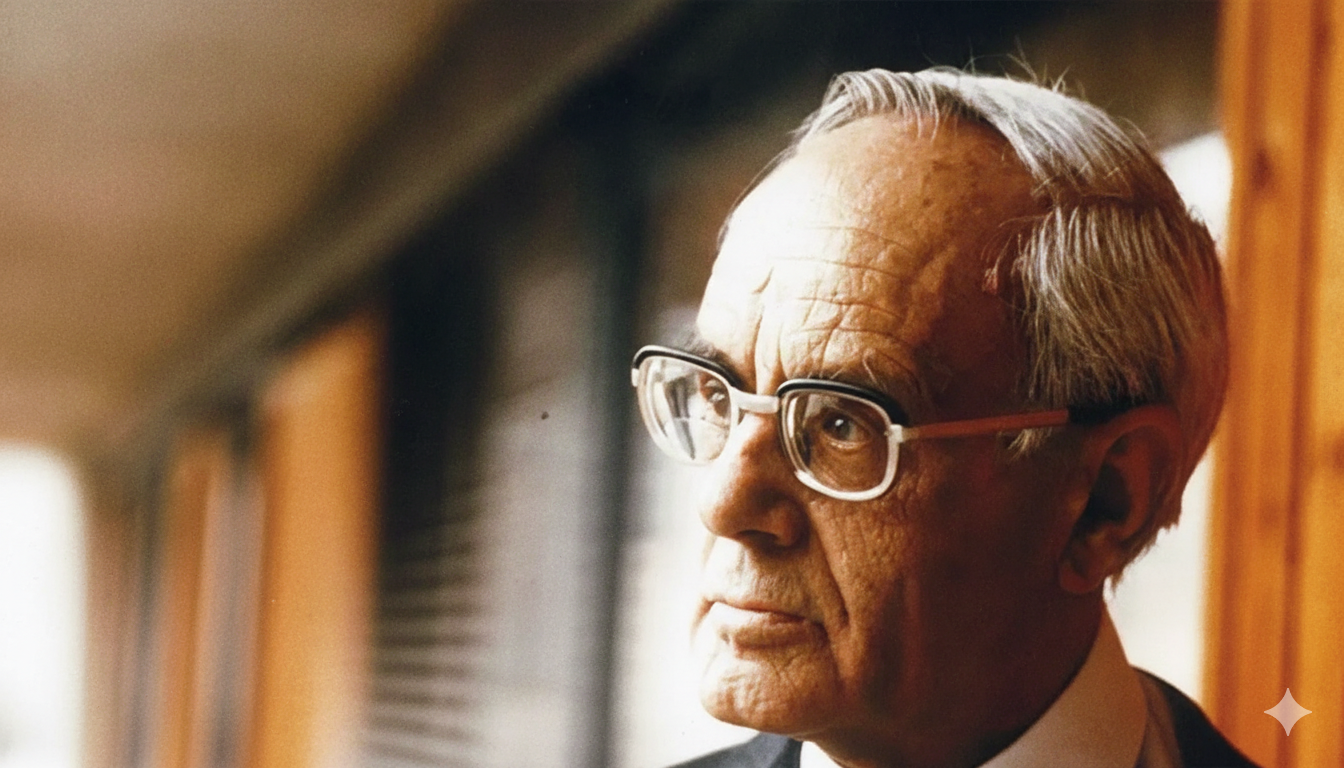
The Anthropology of Karl Rahner
Unlike Guardini, Rahner remains and works within the specific field of systematic theology. Yet, as for Guardini, so too for Rahner theology has value and meaning if it goes out to meet everyday life in a real and authentic way. Only great closeness to little things gives great theology, including academic theology, meaning and force.
Rahner is one of the most influential and significant authors of the anthropological current. Unlike Guardini, he sets each of his treatises within the pastoral perspective and always within a global theological discourse. For Rahner, man is essentially a spirit listening for God’s possible revelation; he is the being who also has the duty to listen to that revelation. This metaphysical capacity for openness to the absolute is actualized through grace, which is God’s self-communication received by man in faith and in love. This mystery of grace is, for Rahner, the starting point for a theological reflection on the Christian, so much so that his theology is called “charismatic,” that is, centered on grace, charis. In this perspective, theology, besides being a total glorification of God, is also necessarily, in its most intimate fulfillment, an exaltation of man. Rahner sees the reason for this theology of man not only in the order of creation, but also in the historical order of the Covenant and of the Incarnation, where God willed to deal with us, made us His interlocutors, and even became one of us, man as we are. One cannot do theology, therefore, without necessarily doing anthropology.
The Mariology of Karl Rahner
Rahner’s bibliographical repertory contains 40 titles of Mariological works, some of them unpublished, not counting the allusions or the treatments present in other works. For Rahner, the esteem for Mary is a postulate of the philosophical-theological premises of his anthropological system, as presented above.
Here, in broad outline, is Rahner’s Mariology:
- Rahner too, like Guardini, does not believe in an autonomous approach to the Mother of the Lord. A correct discourse about her finds assent and validity only in relation to the essential questions of anthropology and Christology. The backdrop is always the historical-salvific horizon, where, if Mary’s place is defined as essential, unique, and decisive, this in no way prevents seeing her as the simple creature who belongs, as we do, to the one human family. Mary too needs to receive everything from the mercy of God and, in particular, the gift of Christ’s redemption.
- When faith and theology speak about the meaning and the salvific importance of man in God’s history, they must necessarily speak of Mary, who has decisive importance in the History of Salvation alongside Christ, by the will of God Himself. If theology must be anthropological, it must also be Mariological.
- Mary’s historical-salvific significance is determined by her divine motherhood, understood not as a purely biological fact, but as a spiritual-bodily event and a decisive point in the history of salvation.
- Mary’s “fiat” has a profound significance for the whole of human history, because it is accomplished in the Incarnation, which is the act by which God irrevocably embraces the world and begins the redemption, to be definitively brought about by the death of Christ. Mary’s “yes” is therefore directly soteriological, and Mary occupies a central place in the history of salvation, not as Mother of the Lord in a passive way, but because, by her free action, she effectively becomes such in giving her assent to the decisive act of God.
- Since Mary’s consent is made possible by the grace of Christ, it not only cooperates in the salvation of man, but is an act of receiving redemption for herself. Mary is, therefore, also the most perfect example of redemption, the prototype of the ransomed Church, the realization of perfect Christianity, which is the pure reception of the one and triune God who appears in Christ.
- Mary, though essential, unique, and decisive in the history of salvation, is nevertheless entirely on our side; she belongs, as we do, to the one human family. Like us, she was redeemed and received everything from the mercy of God.
- The relationship between Mary and the Church is so intimate that the consideration of the one fosters the knowledge of the other. Ecclesiology safeguards Mariology from falling into sentimentalism and subjective isolationism, and Mariology makes ecclesiology fruitful and enriches it. The Church is not a static substance, but is realized and is continually built up by concrete human beings. One must therefore look to them if one wishes to come to know what the Church is. Consequently, there is no human being capable of representing the genuine Christian essence better than Mary. Indeed, by concentrating one’s thought on this concrete person, on her way of acting and on her destiny, one comes to understand far better what the Church is than through purely abstract concepts.
- By manifesting to the Church its own nature, Mary also shows man his vocation to be the image of God and to share in His life, opening himself to Christ in faith and in self-giving. When we celebrate Mary, we also celebrate a Christian way of understanding the existence of man; we celebrate and proclaim the Christian idea of man.
Karl Rahner’s “Marian meditations”
Lines of the dogmatic teaching concerning Mary
A) Mary is the Virgin Mother of Christ
This relationship of motherhood must not be reduced to a purely physical connection. She received the Son of God for us in the free “yes” of her faith, and from her womb she gave Him that earthly existence by which He could be a member of the new human family and thus its Redeemer. Her motherhood is therefore the work of her faith and not a mere biological process. This divine motherhood, freely accepted, comes about as a reception of the grace of God which, in the Incarnation, comes into the world, and therefore in an authentic collaboration with God who works in man. This function of receiving salvation is assumed and exercised by her throughout her whole existence, until the hour of the Redemption. By reason of this central place in the history of salvation, Mary is, for the Church, the absolute and radical case of redeemed man, the one who was redeemed in a perfect way and therefore the archetype of the redeemed and of the Church in general, according to the secret design of God’s will. Mary was thus, by the gratuitous grace of God, preserved from guilt and from all sin; she was not subject to concupiscence.
Mary was also not only a mother, but the Virgin Mother of Christ. This birth of the Son without the contribution of a man and yet by the true generation of a mother shows clearly that a radically new starting point of salvation is thereby established, and that the history of humanity, laden with sin, does not simply continue but is renewed in redemption. By reason of her total self-giving to Christ for the good of the Church, the Church acknowledges Mary as ever Virgin.
With her glorious assumption into heaven, Mary attained her perfect fulfillment in body and soul, and from heaven, where her function as mother is raised up and reaches its fullness, she intercedes for us.
B) Mary was a concrete person of her time
She is a descendant of David, related to the priestly family of Zechariah and Elizabeth, betrothed to and wife of Joseph of Nazareth. She conceives her child in that city and gives birth to Him in Bethlehem. She is forced to flee into Egypt, but afterward returns and lives permanently with Joseph and Jesus in Nazareth. She takes an active part in the religious life of her people; she leads a life of work, of poverty, of loving acceptance of the unfathomable dispositions of God. Sharing intimately in the mysteries of her Son, she shows that she received her motherhood not merely biologically, but rather in faith, as an acceptance of the supreme will of God. She too knew death in the authentic fulfillment of her earthly existence, as the destiny of all men entailed, in imitation of the death of her Son.
C) The special veneration of Mary
Given her singular dignity as Mother of God and given the singular place Mary occupies in the history of salvation and in the life of the Church, a particular veneration is rendered to her. This Marian devotion is carried out concretely in the Church through certain Marian feasts that celebrate facts and events of Mary’s life linked to the mysteries of Christ, through other feasts by which the Church acknowledges Mary’s presence in the history of the Church itself, and through other forms of devotion, such as the prayers of the Rosary and of the Angelus, pilgrimages, consecration, and so forth. This veneration of the Virgin fulfills her prophecy: “All generations will call me blessed.”
Mary in Theology
The Christian who wishes to reflect on Mary must, above all, open Sacred Scripture, read under the guidance of the Magisterium of the Church, because the Church preaches what she reads in Scripture. The first question that spontaneously arises is the one at the origin of the discussion: but does faith, speaking absolutely, have anything to tell us about Mary, about a woman, about a creature? Is there, at bottom, a theology of man? For only after answering that question can we answer the question about Mary and, retracing the path, understand what Scripture, through the Church, tells us about Mary. To this last question we must answer positively: yes, there is a theology of man, a proclamation of faith and a theology that praises and glorifies God while at the same time saying something about man. And this for various reasons: above all because God is truly all in all things and, then, because God, in His ineffable glory, in His eternal living, has made us sharers in His own eternal living. Besides having concluded the Covenant with us, He even became one of us; He became man. After the event of the Incarnation, in Christianity nothing true, authentic, or concrete can be said about God without confessing Him as Emmanuel, God with us. For this reason the face of God shines forth in man, and for this reason theology, insofar as it is the glorification of God, is also a theology of the exaltation of man. For this reason, when we speak of the mystery of Christ and of salvation, we must also speak of Mary, because in this history she has a decisive importance, willed by God Himself. Celebrating God, celebrating the man who comes into contact with God, we cannot but speak of Mary, we cannot but celebrate Mary, because in her we celebrate a Christian way of understanding man; we proclaim the Christian idea of man. The praise of Mary is praise of God who gives Himself to man and praise of man who receives God in fullness and with responsibility.
Fundamental lines of Mariology
What, for theologians, is the fundamental principle of Mariology? Theologians are divided: some say it is the divine motherhood. Others, her cooperation in salvation. Others, her universal motherhood. “For me,” says Rahner, in order to say what this principle is, one must first answer the question: who is Mary properly speaking? and, even before that, the more general question: what is Christianity and perfect Christianity?
Christianity is the work of the living God toward us: it is what He, the living God of grace, gives us in forgiveness, in redemption, in justification, and in the communication of His own divine glory. Christianity is the eternal God Himself, He Himself who comes to man, He Himself who, with His grace, deals with man in such a way that man freely opens his heart to Him, so that into this poor heart of a little creature there may penetrate all the splendor of the infinite life of the Triune God.
Perfect Christianity is the reception, in body and soul, of the gift of God, which is God Himself, in an encounter in which one offers all that one has, all that one does, and what one suffers, so that this receiving of God may embrace one’s whole being and whole history. It is the perfect harmony and coherence between personal life and official functions, between the visible manifestation and what happens in the depths of consciences. It is to manifest what happens in the depths of the Christian life; it is to make perceptible outwardly what God works in the depths of the heart.
Now, if this is perfect Christianity, we can say that Mary is its full realization: Mary is the perfect Christian, the typical and concrete realization of what constitutes redemption in its perfect form. And if perfect Christianity is the full reception of God, it is clear that the divine motherhood, the highest degree of the reception of God, is the principle for grasping and understanding Mary. But take note: Mary, though Mother of God, though the perfect Christian, though the summit of perfect Christianity, is on our side, because all that she is and all that she has is the fruit of the mercy of God. Mary is the one who, like us and belonging to our side, comes to God together with us, within this one and immense choir of humanity.
To deepen the cultic and theological dimension of Mary, the apostolic exhortation Marialis Cultus of Paul VI offers the magisterial framework that complements the Rahnerian reflection on Mary in theology.
Deepen your studies: explore Mariology, Marian Theology, Marian apparitions, and the Postgraduate Program in Mariology.
Postgraduate Program in Mariology
Would you like to deepen your formation in Mariology? Discover the Postgraduate Program in Mariology of Locus Mariologicus, an academic formation that unites theological rigor, spiritual life, and the living tradition of the Church.
Would you like to study Mariology seriously?
This article arises from the works in the library of Locus Mariologicus. The Postgraduate Program in Mariology brings you to the same source, with academic guidance: Scripture, the Fathers of the Church, and the Magisterium, from the first dogma to contemporary questions.





Responses