What was Lucifer’s sin? Pride, envy, and the fall of the angels
By Prof. Dr. Daniel C. Afonso · Updated
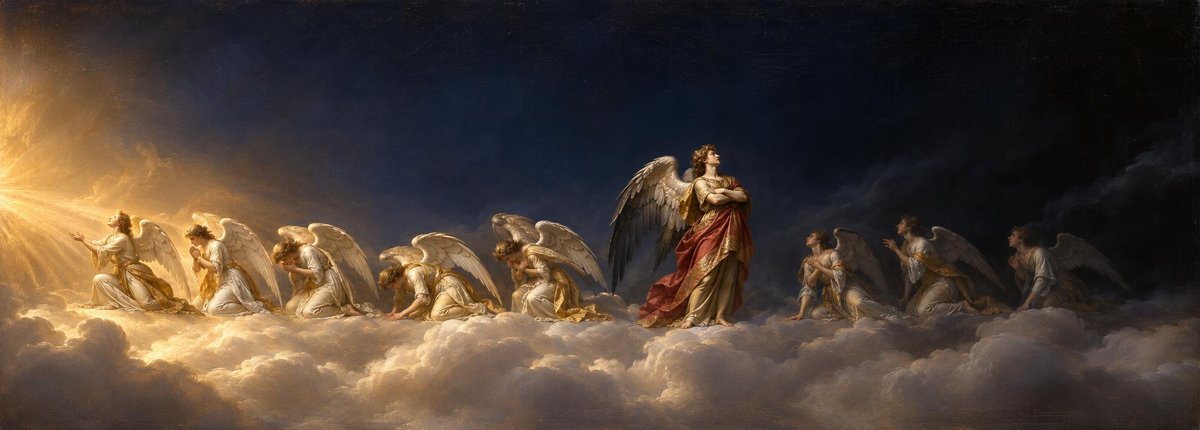
The sin of Lucifer was, above all, pride. The Church teaches that the fallen angels “rejected radical and irrevocably God and his Kingdom” (Catechism of the Catholic Church, no. 392), and Saint Thomas Aquinas explains that the first sin of the angel “cannot be other than pride,” to which envy followed (Summa Theologica I, q. 63, a. 2).
In summary
- Short answer: Pride. Envy followed as a consequence (St. Thomas Aquinas, Summa Theologica I, q. 63, a. 2).
- What the Church teaches: demons were created good and became evil by their own choice (Catechism, nos. 391-392).
- What is theological explanation: that this sin was pride and envy, and in what sense the angel wanted to be “like God.”
- Isaiah 14: it can be read in a spiritual sense, but the literal meaning speaks of the king of Babylon.
- One opinion: that the proof of the angels concerned the Incarnation. Suárez considers it very probable, but not certain.
# What the Church Teaches and Theologians Explain
It is necessary to begin by distinguishing two levels. The first is that of faith. The Fourth Lateran Council (1215) taught, and the Catechism repeats, that “Satan and other demons were created good by God in their nature, but became evil by their own initiative” (no. 391). The fall is a “free choice of these created spirits, who rejected radically and irrevocably God and His Kingdom” (no. 392).
The second level is that of the theological explanation. Stating that this sin was one of pride and envy, and in what sense the angel wanted to be “as God,” is a doctrine of the theological tradition, clearly expounded by Saint Thomas Aquinas, but it is not a definition of the Church. For a comprehensive view, see Fallen Angels.
Why only pride and envy?
In the Summa Theologica (I, q. 63, a. 2), St. Thomas asks whether other sins besides pride and envy can exist in angels. An objection reminds us that, according to Augustine, demons take delight even in carnal sins. The response distinguishes two modes of having a sin: by fault, because demons drag men into all sins, and by affection. By affection, only those sins can be had to which a purely spiritual nature inclines, and this does not desire the goods of the body. The deviation remains in the relation to spiritual goods, which Thomas defines thus:

“And this is the sin of pride: not to submit to the superior in that which ought to be submitted. Therefore the first sin of the angel cannot be other than pride. But in consequence, envy could also be present in him.” (Thomas Aquinas, Summa Theologica I, q. 63, a. 2)
Thomas quotes Augustine: “The Devil is not a fornicator nor a drunkard, nor anything like that, but he is proud and envious.” And when demons seem to take pleasure in the sins of the flesh, the cause is still envy, for they rejoice in anything that obstructs the good of man (ad 1).
“You will be like gods”: In what sense the angel wanted to be like God
The Catechism sees a reflection of the rebellion of the angels in the words of the Tempter to our first parents: “And you shall be as gods” (Gen 3:5). The Devil, he says, is “a sinner from the beginning” (1 Jn 3:8) and “the father of lies” (Jn 8:44) (n. 392). But what does it mean to want to be like God? In Article 3, St. Thomas asserts without hesitation that the angel sinned by desiring to be like God, and then distinguishes two senses.
The first would be to desire equality with God. This the angel could not wish, for he knew, by natural knowledge, that it was impossible. No thing of lower degree desires the higher degree of nature, says Thomas, “just as the ass does not desire to be a horse,” for if it were transferred to that degree, it would no longer be itself.
The second sense is that of resemblance. To desire to resemble God in what the creature was made for is not a sin, if the resemblance is received from God. He who desires it as of himself commits a sin. Thus did the Devil sin.
“He desired, as the ultimate goal of happiness, that which he could attain by the virtue of his nature, turning his desire away from the supernatural happiness that comes from God’s grace. Or, if he desired as the ultimate goal that similarity to God that is given by grace, he wanted to have it by the virtue of his nature, and not through divine help, according to God’s disposition.” (Summa Theologica I, q. 63, a. 3)
In simple terms: The angel did not seek to take God’s place, but to be happy in himself, without receiving happiness as a gift. He also desired some principality over others, and “in this also, perversely, sought to resemble God.” Thomas excludes that he wanted to be entirely subject to no one, because he would desire his own non-existence, since no creature exists except by participating in the being that comes from God.
The envy that follows
If pride is the root, envy is the fruit. The envious man is grieved at another’s good, because he judges it an obstacle to his own good. This could only happen to the evil angel, because he desired a singular excellence, and that singularity is dispelled before another’s excellence. Thus, “after the sin of pride followed in the sinning angel the evil of envy, while he was grieved at the good of man, and also at the divine excellence,” because God uses him, against his will, for divine glory (I, q. 63, a. 2).
Scripture connects this envy to the entry of death into the world: “Through the envy of the devil death entered into the world” (Wisdom 2:24, our translation from Greek). The Catechism echoes the text when it speaks of the Temptor who, “out of envy,” led the first parents into death (no. 391), and repeats the phrase when treating the tenth commandment (no. 2538). It also cites Saint Augustine, who saw in envy “the diabolical sin par excellence” (no. 2539), and notes that it “often arises from pride” (no. 2540), the same order that Thomas describes in the angels.
Pride in Scripture: 1 Tim 3:6 and Isaiah 14
In the First Letter to Timothy, Paul advises that a bishop should not be newly converted, “that he may not be elated and fall into the condemnation of the devil” (1 Timothy 3:6, translated from the Greek). It can be read that the pride which led the devil to judgment also threatens those who rise too quickly. As the Greek genitive allows for other interpretations, the verse serves here as a coherent indication consistent with the doctrine, rather than as isolated evidence.
Isaiah 14 demands closer scrutiny. The text is a «parable against the king of Babylon» (Is 14:4) and its literal meaning is historical. However, tradition has read a spiritual sense into it. Even St. Thomas writes that what is said there «under the figure of the prince of Babylon» is said of the Devil (I, q. 63, a. 5). The desire to ascend to heaven and to be «like the Most High» (Is 14:13-14, from the New Vulgata) well describes pride, but this does not necessarily mean that the prophet is speaking literally of Lucifer. On the name and this interpretation, see Lucifer in the Bible.
A debated opinion: the proof of the angels and the Incarnation
Among the scholastics, there was debate as to whether the sin of Lucifer had as its object the hypostatic union, that is, the future Incarnation of the Word. Francis Suárez, in the work De Angelis (Book VII, Chapter XIII), weighs the arguments. He records the objection that there is no basis to assert that the event occurred in this way, but he concludes:
“It is very likely the opinion that believes that Lucifer indeed sinned through pride, desiring the hypostatic union, and has been from the beginning opposed to Christ.” (Francisco Suárez, De Angelis VII, cap. 13, n. 13)
Suárez is prudent. He admits that the opinion «is not certain», because neither Scripture nor the Fathers show it sufficiently, nor does reason demonstrate it, but he adheres to it «willingly» as the most probable. He also assumes that the angels knew Christ only as a future God-man, and not as a Redeemer. It is a theological opinion, not a teaching of the Church, and the Catechism does not adopt it.
What does this mean for us?
The doctrine on Lucifer is not the mere curiosity of a scholar. Pride and envy are also human vices, and the Catechism indicates the remedy: humility against pride and benevolence against envy (n. 2540). Whoever wishes to avoid the fate of the fallen angel begins by recognizing that happiness is a grace, and by rejoicing in the good that God does for others.
## Frequently Asked Questions
Qual foi o pecado de Lúcifer?
Segundo São Tomás de Aquino, o primeiro pecado do anjo foi a soberba, isto é, não se submeter ao superior naquilo em que devia, e a inveja veio depois (Suma Teológica I, q. 63, a. 2). O Catecismo descreve a queda como uma rejeição radical e irrevogável de Deus e do seu Reino (n. 392).
Lúcifer quis ser igual a Deus?
Não no sentido de igualdade, que o anjo sabia ser impossível. Segundo São Tomás, quis ser semelhante a Deus de modo desordenado, procurando a felicidade pela força da sua natureza e não como dom da graça (I, q. 63, a. 3).
Por que a inveja é chamada pecado diabólico?
Porque a Escritura diz que pela inveja do diabo a morte entrou no mundo (Sb 2,24), e o Catecismo cita Santo Agostinho, para quem a inveja é «o pecado diabólico por excelência» (n. 2539). Para São Tomás, ela nasce da soberba.
Isaías 14 fala de Lúcifer?
No sentido literal, fala do rei de Babilônia (Is 14,4). A tradição cristã leu nele também uma figura da soberba do Diabo, e São Tomás a recolhe. É uma leitura espiritual, e não uma afirmação de que o profeta descreva literalmente o demônio.
A prova dos anjos foi sobre a Encarnação?
É uma opinião teológica. Francisco Suárez a julga muito provável, mas confessa que não é certa, porque não se prova suficientemente pela Escritura nem pelos Padres. A Igreja não a ensina como doutrina.
## References
- SACRED SCRIPTURE: Gen 3:5; Jn 8:44; 1 Jn 3:8; Wis 2:24; 1 Tim 3:6; Is 14:4.12-15. Our translations from Greek (Wis 2:24 and 1 Tim 3:6) and the New Vulgata (Is 14).
- Catechism of the Catholic Church, nos. 391-392 and 2538-2540.
- Fourth Lateran Council (1215), ch. 1. In: Denzerger, Heinrich. Hünermann, Peter. Enchiridion Symbolorum, no. 800.
- SUÁREZ, Francisco. De Angelis, lib. VII, cap. XIII, n. 13. In: Opera omnia, t. II. Paris: Vivès, 1856, p. 885.
- Thomas Aquinas. Summa Theologiae I, q. 63, a. 2, 3, and 5.
Responses