Mary and Jesus Christ: the Christological foundation of Mariology
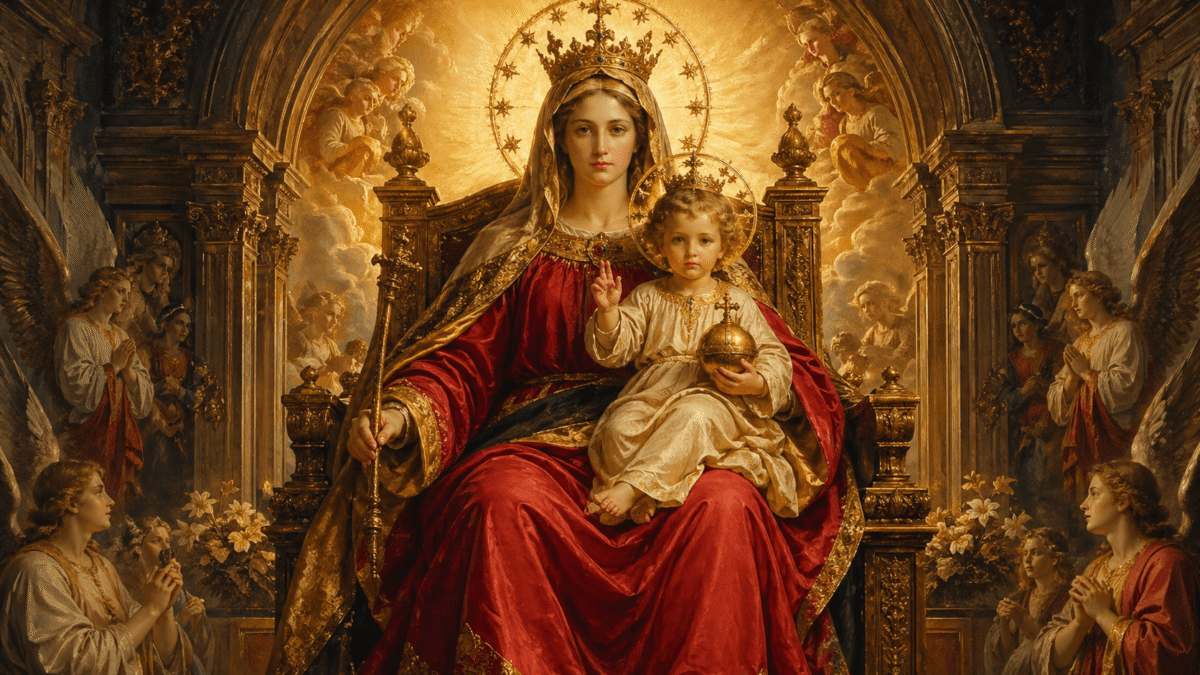
Mary and Jesus Christ, the Christological foundation of Mariology
Mariology has its foundation, its reason for being, and its center in Jesus Christ. The Second Vatican Council placed Mary “within the mystery of Christ and of the Church” (LG 8), rejecting both an isolated Mariology and a Christology that would dispense with the Mother of the Lord. Mary’s relationship with Christ can be summed up in three biblical titles: Mother of the Savior, disciple of the Lord, associate of the Redeemer.
Mary, Mother of the Savior
The oldest New Testament testimony about Mary comes from Paul: “When the fullness of time came, God sent his Son, born of woman, born under the law” (Gal 4:4). The incarnation of the Son of God necessarily implies Mary’s motherhood. Matthew and Luke recount in detail the virginal birth of Jesus by the action of the Holy Spirit. Luke presents Mary as “the mother of my Lord” (Lk 1:43), using the divine title of Jesus even before His birth. John calls Mary “mother” five times in the two most significant scenes of his Gospel: Cana and the Cross. This divine motherhood was solemnly defined at the Council of Ephesus (431) with the title Theotokos, confirmed at Chalcedon (451): Mary is “Virgin Mother of God” (Dei Genitrix).
Mary, disciple of the Lord
Luke presents Mary as the first and most perfect disciple of Jesus. When Jesus says, “My mother and my brethren are those who hear the word of God and do it” (Lk 8:21), He does not diminish Mary’s physical motherhood, but shows that this motherhood is rooted in a deeper faith: total adherence to the will of the Father. Augustine summed it up in an unsurpassable way: “Mary conceived in her heart before she conceived in her womb” (fide plena et Christum prius mente quam ventre concipiens). Mary’s faith temporally precedes her motherhood. Mary was a disciple before she was a mother. Lumen Gentium (n. 58) describes her “pilgrimage of faith,” which included moments of incomprehension, of silently keeping things in her heart, of advancing in darkness. This dimension is the closest to the ecumenical experience shared with the Churches of the Reformation.
Mary, associate of the Redeemer
Mary cooperated actively in the work of salvation not by her own merit, but by the grace of Christ. Her fiat at the Annunciation (Lk 1:38) was the consent to the incarnation of the Son of God. At Calvary, she “stood by the Cross of Jesus” (Jn 19:25), suffering with her Son and consenting, with maternal love, to the sacrifice of the Redeemer. LG 58 affirms that Mary “associated herself with a maternal heart with the sacrifice of Jesus, lovingly consenting to the immolation of the victim whom she herself had brought forth.” This twofold fiat, at the Annunciation and at the Cross, constitutes the arc of her participation in the redemption. LG 60 makes clear that this mediation of Mary neither diminishes nor obscures the unique mediation of Christ: “sgorga dalla sovrabbondanza dei meriti di Cristo,” it is wholly subordinate and dependent.
Christology and Mariology
The fundamental principle that governs the relationship between the two disciplines is that of instrumental subordination: Mariology serves Christology and illumines the mystery of salvation. Whatever is affirmed of Mary is always referred to Christ and to His Spirit. Marialis Cultus (n. 25) requires that the Marian cult be “of a clearly Christological nature.” All Mary’s greatness derives from her relationship to the Son: “Everything goes to Jesus, by way of Mary” (LG 67).
Deepen your studies: explore Mariology, Marian Theology, Marian dogmas, and the Postgraduate Program in Mariology.
Magisterium of the Church
Mariologia non est nisi Christologia plene intellecta: quia Maria tota est ad Christum ordinata, totaque ex Christo intelligitur.
S. Ioannes Paulus II, Enc. Redemptoris Mater, n. 4 (25 martii 1987)
📚. Literal translation: Mariology is nothing other than Christology fully understood: for Mary is wholly ordered to Christ, and only from Christ is she entirely understood.
Postgraduate Program in Mariology
Would you like to deepen your formation in Mariology? Discover the Postgraduate Program in Mariology of Locus Mariologicus – an academic formation that unites theological rigor, spiritual life, and the living tradition of the Church.
Learn what the Church teaches about Mary, Mediatrix of All Graces.
Would you like to study Mariology seriously?
This article grows out of the works in the Locus Mariologicus library. The Postgraduate Program in Mariology takes you to the same source, with academic guidance: Scripture, the Fathers of the Church, and the Magisterium, from the first dogma to contemporary questions.





Responses