Akathistos: The Great Marian Hymn of the East
Akathistos, the Great Marian Hymn of the East
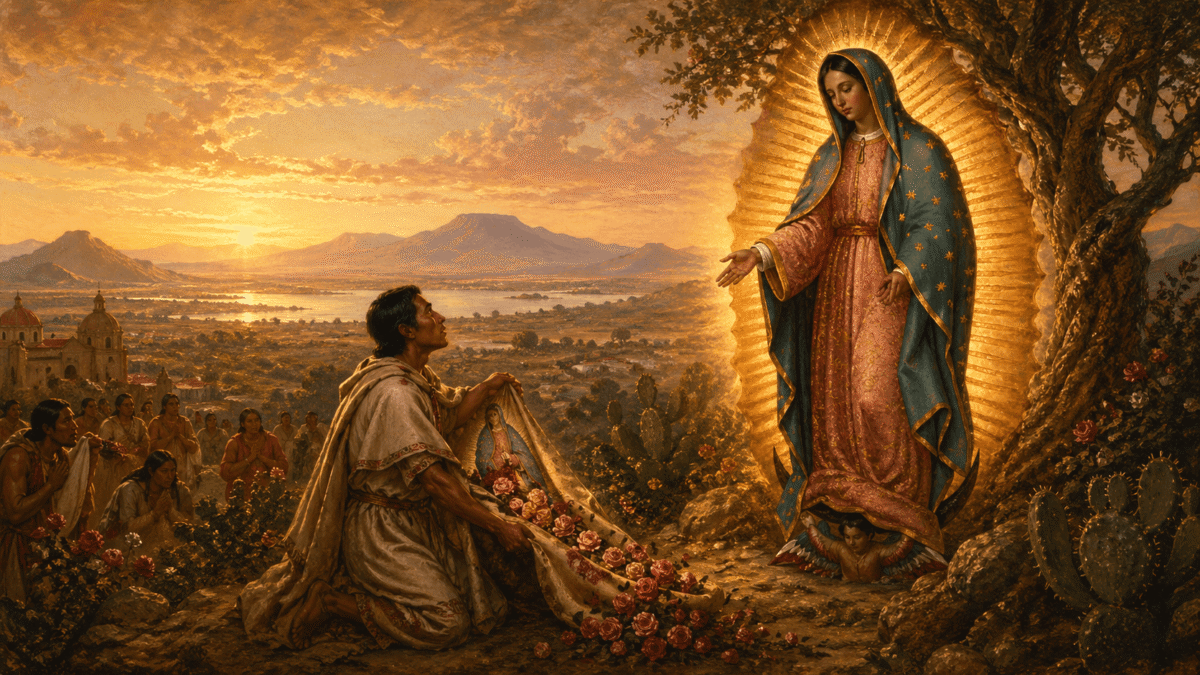
The Akathistos (in Greek, “not seated”) is the greatest Marian hymn of Christian antiquity, probably composed in the fifth or sixth century. The name indicates that it must be sung and listened to standing, like the Gospel, as a sign of reverence. For fifteen centuries it has nourished devotion to the Theotokos in the Churches of the Christian East.
The Name and Its Importance
The name Akathistos comes from a liturgical rubric: this hymn was sung standing throughout the whole night, while the other compositions of the Byzantine liturgy were listened to seated. The city of Constantinople, consecrated to Mary, intoned it at vigils of thanksgiving after being delivered from barbarian sieges, and from the rubric the proper name was born. In the Byzantine rite it has its own liturgical feast, the fifth Saturday of Lent, and it is sung in part on the four preceding Saturdays.
The Structure of the Hymn
The Akathistos is composed of 24 stanzas following the acrostic of the Greek alphabet. It is divided into two parts of 12 stanzas each: the first, historical in character, follows the Gospel of the infancy (Annunciation, Nativity, Magi). The second, theological in character, contemplates the mysteries of the faith. The odd-numbered stanzas, which are longer, end with 12 acclamations to the Virgin and with the refrain “Hail, Virgin and Bride!”; the even-numbered ones end with “Alleluia!”
Theology: Theotokos and the Incarnation
The Akathistos is, in its essence, a contemplation of the mystery of the Incarnation through Mary. The Trinitarian mystery and the two dogmas defined at Nicaea and at Ephesus (the Trinity and the two natures of Christ) structure its numerical architecture. Mary emerges from the mystery of the Word whom she bore, and in Him her role as Mother of God is illuminated. The hymn was sung in its entirety at the solemn commemoration of the 1550th anniversary of the Council of Ephesus, presided over by John Paul II in the Basilica of Saint Mary Major, in 1981.
Ecumenical Value
Translated into all the languages of the Byzantine rite, in the Orthodox branch as well as in the Eastern Catholic one, the Akathistos is today increasingly known in the West. The Italian catechism for adults (1981) reproduced two of its stanzas alongside the Salve Regina, regarding it as already a common patrimony of the Churches. For ecumenical dialogue it represents a privileged point of convergence between East and West in the contemplation of the Theotokos.
Deepen your studies: explore Mariology, Marian Theology, Marian apparitions and the Postgraduate Program in Mariology.
Magisterium of the Church
Vere dignum et iustum est, ut eam quam Filius Dei pro sua misericordia elegit in Matrem suam, nos quoque ex corde laudemus et honoremus.
Benedictus XIV, Const. Ap. Gloriosae Dominae (27 septembris 1748)
📚. Literal translation: It is truly right and just that we should honor and praise from the heart her whom the Son of God chose out of mercy as His Mother.
Hymnographia orientalis, cuius apex est Acathistus, maximum documentum est sensus theologici Orientis erga Theotokon.
S. Ioannes Paulus II, Enc. Redemptoris Mater, n. 33 (25 martii 1987)
📚. Literal translation: Eastern hymnography, whose summit is the Akathistos, is the greatest document of the theological sense of the East in relation to the Theotokos.
Postgraduate Program in Mariology
Would you like to deepen your formation in Mariology? Discover the Postgraduate Program in Mariology of Locus Mariologicus – an academic formation that unites theological rigor, spiritual life and the living tradition of the Church.
Would you like to study Mariology seriously?
This article grows out of the works in the Locus Mariologicus library. The Postgraduate Program in Mariology brings you to the same source, with academic guidance: Scripture, the Fathers of the Church and the Magisterium, from the first dogma to contemporary questions.




Responses