Marian apocrypha: the non-canonized traditions about Mary
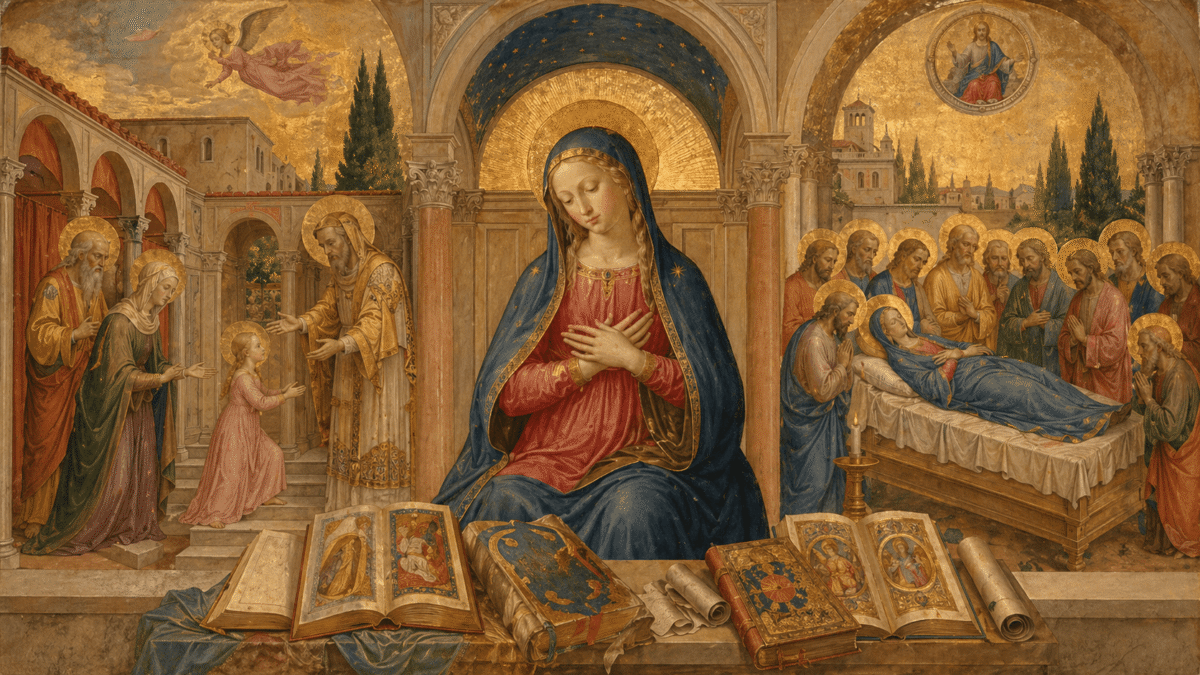
Marian apocrypha, the non-canonical traditions about Mary
The apocrypha are writings that, drawing on biblical themes, were not included in the sacred canon. In the field of Mariology the apocrypha of the New Testament played a decisive role: they handed on popular traditions about Mary, nourished Christian devotion and iconography, and constitute the first written documentation of certain truths that the Church would come to define dogmatically.
What an apocryphal text is
The word “apocryphal” originally means “hidden” or “secret.” In time it came to designate writings that imitate the biblical literary genres (gospel, acts, letter, apocalypse) but that the Church recognizes neither as inspired nor as a source of revelation. Even so, the apocrypha are not without value: they reflect the popular faith of the first Christian communities and reveal how nascent Mariology expressed itself before being formalized in dogma.
The apocrypha and the tradition about Mary
Some of the traditions most deeply rooted in Marian devotion come from apocryphal texts: the names of Mary’s parents, Joachim and Anne; the presentation of the child Mary in the Temple; the birth of Jesus in a grotto, with the ox and the ass present; the names of the Magi, Melchior, Caspar, and Balthasar; the story of Mary’s death and glorification. These traditions entered the liturgy, iconography, and popular piety without many of the faithful knowing that their origin was apocryphal.
The Protoevangelium of James
The most important of the Marian apocrypha is the Protoevangelium of James (c. A.D. 200), divided into three parts: the life of Mary up to the Annunciation, the story of Joseph, and an account of the massacre of the innocents. This text upholds the perpetual virginity of Mary before, during, and after childbirth. The proof of virginity in giving birth is confirmed by two witnesses (a midwife and Salome), according to the criterion of the double witness that makes a fact incontestable. The mosaics of the triumphal arch of the Basilica of Saint Mary Major in Rome (fifth century) reproduce scenes taken directly from the Protoevangelium.
The apocrypha of the Assumption
The death and glorification of Mary are the central theme of the apocrypha of the Assumption, among which the “Dormition of the Mother of God” (attributed to John the Theologian, fourth-fifth century) and the “Transitus of Mary” stand out. These texts converge on one fundamental point: Mary’s body did not decompose in the tomb, but was taken up to heaven. Although full of legendary elements, they constitute the first written documentation of what would become the dogma of the Assumption (defined by Pius XII in 1950). The theologian E. Peretto stresses that the apocrypha of the Assumption do not represent a heretical position, but a teaching of which they are the first written documentation.
Influence on art and liturgy
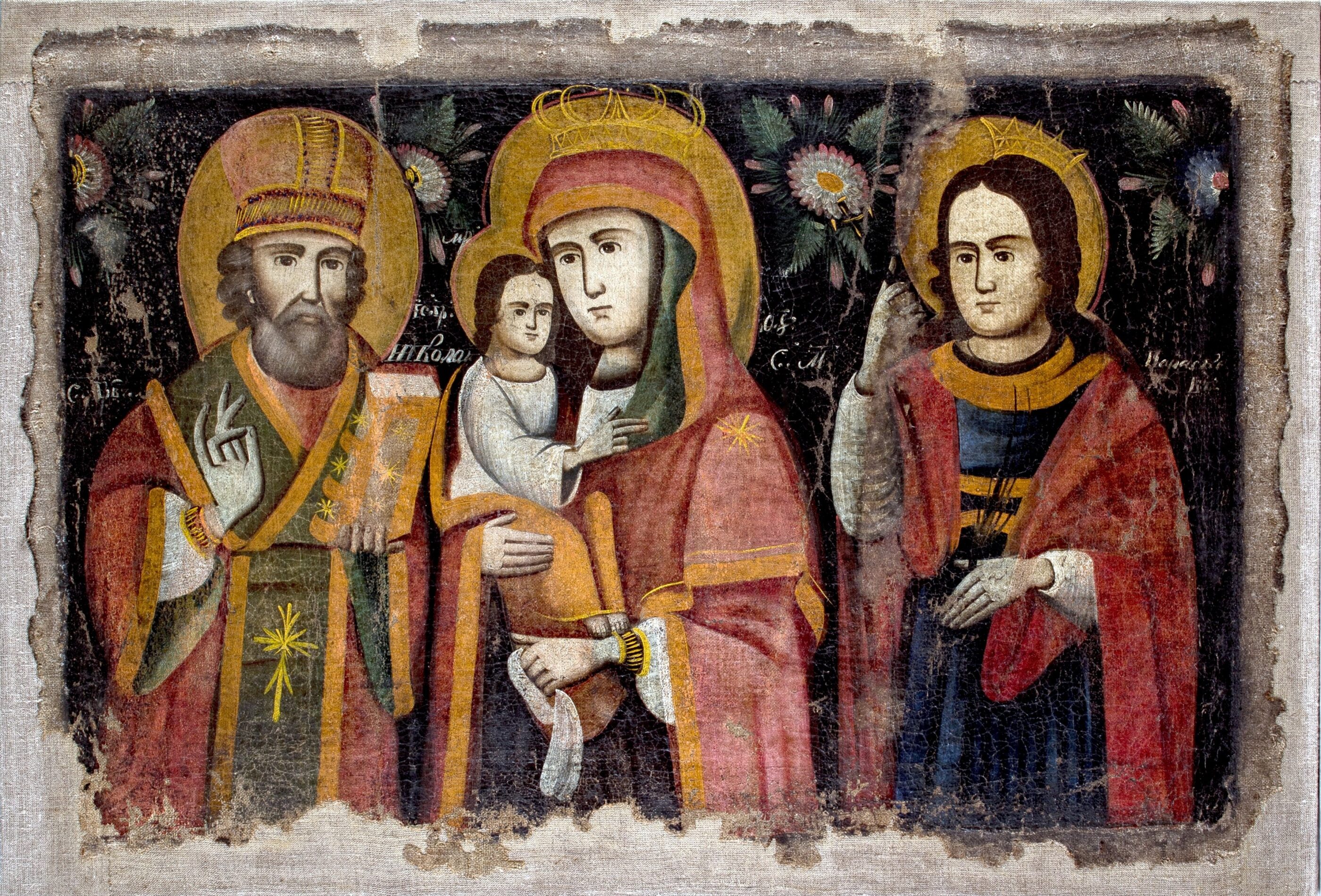
The influence of the apocrypha on Christian art is profound. The presentation of Mary in the Temple, the marriage of Mary to Joseph, and the Flight into Egypt were favorite themes of Christian painting, from the frescoes of Giotto to the compositions of Raphael and Titian, all of them inspired by apocryphal sources. The Eastern and Slavic churches likewise drew on this tradition in Marian iconography. The Marian iconographic cycle is, to a great extent, a visual translation of apocryphal literature.
Theological value and limits
The apocrypha are not a source of divine revelation, but they are a precious document of the popular faith of the first Christian communities. The Church clearly distinguishes between canonical Scripture and this parallel literature, without formally condemning most of the apocrypha. Their value lies in the fact that they mirror how the first generations of Christians lived and expressed their faith in Mary, filling out with pious imagination the sober data of the canonical Gospels and responding, at times, to the doctrinal controversies of their own time.
Deepen your studies: explore Mariology, Marian Theology, the Assumption of Mary, and the Postgraduate Program in Mariology.
Magisterium of the Church
Cautio adhibenda est circa libros apocryphos qui nonnullas veritates fide dignas continent, sed etiam permixta habent quae admitti nequeunt.
Pontifical Biblical Commission, Instructio de historica Evangeliorum veritate (21 aprilis 1964)
📚 Literal translation: Caution must be exercised with regard to the apocryphal books, which contain some truths worthy of belief, but which also have mixed in with them things that cannot be admitted.
Postgraduate Program in Mariology
Would you like to deepen your formation in Mariology? Discover the Postgraduate Program in Mariology of Locus Mariologicus – an academic formation that unites theological rigor, spiritual life, and the living tradition of the Church.
Would you like to study Mariology seriously?
This article grows out of the works in the Locus Mariologicus library. The Postgraduate Program in Mariology takes you to the same source, with academic guidance: Scripture, the Fathers of the Church, and the Magisterium, from the first dogma to contemporary questions.

Responses