Our Lady of Fatima: the message of the Immaculate Heart

Our Lady of Fatima, the message of the Immaculate Heart
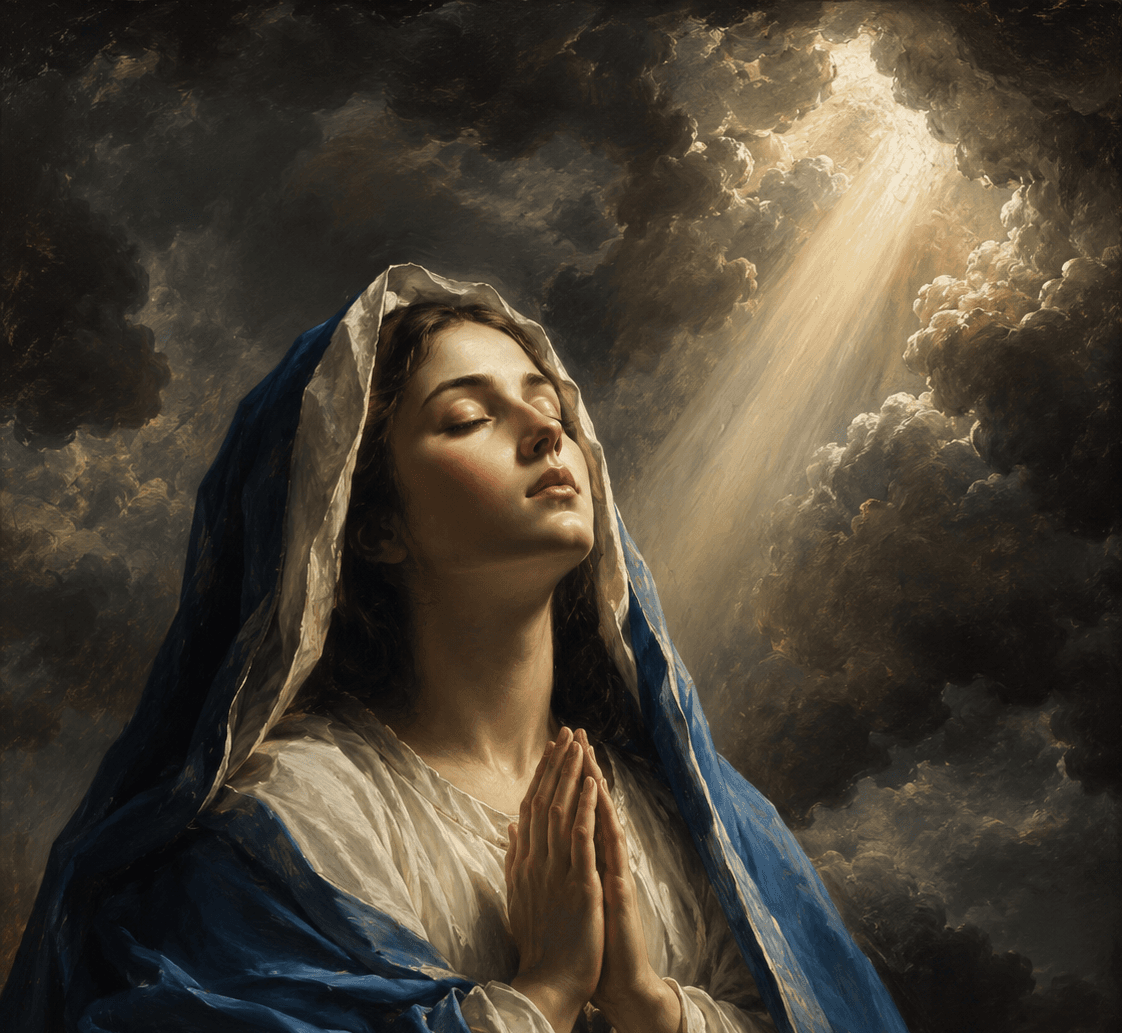
Our Lady of Fatima is one of the most important Marian apparitions of the twentieth century and one of the religious phenomena of greatest impact in the history of the contemporary Church. Between May and October 1917, Mary appeared six times to three shepherd children at the Cova da Iria, in Fatima (Portugal), leaving a message of prayer, penance, and devotion to her Immaculate Heart. For the full article: Our Lady of Fatima.
The seers and the apparitions
The three seers were Lúcia dos Santos (age 10), Francisco Marto (age 9), and Jacinta Marto (age 7), children of shepherd families from Aljustrel, a village near Fatima. In 1916, an angel appeared to them three times to prepare them. The six apparitions of Our Lady always took place on the 13th, from May to October 1917, at the Cova da Iria. At each apparition, Mary showed herself in a white dress and a mantle with golden borders, a rosary in her hands, and asked them to return for six consecutive months. She promised to take Francisco and Jacinta with her soon (both died in 1919-1920, during the influenza epidemic). Lúcia lived until 2005, becoming a Carmelite religious.
The message and the secret
The core of the message of Fatima is a call to prayer, penance, and reparation. Our Lady asked especially for the daily recitation of the Rosary and for devotion to her Immaculate Heart. At the third apparition (July 13, 1917), she entrusted to the seers a secret in three parts. The first was the vision of hell, where the souls of sinners go. The second was the foretelling of a second world war if the world did not convert, and the request for the consecration of Russia to the Immaculate Heart. The third part remained in the Vatican Archives until the year 2000, when John Paul II ordered it to be published. The message is directed toward the final triumph: “In the end, my Immaculate Heart will triumph.”
The miracle of the sun
On October 13, 1917, the day of the last apparition, more than fifty thousand people gathered at the Cova da Iria, drawn by the announcement that the Virgin would work a miracle so that all might believe. The so-called miracle of the sun consisted in a dizzying movement of the sun, which cast all the colors of the rainbow and seemed to plunge toward the earth, and was observed by the whole crowd, believers and unbelievers. Several secular newspapers in Lisbon documented the event as an undeniable fact. It is one of the most widely witnessed prodigies in the history of Marian apparitions.
Approval and worldwide spread
The Bishop of Leiria declared the apparitions worthy of belief in 1930 and authorized the public cult. Pius XII consecrated the world to the Immaculate Heart of Mary in 1942 and called himself “the pope of Fatima.” Paul VI made a pilgrimage to Fatima in 1967, on the fiftieth anniversary of the apparitions. John Paul II, who survived the assassination attempt of May 13, 1981, made a pilgrimage to Fatima in 1982 to thank the Virgin for her protection, and beatified Francisco and Jacinta in 2000. Fatima became one of the greatest Marian shrines in the world, receiving millions of pilgrims each year.
Theological significance
Fatima is a charismatic phenomenon that the Second Vatican Council situates within the distribution of charisms by the Holy Spirit for the building up of the Church (LG 12). Its message adds nothing to public revelation, but presents anew the essence of the Gospel with prophetic urgency: conversion, prayer, trust in the mercy of God manifested through the Heart of Mary. The theologian S. De Fiores stressed that the greatest risk in the reception of Fatima is to absolutize it, as though it were the whole pastoral work of the Church, or to isolate it in secondary apocalyptic elements. The center is the maternal love of Mary, who calls her children to faith and to hope.
Deepen your studies: explore Mariology, Marian apparitions, Immaculate Heart of Mary, and the Postgraduate Program in Mariology.
Magisterium of the Church
Fatimense nuntium magnum momentum habet: Deus per Mariam advocat homines ad poenitentiam et ad precationem, signanter ad recitationem Rosarii.
S. Ioannes Paulus II, Homilia in Fátima (13 maii 1982)
📚 Literal translation: The message of Fatima has great importance: God, through Mary, calls men to penance and to prayer, namely to the recitation of the Rosary.
In fine, Cor meum Immaculatum triumphabit.
Beata Virgo Maria apud Luciam de Fátima (13 iulii 1917), apud documenta authenticata
📚 Literal translation: In the end, my Immaculate Heart will triumph.
Postgraduate Program in Mariology
Would you like to deepen your formation in Mariology? Discover the Postgraduate Program in Mariology of Locus Mariologicus, an academic formation that unites theological rigor, spiritual life, and the living tradition of the Church.
See the complete list of Marian apparitions recognized by the Church.
Learn what the Church teaches about Mary, Mediatrix of All Graces.
Would you like to study Mariology seriously?
This article grows out of the works in the Locus Mariologicus library. The Postgraduate Program in Mariology takes you to the same source, with academic guidance: Scripture, the Fathers of the Church, and the Magisterium, from the first dogma to contemporary questions.


Responses