Francis – christus vivit, patris corde and fratelli tutti: Mary and Young People, Saint Joseph and Fraternity
Three major documents of Pope Francis close the Marian panorama of his pontificate: Christus Vivit (2019) on young people, Patris Corde (2020) on Saint Joseph, and Fratelli Tutti (2020) on universal fraternity. In each one, Mary plays a specific role tied to the central theme.
| Pope | Francis |
| Documents | Christus Vivit (2019, nn. 43-48,298) | Patris Corde (2020, conclusion) | Fratelli Tutti (2020, conclusion) |
| Topic | Mary and young people, Mary and Saint Joseph, Mary and fraternity |
Christus vivit nn. 43-48, Mary, God’s Influencer
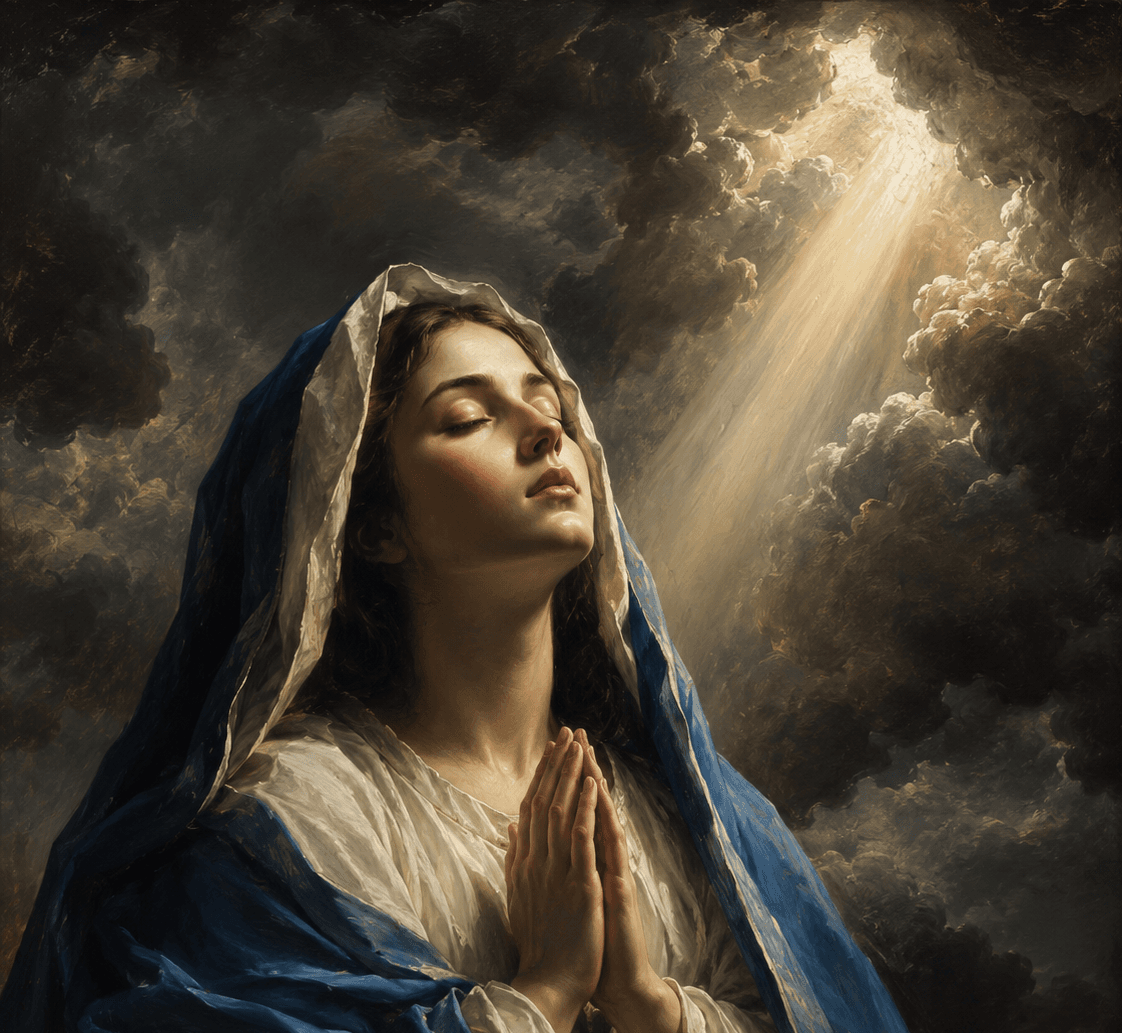
The Exhortation Christus Vivit contains one of the most original pastoral applications of the figure of Mary: Mary as a model of Christian youth. Numbers 43-48 are devoted to Mary as a “young Christian woman” and as God’s “influencer”:
«Maria erat juvenis. Cor eius palpitabat propinquum amoribus, sicut omnium juvenum, sed in eius spiritualitate gracia inerrabili adiuvabantur, qua sciret Deum vocare cum tota sui anima. Et tamen, primum quod ostendit nobis Maria iuvenis non est seipsa, sed seipsa pro alterius: «Magnificat anima mea Dominum»! Pro hac ratione Maria erat in modum prima maxima «influencer» Dei: una iuvenis quae nesciebat ostendere alteros sed Christum»
Mary was young. Her heart throbbed close to love, like that of all young people, but in her spirituality she was aided by an ineffable grace, with which she knew how to call upon God with all her soul. And yet, the first thing the young Mary shows us is not herself, but herself for others: “My soul magnifies the Lord”! For this reason Mary was in a certain sense God’s first and greatest “influencer”: a young woman who did not know how to show anyone other than Christ.
Mary and the Digital Culture of Young People
Francis uses the term “influencer” (in English in the original Italian text) deliberately, in order to bring Mary close to the digital culture of young people. In a world where adolescents follow influencers on social media, Francis proposes Mary as the first and greatest influencer in history, the one who does not promote herself but promotes Christ.
Christus vivit n. 298, the Prayer to Mary for Young People
The final prayer for young people invokes Mary’s motherhood over contemporary Christian youth:
«Maria iuvenum, ora pro nobis, sis advocata juvenum apud Filium tuum, ut, sicut tu in iuventute respondisti «fiat», ita iidem juvenes nostri possint cum cor leto respondere «sicut» Domino vocanti»
Mary of young people, pray for us, be an advocate for young people before your Son, so that, just as you in your youth answered “fiat”, so our young people may answer with a joyful heart “yes” to the Lord who calls.
Patris corde (December 8, 2020), Mary and Saint Joseph
The Apostolic Letter Patris Corde, published on the feast of the Immaculate Conception of 2020 for the 150th anniversary of the declaration of Saint Joseph as Patron of the Universal Church (Pius IX, 1870), contains a final section on Mary and Joseph as a couple:
«Iosephus est «vir iustus» (Mt 1:19), qui «accepit Mariam coniugem suam» (Mt 1:24) et qui in domestica lateri Mariae apparuit veluti angelus custos. Maria et Iosephus simul lingua amoris caelestis loquerunt, silentio, occultatione, mutua sustentatione. Iosephus est primum exemplum sponsi qui amat sponsam aliter quam aliii uxorem amant, quia amat ipsam sicut amavit Christus Ecclesiam»
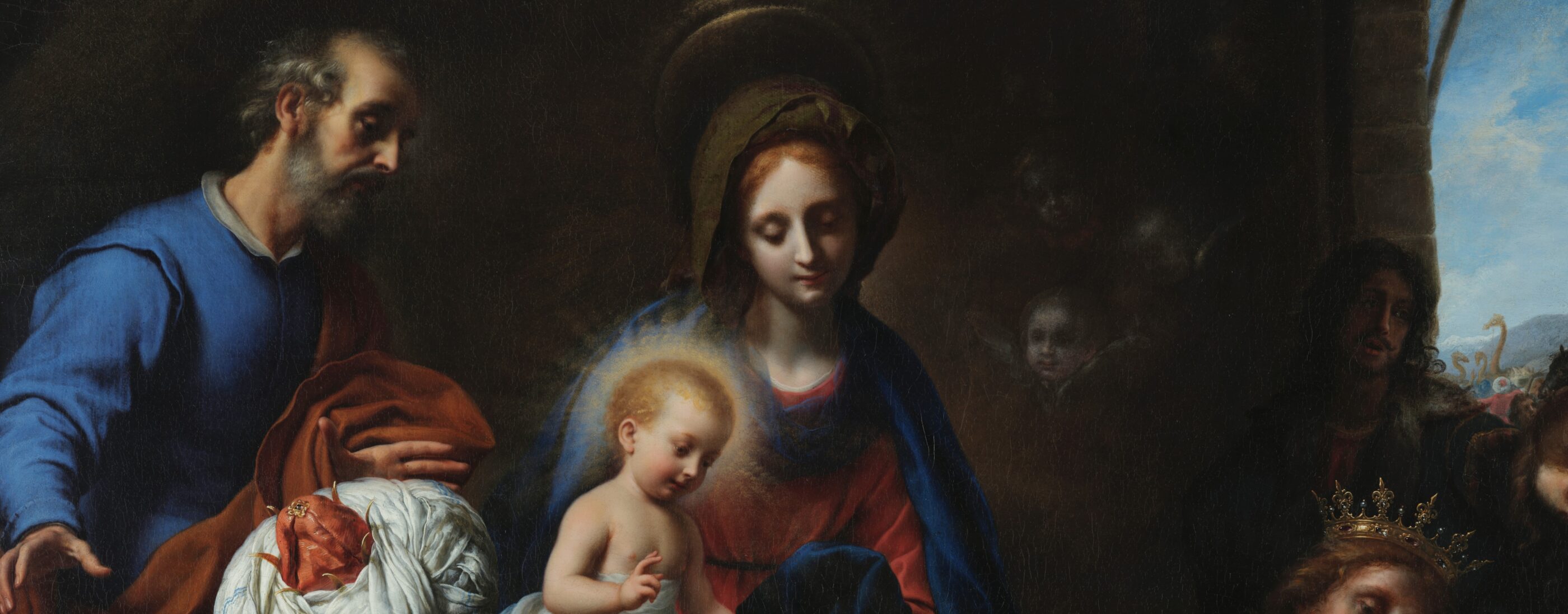
Joseph is the “just man” (Mt 1:19), who “took Mary his wife” (Mt 1:24) and who at Mary’s side in domestic life appeared as a guardian angel. Mary and Joseph together spoke the language of heavenly love, in silence, in hiddenness, in mutual support. Joseph is the first example of a husband who loves his wife in a way different from that in which others love their wife, because he loves her as Christ loved the Church.
Fratelli tutti (October 3, 2020), Mary Mother of Universal Fraternity
The encyclical Fratelli Tutti, on fraternity and social friendship, concludes with a Marian section in which Mary appears as Mother of universal fraternity:
«Maria Iesum dedit mundo, et per Iesum, omnem hominem fratrem omnium hominum redidit. Sub Cruce, Iesus Mariam dedit Iohanni, et omnes apostolos et omnes fideles, tanquam Matrem. Sic Maria mater facta est non solum Christi, sed totius humanitatis fraterne uniti. In hoc tempore separationum et belli, Maria stat ut signum visibile fraternitatis universae»
Mary gave Jesus to the world, and through Jesus she made every man a brother of all men. Beside the Cross, Jesus gave Mary to John, and to all the apostles and all the faithful, as Mother. Thus Mary became the mother not only of Christ, but of all humanity fraternally united. In this time of separations and wars, Mary stands as a visible sign of universal fraternity.
Conclusion: The Pastoral Mariology of Francis
Pope Francis’s Mariology is above all pastoral and existential: Mary is proposed as a mother who is close at hand, present at the sensitive points of contemporary life, youth, family, consecrated life, ecology, fraternity. This pastoral closeness does not diminish dogmatic depth; rather, it makes it accessible.
Further reading
Mariology | Evangelii Gaudium | Lumen Fidei and Laudato Si | Amoris Laetitia and Gaudete et Exsultate
Postgraduate Program in Mariology
Would you like to deepen your formation in Mariology? Discover the Postgraduate Program in Mariology of Locus Mariologicus, an academic formation that unites theological rigor, spiritual life, and the living tradition of the Church.



Responses