The Harvest Is Plentiful: Ex 19, Rom 5, and the Sending of the Twelve in Mt 9-10
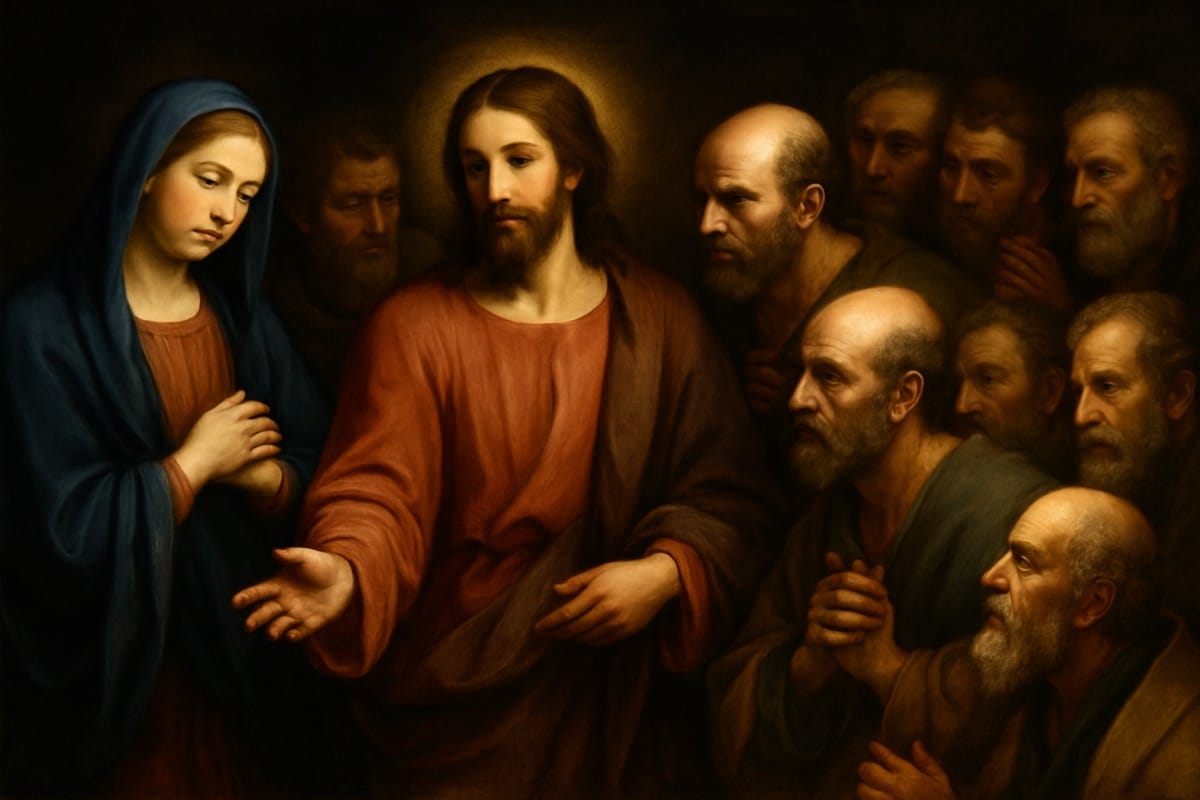
Messis quidem multa, operarii autem pauci: rogate ergo Dominum messis ut mittat operarios in messem suam.
Mt 9:37-38
The Eleventh Sunday in Ordinary Time, Year A, brings together three texts around vocation and mission. Ex 19:2-6a presents the covenant of Sinai: God bore Israel to Himself on eagles’ wings, and if it keeps the covenant it will be His treasure, a kingdom of priests and a holy nation. Rom 5:6-11 proclaims that Christ died for the ungodly in order to prove God’s love: reconciled by the death of the Son, we will be saved by His life. Mt 9:36-10:8 recounts the compassion of Jesus for the crowds, like sheep without a shepherd, and the sending of the twelve apostles with power to heal and to proclaim the Kingdom. The three texts describe the same movement: God who chooses, who redeems, and who sends into His service those whom He has chosen.
I. The first reading: Ex 19:2-6a
Israel arrived at the desert of Sinai and encamped before the mountain. God called Moses and said: “You yourselves have seen what I did to Egypt and how I bore you on eagles’ wings and brought you to myself” (Ex 19:4). The image of the eagle’s wings evokes tenderness and strength: God carried Israel on His wings as the eagle carries her young. The condition of the covenant is obedience, but the motive is love: “If you listen to my voice and keep my covenant, you will be my treasure among all peoples” (v. 5). And the vocation: “You will be for me a kingdom of priests and a holy nation” (v. 6a). Israel is not called to be a nation among the nations but to be a nation for the nations: the royal priesthood means mediating between God and the world.
II. The second reading: Rom 5:6-11
“Christ, when the moment came, died for the ungodly, while we were still weak” (Rom 5:6). Paul underlines God’s unilateral initiative: not our prior conversion, not our merit, but our weakness and ungodliness. “Scarcely would anyone die for a righteous man. But God proves His love for us: while we were still sinners, Christ died for us” (vv. 7-8). The proof of God’s love is precisely that He did not wait for us to be good. “Reconciled with God by the death of His Son, we will certainly be saved by His life” (v. 10). Reconciliation is the point of departure, not of arrival: the life of the risen Christ is what saves us definitively. “We boast in God through our Lord Jesus Christ, through whom we have now received reconciliation” (v. 11).
III. Evangelium: Mt 9:36-10:8
Jesus was going through the towns and the villages, teaching and proclaiming the Good News. “When He saw the crowds, He had compassion on them, because they were troubled and abandoned like sheep that have no shepherd” (Mt 9:36). The compassion of Jesus is not a superficial emotion: it is the movement of the inmost being that gives rise to action. He said to the disciples: “The harvest is plentiful, but the laborers are few. Pray therefore the Lord of the harvest to send laborers into His harvest” (vv. 37-38). And He took the initiative: He called the twelve and gave them power to cast out unclean spirits and to heal every disease and infirmity. He sent them with precise instructions: “Go and proclaim that the Kingdom of heaven is at hand. Heal the sick, raise the dead, cleanse the lepers, cast out demons: freely you have received, freely give” (10:7-8). The “freely you have received, freely give” defines the style of the Christian mission: not transaction, not merit, but the gratuitous spreading of what has been gratuitously received.
IV. Mary and compassion for the crowds
Ex 19 presents Israel as a “kingdom of priests and a holy nation”: Mary is the fullest realization of this vocation within the new Israel. As priestess in the highest sense, she offered the Son to the Father at the Presentation in the Temple and at the foot of the Cross, mediating between sinful humanity and the holy God. Rom 5 proclaims that Christ died for the ungodly while we were still weak: tradition sees in Mary the mediatrix who presents to the Son the weak and the sinners whom He loved unto death, not as redemptive mediation (which belongs to Christ alone) but as maternal intercession. Mt 9 describes Jesus seeing the crowds “troubled and abandoned like sheep without a shepherd” with compassion: Mary shares this compassion with the Son. What Jesus saw and felt for the crowds that followed Him, Mary sees and feels for the crowds entrusted to her. The mission of the twelve is born of the compassion of Jesus: the intercession of Mary is born of the same compassion, maternal and universal, for all who are “troubled and abandoned” in the world today.
Postgraduate Program in Mariology
Would you like to deepen your formation in Mariology? Discover the Postgraduate Program in Mariology of Locus Mariologicus – an academic formation that unites theological rigor, spiritual life, and the living tradition of the Church.


Responses