Holy Mary, Gate of Heaven: a dogmatic-liturgical analysis
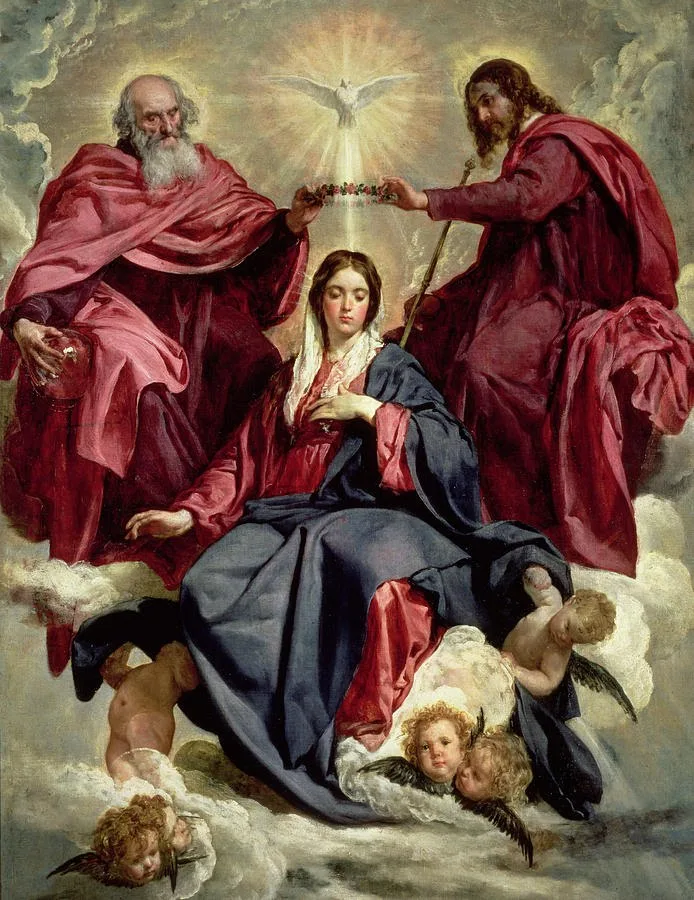
By Prof. Dr. Daniel C. Afonso · Updated
The expression Janua Caeli, “Gate of Heaven”, has run through the Christian liturgy for more than sixteen centuries. Biblical typology, from Ezek 44:2 to Jacob’s ladder (Gen 28:17), was interpreted by the Fathers of the Church as a prefiguration of Mary as the portal through which God entered the world. If Jesus is the Gate of eternal life (Jn 10:9), Mary is the human gate through which that eternal Gate entered history. The title became established in Marian dogmatics from the patristic period onward and is part of the Litany of Loreto approved by Sixtus V in 1587.
The Entrance Antiphon explains the concept of gate when it says: “Hail, Virgin, pregnant with the Incarnate Word! Gate of paradise, giving God to the world, you opened for us the way to heaven”. Mary is called the gate of heaven because she reopened for us, and continues to open, the gate of heaven. The Collect confirms this: “O God, who in your only Son established the gate of life and salvation”. God, in Christ, is above all the gate of heaven: the gate of life and salvation.
The biblical origins: Jacob’s ladder (Gen 28:17), the Book of Revelation, and the eschatological “Gate”
The author of Revelation glimpses in Rev 21:1 the fulfillment of the new covenant which, promised to Abraham and confirmed over time to the people of Israel, reached its perfection in Christ, or rather, will be definitively sealed when Christ is all in all.

What does it mean? This fulfillment of the old covenant is called “new heavens and a new earth” to indicate the restoration of the universe, devastated by sin and corruption, to its original harmony.
Saint Paul reminds us of this: “for this reason, creation eagerly awaits the revelation of the children of God. For creation was subjected to futility (not willingly, but by the will of the one who subjected it), yet with the hope that creation itself would also be set free from the bondage of corruption, to share in the glorious freedom of the children of God. For we know that all creation groans and suffers, as it were, the pains of childbirth until the present day. And not only creation, but we ourselves, who have the firstfruits of the Spirit, groan within ourselves, awaiting adoption, the redemption of our body” (Rom 8:19-23). Overcoming all this depends on the affirmation of the Kingdom of God which, in Christ, will make all things new.
Mary as the wise Virgin: the parable of the ten virgins and the typology of the “Gate of Heaven”
Applying the Gospel parable to Mary, it follows that she is the wise Virgin to whom, when she knocks at the door, the lord does not say: “I do not know you!” (Mt 25:12), but invites her to enter. Once again the concept of the gate reappears to underline Mary’s mediating role. According to the Fathers of the Church, Mary is the New Eve who reopens the gate of paradise closed by Eve, as the Preface sings: “humble and obedient Virgin, who reopens the gate of paradise, closed by the disobedience of Eve”.
The “Gate” in Christian tradition: from Ezekiel to medieval hymnography and the Shrine of Montserrat
The image of the gate, within the Christian tradition of images attributed to Mary, is not the only one to indicate the role of Mary’s intercession. She is also known as ‘channel’, ‘neck’, ‘way’, “suppliant voice of intercession” (Preface). However, the Gospel passage is also eloquent because it presupposes that, conveniently or not, we are about to enter through the gate that gives access to the new heavens and the new earth. The presence and assistance of the heavenly Mother do not replace our own presence and commitment. She is there waiting for us, ready to open the door, but it is up to us to knock.
On the door through which one reaches the image of Our Lady venerated at the famous Benedictine Shrine of Montserrat, fifty kilometers from Barcelona, one can read the inscription: “Ostende nobis Christum et sufficit,” “Show us Christ and that is enough for us!” We know the vigils spent in solitude and in the bitterness brought on by the trials of life, and the hope with which we repeat, before the door of the house of the Lord: Open to us!
“Janua caeli”: the Marian title in dogmatics, spirituality, and eschatological hope
Mary, Gate of Heaven, is the firm ground of our hope that this gate will be opened to us, thanks to her who is “ianua Dei et porta coeli,” “entrance to God and gate to heaven.” She is not only at our side; the experience of the saints assures us that Mary urges on our supplication and places on our lips the words that make it effective. She knows the Son and knows the moment when “the Bridegroom comes,” “while we” know neither the day nor the hour.
Our age avoids and pushes away the thought of death, of God’s call to the Father’s house. Not knowing the day and the hour is an absurd justification for discarding any reference to this truth, the most certain and universal after that of being alive. Death is closely associated with the idea of a door that closes never to reopen. Mary intercedes with faithful maternal love so that, at the end of our earthly existence, this door may open for those who have recourse to her.
To deepen your reflection on the Marian title “Gate of Heaven” and its spirituality, consult Paul VI’s apostolic exhortation Marialis Cultus, which places Marian titles within an authentic devotion rooted in the liturgical tradition of the Church.
Deepen your studies: explore Mariology, Marian Theology, Marian apparitions, and the Postgraduate Program in Mariology.
Postgraduate Program in Mariology
Would you like to deepen your formation in Mariology? Discover the Postgraduate Program in Mariology of Locus Mariologicus, an academic formation that unites theological rigor, spiritual life, and the living tradition of the Church.
Would you like to study Mariology seriously?
This article grows out of the works in the Locus Mariologicus library. The Postgraduate Program in Mariology takes you to the same source, with academic guidance: Scripture, the Fathers of the Church, and the Magisterium, from the first dogma to contemporary questions.
Responses