Holy Mary, gate of heaven: a dogmatic-liturgical analysis
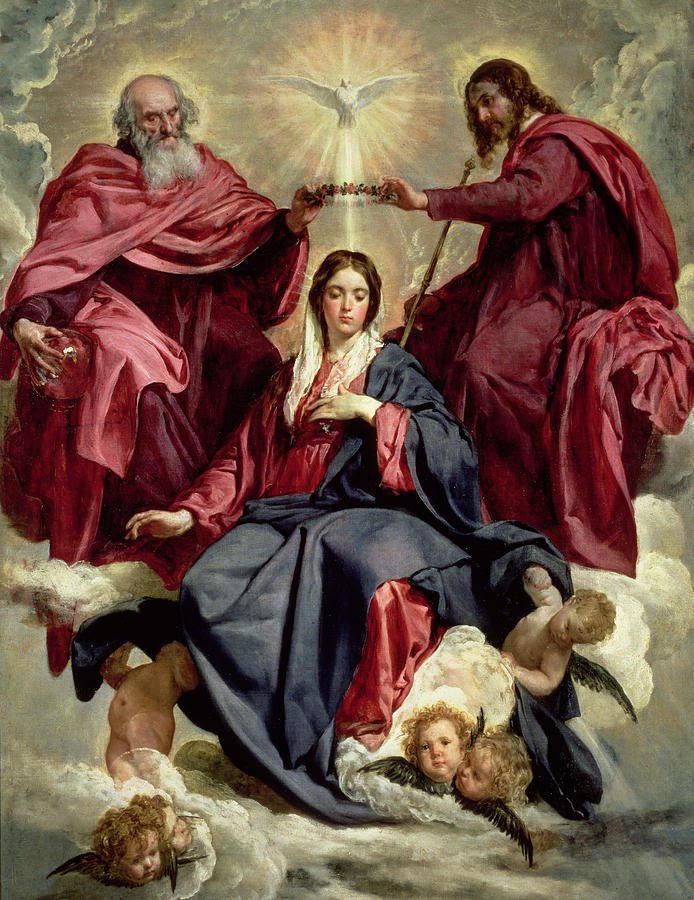
The expression Janua Caeli, “Gate of Heaven”, has run through the Christian liturgy for more than sixteen centuries. The biblical typology, from Ezek 44:2 to Jacob’s ladder (Gen 28:17), was interpreted by the Fathers of the Church as a prefiguration of Mary as the portal through which God entered the world. If Jesus is the Gate of eternal life (Jn 10:9), Mary is the human gate through which that eternal Gate entered history. The title was consolidated in Marian dogmatics from the patristic period onward and forms part of the Litany of Loreto approved by Sixtus V in 1587.
The entrance antiphon explains the concept of gate when it says: “Hail, O Virgin, pregnant with the Incarnate Word! Gate of paradise, giving God to the world, you opened for us the way to heaven”. Mary is called the gate of heaven because she reopened for us, and continues to open, the gate of heaven. The Collect prayer confirms this: “O God, who in your only Son established the gate of life and of salvation”. God, in Christ, is above all the gate of heaven: the gate of life and of salvation.
The biblical origins: Jacob’s ladder (Gen 28:17), the Book of Revelation, and the eschatological “Gate”
The author of the Book of Revelation glimpses in this passage the fulfillment of the new covenant which, promised to Abraham and confirmed over time to the people of Israel, reached its perfection in Christ, or rather, will be definitively sanctioned when Christ is all in all.
What does it mean? This fulfillment of the ancient covenant is called “new heavens and a new earth” to indicate the recomposition of the universe devastated by sin and by corruption, in its original harmony.
Saint Paul reminds us of this: “therefore, creation waits eagerly for the manifestation of the children of God. For creation was subjected to vanity (not willingly, but by the will of him who subjected it), yet with the hope of being itself also set free from the bondage of corruption, in order to share in the glorious liberty of the children of God. For we know that the whole creation groans and suffers as though in the pains of childbirth until the present day. Not only it, but we ourselves also, who have the first fruits of the Spirit, groan within ourselves, awaiting the adoption, the redemption of our body” (Rom 8:19-23). The overcoming of all this depends on the affirmation of the kingdom of God which, in Christ, will make all things new.
Mary as the prudent Virgin: the parable of the ten virgins and the typology of the “Gate of heaven”
Referring the Gospel parable to Mary, it follows that she is the prudent Virgin to whom, when she knocks at the door, the lord does not say: “I do not know you!” (v. 12), but invites her to enter. Once again the concept of the gate reappears to underline Mary’s mediating role. According to the Fathers of the Church, Mary is the New Eve who reopens the gate of paradise closed by Eve, as the preface sings: “humble and obedient Virgin, who reopens the gate of paradise, closed by the disobedience of Eve”.
The “Gate” in the Christian tradition: from Ezekiel to medieval hymnography and to the Shrine of Montserrat
The image of the gate in the Christian tradition of the images attributed to Mary is not the only one that indicates the role of Mary’s intercession. She is also known as ‘channel’, ‘neck’, ‘way’, “suppliant voice of intercession” (Preface). Nevertheless, the Gospel passage is eloquent also because it supposes that, conveniently or not, we are about to enter through the gate that gives access to the new heavens and the new earth. The presence and assistance of the heavenly mother do not replace our presence and our commitment. She is there waiting for us in order to open the gate, but it is up to us to knock.
On the doorpost of the door through which one reaches the image of Our Lady venerated in the famous Benedictine Shrine of Montserrat, fifty kilometers from Barcelona, one can read the inscription: “Ostende nobis Christum et sufficit”, “Show us Christ and that is enough for us!” We know the vigils spent in the solitude and the bitterness induced by the trials of life and the hope with which we repeat, before the door of the house of the Lord: Open to us!
“Janua caeli”: the Marian title in dogmatics, in spirituality, and in eschatological hope
Mary, gate of heaven, is the firm reason for our hope that it may be opened to us, thanks to her who is “ianua Dei et porta coeli”, “entrance to God and gate to heaven”. She is not only at our side, but the experience of the saints assures us that Mary impels our asking and places on our lips the words that make it effective. She knows her Son and knows the moment in which “the Bridegroom arrives”, “while we” know neither the day nor the hour.
Our time avoids and pushes away the thought of death, of God’s call to the house of the Father. Not knowing the day and the hour is an absurd justification for discarding any reference to that truth, the most certain and universal one after that of being alive. Death is closely associated with the idea of a door that closes never to reopen. Mary intercedes with faithful maternal love so that, at the end of our earthly existence, this gate may open for those who have recourse to her.
To deepen the reflection on the Marian title “Gate of Heaven” and its spirituality, consult the apostolic exhortation Marialis Cultus of Paul VI, which frames the Marian titles within an authentic devotion rooted in the liturgical tradition of the Church.
Deepen your studies: explore Mariology, Marian Theology, Marian apparitions, and the Postgraduate Program in Mariology.
Postgraduate Program in Mariology
Would you like to deepen your formation in Mariology? Discover the Postgraduate Program in Mariology at Locus Mariologicus, an academic formation that unites theological rigor, spiritual life, and the living tradition of the Church.
Would you like to study Mariology seriously?
This article arises from the works in the library of Locus Mariologicus. The Postgraduate Program in Mariology brings you to that same source, with academic guidance: Scripture, the Fathers of the Church, and the Magisterium, from the first dogma to contemporary questions.



Responses