The Two Marys: Witnesses of the Same Mystery
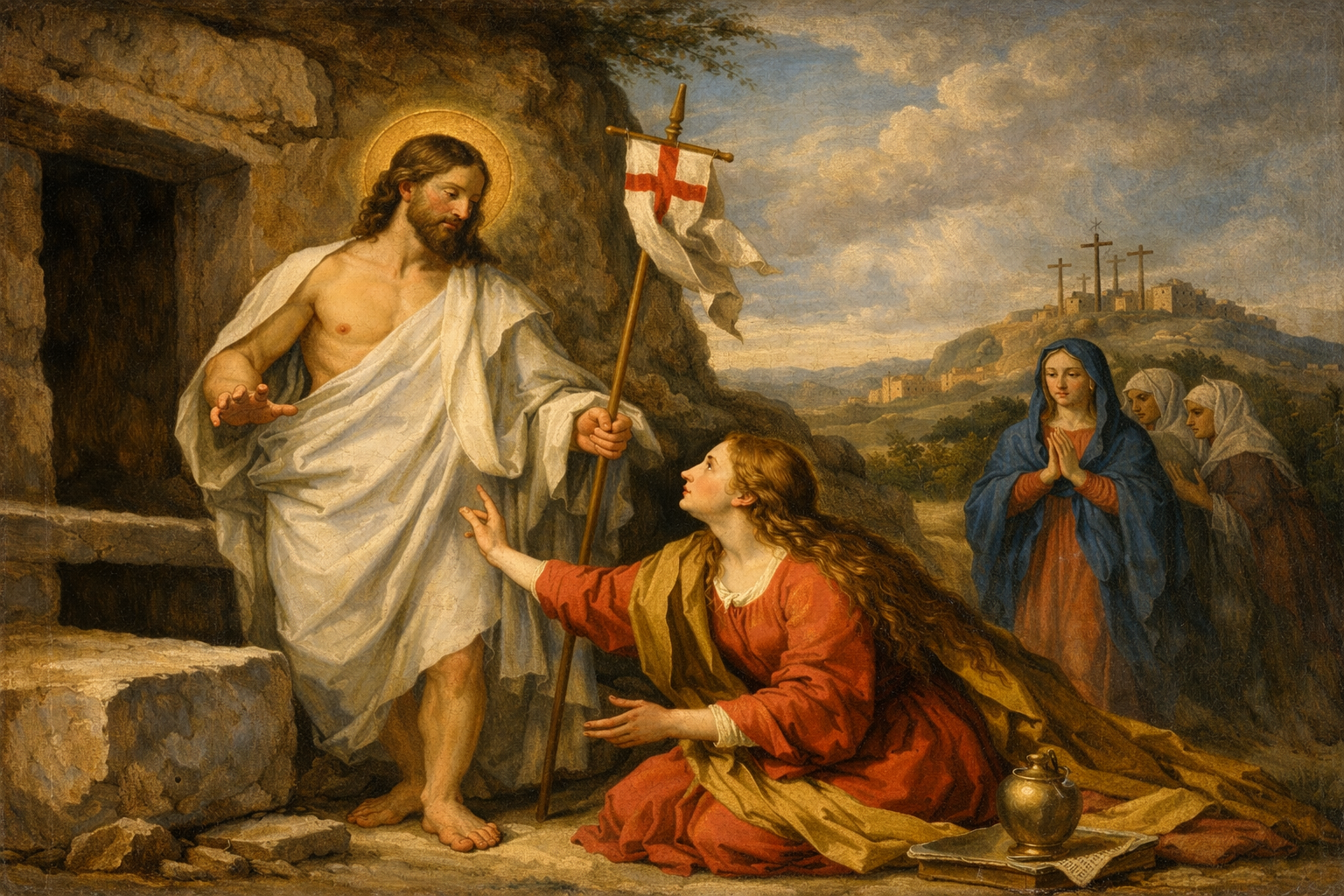
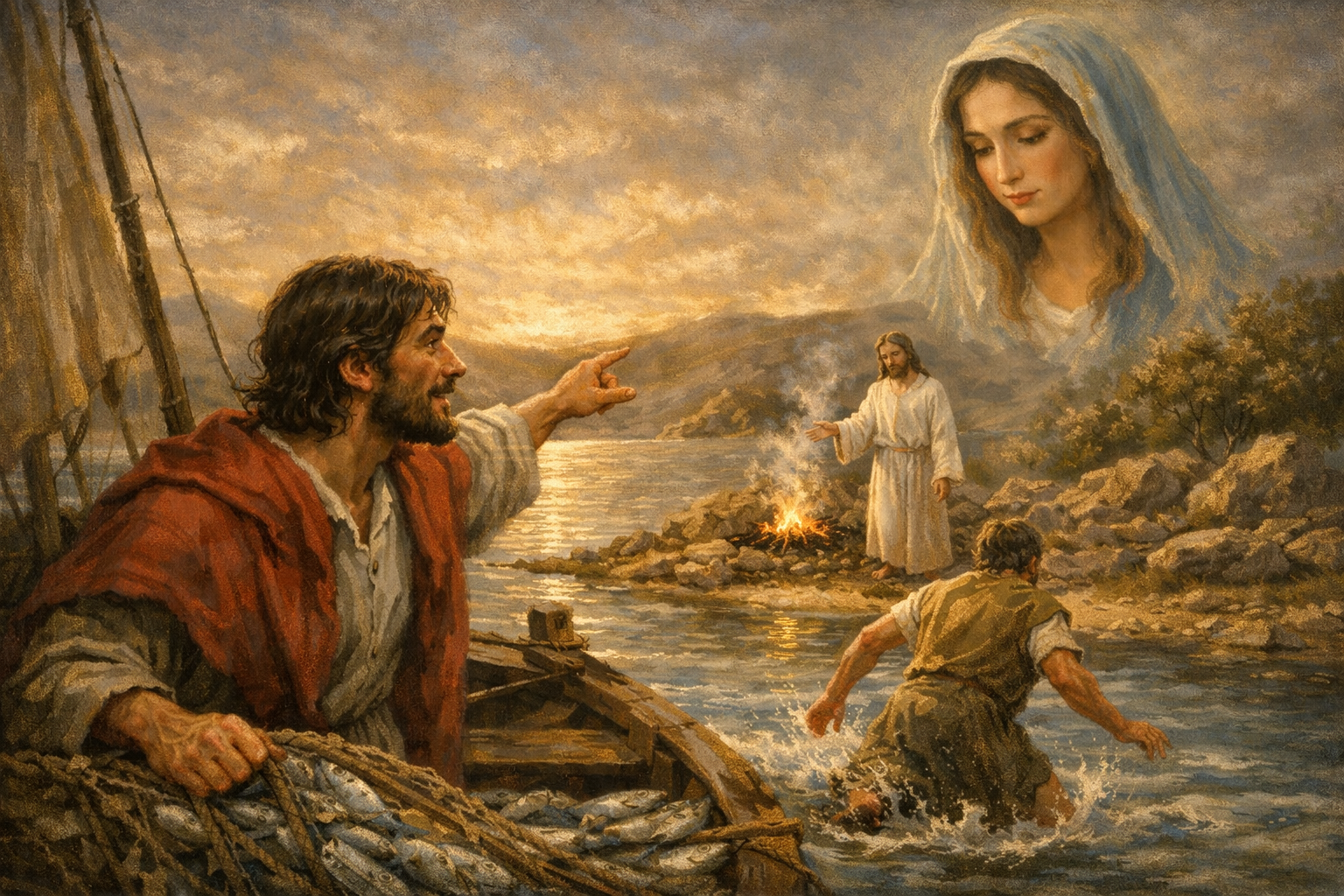
Surgens autem mane prima sabbati, apparuit primo Mariae Magdalenae.
Mk 16:9, Gospel of Saturday in the Octave of Easter
Mariological meditation from the readings of Saturday in the Octave of Easter (Mk 16:9-15)
“Having risen early in the morning, on the first day of the week, He appeared first to Mary Magdalene” (Mk 16:9). The Gospel of Mark, the oldest, is explicit: the first paschal witness is a woman named Mary. The question that Mariology cannot avoid: what relationship exists between this Mary and the other Mary, the Mother? The tradition of the Church has always known that the two Marys, Magdalene and the Mother, are witnesses of the same mystery, by distinct paths.
It is no accident that the most frequent name among the women at the foot of the Cross and at the foot of the Sepulcher is Mary. The evangelical tradition seems deliberate: it is the family of Marys that sustains the paschal testimony when the Twelve waver. And at the center of this family stands the Mother, the one whom the liturgical tradition calls prima inter omnes in paschal faith.
I. Mary Magdalene: apostola apostolorum
Thomas Aquinas attributed to Mary Magdalene the title Apostola Apostolorum: apostle of the apostles. It is she who receives the first appearance of the Risen One (Mk 16:9; Jn 20:11-18) and who is sent to announce it to the disciples. Her ministry is the ministry of eyewitness testimony: I have seen the Lord (Jn 20:18).
Her paschal journey is the journey of one who passed through the scandal of the Cross “she was standing beside the tomb weeping” (Jn 20:11), and who found the Risen One precisely at the moment when she was seeking Him with tears. The word that reverses everything is the simplest possible: her name, Mary (Jn 20:16). The Risen One recognizes her by her name; she recognizes Him by His voice. Paschal recognition is always personal, never abstract.
The Directory on Popular Piety and the Liturgy (2002, n. 158) mentions Mary Magdalene among the figures who prolong the mission of Mary the Mother in the paschal season. Her function is that of the outward proclamation: go and tell.
II. Mary the Mother: the one who believed without seeing
The Mother of Jesus does not appear in the narratives of Easter morning. No evangelist places her beside the tomb. This absence is theologically charged: Mary did not go to the tomb because she had no need to. Her faith never needed the stone rolled away in order to believe in the Resurrection.
The liturgical tradition expressed this fact with the formula: sola remansit fides in Maria, in Mary alone did faith remain on Holy Saturday. One who never lost faith in the living Son does not have to go and verify the tomb. This is the primacy of Mary the Mother over Mary Magdalene: not the primacy of sight but the primacy of faith.
Mary’s faith sustained the Church in the moments when the faith of the disciples was extinguished. Her closeness to the dead Son, spiritual and prayerful, not merely physical, is the condition of possibility for Magdalene’s announcement to find a welcome. One who never ceased to believe, on hearing He is risen!, confirms instead of being astonished.
III. Two functions, one single mystery
The two Marys fulfill complementary functions in the paschal mystery:
- Mary Magdalene = witness of the Resurrection ad extra, the one sent outward, the Apostola who announces to those who have not seen.
- Mary the Mother is witness of the Resurrection ad intra, that is, the one who keeps faith alive within the community, the heart of the Church (an expression of Paul VI when he proclaimed her Mater Ecclesiae in 1964).
Redemptoris Mater (John Paul II, 1987, n. 26) describes this interior function of Mary: “Mary’s motherhood in the order of grace […] will last without interruption until the eternal fulfillment of all the elect”. Mary does not go to the tomb because she is already at the source: her heart is the space in which the Resurrection is permanently recognized.
Laurentin, in the Court traité de théologie mariale (1959), identified this paradox with precision: “Mary is the most discreet in the narratives of the Resurrection and the most present in its reality”. Narrative discretion is inversely proportional to theological importance.
IV. “Go into all the world”: the mission of the two Marys
“Go into all the world and preach the Gospel to every creature” (Mk 16:15). The universal mission is born of the paschal testimony. And this testimony has two feminine faces: the one who saw and the one who believed. Both are necessary for the Church: direct mystical experience (Magdalene) and the contemplative faith that sustains (the Mother).
The Upper Room of Pentecost (Acts 1:14) brings the two together: “with one accord devoted to prayer, together with Mary the mother of Jesus, and with His brethren”. Mary Magdalene is not named here, but she is implicitly present in the group of those who persevered. The paschal communion that prepares Pentecost is a communion of testimonies: the announcement of the one who saw and the faith of the one who always knew.
We invite you to recognize in every Christian community these two complementary vocations: that of Mary Magdalene, to announce what has been seen and lived, and that of Mary the Mother, to sustain faith when sight is lacking. Each disciple is called to be, according to his own grace, one or the other of these Marys.
Prof. Daniel Afonso
President of Locus Mariologicus
Rome, April 11, 2026
To go deeper into the theology of the paschal appearances and the role of Mary in salvation, see the encyclical Redemptoris Mater of Saint John Paul II.
Who are the two Marys of the New Testament?
In the New Testament, the two most prominent Marys are Mary, the Mother of Jesus, and Mary Magdalene. The first is a witness of the Incarnation and of the Cross. The second is the first witness of the Resurrection (Jn 20:1-18). Together, they embrace the whole paschal mystery.
What is the theological meaning of the two Marys in the paschal mystery?
The two Marys reveal the feminine dimension of paschal faith: Mary the Mother remains faithful at the foot of the Cross (Jn 19:25), and Mary Magdalene is sent as the “apostle of the apostles.” Both are witnesses of the same mystery of the death and resurrection of Christ.
What does it mean for Mary Magdalene to be called “apostola apostolorum”?
The title “apostola apostolorum” (apostle of the apostles), given to Mary Magdalene by Rupert of Deutz and other Fathers of the Church, recognizes that she was the first to receive and to announce the message of the Risen One (Jn 20:17-18), before the apostles themselves.
Deepen your studies: explore Mariology, Marian Theology, Marian apparitions and the Postgraduate Program in Mariology.
Postgraduate Program in Mariology
Would you like to deepen your formation in Mariology? Discover the Postgraduate Program in Mariology of Locus Mariologicus – an academic formation that unites theological rigor, spiritual life, and the living tradition of the Church.
Would you like to study Mariology seriously?
This article is born of the works in the library of Locus Mariologicus. The Postgraduate Program in Mariology takes you to the same source, with academic guidance: Scripture, the Fathers of the Church, and the Magisterium, from the first dogma to contemporary questions.




Responses