Mary’s Unshakable Faith: Demonic Testimony and Foundation of the Church’s Faith (2026)
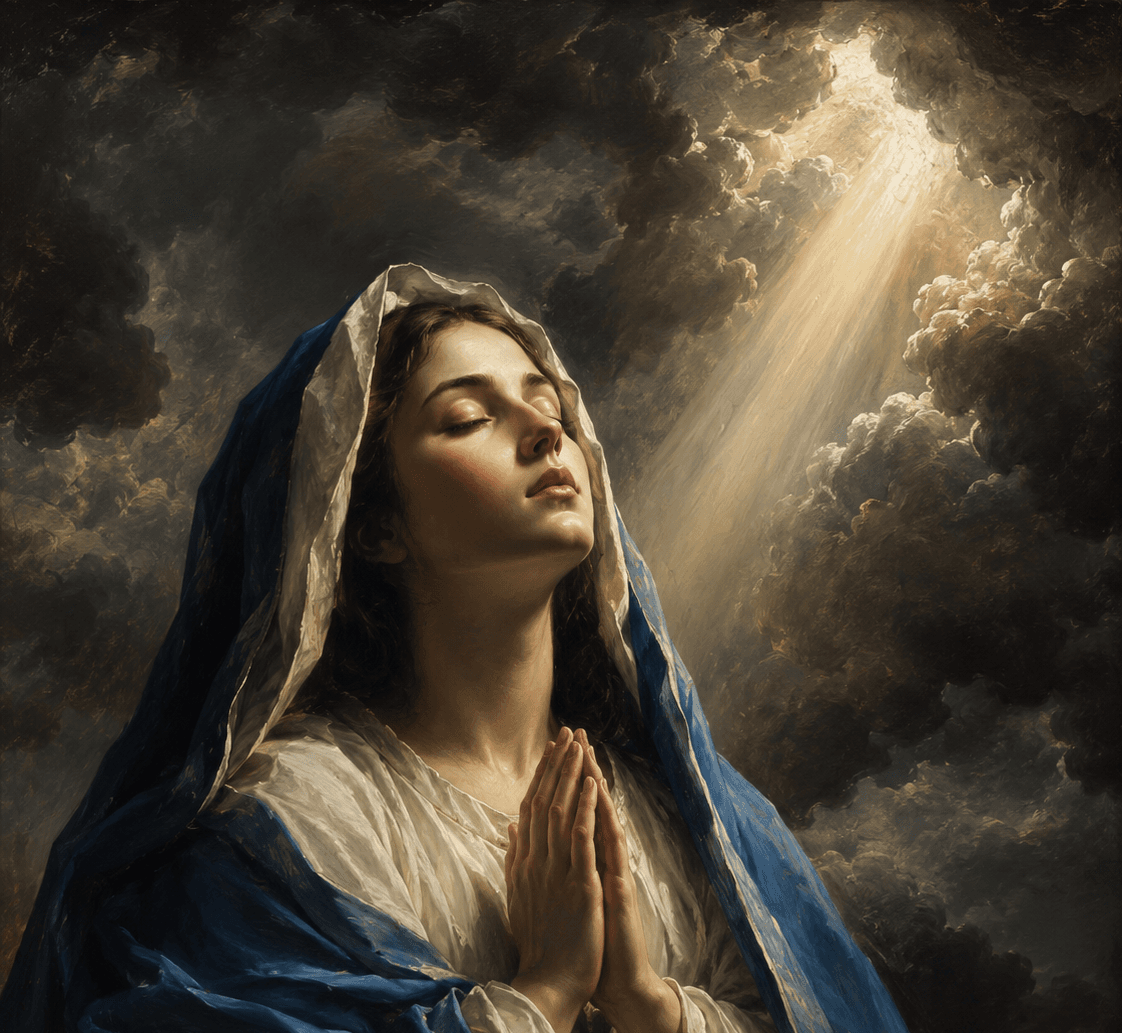
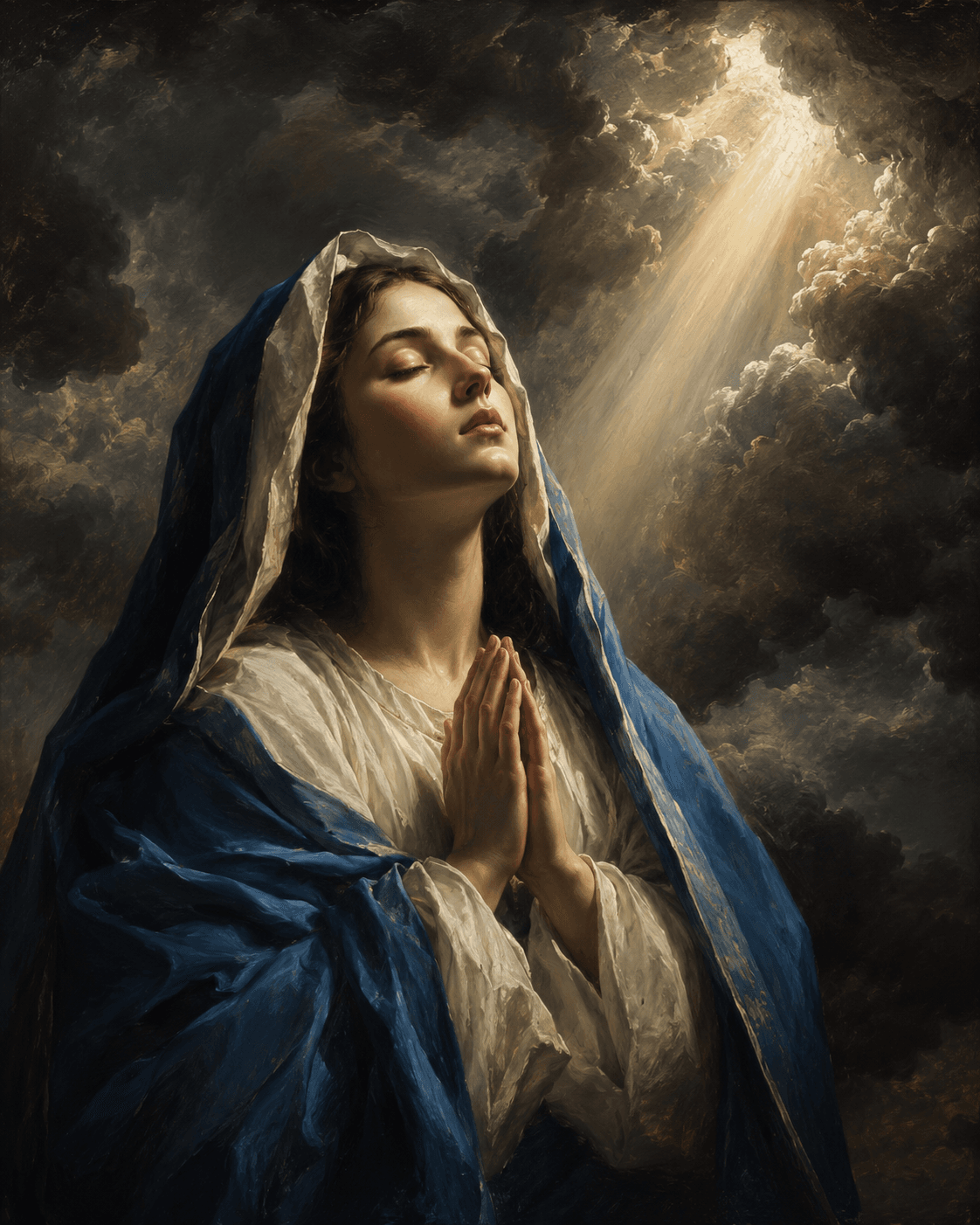
I. Mary’s Faith at the Annunciation: Theological Foundation
The theological foundation of Mary’s faith lies in the episode of the Annunciation narrated by Luke (Lk 1:26-38). The exegetical tradition, from Saint Justin Martyr to contemporary commentaries, has identified in this text not merely Mary’s individual consent but an act of faith with cosmological consequences: by her “Fiat,” the human creature receives the eternal Word into time, and redemption becomes historical. Elizabeth, in the episode of the Visitation, formulates theologically what the Annunciation establishes: “Blessed is she who believed” (Lk 1:45).
The demonic testimony documented by Bamonte concerning the Annunciation has a theological density that is surprising in its precision. On the Solemnity of the Annunciation in 2009, the demonic entity, constrained to reveal the reality of that moment, declared: “the Archangel Gabriel arrived. She believed. That soul so white arrived, united to the body and to the second divine person. She knew the Scriptures, she knew whom she had in her womb, and she kept Him.” The confession identifies three precise theological elements: the absence of doubt (“she believed”), Mary’s scriptural awareness (“she knew the Scriptures”), and the act of contemplative custody (“she kept Him”).
II. Mary’s Faith at Calvary: The Second Fiat
The theological tradition, from Origen to John Paul II’s Redemptoris Mater, developed the doctrine of Mary’s “second fiat”: if the first consent was pronounced at the Annunciation in relation to the Incarnation, the second was pronounced at Calvary in relation to redemption. Lumen Gentium, no. 58, expresses this insight when it affirms that Mary “suffered deeply with her only-begotten Son and united herself with a maternal heart to the sacrifice of Christ.” Calvary is not only the place of the Son’s death: it is the place where Mary’s faith reaches its most radical expression, in embracing a mystery that seemed to contradict the promises in which she had believed.
The demonic testimony gathered by Bamonte concerning Mary’s faith has the apologetic value proper to extorted testimonies: the adversary confirms with hatred what faith confesses with love. The statement “in vain did we undermine her faith, she went on praying, she was the only one who kept her faith in the resurrection,” obtained in the context of the Good Friday exorcisms, is the exact demonological translation of what Mariology teaches about Mary’s subsisting faith as the foundation of the Church’s faith in the darkness of Holy Saturday.
What the adversary confesses with hatred, the Church professes with gratitude. Cf. Redemptoris Mater (John Paul II, 1987) and Lumen Gentium, nos. 58-63. The in-depth study of Mary’s faith is part of the curriculum of the Join the waiting list for the 2027 class → at Locus Mariologicus.
The doctrine of Mary’s faith occupies a structural place in dogmatic Mariology: it is not a matter of accessory piety but a constitutive dimension of the Marian mystery, with direct implications for the theology of redemption, for ecclesiology, and for the theological understanding of Calvary. Mary’s faith is not merely the initial act of consent at the Annunciation. It is a permanent disposition that the patristic tradition, from Origen to Augustine, identified as the condition of possibility of the Incarnation and as the model of all Christian faith.
The most disturbing confirmation of this doctrine comes from the records of exorcisms documented by the Italian priest Giovanni Bamonte, in which demonic entities were constrained to reveal, with hatred and under constraint, what Mary’s faith represents in the economy of salvation: an ontological fortress that the adversary was unable to shake either at Calvary or during the three days of the Son’s death.
Bamonte’s records on Good Friday of 2009 provide a description of rare depth concerning this contemplative suffering of Mary. The demon, constrained to reveal what he had observed at Calvary, declared: “she lived her Passion within her heart. The sword was piercing her heart. She was there the whole time, torn by sorrow, yet beautiful in her sorrow. She shone with sorrow and prayer: Thy will be done.”
The conjunction “sorrow and prayer” is theologically precise: Mary’s faith is expressed not only as intellectual assent or volitional consent, but as continual prayer that transformed suffering into oblation, confirming the logic of the sacrifice that the Son was consummating on the Cross.
V. The Theological Legacy of Mary’s Unshakable Faith
In the conciliar and postconciliar Magisterium, Mary’s faith received a formulation that articulates its three fundamental moments: the Annunciation, Calvary, and the waiting for Pentecost. Lumen Gentium, no. 63, presents Mary as “virgin and mother par excellence,” identifying her spiritual motherhood as a direct fruit of her faith: “by believing and obeying, she brought forth into the world the Father’s own Son.” Redemptoris Mater, no. 14, develops this insight by affirming that Mary’s faith is “gift and conquest at the same time,” that is, a grace received but also an act of freedom sustained throughout an entire lifetime.
The demonic testimony gathered by Bamonte concerning Mary’s faith has the apologetic value proper to extorted testimonies: the adversary confirms with hatred what faith confesses with love. The statement “in vain did we undermine her faith, she went on praying, she was the only one who kept her faith in the resurrection,” obtained in the context of the Good Friday exorcisms, is the exact demonological translation of what Mariology teaches about Mary’s subsisting faith as the foundation of the Church’s faith in the darkness of Holy Saturday.
What the adversary confesses with hatred, the Church professes with gratitude. Cf. Redemptoris Mater (John Paul II, 1987) and Lumen Gentium, nos. 58-63. The in-depth study of Mary’s faith is part of the curriculum of the Join the waiting list for the 2027 class → at Locus Mariologicus.
The doctrine of Mary’s faith occupies a structural place in dogmatic Mariology: it is not a matter of accessory piety but a constitutive dimension of the Marian mystery, with direct implications for the theology of redemption, for ecclesiology, and for the theological understanding of Calvary. Mary’s faith is not merely the initial act of consent at the Annunciation. It is a permanent disposition that the patristic tradition, from Origen to Augustine, identified as the condition of possibility of the Incarnation and as the model of all Christian faith.
The most disturbing confirmation of this doctrine comes from the records of exorcisms documented by the Italian priest Giovanni Bamonte, in which demonic entities were constrained to reveal, with hatred and under constraint, what Mary’s faith represents in the economy of salvation: an ontological fortress that the adversary was unable to shake either at Calvary or during the three days of the Son’s death.
In an exorcism session on the liturgical memorial of Our Lady of Sorrows (September 15, 2006), the demon was constrained to praise Mary’s faith with words that identify her most disturbing attribute: “Holy Immaculate One. At the foot of that Cross: unassailable, unalterable, like the purest of metals. Without stain, without the slightest shadow of doubt. No. Even when she saw Him scourged, nailed, she never doubted His words. She always knew that He had spoken the truth, and that everything served to fulfill the Scriptures that she knew so well.”
The hatred with which the adversary formulates this statement is the index of its theological greatness: what the demon most fears in Mary is not her power of intercession but her faith, because this faith is the model and the foundation of the faith of the whole Church.
IV. Mary’s Suffering as an Expression of Faith: The Sword and Prayer
The tradition of the Via Matris developed the meditation on the Seven Sorrows of Mary as a spiritual path parallel to the Via Crucis. Mary’s faith, within this framework, is not a disposition of serene peace that abolished suffering: it is a faith that was tested by suffering and that remained intact through it. The sword prophesied by Simeon (Lk 2:35) is not a pious metaphor: it is the precise description of an experience of pain that passed through Mary’s soul without destroying it, precisely because faith bore what natural hope could not.
Bamonte’s records on Good Friday of 2009 provide a description of rare depth concerning this contemplative suffering of Mary. The demon, constrained to reveal what he had observed at Calvary, declared: “she lived her Passion within her heart. The sword was piercing her heart. She was there the whole time, torn by sorrow, yet beautiful in her sorrow. She shone with sorrow and prayer: Thy will be done.”
The conjunction “sorrow and prayer” is theologically precise: Mary’s faith is expressed not only as intellectual assent or volitional consent, but as continual prayer that transformed suffering into oblation, confirming the logic of the sacrifice that the Son was consummating on the Cross.
V. The Theological Legacy of Mary’s Unshakable Faith
In the conciliar and postconciliar Magisterium, Mary’s faith received a formulation that articulates its three fundamental moments: the Annunciation, Calvary, and the waiting for Pentecost. Lumen Gentium, no. 63, presents Mary as “virgin and mother par excellence,” identifying her spiritual motherhood as a direct fruit of her faith: “by believing and obeying, she brought forth into the world the Father’s own Son.” Redemptoris Mater, no. 14, develops this insight by affirming that Mary’s faith is “gift and conquest at the same time,” that is, a grace received but also an act of freedom sustained throughout an entire lifetime.
The demonic testimony gathered by Bamonte concerning Mary’s faith has the apologetic value proper to extorted testimonies: the adversary confirms with hatred what faith confesses with love. The statement “in vain did we undermine her faith, she went on praying, she was the only one who kept her faith in the resurrection,” obtained in the context of the Good Friday exorcisms, is the exact demonological translation of what Mariology teaches about Mary’s subsisting faith as the foundation of the Church’s faith in the darkness of Holy Saturday.
What the adversary confesses with hatred, the Church professes with gratitude. Cf. Redemptoris Mater (John Paul II, 1987) and Lumen Gentium, nos. 58-63. The in-depth study of Mary’s faith is part of the curriculum of the Join the waiting list for the 2027 class → at Locus Mariologicus.
The doctrine of Mary’s faith occupies a structural place in dogmatic Mariology: it is not a matter of accessory piety but a constitutive dimension of the Marian mystery, with direct implications for the theology of redemption, for ecclesiology, and for the theological understanding of Calvary. Mary’s faith is not merely the initial act of consent at the Annunciation. It is a permanent disposition that the patristic tradition, from Origen to Augustine, identified as the condition of possibility of the Incarnation and as the model of all Christian faith.
The most disturbing confirmation of this doctrine comes from the records of exorcisms documented by the Italian priest Giovanni Bamonte, in which demonic entities were constrained to reveal, with hatred and under constraint, what Mary’s faith represents in the economy of salvation: an ontological fortress that the adversary was unable to shake either at Calvary or during the three days of the Son’s death.
Bamonte’s records provide a testimony of exceptional precision concerning this second fiat. In an exorcism session on Good Friday of 2006, the demon, constrained by the words of the Gospel of John in which Jesus entrusts His mother to the beloved disciple, declared: “in an instant she loved all her children throughout all generations, and said her second yes. After the yes spoken to the angel, she said her yes to her son on the cross, so that you might become her children.”
The statement identifies with precision the nexus between Mary’s faith and her universal spiritual motherhood: the second fiat is simultaneously an act of faith in God’s redemptive plan and an act of love that embraces the whole of humanity as her family.
III. Mary’s Faith in the Face of the Son’s Death: Demonic Testimony
The most theologically delicate question that Mary’s faith raises lies in the period between the death of Christ and the Resurrection. When the disciples fled and faith in the Nazarene seemed definitively refuted by the facts, what happened in Mary’s soul? The theological tradition, forcefully articulated by Hans Urs von Balthasar in his meditation on Holy Saturday, affirms that the faith of the Church subsisted in that period in its immaculate nucleus, which is Mary. Von Balthasar’s expression has a density that the demonic records confirm in an unexpected way.
In an exorcism session on the liturgical memorial of Our Lady of Sorrows (September 15, 2006), the demon was constrained to praise Mary’s faith with words that identify her most disturbing attribute: “Holy Immaculate One. At the foot of that Cross: unassailable, unalterable, like the purest of metals. Without stain, without the slightest shadow of doubt. No. Even when she saw Him scourged, nailed, she never doubted His words. She always knew that He had spoken the truth, and that everything served to fulfill the Scriptures that she knew so well.”
The hatred with which the adversary formulates this statement is the index of its theological greatness: what the demon most fears in Mary is not her power of intercession but her faith, because this faith is the model and the foundation of the faith of the whole Church.
IV. Mary’s Suffering as an Expression of Faith: The Sword and Prayer
The tradition of the Via Matris developed the meditation on the Seven Sorrows of Mary as a spiritual path parallel to the Via Crucis. Mary’s faith, within this framework, is not a disposition of serene peace that abolished suffering: it is a faith that was tested by suffering and that remained intact through it. The sword prophesied by Simeon (Lk 2:35) is not a pious metaphor: it is the precise description of an experience of pain that passed through Mary’s soul without destroying it, precisely because faith bore what natural hope could not.
Bamonte’s records on Good Friday of 2009 provide a description of rare depth concerning this contemplative suffering of Mary. The demon, constrained to reveal what he had observed at Calvary, declared: “she lived her Passion within her heart. The sword was piercing her heart. She was there the whole time, torn by sorrow, yet beautiful in her sorrow. She shone with sorrow and prayer: Thy will be done.”
The conjunction “sorrow and prayer” is theologically precise: Mary’s faith is expressed not only as intellectual assent or volitional consent, but as continual prayer that transformed suffering into oblation, confirming the logic of the sacrifice that the Son was consummating on the Cross.
V. The Theological Legacy of Mary’s Unshakable Faith
In the conciliar and postconciliar Magisterium, Mary’s faith received a formulation that articulates its three fundamental moments: the Annunciation, Calvary, and the waiting for Pentecost. Lumen Gentium, no. 63, presents Mary as “virgin and mother par excellence,” identifying her spiritual motherhood as a direct fruit of her faith: “by believing and obeying, she brought forth into the world the Father’s own Son.” Redemptoris Mater, no. 14, develops this insight by affirming that Mary’s faith is “gift and conquest at the same time,” that is, a grace received but also an act of freedom sustained throughout an entire lifetime.
The demonic testimony gathered by Bamonte concerning Mary’s faith has the apologetic value proper to extorted testimonies: the adversary confirms with hatred what faith confesses with love. The statement “in vain did we undermine her faith, she went on praying, she was the only one who kept her faith in the resurrection,” obtained in the context of the Good Friday exorcisms, is the exact demonological translation of what Mariology teaches about Mary’s subsisting faith as the foundation of the Church’s faith in the darkness of Holy Saturday.
What the adversary confesses with hatred, the Church professes with gratitude. Cf. Redemptoris Mater (John Paul II, 1987) and Lumen Gentium, nos. 58-63. The in-depth study of Mary’s faith is part of the curriculum of the Join the waiting list for the 2027 class → at Locus Mariologicus.
The doctrine of Mary’s faith occupies a structural place in dogmatic Mariology: it is not a matter of accessory piety but a constitutive dimension of the Marian mystery, with direct implications for the theology of redemption, for ecclesiology, and for the theological understanding of Calvary. Mary’s faith is not merely the initial act of consent at the Annunciation. It is a permanent disposition that the patristic tradition, from Origen to Augustine, identified as the condition of possibility of the Incarnation and as the model of all Christian faith.
The most disturbing confirmation of this doctrine comes from the records of exorcisms documented by the Italian priest Giovanni Bamonte, in which demonic entities were constrained to reveal, with hatred and under constraint, what Mary’s faith represents in the economy of salvation: an ontological fortress that the adversary was unable to shake either at Calvary or during the three days of the Son’s death.
Bamonte’s records on Good Friday of 2009 provide a description of rare depth concerning this contemplative suffering of Mary. The demon, constrained to reveal what he had observed at Calvary, declared: “she lived her Passion within her heart. The sword was piercing her heart. She was there the whole time, torn by sorrow, yet beautiful in her sorrow. She shone with sorrow and prayer: Thy will be done.”
The conjunction “sorrow and prayer” is theologically precise: Mary’s faith is expressed not only as intellectual assent or volitional consent, but as continual prayer that transformed suffering into oblation, confirming the logic of the sacrifice that the Son was consummating on the Cross.
V. The Theological Legacy of Mary’s Unshakable Faith
In the conciliar and postconciliar Magisterium, Mary’s faith received a formulation that articulates its three fundamental moments: the Annunciation, Calvary, and the waiting for Pentecost. Lumen Gentium, no. 63, presents Mary as “virgin and mother par excellence,” identifying her spiritual motherhood as a direct fruit of her faith: “by believing and obeying, she brought forth into the world the Father’s own Son.” Redemptoris Mater, no. 14, develops this insight by affirming that Mary’s faith is “gift and conquest at the same time,” that is, a grace received but also an act of freedom sustained throughout an entire lifetime.
The demonic testimony gathered by Bamonte concerning Mary’s faith has the apologetic value proper to extorted testimonies: the adversary confirms with hatred what faith confesses with love. The statement “in vain did we undermine her faith, she went on praying, she was the only one who kept her faith in the resurrection,” obtained in the context of the Good Friday exorcisms, is the exact demonological translation of what Mariology teaches about Mary’s subsisting faith as the foundation of the Church’s faith in the darkness of Holy Saturday.
What the adversary confesses with hatred, the Church professes with gratitude. Cf. Redemptoris Mater (John Paul II, 1987) and Lumen Gentium, nos. 58-63. The in-depth study of Mary’s faith is part of the curriculum of the Join the waiting list for the 2027 class → at Locus Mariologicus.
The doctrine of Mary’s faith occupies a structural place in dogmatic Mariology: it is not a matter of accessory piety but a constitutive dimension of the Marian mystery, with direct implications for the theology of redemption, for ecclesiology, and for the theological understanding of Calvary. Mary’s faith is not merely the initial act of consent at the Annunciation. It is a permanent disposition that the patristic tradition, from Origen to Augustine, identified as the condition of possibility of the Incarnation and as the model of all Christian faith.
The most disturbing confirmation of this doctrine comes from the records of exorcisms documented by the Italian priest Giovanni Bamonte, in which demonic entities were constrained to reveal, with hatred and under constraint, what Mary’s faith represents in the economy of salvation: an ontological fortress that the adversary was unable to shake either at Calvary or during the three days of the Son’s death.
Bamonte’s records provide a testimony of exceptional precision concerning this second fiat. In an exorcism session on Good Friday of 2006, the demon, constrained by the words of the Gospel of John in which Jesus entrusts His mother to the beloved disciple, declared: “in an instant she loved all her children throughout all generations, and said her second yes. After the yes spoken to the angel, she said her yes to her son on the cross, so that you might become her children.”
The statement identifies with precision the nexus between Mary’s faith and her universal spiritual motherhood: the second fiat is simultaneously an act of faith in God’s redemptive plan and an act of love that embraces the whole of humanity as her family.
III. Mary’s Faith in the Face of the Son’s Death: Demonic Testimony
The most theologically delicate question that Mary’s faith raises lies in the period between the death of Christ and the Resurrection. When the disciples fled and faith in the Nazarene seemed definitively refuted by the facts, what happened in Mary’s soul? The theological tradition, forcefully articulated by Hans Urs von Balthasar in his meditation on Holy Saturday, affirms that the faith of the Church subsisted in that period in its immaculate nucleus, which is Mary. Von Balthasar’s expression has a density that the demonic records confirm in an unexpected way.
In an exorcism session on the liturgical memorial of Our Lady of Sorrows (September 15, 2006), the demon was constrained to praise Mary’s faith with words that identify her most disturbing attribute: “Holy Immaculate One. At the foot of that Cross: unassailable, unalterable, like the purest of metals. Without stain, without the slightest shadow of doubt. No. Even when she saw Him scourged, nailed, she never doubted His words. She always knew that He had spoken the truth, and that everything served to fulfill the Scriptures that she knew so well.”
The hatred with which the adversary formulates this statement is the index of its theological greatness: what the demon most fears in Mary is not her power of intercession but her faith, because this faith is the model and the foundation of the faith of the whole Church.
IV. Mary’s Suffering as an Expression of Faith: The Sword and Prayer
The tradition of the Via Matris developed the meditation on the Seven Sorrows of Mary as a spiritual path parallel to the Via Crucis. Mary’s faith, within this framework, is not a disposition of serene peace that abolished suffering: it is a faith that was tested by suffering and that remained intact through it. The sword prophesied by Simeon (Lk 2:35) is not a pious metaphor: it is the precise description of an experience of pain that passed through Mary’s soul without destroying it, precisely because faith bore what natural hope could not.
Bamonte’s records on Good Friday of 2009 provide a description of rare depth concerning this contemplative suffering of Mary. The demon, constrained to reveal what he had observed at Calvary, declared: “she lived her Passion within her heart. The sword was piercing her heart. She was there the whole time, torn by sorrow, yet beautiful in her sorrow. She shone with sorrow and prayer: Thy will be done.”
The conjunction “sorrow and prayer” is theologically precise: Mary’s faith is expressed not only as intellectual assent or volitional consent, but as continual prayer that transformed suffering into oblation, confirming the logic of the sacrifice that the Son was consummating on the Cross.
V. The Theological Legacy of Mary’s Unshakable Faith
In the conciliar and postconciliar Magisterium, Mary’s faith received a formulation that articulates its three fundamental moments: the Annunciation, Calvary, and the waiting for Pentecost. Lumen Gentium, no. 63, presents Mary as “virgin and mother par excellence,” identifying her spiritual motherhood as a direct fruit of her faith: “by believing and obeying, she brought forth into the world the Father’s own Son.” Redemptoris Mater, no. 14, develops this insight by affirming that Mary’s faith is “gift and conquest at the same time,” that is, a grace received but also an act of freedom sustained throughout an entire lifetime.
The demonic testimony gathered by Bamonte concerning Mary’s faith has the apologetic value proper to extorted testimonies: the adversary confirms with hatred what faith confesses with love. The statement “in vain did we undermine her faith, she went on praying, she was the only one who kept her faith in the resurrection,” obtained in the context of the Good Friday exorcisms, is the exact demonological translation of what Mariology teaches about Mary’s subsisting faith as the foundation of the Church’s faith in the darkness of Holy Saturday.
What the adversary confesses with hatred, the Church professes with gratitude. Cf. Redemptoris Mater (John Paul II, 1987) and Lumen Gentium, nos. 58-63. The in-depth study of Mary’s faith is part of the curriculum of the Join the waiting list for the 2027 class → at Locus Mariologicus.
The doctrine of Mary’s faith occupies a structural place in dogmatic Mariology: it is not a matter of accessory piety but a constitutive dimension of the Marian mystery, with direct implications for the theology of redemption, for ecclesiology, and for the theological understanding of Calvary. Mary’s faith is not merely the initial act of consent at the Annunciation. It is a permanent disposition that the patristic tradition, from Origen to Augustine, identified as the condition of possibility of the Incarnation and as the model of all Christian faith.
The most disturbing confirmation of this doctrine comes from the records of exorcisms documented by the Italian priest Giovanni Bamonte, in which demonic entities were constrained to reveal, with hatred and under constraint, what Mary’s faith represents in the economy of salvation: an ontological fortress that the adversary was unable to shake either at Calvary or during the three days of the Son’s death.
In an exorcism session on the liturgical memorial of Our Lady of Sorrows (September 15, 2006), the demon was constrained to praise Mary’s faith with words that identify her most disturbing attribute: “Holy Immaculate One. At the foot of that Cross: unassailable, unalterable, like the purest of metals. Without stain, without the slightest shadow of doubt. No. Even when she saw Him scourged, nailed, she never doubted His words. She always knew that He had spoken the truth, and that everything served to fulfill the Scriptures that she knew so well.”
The hatred with which the adversary formulates this statement is the index of its theological greatness: what the demon most fears in Mary is not her power of intercession but her faith, because this faith is the model and the foundation of the faith of the whole Church.
IV. Mary’s Suffering as an Expression of Faith: The Sword and Prayer
The tradition of the Via Matris developed the meditation on the Seven Sorrows of Mary as a spiritual path parallel to the Via Crucis. Mary’s faith, within this framework, is not a disposition of serene peace that abolished suffering: it is a faith that was tested by suffering and that remained intact through it. The sword prophesied by Simeon (Lk 2:35) is not a pious metaphor: it is the precise description of an experience of pain that passed through Mary’s soul without destroying it, precisely because faith bore what natural hope could not.
Bamonte’s records on Good Friday of 2009 provide a description of rare depth concerning this contemplative suffering of Mary. The demon, constrained to reveal what he had observed at Calvary, declared: “she lived her Passion within her heart. The sword was piercing her heart. She was there the whole time, torn by sorrow, yet beautiful in her sorrow. She shone with sorrow and prayer: Thy will be done.”
The conjunction “sorrow and prayer” is theologically precise: Mary’s faith is expressed not only as intellectual assent or volitional consent, but as continual prayer that transformed suffering into oblation, confirming the logic of the sacrifice that the Son was consummating on the Cross.
V. The Theological Legacy of Mary’s Unshakable Faith
In the conciliar and postconciliar Magisterium, Mary’s faith received a formulation that articulates its three fundamental moments: the Annunciation, Calvary, and the waiting for Pentecost. Lumen Gentium, no. 63, presents Mary as “virgin and mother par excellence,” identifying her spiritual motherhood as a direct fruit of her faith: “by believing and obeying, she brought forth into the world the Father’s own Son.” Redemptoris Mater, no. 14, develops this insight by affirming that Mary’s faith is “gift and conquest at the same time,” that is, a grace received but also an act of freedom sustained throughout an entire lifetime.
The demonic testimony gathered by Bamonte concerning Mary’s faith has the apologetic value proper to extorted testimonies: the adversary confirms with hatred what faith confesses with love. The statement “in vain did we undermine her faith, she went on praying, she was the only one who kept her faith in the resurrection,” obtained in the context of the Good Friday exorcisms, is the exact demonological translation of what Mariology teaches about Mary’s subsisting faith as the foundation of the Church’s faith in the darkness of Holy Saturday.
What the adversary confesses with hatred, the Church professes with gratitude. Cf. Redemptoris Mater (John Paul II, 1987) and Lumen Gentium, nos. 58-63. The in-depth study of Mary’s faith is part of the curriculum of the Join the waiting list for the 2027 class → at Locus Mariologicus.
The doctrine of Mary’s faith occupies a structural place in dogmatic Mariology: it is not a matter of accessory piety but a constitutive dimension of the Marian mystery, with direct implications for the theology of redemption, for ecclesiology, and for the theological understanding of Calvary. Mary’s faith is not merely the initial act of consent at the Annunciation. It is a permanent disposition that the patristic tradition, from Origen to Augustine, identified as the condition of possibility of the Incarnation and as the model of all Christian faith.
The most disturbing confirmation of this doctrine comes from the records of exorcisms documented by the Italian priest Giovanni Bamonte, in which demonic entities were constrained to reveal, with hatred and under constraint, what Mary’s faith represents in the economy of salvation: an ontological fortress that the adversary was unable to shake either at Calvary or during the three days of the Son’s death.
Bamonte’s records provide a testimony of exceptional precision concerning this second fiat. In an exorcism session on Good Friday of 2006, the demon, constrained by the words of the Gospel of John in which Jesus entrusts His mother to the beloved disciple, declared: “in an instant she loved all her children throughout all generations, and said her second yes. After the yes spoken to the angel, she said her yes to her son on the cross, so that you might become her children.”
The statement identifies with precision the nexus between Mary’s faith and her universal spiritual motherhood: the second fiat is simultaneously an act of faith in God’s redemptive plan and an act of love that embraces the whole of humanity as her family.
III. Mary’s Faith in the Face of the Son’s Death: Demonic Testimony
The most theologically delicate question that Mary’s faith raises lies in the period between the death of Christ and the Resurrection. When the disciples fled and faith in the Nazarene seemed definitively refuted by the facts, what happened in Mary’s soul? The theological tradition, forcefully articulated by Hans Urs von Balthasar in his meditation on Holy Saturday, affirms that the faith of the Church subsisted in that period in its immaculate nucleus, which is Mary. Von Balthasar’s expression has a density that the demonic records confirm in an unexpected way.
In an exorcism session on the liturgical memorial of Our Lady of Sorrows (September 15, 2006), the demon was constrained to praise Mary’s faith with words that identify her most disturbing attribute: “Holy Immaculate One. At the foot of that Cross: unassailable, unalterable, like the purest of metals. Without stain, without the slightest shadow of doubt. No. Even when she saw Him scourged, nailed, she never doubted His words. She always knew that He had spoken the truth, and that everything served to fulfill the Scriptures that she knew so well.”
The hatred with which the adversary formulates this statement is the index of its theological greatness: what the demon most fears in Mary is not her power of intercession but her faith, because this faith is the model and the foundation of the faith of the whole Church.
IV. Mary’s Suffering as an Expression of Faith: The Sword and Prayer
The tradition of the Via Matris developed the meditation on the Seven Sorrows of Mary as a spiritual path parallel to the Via Crucis. Mary’s faith, within this framework, is not a disposition of serene peace that abolished suffering: it is a faith that was tested by suffering and that remained intact through it. The sword prophesied by Simeon (Lk 2:35) is not a pious metaphor: it is the precise description of an experience of pain that passed through Mary’s soul without destroying it, precisely because faith bore what natural hope could not.
Bamonte’s records on Good Friday of 2009 provide a description of rare depth concerning this contemplative suffering of Mary. The demon, constrained to reveal what he had observed at Calvary, declared: “she lived her Passion within her heart. The sword was piercing her heart. She was there the whole time, torn by sorrow, yet beautiful in her sorrow. She shone with sorrow and prayer: Thy will be done.”
The conjunction “sorrow and prayer” is theologically precise: Mary’s faith is expressed not only as intellectual assent or volitional consent, but as continual prayer that transformed suffering into oblation, confirming the logic of the sacrifice that the Son was consummating on the Cross.
V. The Theological Legacy of Mary’s Unshakable Faith
In the conciliar and postconciliar Magisterium, Mary’s faith received a formulation that articulates its three fundamental moments: the Annunciation, Calvary, and the waiting for Pentecost. Lumen Gentium, no. 63, presents Mary as “virgin and mother par excellence,” identifying her spiritual motherhood as a direct fruit of her faith: “by believing and obeying, she brought forth into the world the Father’s own Son.” Redemptoris Mater, no. 14, develops this insight by affirming that Mary’s faith is “gift and conquest at the same time,” that is, a grace received but also an act of freedom sustained throughout an entire lifetime.
The demonic testimony gathered by Bamonte concerning Mary’s faith has the apologetic value proper to extorted testimonies: the adversary confirms with hatred what faith confesses with love. The statement “in vain did we undermine her faith, she went on praying, she was the only one who kept her faith in the resurrection,” obtained in the context of the Good Friday exorcisms, is the exact demonological translation of what Mariology teaches about Mary’s subsisting faith as the foundation of the Church’s faith in the darkness of Holy Saturday.
What the adversary confesses with hatred, the Church professes with gratitude. Cf. Redemptoris Mater (John Paul II, 1987) and Lumen Gentium, nos. 58-63. The in-depth study of Mary’s faith is part of the curriculum of the Join the waiting list for the 2027 class → at Locus Mariologicus.
The doctrine of Mary’s faith occupies a structural place in dogmatic Mariology: it is not a matter of accessory piety but a constitutive dimension of the Marian mystery, with direct implications for the theology of redemption, for ecclesiology, and for the theological understanding of Calvary. Mary’s faith is not merely the initial act of consent at the Annunciation. It is a permanent disposition that the patristic tradition, from Origen to Augustine, identified as the condition of possibility of the Incarnation and as the model of all Christian faith.
The most disturbing confirmation of this doctrine comes from the records of exorcisms documented by the Italian priest Giovanni Bamonte, in which demonic entities were constrained to reveal, with hatred and under constraint, what Mary’s faith represents in the economy of salvation: an ontological fortress that the adversary was unable to shake either at Calvary or during the three days of the Son’s death.
Bamonte’s records on Good Friday of 2009 provide a description of rare depth concerning this contemplative suffering of Mary. The demon, constrained to reveal what he had observed at Calvary, declared: “she lived her Passion within her heart. The sword was piercing her heart. She was there the whole time, torn by sorrow, yet beautiful in her sorrow. She shone with sorrow and prayer: Thy will be done.”
The conjunction “sorrow and prayer” is theologically precise: Mary’s faith is expressed not only as intellectual assent or volitional consent, but as continual prayer that transformed suffering into oblation, confirming the logic of the sacrifice that the Son was consummating on the Cross.
V. The Theological Legacy of Mary’s Unshakable Faith
In the conciliar and postconciliar Magisterium, Mary’s faith received a formulation that articulates its three fundamental moments: the Annunciation, Calvary, and the waiting for Pentecost. Lumen Gentium, no. 63, presents Mary as “virgin and mother par excellence,” identifying her spiritual motherhood as a direct fruit of her faith: “by believing and obeying, she brought forth into the world the Father’s own Son.” Redemptoris Mater, no. 14, develops this insight by affirming that Mary’s faith is “gift and conquest at the same time,” that is, a grace received but also an act of freedom sustained throughout an entire lifetime.
The demonic testimony gathered by Bamonte concerning Mary’s faith has the apologetic value proper to extorted testimonies: the adversary confirms with hatred what faith confesses with love. The statement “in vain did we undermine her faith, she went on praying, she was the only one who kept her faith in the resurrection,” obtained in the context of the Good Friday exorcisms, is the exact demonological translation of what Mariology teaches about Mary’s subsisting faith as the foundation of the Church’s faith in the darkness of Holy Saturday.
What the adversary confesses with hatred, the Church professes with gratitude. Cf. Redemptoris Mater (John Paul II, 1987) and Lumen Gentium, nos. 58-63. The in-depth study of Mary’s faith is part of the curriculum of the Join the waiting list for the 2027 class → at Locus Mariologicus.
The doctrine of Mary’s faith occupies a structural place in dogmatic Mariology: it is not a matter of accessory piety but a constitutive dimension of the Marian mystery, with direct implications for the theology of redemption, for ecclesiology, and for the theological understanding of Calvary. Mary’s faith is not merely the initial act of consent at the Annunciation. It is a permanent disposition that the patristic tradition, from Origen to Augustine, identified as the condition of possibility of the Incarnation and as the model of all Christian faith.
The most disturbing confirmation of this doctrine comes from the records of exorcisms documented by the Italian priest Giovanni Bamonte, in which demonic entities were constrained to reveal, with hatred and under constraint, what Mary’s faith represents in the economy of salvation: an ontological fortress that the adversary was unable to shake either at Calvary or during the three days of the Son’s death.
In an exorcism session on the liturgical memorial of Our Lady of Sorrows (September 15, 2006), the demon was constrained to praise Mary’s faith with words that identify her most disturbing attribute: “Holy Immaculate One. At the foot of that Cross: unassailable, unalterable, like the purest of metals. Without stain, without the slightest shadow of doubt. No. Even when she saw Him scourged, nailed, she never doubted His words. She always knew that He had spoken the truth, and that everything served to fulfill the Scriptures that she knew so well.”
The hatred with which the adversary formulates this statement is the index of its theological greatness: what the demon most fears in Mary is not her power of intercession but her faith, because this faith is the model and the foundation of the faith of the whole Church.
IV. Mary’s Suffering as an Expression of Faith: The Sword and Prayer
The tradition of the Via Matris developed the meditation on the Seven Sorrows of Mary as a spiritual path parallel to the Via Crucis. Mary’s faith, within this framework, is not a disposition of serene peace that abolished suffering: it is a faith that was tested by suffering and that remained intact through it. The sword prophesied by Simeon (Lk 2:35) is not a pious metaphor: it is the precise description of an experience of pain that passed through Mary’s soul without destroying it, precisely because faith bore what natural hope could not.
Bamonte’s records on Good Friday of 2009 provide a description of rare depth concerning this contemplative suffering of Mary. The demon, constrained to reveal what he had observed at Calvary, declared: “she lived her Passion within her heart. The sword was piercing her heart. She was there the whole time, torn by sorrow, yet beautiful in her sorrow. She shone with sorrow and prayer: Thy will be done.”
The conjunction “sorrow and prayer” is theologically precise: Mary’s faith is expressed not only as intellectual assent or volitional consent, but as continual prayer that transformed suffering into oblation, confirming the logic of the sacrifice that the Son was consummating on the Cross.
V. The Theological Legacy of Mary’s Unshakable Faith
In the conciliar and postconciliar Magisterium, Mary’s faith received a formulation that articulates its three fundamental moments: the Annunciation, Calvary, and the waiting for Pentecost. Lumen Gentium, no. 63, presents Mary as “virgin and mother par excellence,” identifying her spiritual motherhood as a direct fruit of her faith: “by believing and obeying, she brought forth into the world the Father’s own Son.” Redemptoris Mater, no. 14, develops this insight by affirming that Mary’s faith is “gift and conquest at the same time,” that is, a grace received but also an act of freedom sustained throughout an entire lifetime.
The demonic testimony gathered by Bamonte concerning Mary’s faith has the apologetic value proper to extorted testimonies: the adversary confirms with hatred what faith confesses with love. The statement “in vain did we undermine her faith, she went on praying, she was the only one who kept her faith in the resurrection,” obtained in the context of the Good Friday exorcisms, is the exact demonological translation of what Mariology teaches about Mary’s subsisting faith as the foundation of the Church’s faith in the darkness of Holy Saturday.
What the adversary confesses with hatred, the Church professes with gratitude. Cf. Redemptoris Mater (John Paul II, 1987) and Lumen Gentium, nos. 58-63. The in-depth study of Mary’s faith is part of the curriculum of the Join the waiting list for the 2027 class → at Locus Mariologicus.
The doctrine of Mary’s faith occupies a structural place in dogmatic Mariology: it is not a matter of accessory piety but a constitutive dimension of the Marian mystery, with direct implications for the theology of redemption, for ecclesiology, and for the theological understanding of Calvary. Mary’s faith is not merely the initial act of consent at the Annunciation. It is a permanent disposition that the patristic tradition, from Origen to Augustine, identified as the condition of possibility of the Incarnation and as the model of all Christian faith.
The most disturbing confirmation of this doctrine comes from the records of exorcisms documented by the Italian priest Giovanni Bamonte, in which demonic entities were constrained to reveal, with hatred and under constraint, what Mary’s faith represents in the economy of salvation: an ontological fortress that the adversary was unable to shake either at Calvary or during the three days of the Son’s death.
Bamonte’s records provide a testimony of exceptional precision concerning this second fiat. In an exorcism session on Good Friday of 2006, the demon, constrained by the words of the Gospel of John in which Jesus entrusts His mother to the beloved disciple, declared: “in an instant she loved all her children throughout all generations, and said her second yes. After the yes spoken to the angel, she said her yes to her son on the cross, so that you might become her children.”
The statement identifies with precision the nexus between Mary’s faith and her universal spiritual motherhood: the second fiat is simultaneously an act of faith in God’s redemptive plan and an act of love that embraces the whole of humanity as her family.
III. Mary’s Faith in the Face of the Son’s Death: Demonic Testimony
The most theologically delicate question that Mary’s faith raises lies in the period between the death of Christ and the Resurrection. When the disciples fled and faith in the Nazarene seemed definitively refuted by the facts, what happened in Mary’s soul? The theological tradition, forcefully articulated by Hans Urs von Balthasar in his meditation on Holy Saturday, affirms that the faith of the Church subsisted in that period in its immaculate nucleus, which is Mary. Von Balthasar’s expression has a density that the demonic records confirm in an unexpected way.
In an exorcism session on the liturgical memorial of Our Lady of Sorrows (September 15, 2006), the demon was constrained to praise Mary’s faith with words that identify her most disturbing attribute: “Holy Immaculate One. At the foot of that Cross: unassailable, unalterable, like the purest of metals. Without stain, without the slightest shadow of doubt. No. Even when she saw Him scourged, nailed, she never doubted His words. She always knew that He had spoken the truth, and that everything served to fulfill the Scriptures that she knew so well.”
The hatred with which the adversary formulates this statement is the index of its theological greatness: what the demon most fears in Mary is not her power of intercession but her faith, because this faith is the model and the foundation of the faith of the whole Church.
IV. Mary’s Suffering as an Expression of Faith: The Sword and Prayer
The tradition of the Via Matris developed the meditation on the Seven Sorrows of Mary as a spiritual path parallel to the Via Crucis. Mary’s faith, within this framework, is not a disposition of serene peace that abolished suffering: it is a faith that was tested by suffering and that remained intact through it. The sword prophesied by Simeon (Lk 2:35) is not a pious metaphor: it is the precise description of an experience of pain that passed through Mary’s soul without destroying it, precisely because faith bore what natural hope could not.
Bamonte’s records on Good Friday of 2009 provide a description of rare depth concerning this contemplative suffering of Mary. The demon, constrained to reveal what he had observed at Calvary, declared: “she lived her Passion within her heart. The sword was piercing her heart. She was there the whole time, torn by sorrow, yet beautiful in her sorrow. She shone with sorrow and prayer: Thy will be done.”
The conjunction “sorrow and prayer” is theologically precise: Mary’s faith is expressed not only as intellectual assent or volitional consent, but as continual prayer that transformed suffering into oblation, confirming the logic of the sacrifice that the Son was consummating on the Cross.
V. The Theological Legacy of Mary’s Unshakable Faith
In the conciliar and postconciliar Magisterium, Mary’s faith received a formulation that articulates its three fundamental moments: the Annunciation, Calvary, and the waiting for Pentecost. Lumen Gentium, no. 63, presents Mary as “virgin and mother par excellence,” identifying her spiritual motherhood as a direct fruit of her faith: “by believing and obeying, she brought forth into the world the Father’s own Son.” Redemptoris Mater, no. 14, develops this insight by affirming that Mary’s faith is “gift and conquest at the same time,” that is, a grace received but also an act of freedom sustained throughout an entire lifetime.
The demonic testimony gathered by Bamonte concerning Mary’s faith has the apologetic value proper to extorted testimonies: the adversary confirms with hatred what faith confesses with love. The statement “in vain did we undermine her faith, she went on praying, she was the only one who kept her faith in the resurrection,” obtained in the context of the Good Friday exorcisms, is the exact demonological translation of what Mariology teaches about Mary’s subsisting faith as the foundation of the Church’s faith in the darkness of Holy Saturday.
What the adversary confesses with hatred, the Church professes with gratitude. Cf. Redemptoris Mater (John Paul II, 1987) and Lumen Gentium, nos. 58-63. The in-depth study of Mary’s faith is part of the curriculum of the Join the waiting list for the 2027 class → at Locus Mariologicus.
The doctrine of Mary’s faith occupies a structural place in dogmatic Mariology: it is not a matter of accessory piety but a constitutive dimension of the Marian mystery, with direct implications for the theology of redemption, for ecclesiology, and for the theological understanding of Calvary. Mary’s faith is not merely the initial act of consent at the Annunciation. It is a permanent disposition that the patristic tradition, from Origen to Augustine, identified as the condition of possibility of the Incarnation and as the model of all Christian faith.
The most disturbing confirmation of this doctrine comes from the records of exorcisms documented by the Italian priest Giovanni Bamonte, in which demonic entities were constrained to reveal, with hatred and under constraint, what Mary’s faith represents in the economy of salvation: an ontological fortress that the adversary was unable to shake either at Calvary or during the three days of the Son’s death.
In an exorcism session on the liturgical memorial of Our Lady of Sorrows (September 15, 2006), the demon was constrained to praise Mary’s faith with words that identify her most disturbing attribute: “Holy Immaculate One. At the foot of that Cross: unassailable, unalterable, like the purest of metals. Without stain, without the slightest shadow of doubt. No. Even when she saw Him scourged, nailed, she never doubted His words. She always knew that He had spoken the truth, and that everything served to fulfill the Scriptures that she knew so well.”
The hatred with which the adversary formulates this statement is the index of its theological greatness: what the demon most fears in Mary is not her power of intercession but her faith, because this faith is the model and the foundation of the faith of the whole Church.
IV. Mary’s Suffering as an Expression of Faith: The Sword and Prayer
The tradition of the Via Matris developed the meditation on the Seven Sorrows of Mary as a spiritual path parallel to the Via Crucis. Mary’s faith, within this framework, is not a disposition of serene peace that abolished suffering: it is a faith that was tested by suffering and that remained intact through it. The sword prophesied by Simeon (Lk 2:35) is not a pious metaphor: it is the precise description of an experience of pain that passed through Mary’s soul without destroying it, precisely because faith bore what natural hope could not.
Bamonte’s records on Good Friday of 2009 provide a description of rare depth concerning this contemplative suffering of Mary. The demon, constrained to reveal what he had observed at Calvary, declared: “she lived her Passion within her heart. The sword was piercing her heart. She was there the whole time, torn by sorrow, yet beautiful in her sorrow. She shone with sorrow and prayer: Thy will be done.”
The conjunction “sorrow and prayer” is theologically precise: Mary’s faith is expressed not only as intellectual assent or volitional consent, but as continual prayer that transformed suffering into oblation, confirming the logic of the sacrifice that the Son was consummating on the Cross.
V. The Theological Legacy of Mary’s Unshakable Faith
In the conciliar and postconciliar Magisterium, Mary’s faith received a formulation that articulates its three fundamental moments: the Annunciation, Calvary, and the waiting for Pentecost. Lumen Gentium, no. 63, presents Mary as “virgin and mother par excellence,” identifying her spiritual motherhood as a direct fruit of her faith: “by believing and obeying, she brought forth into the world the Father’s own Son.” Redemptoris Mater, no. 14, develops this insight by affirming that Mary’s faith is “gift and conquest at the same time,” that is, a grace received but also an act of freedom sustained throughout an entire lifetime.
The demonic testimony gathered by Bamonte concerning Mary’s faith has the apologetic value proper to extorted testimonies: the adversary confirms with hatred what faith confesses with love. The statement “in vain did we undermine her faith, she went on praying, she was the only one who kept her faith in the resurrection,” obtained in the context of the Good Friday exorcisms, is the exact demonological translation of what Mariology teaches about Mary’s subsisting faith as the foundation of the Church’s faith in the darkness of Holy Saturday.
What the adversary confesses with hatred, the Church professes with gratitude. Cf. Redemptoris Mater (John Paul II, 1987) and Lumen Gentium, nos. 58-63. The in-depth study of Mary’s faith is part of the curriculum of the Join the waiting list for the 2027 class → at Locus Mariologicus.
The doctrine of Mary’s faith occupies a structural place in dogmatic Mariology: it is not a matter of accessory piety but a constitutive dimension of the Marian mystery, with direct implications for the theology of redemption, for ecclesiology, and for the theological understanding of Calvary. Mary’s faith is not merely the initial act of consent at the Annunciation. It is a permanent disposition that the patristic tradition, from Origen to Augustine, identified as the condition of possibility of the Incarnation and as the model of all Christian faith.
The most disturbing confirmation of this doctrine comes from the records of exorcisms documented by the Italian priest Giovanni Bamonte, in which demonic entities were constrained to reveal, with hatred and under constraint, what Mary’s faith represents in the economy of salvation: an ontological fortress that the adversary was unable to shake either at Calvary or during the three days of the Son’s death.
Bamonte’s records on Good Friday of 2009 provide a description of rare depth concerning this contemplative suffering of Mary. The demon, constrained to reveal what he had observed at Calvary, declared: “she lived her Passion within her heart. The sword was piercing her heart. She was there the whole time, torn by sorrow, yet beautiful in her sorrow. She shone with sorrow and prayer: Thy will be done.”
The conjunction “sorrow and prayer” is theologically precise: Mary’s faith is expressed not only as intellectual assent or volitional consent, but as continual prayer that transformed suffering into oblation, confirming the logic of the sacrifice that the Son was consummating on the Cross.
V. The Theological Legacy of Mary’s Unshakable Faith
In the conciliar and postconciliar Magisterium, Mary’s faith received a formulation that articulates its three fundamental moments: the Annunciation, Calvary, and the waiting for Pentecost. Lumen Gentium, no. 63, presents Mary as “virgin and mother par excellence,” identifying her spiritual motherhood as a direct fruit of her faith: “by believing and obeying, she brought forth into the world the Father’s own Son.” Redemptoris Mater, no. 14, develops this insight by affirming that Mary’s faith is “gift and conquest at the same time,” that is, a grace received but also an act of freedom sustained throughout an entire lifetime.
The demonic testimony gathered by Bamonte concerning Mary’s faith has the apologetic value proper to extorted testimonies: the adversary confirms with hatred what faith confesses with love. The statement “in vain did we undermine her faith, she went on praying, she was the only one who kept her faith in the resurrection,” obtained in the context of the Good Friday exorcisms, is the exact demonological translation of what Mariology teaches about Mary’s subsisting faith as the foundation of the Church’s faith in the darkness of Holy Saturday.
What the adversary confesses with hatred, the Church professes with gratitude. Cf. Redemptoris Mater (John Paul II, 1987) and Lumen Gentium, nos. 58-63. The in-depth study of Mary’s faith is part of the curriculum of the Join the waiting list for the 2027 class → at Locus Mariologicus.
The doctrine of Mary’s faith occupies a structural place in dogmatic Mariology: it is not a matter of accessory piety but a constitutive dimension of the Marian mystery, with direct implications for the theology of redemption, for ecclesiology, and for the theological understanding of Calvary. Mary’s faith is not merely the initial act of consent at the Annunciation. It is a permanent disposition that the patristic tradition, from Origen to Augustine, identified as the condition of possibility of the Incarnation and as the model of all Christian faith.
The most disturbing confirmation of this doctrine comes from the records of exorcisms documented by the Italian priest Giovanni Bamonte, in which demonic entities were constrained to reveal, with hatred and under constraint, what Mary’s faith represents in the economy of salvation: an ontological fortress that the adversary was unable to shake either at Calvary or during the three days of the Son’s death.
In an exorcism session on the liturgical memorial of Our Lady of Sorrows (September 15, 2006), the demon was constrained to praise Mary’s faith with words that identify her most disturbing attribute: “Holy Immaculate One. At the foot of that Cross: unassailable, unalterable, like the purest of metals. Without stain, without the slightest shadow of doubt. No. Even when she saw Him scourged, nailed, she never doubted His words. She always knew that He had spoken the truth, and that everything served to fulfill the Scriptures that she knew so well.”
The hatred with which the adversary formulates this statement is the index of its theological greatness: what the demon most fears in Mary is not her power of intercession but her faith, because this faith is the model and the foundation of the faith of the whole Church.
IV. Mary’s Suffering as an Expression of Faith: The Sword and Prayer
The tradition of the Via Matris developed the meditation on the Seven Sorrows of Mary as a spiritual path parallel to the Via Crucis. Mary’s faith, within this framework, is not a disposition of serene peace that abolished suffering: it is a faith that was tested by suffering and that remained intact through it. The sword prophesied by Simeon (Lk 2:35) is not a pious metaphor: it is the precise description of an experience of pain that passed through Mary’s soul without destroying it, precisely because faith bore what natural hope could not.
Bamonte’s records on Good Friday of 2009 provide a description of rare depth concerning this contemplative suffering of Mary. The demon, constrained to reveal what he had observed at Calvary, declared: “she lived her Passion within her heart. The sword was piercing her heart. She was there the whole time, torn by sorrow, yet beautiful in her sorrow. She shone with sorrow and prayer: Thy will be done.”
The conjunction “sorrow and prayer” is theologically precise: Mary’s faith is expressed not only as intellectual assent or volitional consent, but as continual prayer that transformed suffering into oblation, confirming the logic of the sacrifice that the Son was consummating on the Cross.
V. The Theological Legacy of Mary’s Unshakable Faith
In the conciliar and postconciliar Magisterium, Mary’s faith received a formulation that articulates its three fundamental moments: the Annunciation, Calvary, and the waiting for Pentecost. Lumen Gentium, no. 63, presents Mary as “virgin and mother par excellence,” identifying her spiritual motherhood as a direct fruit of her faith: “by believing and obeying, she brought forth into the world the Father’s own Son.” Redemptoris Mater, no. 14, develops this insight by affirming that Mary’s faith is “gift and conquest at the same time,” that is, a grace received but also an act of freedom sustained throughout an entire lifetime.
The demonic testimony gathered by Bamonte concerning Mary’s faith has the apologetic value proper to extorted testimonies: the adversary confirms with hatred what faith confesses with love. The statement “in vain did we undermine her faith, she went on praying, she was the only one who kept her faith in the resurrection,” obtained in the context of the Good Friday exorcisms, is the exact demonological translation of what Mariology teaches about Mary’s subsisting faith as the foundation of the Church’s faith in the darkness of Holy Saturday.
What the adversary confesses with hatred, the Church professes with gratitude. Cf. Redemptoris Mater (John Paul II, 1987) and Lumen Gentium, nos. 58-63. The in-depth study of Mary’s faith is part of the curriculum of the Join the waiting list for the 2027 class → at Locus Mariologicus.
The doctrine of Mary’s faith occupies a structural place in dogmatic Mariology: it is not a matter of accessory piety but a constitutive dimension of the Marian mystery, with direct implications for the theology of redemption, for ecclesiology, and for the theological understanding of Calvary. Mary’s faith is not merely the initial act of consent at the Annunciation. It is a permanent disposition that the patristic tradition, from Origen to Augustine, identified as the condition of possibility of the Incarnation and as the model of all Christian faith.
The most disturbing confirmation of this doctrine comes from the records of exorcisms documented by the Italian priest Giovanni Bamonte, in which demonic entities were constrained to reveal, with hatred and under constraint, what Mary’s faith represents in the economy of salvation: an ontological fortress that the adversary was unable to shake either at Calvary or during the three days of the Son’s death.
Bamonte’s records provide a testimony of exceptional precision concerning this second fiat. In an exorcism session on Good Friday of 2006, the demon, constrained by the words of the Gospel of John in which Jesus entrusts His mother to the beloved disciple, declared: “in an instant she loved all her children throughout all generations, and said her second yes. After the yes spoken to the angel, she said her yes to her son on the cross, so that you might become her children.”
The statement identifies with precision the nexus between Mary’s faith and her universal spiritual motherhood: the second fiat is simultaneously an act of faith in God’s redemptive plan and an act of love that embraces the whole of humanity as her family.
III. Mary’s Faith in the Face of the Son’s Death: Demonic Testimony
The most theologically delicate question that Mary’s faith raises lies in the period between the death of Christ and the Resurrection. When the disciples fled and faith in the Nazarene seemed definitively refuted by the facts, what happened in Mary’s soul? The theological tradition, forcefully articulated by Hans Urs von Balthasar in his meditation on Holy Saturday, affirms that the faith of the Church subsisted in that period in its immaculate nucleus, which is Mary. Von Balthasar’s expression has a density that the demonic records confirm in an unexpected way.
In an exorcism session on the liturgical memorial of Our Lady of Sorrows (September 15, 2006), the demon was constrained to praise Mary’s faith with words that identify her most disturbing attribute: “Holy Immaculate One. At the foot of that Cross: unassailable, unalterable, like the purest of metals. Without stain, without the slightest shadow of doubt. No. Even when she saw Him scourged, nailed, she never doubted His words. She always knew that He had spoken the truth, and that everything served to fulfill the Scriptures that she knew so well.”
The hatred with which the adversary formulates this statement is the index of its theological greatness: what the demon most fears in Mary is not her power of intercession but her faith, because this faith is the model and the foundation of the faith of the whole Church.
IV. Mary’s Suffering as an Expression of Faith: The Sword and Prayer
The tradition of the Via Matris developed the meditation on the Seven Sorrows of Mary as a spiritual path parallel to the Via Crucis. Mary’s faith, within this framework, is not a disposition of serene peace that abolished suffering: it is a faith that was tested by suffering and that remained intact through it. The sword prophesied by Simeon (Lk 2:35) is not a pious metaphor: it is the precise description of an experience of pain that passed through Mary’s soul without destroying it, precisely because faith bore what natural hope could not.
Bamonte’s records on Good Friday of 2009 provide a description of rare depth concerning this contemplative suffering of Mary. The demon, constrained to reveal what he had observed at Calvary, declared: “she lived her Passion within her heart. The sword was piercing her heart. She was there the whole time, torn by sorrow, yet beautiful in her sorrow. She shone with sorrow and prayer: Thy will be done.”
The conjunction “sorrow and prayer” is theologically precise: Mary’s faith is expressed not only as intellectual assent or volitional consent, but as continual prayer that transformed suffering into oblation, confirming the logic of the sacrifice that the Son was consummating on the Cross.
V. The Theological Legacy of Mary’s Unshakable Faith
In the conciliar and postconciliar Magisterium, Mary’s faith received a formulation that articulates its three fundamental moments: the Annunciation, Calvary, and the waiting for Pentecost. Lumen Gentium, no. 63, presents Mary as “virgin and mother par excellence,” identifying her spiritual motherhood as a direct fruit of her faith: “by believing and obeying, she brought forth into the world the Father’s own Son.” Redemptoris Mater, no. 14, develops this insight by affirming that Mary’s faith is “gift and conquest at the same time,” that is, a grace received but also an act of freedom sustained throughout an entire lifetime.
The demonic testimony gathered by Bamonte concerning Mary’s faith has the apologetic value proper to extorted testimonies: the adversary confirms with hatred what faith confesses with love. The statement “in vain did we undermine her faith, she went on praying, she was the only one who kept her faith in the resurrection,” obtained in the context of the Good Friday exorcisms, is the exact demonological translation of what Mariology teaches about Mary’s subsisting faith as the foundation of the Church’s faith in the darkness of Holy Saturday.
What the adversary confesses with hatred, the Church professes with gratitude. Cf. Redemptoris Mater (John Paul II, 1987) and Lumen Gentium, nos. 58-63. The in-depth study of Mary’s faith is part of the curriculum of the Join the waiting list for the 2027 class → at Locus Mariologicus.
The doctrine of Mary’s faith occupies a structural place in dogmatic Mariology: it is not a matter of accessory piety but a constitutive dimension of the Marian mystery, with direct implications for the theology of redemption, for ecclesiology, and for the theological understanding of Calvary. Mary’s faith is not merely the initial act of consent at the Annunciation. It is a permanent disposition that the patristic tradition, from Origen to Augustine, identified as the condition of possibility of the Incarnation and as the model of all Christian faith.
The most disturbing confirmation of this doctrine comes from the records of exorcisms documented by the Italian priest Giovanni Bamonte, in which demonic entities were constrained to reveal, with hatred and under constraint, what Mary’s faith represents in the economy of salvation: an ontological fortress that the adversary was unable to shake either at Calvary or during the three days of the Son’s death.
Bamonte’s records provide a testimony of exceptional precision concerning this second fiat. In an exorcism session on Good Friday of 2006, the demon, constrained by the words of the Gospel of John in which Jesus entrusts His mother to the beloved disciple, declared: “in an instant she loved all her children throughout all generations, and said her second yes. After the yes spoken to the angel, she said her yes to her son on the cross, so that you might become her children.”
The statement identifies with precision the nexus between Mary’s faith and her universal spiritual motherhood: the second fiat is simultaneously an act of faith in God’s redemptive plan and an act of love that embraces the whole of humanity as her family.
III. Mary’s Faith in the Face of the Son’s Death: Demonic Testimony
The most theologically delicate question that Mary’s faith raises lies in the period between the death of Christ and the Resurrection. When the disciples fled and faith in the Nazarene seemed definitively refuted by the facts, what happened in Mary’s soul? The theological tradition, forcefully articulated by Hans Urs von Balthasar in his meditation on Holy Saturday, affirms that the faith of the Church subsisted in that period in its immaculate nucleus, which is Mary. Von Balthasar’s expression has a density that the demonic records confirm in an unexpected way.
In an exorcism session on the liturgical memorial of Our Lady of Sorrows (September 15, 2006), the demon was constrained to praise Mary’s faith with words that identify her most disturbing attribute: “Holy Immaculate One. At the foot of that Cross: unassailable, unalterable, like the purest of metals. Without stain, without the slightest shadow of doubt. No. Even when she saw Him scourged, nailed, she never doubted His words. She always knew that He had spoken the truth, and that everything served to fulfill the Scriptures that she knew so well.”
The hatred with which the adversary formulates this statement is the index of its theological greatness: what the demon most fears in Mary is not her power of intercession but her faith, because this faith is the model and the foundation of the faith of the whole Church.
IV. Mary’s Suffering as an Expression of Faith: The Sword and Prayer
The tradition of the Via Matris developed the meditation on the Seven Sorrows of Mary as a spiritual path parallel to the Via Crucis. Mary’s faith, within this framework, is not a disposition of serene peace that abolished suffering: it is a faith that was tested by suffering and that remained intact through it. The sword prophesied by Simeon (Lk 2:35) is not a pious metaphor: it is the precise description of an experience of pain that passed through Mary’s soul without destroying it, precisely because faith bore what natural hope could not.
Bamonte’s records on Good Friday of 2009 provide a description of rare depth concerning this contemplative suffering of Mary. The demon, constrained to reveal what he had observed at Calvary, declared: “she lived her Passion within her heart. The sword was piercing her heart. She was there the whole time, torn by sorrow, yet beautiful in her sorrow. She shone with sorrow and prayer: Thy will be done.”
The conjunction “sorrow and prayer” is theologically precise: Mary’s faith is expressed not only as intellectual assent or volitional consent, but as continual prayer that transformed suffering into oblation, confirming the logic of the sacrifice that the Son was consummating on the Cross.
V. The Theological Legacy of Mary’s Unshakable Faith
In the conciliar and postconciliar Magisterium, Mary’s faith received a formulation that articulates its three fundamental moments: the Annunciation, Calvary, and the waiting for Pentecost. Lumen Gentium, no. 63, presents Mary as “virgin and mother par excellence,” identifying her spiritual motherhood as a direct fruit of her faith: “by believing and obeying, she brought forth into the world the Father’s own Son.” Redemptoris Mater, no. 14, develops this insight by affirming that Mary’s faith is “gift and conquest at the same time,” that is, a grace received but also an act of freedom sustained throughout an entire lifetime.
The demonic testimony gathered by Bamonte concerning Mary’s faith has the apologetic value proper to extorted testimonies: the adversary confirms with hatred what faith confesses with love. The statement “in vain did we undermine her faith, she went on praying, she was the only one who kept her faith in the resurrection,” obtained in the context of the Good Friday exorcisms, is the exact demonological translation of what Mariology teaches about Mary’s subsisting faith as the foundation of the Church’s faith in the darkness of Holy Saturday.
What the adversary confesses with hatred, the Church professes with gratitude. Cf. Redemptoris Mater (John Paul II, 1987) and Lumen Gentium, nos. 58-63. The in-depth study of Mary’s faith is part of the curriculum of the Join the waiting list for the 2027 class → at Locus Mariologicus.
The doctrine of Mary’s faith occupies a structural place in dogmatic Mariology: it is not a matter of accessory piety but a constitutive dimension of the Marian mystery, with direct implications for the theology of redemption, for ecclesiology, and for the theological understanding of Calvary. Mary’s faith is not merely the initial act of consent at the Annunciation. It is a permanent disposition that the patristic tradition, from Origen to Augustine, identified as the condition of possibility of the Incarnation and as the model of all Christian faith.
The most disturbing confirmation of this doctrine comes from the records of exorcisms documented by the Italian priest Giovanni Bamonte, in which demonic entities were constrained to reveal, with hatred and under constraint, what Mary’s faith represents in the economy of salvation: an ontological fortress that the adversary was unable to shake either at Calvary or during the three days of the Son’s death.
Bamonte’s records on Good Friday of 2009 provide a description of rare depth concerning this contemplative suffering of Mary. The demon, constrained to reveal what he had observed at Calvary, declared: “she lived her Passion within her heart. The sword was piercing her heart. She was there the whole time, torn by sorrow, yet beautiful in her sorrow. She shone with sorrow and prayer: Thy will be done.”
The conjunction “sorrow and prayer” is theologically precise: Mary’s faith is expressed not only as intellectual assent or volitional consent, but as continual prayer that transformed suffering into oblation, confirming the logic of the sacrifice that the Son was consummating on the Cross.
V. The Theological Legacy of Mary’s Unshakable Faith
In the conciliar and postconciliar Magisterium, Mary’s faith received a formulation that articulates its three fundamental moments: the Annunciation, Calvary, and the waiting for Pentecost. Lumen Gentium, no. 63, presents Mary as “virgin and mother par excellence,” identifying her spiritual motherhood as a direct fruit of her faith: “by believing and obeying, she brought forth into the world the Father’s own Son.” Redemptoris Mater, no. 14, develops this insight by affirming that Mary’s faith is “gift and conquest at the same time,” that is, a grace received but also an act of freedom sustained throughout an entire lifetime.
The demonic testimony gathered by Bamonte concerning Mary’s faith has the apologetic value proper to extorted testimonies: the adversary confirms with hatred what faith confesses with love. The statement “in vain did we undermine her faith, she went on praying, she was the only one who kept her faith in the resurrection,” obtained in the context of the Good Friday exorcisms, is the exact demonological translation of what Mariology teaches about Mary’s subsisting faith as the foundation of the Church’s faith in the darkness of Holy Saturday.
What the adversary confesses with hatred, the Church professes with gratitude. Cf. Redemptoris Mater (John Paul II, 1987) and Lumen Gentium, nos. 58-63. The in-depth study of Mary’s faith is part of the curriculum of the Join the waiting list for the 2027 class → at Locus Mariologicus.
The doctrine of Mary’s faith occupies a structural place in dogmatic Mariology: it is not a matter of accessory piety but a constitutive dimension of the Marian mystery, with direct implications for the theology of redemption, for ecclesiology, and for the theological understanding of Calvary. Mary’s faith is not merely the initial act of consent at the Annunciation. It is a permanent disposition that the patristic tradition, from Origen to Augustine, identified as the condition of possibility of the Incarnation and as the model of all Christian faith.
The most disturbing confirmation of this doctrine comes from the records of exorcisms documented by the Italian priest Giovanni Bamonte, in which demonic entities were constrained to reveal, with hatred and under constraint, what Mary’s faith represents in the economy of salvation: an ontological fortress that the adversary was unable to shake either at Calvary or during the three days of the Son’s death.
In an exorcism session on the liturgical memorial of Our Lady of Sorrows (September 15, 2006), the demon was constrained to praise Mary’s faith with words that identify her most disturbing attribute: “Holy Immaculate One. At the foot of that Cross: unassailable, unalterable, like the purest of metals. Without stain, without the slightest shadow of doubt. No. Even when she saw Him scourged, nailed, she never doubted His words. She always knew that He had spoken the truth, and that everything served to fulfill the Scriptures that she knew so well.”
The hatred with which the adversary formulates this statement is the index of its theological greatness: what the demon most fears in Mary is not her power of intercession but her faith, because this faith is the model and the foundation of the faith of the whole Church.
IV. Mary’s Suffering as an Expression of Faith: The Sword and Prayer
The tradition of the Via Matris developed the meditation on the Seven Sorrows of Mary as a spiritual path parallel to the Via Crucis. Mary’s faith, within this framework, is not a disposition of serene peace that abolished suffering: it is a faith that was tested by suffering and that remained intact through it. The sword prophesied by Simeon (Lk 2:35) is not a pious metaphor: it is the precise description of an experience of pain that passed through Mary’s soul without destroying it, precisely because faith bore what natural hope could not.
Bamonte’s records on Good Friday of 2009 provide a description of rare depth concerning this contemplative suffering of Mary. The demon, constrained to reveal what he had observed at Calvary, declared: “she lived her Passion within her heart. The sword was piercing her heart. She was there the whole time, torn by sorrow, yet beautiful in her sorrow. She shone with sorrow and prayer: Thy will be done.”
The conjunction “sorrow and prayer” is theologically precise: Mary’s faith is expressed not only as intellectual assent or volitional consent, but as continual prayer that transformed suffering into oblation, confirming the logic of the sacrifice that the Son was consummating on the Cross.
V. The Theological Legacy of Mary’s Unshakable Faith
In the conciliar and postconciliar Magisterium, Mary’s faith received a formulation that articulates its three fundamental moments: the Annunciation, Calvary, and the waiting for Pentecost. Lumen Gentium, no. 63, presents Mary as “virgin and mother par excellence,” identifying her spiritual motherhood as a direct fruit of her faith: “by believing and obeying, she brought forth into the world the Father’s own Son.” Redemptoris Mater, no. 14, develops this insight by affirming that Mary’s faith is “gift and conquest at the same time,” that is, a grace received but also an act of freedom sustained throughout an entire lifetime.
The demonic testimony gathered by Bamonte concerning Mary’s faith has the apologetic value proper to extorted testimonies: the adversary confirms with hatred what faith confesses with love. The statement “in vain did we undermine her faith, she went on praying, she was the only one who kept her faith in the resurrection,” obtained in the context of the Good Friday exorcisms, is the exact demonological translation of what Mariology teaches about Mary’s subsisting faith as the foundation of the Church’s faith in the darkness of Holy Saturday.
What the adversary confesses with hatred, the Church professes with gratitude. Cf. Redemptoris Mater (John Paul II, 1987) and Lumen Gentium, nos. 58-63. The in-depth study of Mary’s faith is part of the curriculum of the Join the waiting list for the 2027 class → at Locus Mariologicus.
The doctrine of Mary’s faith occupies a structural place in dogmatic Mariology: it is not a matter of accessory piety but a constitutive dimension of the Marian mystery, with direct implications for the theology of redemption, for ecclesiology, and for the theological understanding of Calvary. Mary’s faith is not merely the initial act of consent at the Annunciation. It is a permanent disposition that the patristic tradition, from Origen to Augustine, identified as the condition of possibility of the Incarnation and as the model of all Christian faith.
The most disturbing confirmation of this doctrine comes from the records of exorcisms documented by the Italian priest Giovanni Bamonte, in which demonic entities were constrained to reveal, with hatred and under constraint, what Mary’s faith represents in the economy of salvation: an ontological fortress that the adversary was unable to shake either at Calvary or during the three days of the Son’s death.
Bamonte’s records provide a testimony of exceptional precision concerning this second fiat. In an exorcism session on Good Friday of 2006, the demon, constrained by the words of the Gospel of John in which Jesus entrusts His mother to the beloved disciple, declared: “in an instant she loved all her children throughout all generations, and said her second yes. After the yes spoken to the angel, she said her yes to her son on the cross, so that you might become her children.”
The statement identifies with precision the nexus between Mary’s faith and her universal spiritual motherhood: the second fiat is simultaneously an act of faith in God’s redemptive plan and an act of love that embraces the whole of humanity as her family.
III. Mary’s Faith in the Face of the Son’s Death: Demonic Testimony
The most theologically delicate question that Mary’s faith raises lies in the period between the death of Christ and the Resurrection. When the disciples fled and faith in the Nazarene seemed definitively refuted by the facts, what happened in Mary’s soul? The theological tradition, forcefully articulated by Hans Urs von Balthasar in his meditation on Holy Saturday, affirms that the faith of the Church subsisted in that period in its immaculate nucleus, which is Mary. Von Balthasar’s expression has a density that the demonic records confirm in an unexpected way.
In an exorcism session on the liturgical memorial of Our Lady of Sorrows (September 15, 2006), the demon was constrained to praise Mary’s faith with words that identify her most disturbing attribute: “Holy Immaculate One. At the foot of that Cross: unassailable, unalterable, like the purest of metals. Without stain, without the slightest shadow of doubt. No. Even when she saw Him scourged, nailed, she never doubted His words. She always knew that He had spoken the truth, and that everything served to fulfill the Scriptures that she knew so well.”
The hatred with which the adversary formulates this statement is the index of its theological greatness: what the demon most fears in Mary is not her power of intercession but her faith, because this faith is the model and the foundation of the faith of the whole Church.
IV. Mary’s Suffering as an Expression of Faith: The Sword and Prayer
The tradition of the Via Matris developed the meditation on the Seven Sorrows of Mary as a spiritual path parallel to the Via Crucis. Mary’s faith, within this framework, is not a disposition of serene peace that abolished suffering: it is a faith that was tested by suffering and that remained intact through it. The sword prophesied by Simeon (Lk 2:35) is not a pious metaphor: it is the precise description of an experience of pain that passed through Mary’s soul without destroying it, precisely because faith bore what natural hope could not.
Bamonte’s records on Good Friday of 2009 provide a description of rare depth concerning this contemplative suffering of Mary. The demon, constrained to reveal what he had observed at Calvary, declared: “she lived her Passion within her heart. The sword was piercing her heart. She was there the whole time, torn by sorrow, yet beautiful in her sorrow. She shone with sorrow and prayer: Thy will be done.”
The conjunction “sorrow and prayer” is theologically precise: Mary’s faith is expressed not only as intellectual assent or volitional consent, but as continual prayer that transformed suffering into oblation, confirming the logic of the sacrifice that the Son was consummating on the Cross.
V. The Theological Legacy of Mary’s Unshakable Faith
In the conciliar and postconciliar Magisterium, Mary’s faith received a formulation that articulates its three fundamental moments: the Annunciation, Calvary, and the waiting for Pentecost. Lumen Gentium, no. 63, presents Mary as “virgin and mother par excellence,” identifying her spiritual motherhood as a direct fruit of her faith: “by believing and obeying, she brought forth into the world the Father’s own Son.” Redemptoris Mater, no. 14, develops this insight by affirming that Mary’s faith is “gift and conquest at the same time,” that is, a grace received but also an act of freedom sustained throughout an entire lifetime.
The demonic testimony gathered by Bamonte concerning Mary’s faith has the apologetic value proper to extorted testimonies: the adversary confirms with hatred what faith confesses with love. The statement “in vain did we undermine her faith, she went on praying, she was the only one who kept her faith in the resurrection,” obtained in the context of the Good Friday exorcisms, is the exact demonological translation of what Mariology teaches about Mary’s subsisting faith as the foundation of the Church’s faith in the darkness of Holy Saturday.
What the adversary confesses with hatred, the Church professes with gratitude. Cf. Redemptoris Mater (John Paul II, 1987) and Lumen Gentium, nos. 58-63. The in-depth study of Mary’s faith is part of the curriculum of the Join the waiting list for the 2027 class → at Locus Mariologicus.
The doctrine of Mary’s faith occupies a structural place in dogmatic Mariology: it is not a matter of accessory piety but a constitutive dimension of the Marian mystery, with direct implications for the theology of redemption, for ecclesiology, and for the theological understanding of Calvary. Mary’s faith is not merely the initial act of consent at the Annunciation. It is a permanent disposition that the patristic tradition, from Origen to Augustine, identified as the condition of possibility of the Incarnation and as the model of all Christian faith.
The most disturbing confirmation of this doctrine comes from the records of exorcisms documented by the Italian priest Giovanni Bamonte, in which demonic entities were constrained to reveal, with hatred and under constraint, what Mary’s faith represents in the economy of salvation: an ontological fortress that the adversary was unable to shake either at Calvary or during the three days of the Son’s death.
Bamonte’s records on Good Friday of 2009 provide a description of rare depth concerning this contemplative suffering of Mary. The demon, constrained to reveal what he had observed at Calvary, declared: “she lived her Passion within her heart. The sword was piercing her heart. She was there the whole time, torn by sorrow, yet beautiful in her sorrow. She shone with sorrow and prayer: Thy will be done.”
The conjunction “sorrow and prayer” is theologically precise: Mary’s faith is expressed not only as intellectual assent or volitional consent, but as continual prayer that transformed suffering into oblation, confirming the logic of the sacrifice that the Son was consummating on the Cross.
V. The Theological Legacy of Mary’s Unshakable Faith
In the conciliar and postconciliar Magisterium, Mary’s faith received a formulation that articulates its three fundamental moments: the Annunciation, Calvary, and the waiting for Pentecost. Lumen Gentium, no. 63, presents Mary as “virgin and mother par excellence,” identifying her spiritual motherhood as a direct fruit of her faith: “by believing and obeying, she brought forth into the world the Father’s own Son.” Redemptoris Mater, no. 14, develops this insight by affirming that Mary’s faith is “gift and conquest at the same time,” that is, a grace received but also an act of freedom sustained throughout an entire lifetime.
The demonic testimony gathered by Bamonte concerning Mary’s faith has the apologetic value proper to extorted testimonies: the adversary confirms with hatred what faith confesses with love. The statement “in vain did we undermine her faith, she went on praying, she was the only one who kept her faith in the resurrection,” obtained in the context of the Good Friday exorcisms, is the exact demonological translation of what Mariology teaches about Mary’s subsisting faith as the foundation of the Church’s faith in the darkness of Holy Saturday.
What the adversary confesses with hatred, the Church professes with gratitude. Cf. Redemptoris Mater (John Paul II, 1987) and Lumen Gentium, nos. 58-63. The in-depth study of Mary’s faith is part of the curriculum of the Join the waiting list for the 2027 class → at Locus Mariologicus.
The doctrine of Mary’s faith occupies a structural place in dogmatic Mariology: it is not a matter of accessory piety but a constitutive dimension of the Marian mystery, with direct implications for the theology of redemption, for ecclesiology, and for the theological understanding of Calvary. Mary’s faith is not merely the initial act of consent at the Annunciation. It is a permanent disposition that the patristic tradition, from Origen to Augustine, identified as the condition of possibility of the Incarnation and as the model of all Christian faith.
The most disturbing confirmation of this doctrine comes from the records of exorcisms documented by the Italian priest Giovanni Bamonte, in which demonic entities were constrained to reveal, with hatred and under constraint, what Mary’s faith represents in the economy of salvation: an ontological fortress that the adversary was unable to shake either at Calvary or during the three days of the Son’s death.
Bamonte’s records provide a testimony of exceptional precision concerning this second fiat. In an exorcism session on Good Friday of 2006, the demon, constrained by the words of the Gospel of John in which Jesus entrusts His mother to the beloved disciple, declared: “in an instant she loved all her children throughout all generations, and said her second yes. After the yes spoken to the angel, she said her yes to her son on the cross, so that you might become her children.”
The statement identifies with precision the nexus between Mary’s faith and her universal spiritual motherhood: the second fiat is simultaneously an act of faith in God’s redemptive plan and an act of love that embraces the whole of humanity as her family.
III. Mary’s Faith in the Face of the Son’s Death: Demonic Testimony
The most theologically delicate question that Mary’s faith raises lies in the period between the death of Christ and the Resurrection. When the disciples fled and faith in the Nazarene seemed definitively refuted by the facts, what happened in Mary’s soul? The theological tradition, forcefully articulated by Hans Urs von Balthasar in his meditation on Holy Saturday, affirms that the faith of the Church subsisted in that period in its immaculate nucleus, which is Mary. Von Balthasar’s expression has a density that the demonic records confirm in an unexpected way.
In an exorcism session on the liturgical memorial of Our Lady of Sorrows (September 15, 2006), the demon was constrained to praise Mary’s faith with words that identify her most disturbing attribute: “Holy Immaculate One. At the foot of that Cross: unassailable, unalterable, like the purest of metals. Without stain, without the slightest shadow of doubt. No. Even when she saw Him scourged, nailed, she never doubted His words. She always knew that He had spoken the truth, and that everything served to fulfill the Scriptures that she knew so well.”
The hatred with which the adversary formulates this statement is the index of its theological greatness: what the demon most fears in Mary is not her power of intercession but her faith, because this faith is the model and the foundation of the faith of the whole Church.
IV. Mary’s Suffering as an Expression of Faith: The Sword and Prayer
The tradition of the Via Matris developed the meditation on the Seven Sorrows of Mary as a spiritual path parallel to the Via Crucis. Mary’s faith, within this framework, is not a disposition of serene peace that abolished suffering: it is a faith that was tested by suffering and that remained intact through it. The sword prophesied by Simeon (Lk 2:35) is not a pious metaphor: it is the precise description of an experience of pain that passed through Mary’s soul without destroying it, precisely because faith bore what natural hope could not.
Bamonte’s records on Good Friday of 2009 provide a description of rare depth concerning this contemplative suffering of Mary. The demon, constrained to reveal what he had observed at Calvary, declared: “she lived her Passion within her heart. The sword was piercing her heart. She was there the whole time, torn by sorrow, yet beautiful in her sorrow. She shone with sorrow and prayer: Thy will be done.”
The conjunction “sorrow and prayer” is theologically precise: Mary’s faith is expressed not only as intellectual assent or volitional consent, but as continual prayer that transformed suffering into oblation, confirming the logic of the sacrifice that the Son was consummating on the Cross.
V. The Theological Legacy of Mary’s Unshakable Faith
In the conciliar and postconciliar Magisterium, Mary’s faith received a formulation that articulates its three fundamental moments: the Annunciation, Calvary, and the waiting for Pentecost. Lumen Gentium, no. 63, presents Mary as “virgin and mother par excellence,” identifying her spiritual motherhood as a direct fruit of her faith: “by believing and obeying, she brought forth into the world the Father’s own Son.” Redemptoris Mater, no. 14, develops this insight by affirming that Mary’s faith is “gift and conquest at the same time,” that is, a grace received but also an act of freedom sustained throughout an entire lifetime.
The demonic testimony gathered by Bamonte concerning Mary’s faith has the apologetic value proper to extorted testimonies: the adversary confirms with hatred what faith confesses with love. The statement “in vain did we undermine her faith, she went on praying, she was the only one who kept her faith in the resurrection,” obtained in the context of the Good Friday exorcisms, is the exact demonological translation of what Mariology teaches about Mary’s subsisting faith as the foundation of the Church’s faith in the darkness of Holy Saturday.
What the adversary confesses with hatred, the Church professes with gratitude. Cf. Redemptoris Mater (John Paul II, 1987) and Lumen Gentium, nos. 58-63. The in-depth study of Mary’s faith is part of the curriculum of the Join the waiting list for the 2027 class → at Locus Mariologicus.
The doctrine of Mary’s faith occupies a structural place in dogmatic Mariology: it is not a matter of accessory piety but a constitutive dimension of the Marian mystery, with direct implications for the theology of redemption, for ecclesiology, and for the theological understanding of Calvary. Mary’s faith is not merely the initial act of consent at the Annunciation. It is a permanent disposition that the patristic tradition, from Origen to Augustine, identified as the condition of possibility of the Incarnation and as the model of all Christian faith.
The most disturbing confirmation of this doctrine comes from the records of exorcisms documented by the Italian priest Giovanni Bamonte, in which demonic entities were constrained to reveal, with hatred and under constraint, what Mary’s faith represents in the economy of salvation: an ontological fortress that the adversary was unable to shake either at Calvary or during the three days of the Son’s death.
Bamonte’s records on Good Friday of 2009 provide a description of rare depth concerning this contemplative suffering of Mary. The demon, constrained to reveal what he had observed at Calvary, declared: “she lived her Passion within her heart. The sword was piercing her heart. She was there the whole time, torn by sorrow, yet beautiful in her sorrow. She shone with sorrow and prayer: Thy will be done.”
The conjunction “sorrow and prayer” is theologically precise: Mary’s faith is expressed not only as intellectual assent or volitional consent, but as continual prayer that transformed suffering into oblation, confirming the logic of the sacrifice that the Son was consummating on the Cross.
V. The Theological Legacy of Mary’s Unshakable Faith
In the conciliar and postconciliar Magisterium, Mary’s faith received a formulation that articulates its three fundamental moments: the Annunciation, Calvary, and the waiting for Pentecost. Lumen Gentium, no. 63, presents Mary as “virgin and mother par excellence,” identifying her spiritual motherhood as a direct fruit of her faith: “by believing and obeying, she brought forth into the world the Father’s own Son.” Redemptoris Mater, no. 14, develops this insight by affirming that Mary’s faith is “gift and conquest at the same time,” that is, a grace received but also an act of freedom sustained throughout an entire lifetime.
The demonic testimony gathered by Bamonte concerning Mary’s faith has the apologetic value proper to extorted testimonies: the adversary confirms with hatred what faith confesses with love. The statement “in vain did we undermine her faith, she went on praying, she was the only one who kept her faith in the resurrection,” obtained in the context of the Good Friday exorcisms, is the exact demonological translation of what Mariology teaches about Mary’s subsisting faith as the foundation of the Church’s faith in the darkness of Holy Saturday.
What the adversary confesses with hatred, the Church professes with gratitude. Cf. Redemptoris Mater (John Paul II, 1987) and Lumen Gentium, nos. 58-63. The in-depth study of Mary’s faith is part of the curriculum of the Join the waiting list for the 2027 class → at Locus Mariologicus.
The doctrine of Mary’s faith occupies a structural place in dogmatic Mariology: it is not a matter of accessory piety but a constitutive dimension of the Marian mystery, with direct implications for the theology of redemption, for ecclesiology, and for the theological understanding of Calvary. Mary’s faith is not merely the initial act of consent at the Annunciation. It is a permanent disposition that the patristic tradition, from Origen to Augustine, identified as the condition of possibility of the Incarnation and as the model of all Christian faith.
The most disturbing confirmation of this doctrine comes from the records of exorcisms documented by the Italian priest Giovanni Bamonte, in which demonic entities were constrained to reveal, with hatred and under constraint, what Mary’s faith represents in the economy of salvation: an ontological fortress that the adversary was unable to shake either at Calvary or during the three days of the Son’s death.
In an exorcism session on the liturgical memorial of Our Lady of Sorrows (September 15, 2006), the demon was constrained to praise Mary’s faith with words that identify her most disturbing attribute: “Holy Immaculate One. At the foot of that Cross: unassailable, unalterable, like the purest of metals. Without stain, without the slightest shadow of doubt. No. Even when she saw Him scourged, nailed, she never doubted His words. She always knew that He had spoken the truth, and that everything served to fulfill the Scriptures that she knew so well.”
The hatred with which the adversary formulates this statement is the index of its theological greatness: what the demon most fears in Mary is not her power of intercession but her faith, because this faith is the model and the foundation of the faith of the whole Church.
IV. Mary’s Suffering as an Expression of Faith: The Sword and Prayer
The tradition of the Via Matris developed the meditation on the Seven Sorrows of Mary as a spiritual path parallel to the Via Crucis. Mary’s faith, within this framework, is not a disposition of serene peace that abolished suffering: it is a faith that was tested by suffering and that remained intact through it. The sword prophesied by Simeon (Lk 2:35) is not a pious metaphor: it is the precise description of an experience of pain that passed through Mary’s soul without destroying it, precisely because faith bore what natural hope could not.
Bamonte’s records on Good Friday of 2009 provide a description of rare depth concerning this contemplative suffering of Mary. The demon, constrained to reveal what he had observed at Calvary, declared: “she lived her Passion within her heart. The sword was piercing her heart. She was there the whole time, torn by sorrow, yet beautiful in her sorrow. She shone with sorrow and prayer: Thy will be done.”
The conjunction “sorrow and prayer” is theologically precise: Mary’s faith is expressed not only as intellectual assent or volitional consent, but as continual prayer that transformed suffering into oblation, confirming the logic of the sacrifice that the Son was consummating on the Cross.
V. The Theological Legacy of Mary’s Unshakable Faith
In the conciliar and postconciliar Magisterium, Mary’s faith received a formulation that articulates its three fundamental moments: the Annunciation, Calvary, and the waiting for Pentecost. Lumen Gentium, no. 63, presents Mary as “virgin and mother par excellence,” identifying her spiritual motherhood as a direct fruit of her faith: “by believing and obeying, she brought forth into the world the Father’s own Son.” Redemptoris Mater, no. 14, develops this insight by affirming that Mary’s faith is “gift and conquest at the same time,” that is, a grace received but also an act of freedom sustained throughout an entire lifetime.
The demonic testimony gathered by Bamonte concerning Mary’s faith has the apologetic value proper to extorted testimonies: the adversary confirms with hatred what faith confesses with love. The statement “in vain did we undermine her faith, she went on praying, she was the only one who kept her faith in the resurrection,” obtained in the context of the Good Friday exorcisms, is the exact demonological translation of what Mariology teaches about Mary’s subsisting faith as the foundation of the Church’s faith in the darkness of Holy Saturday.
What the adversary confesses with hatred, the Church professes with gratitude. Cf. Redemptoris Mater (John Paul II, 1987) and Lumen Gentium, nos. 58-63. The in-depth study of Mary’s faith is part of the curriculum of the Join the waiting list for the 2027 class → at Locus Mariologicus.
The doctrine of Mary’s faith occupies a structural place in dogmatic Mariology: it is not a matter of accessory piety but a constitutive dimension of the Marian mystery, with direct implications for the theology of redemption, for ecclesiology, and for the theological understanding of Calvary. Mary’s faith is not merely the initial act of consent at the Annunciation. It is a permanent disposition that the patristic tradition, from Origen to Augustine, identified as the condition of possibility of the Incarnation and as the model of all Christian faith.
The most disturbing confirmation of this doctrine comes from the records of exorcisms documented by the Italian priest Giovanni Bamonte, in which demonic entities were constrained to reveal, with hatred and under constraint, what Mary’s faith represents in the economy of salvation: an ontological fortress that the adversary was unable to shake either at Calvary or during the three days of the Son’s death.
Bamonte’s records provide a testimony of exceptional precision concerning this second fiat. In an exorcism session on Good Friday of 2006, the demon, constrained by the words of the Gospel of John in which Jesus entrusts His mother to the beloved disciple, declared: “in an instant she loved all her children throughout all generations, and said her second yes. After the yes spoken to the angel, she said her yes to her son on the cross, so that you might become her children.”
The statement identifies with precision the nexus between Mary’s faith and her universal spiritual motherhood: the second fiat is simultaneously an act of faith in God’s redemptive plan and an act of love that embraces the whole of humanity as her family.
III. Mary’s Faith in the Face of the Son’s Death: Demonic Testimony
The most theologically delicate question that Mary’s faith raises lies in the period between the death of Christ and the Resurrection. When the disciples fled and faith in the Nazarene seemed definitively refuted by the facts, what happened in Mary’s soul? The theological tradition, forcefully articulated by Hans Urs von Balthasar in his meditation on Holy Saturday, affirms that the faith of the Church subsisted in that period in its immaculate nucleus, which is Mary. Von Balthasar’s expression has a density that the demonic records confirm in an unexpected way.
In an exorcism session on the liturgical memorial of Our Lady of Sorrows (September 15, 2006), the demon was constrained to praise Mary’s faith with words that identify her most disturbing attribute: “Holy Immaculate One. At the foot of that Cross: unassailable, unalterable, like the purest of metals. Without stain, without the slightest shadow of doubt. No. Even when she saw Him scourged, nailed, she never doubted His words. She always knew that He had spoken the truth, and that everything served to fulfill the Scriptures that she knew so well.”
The hatred with which the adversary formulates this statement is the index of its theological greatness: what the demon most fears in Mary is not her power of intercession but her faith, because this faith is the model and the foundation of the faith of the whole Church.
IV. Mary’s Suffering as an Expression of Faith: The Sword and Prayer
The tradition of the Via Matris developed the meditation on the Seven Sorrows of Mary as a spiritual path parallel to the Via Crucis. Mary’s faith, within this framework, is not a disposition of serene peace that abolished suffering: it is a faith that was tested by suffering and that remained intact through it. The sword prophesied by Simeon (Lk 2:35) is not a pious metaphor: it is the precise description of an experience of pain that passed through Mary’s soul without destroying it, precisely because faith bore what natural hope could not.
Bamonte’s records on Good Friday of 2009 provide a description of rare depth concerning this contemplative suffering of Mary. The demon, constrained to reveal what he had observed at Calvary, declared: “she lived her Passion within her heart. The sword was piercing her heart. She was there the whole time, torn by sorrow, yet beautiful in her sorrow. She shone with sorrow and prayer: Thy will be done.”
The conjunction “sorrow and prayer” is theologically precise: Mary’s faith is expressed not only as intellectual assent or volitional consent, but as continual prayer that transformed suffering into oblation, confirming the logic of the sacrifice that the Son was consummating on the Cross.
V. The Theological Legacy of Mary’s Unshakable Faith
In the conciliar and postconciliar Magisterium, Mary’s faith received a formulation that articulates its three fundamental moments: the Annunciation, Calvary, and the waiting for Pentecost. Lumen Gentium, no. 63, presents Mary as “virgin and mother par excellence,” identifying her spiritual motherhood as a direct fruit of her faith: “by believing and obeying, she brought forth into the world the Father’s own Son.” Redemptoris Mater, no. 14, develops this insight by affirming that Mary’s faith is “gift and conquest at the same time,” that is, a grace received but also an act of freedom sustained throughout an entire lifetime.
The demonic testimony gathered by Bamonte concerning Mary’s faith has the apologetic value proper to extorted testimonies: the adversary confirms with hatred what faith confesses with love. The statement “in vain did we undermine her faith, she went on praying, she was the only one who kept her faith in the resurrection,” obtained in the context of the Good Friday exorcisms, is the exact demonological translation of what Mariology teaches about Mary’s subsisting faith as the foundation of the Church’s faith in the darkness of Holy Saturday.
What the adversary confesses with hatred, the Church professes with gratitude. Cf. Redemptoris Mater (John Paul II, 1987) and Lumen Gentium, nos. 58-63. The in-depth study of Mary’s faith is part of the curriculum of the Join the waiting list for the 2027 class → at Locus Mariologicus.
The doctrine of Mary’s faith occupies a structural place in dogmatic Mariology: it is not a matter of accessory piety but a constitutive dimension of the Marian mystery, with direct implications for the theology of redemption, for ecclesiology, and for the theological understanding of Calvary. Mary’s faith is not merely the initial act of consent at the Annunciation. It is a permanent disposition that the patristic tradition, from Origen to Augustine, identified as the condition of possibility of the Incarnation and as the model of all Christian faith.
The most disturbing confirmation of this doctrine comes from the records of exorcisms documented by the Italian priest Giovanni Bamonte, in which demonic entities were constrained to reveal, with hatred and under constraint, what Mary’s faith represents in the economy of salvation: an ontological fortress that the adversary was unable to shake either at Calvary or during the three days of the Son’s death.
In an exorcism session on the liturgical memorial of Our Lady of Sorrows (September 15, 2006), the demon was constrained to praise Mary’s faith with words that identify her most disturbing attribute: “Holy Immaculate One. At the foot of that Cross: unassailable, unalterable, like the purest of metals. Without stain, without the slightest shadow of doubt. No. Even when she saw Him scourged, nailed, she never doubted His words. She always knew that He had spoken the truth, and that everything served to fulfill the Scriptures that she knew so well.”
The hatred with which the adversary formulates this statement is the index of its theological greatness: what the demon most fears in Mary is not her power of intercession but her faith, because this faith is the model and the foundation of the faith of the whole Church.
IV. Mary’s Suffering as an Expression of Faith: The Sword and Prayer
The tradition of the Via Matris developed the meditation on the Seven Sorrows of Mary as a spiritual path parallel to the Via Crucis. Mary’s faith, within this framework, is not a disposition of serene peace that abolished suffering: it is a faith that was tested by suffering and that remained intact through it. The sword prophesied by Simeon (Lk 2:35) is not a pious metaphor: it is the precise description of an experience of pain that passed through Mary’s soul without destroying it, precisely because faith bore what natural hope could not.
Bamonte’s records on Good Friday of 2009 provide a description of rare depth concerning this contemplative suffering of Mary. The demon, constrained to reveal what he had observed at Calvary, declared: “she lived her Passion within her heart. The sword was piercing her heart. She was there the whole time, torn by sorrow, yet beautiful in her sorrow. She shone with sorrow and prayer: Thy will be done.”
The conjunction “sorrow and prayer” is theologically precise: Mary’s faith is expressed not only as intellectual assent or volitional consent, but as continual prayer that transformed suffering into oblation, confirming the logic of the sacrifice that the Son was consummating on the Cross.
V. The Theological Legacy of Mary’s Unshakable Faith
In the conciliar and postconciliar Magisterium, Mary’s faith received a formulation that articulates its three fundamental moments: the Annunciation, Calvary, and the waiting for Pentecost. Lumen Gentium, no. 63, presents Mary as “virgin and mother par excellence,” identifying her spiritual motherhood as a direct fruit of her faith: “by believing and obeying, she brought forth into the world the Father’s own Son.” Redemptoris Mater, no. 14, develops this insight by affirming that Mary’s faith is “gift and conquest at the same time,” that is, a grace received but also an act of freedom sustained throughout an entire lifetime.
The demonic testimony gathered by Bamonte concerning Mary’s faith has the apologetic value proper to extorted testimonies: the adversary confirms with hatred what faith confesses with love. The statement “in vain did we undermine her faith, she went on praying, she was the only one who kept her faith in the resurrection,” obtained in the context of the Good Friday exorcisms, is the exact demonological translation of what Mariology teaches about Mary’s subsisting faith as the foundation of the Church’s faith in the darkness of Holy Saturday.
What the adversary confesses with hatred, the Church professes with gratitude. Cf. Redemptoris Mater (John Paul II, 1987) and Lumen Gentium, nos. 58-63. The in-depth study of Mary’s faith is part of the curriculum of the Join the waiting list for the 2027 class → at Locus Mariologicus.
The doctrine of Mary’s faith occupies a structural place in dogmatic Mariology: it is not a matter of accessory piety but a constitutive dimension of the Marian mystery, with direct implications for the theology of redemption, for ecclesiology, and for the theological understanding of Calvary. Mary’s faith is not merely the initial act of consent at the Annunciation. It is a permanent disposition that the patristic tradition, from Origen to Augustine, identified as the condition of possibility of the Incarnation and as the model of all Christian faith.
The most disturbing confirmation of this doctrine comes from the records of exorcisms documented by the Italian priest Giovanni Bamonte, in which demonic entities were constrained to reveal, with hatred and under constraint, what Mary’s faith represents in the economy of salvation: an ontological fortress that the adversary was unable to shake either at Calvary or during the three days of the Son’s death.
Bamonte’s records provide a testimony of exceptional precision concerning this second fiat. In an exorcism session on Good Friday of 2006, the demon, constrained by the words of the Gospel of John in which Jesus entrusts His mother to the beloved disciple, declared: “in an instant she loved all her children throughout all generations, and said her second yes. After the yes spoken to the angel, she said her yes to her son on the cross, so that you might become her children.”
The statement identifies with precision the nexus between Mary’s faith and her universal spiritual motherhood: the second fiat is simultaneously an act of faith in God’s redemptive plan and an act of love that embraces the whole of humanity as her family.
III. Mary’s Faith in the Face of the Son’s Death: Demonic Testimony
The most theologically delicate question that Mary’s faith raises lies in the period between the death of Christ and the Resurrection. When the disciples fled and faith in the Nazarene seemed definitively refuted by the facts, what happened in Mary’s soul? The theological tradition, forcefully articulated by Hans Urs von Balthasar in his meditation on Holy Saturday, affirms that the faith of the Church subsisted in that period in its immaculate nucleus, which is Mary. Von Balthasar’s expression has a density that the demonic records confirm in an unexpected way.
In an exorcism session on the liturgical memorial of Our Lady of Sorrows (September 15, 2006), the demon was constrained to praise Mary’s faith with words that identify her most disturbing attribute: “Holy Immaculate One. At the foot of that Cross: unassailable, unalterable, like the purest of metals. Without stain, without the slightest shadow of doubt. No. Even when she saw Him scourged, nailed, she never doubted His words. She always knew that He had spoken the truth, and that everything served to fulfill the Scriptures that she knew so well.”
The hatred with which the adversary formulates this statement is the index of its theological greatness: what the demon most fears in Mary is not her power of intercession but her faith, because this faith is the model and the foundation of the faith of the whole Church.
IV. Mary’s Suffering as an Expression of Faith: The Sword and Prayer
The tradition of the Via Matris developed the meditation on the Seven Sorrows of Mary as a spiritual path parallel to the Via Crucis. Mary’s faith, within this framework, is not a disposition of serene peace that abolished suffering: it is a faith that was tested by suffering and that remained intact through it. The sword prophesied by Simeon (Lk 2:35) is not a pious metaphor: it is the precise description of an experience of pain that passed through Mary’s soul without destroying it, precisely because faith bore what natural hope could not.
Bamonte’s records on Good Friday of 2009 provide a description of rare depth concerning this contemplative suffering of Mary. The demon, constrained to reveal what he had observed at Calvary, declared: “she lived her Passion within her heart. The sword was piercing her heart. She was there the whole time, torn by sorrow, yet beautiful in her sorrow. She shone with sorrow and prayer: Thy will be done.”
The conjunction “sorrow and prayer” is theologically precise: Mary’s faith is expressed not only as intellectual assent or volitional consent, but as continual prayer that transformed suffering into oblation, confirming the logic of the sacrifice that the Son was consummating on the Cross.
V. The Theological Legacy of Mary’s Unshakable Faith
In the conciliar and postconciliar Magisterium, Mary’s faith received a formulation that articulates its three fundamental moments: the Annunciation, Calvary, and the waiting for Pentecost. Lumen Gentium, no. 63, presents Mary as “virgin and mother par excellence,” identifying her spiritual motherhood as a direct fruit of her faith: “by believing and obeying, she brought forth into the world the Father’s own Son.” Redemptoris Mater, no. 14, develops this insight by affirming that Mary’s faith is “gift and conquest at the same time,” that is, a grace received but also an act of freedom sustained throughout an entire lifetime.
The demonic testimony gathered by Bamonte concerning Mary’s faith has the apologetic value proper to extorted testimonies: the adversary confirms with hatred what faith confesses with love. The statement “in vain did we undermine her faith, she went on praying, she was the only one who kept her faith in the resurrection,” obtained in the context of the Good Friday exorcisms, is the exact demonological translation of what Mariology teaches about Mary’s subsisting faith as the foundation of the Church’s faith in the darkness of Holy Saturday.
What the adversary confesses with hatred, the Church professes with gratitude. Cf. Redemptoris Mater (John Paul II, 1987) and Lumen Gentium, nos. 58-63. The in-depth study of Mary’s faith is part of the curriculum of the Join the waiting list for the 2027 class → at Locus Mariologicus.
The doctrine of Mary’s faith occupies a structural place in dogmatic Mariology: it is not a matter of accessory piety but a constitutive dimension of the Marian mystery, with direct implications for the theology of redemption, for ecclesiology, and for the theological understanding of Calvary. Mary’s faith is not merely the initial act of consent at the Annunciation. It is a permanent disposition that the patristic tradition, from Origen to Augustine, identified as the condition of possibility of the Incarnation and as the model of all Christian faith.
The most disturbing confirmation of this doctrine comes from the records of exorcisms documented by the Italian priest Giovanni Bamonte, in which demonic entities were constrained to reveal, with hatred and under constraint, what Mary’s faith represents in the economy of salvation: an ontological fortress that the adversary was unable to shake either at Calvary or during the three days of the Son’s death.
Bamonte’s records on Good Friday of 2009 provide a description of rare depth concerning this contemplative suffering of Mary. The demon, constrained to reveal what he had observed at Calvary, declared: “she lived her Passion within her heart. The sword was piercing her heart. She was there the whole time, torn by sorrow, yet beautiful in her sorrow. She shone with sorrow and prayer: Thy will be done.”
The conjunction “sorrow and prayer” is theologically precise: Mary’s faith is expressed not only as intellectual assent or volitional consent, but as continual prayer that transformed suffering into oblation, confirming the logic of the sacrifice that the Son was consummating on the Cross.
V. The Theological Legacy of Mary’s Unshakable Faith
In the conciliar and postconciliar Magisterium, Mary’s faith received a formulation that articulates its three fundamental moments: the Annunciation, Calvary, and the waiting for Pentecost. Lumen Gentium, no. 63, presents Mary as “virgin and mother par excellence,” identifying her spiritual motherhood as a direct fruit of her faith: “by believing and obeying, she brought forth into the world the Father’s own Son.” Redemptoris Mater, no. 14, develops this insight by affirming that Mary’s faith is “gift and conquest at the same time,” that is, a grace received but also an act of freedom sustained throughout an entire lifetime.
The demonic testimony gathered by Bamonte concerning Mary’s faith has the apologetic value proper to extorted testimonies: the adversary confirms with hatred what faith confesses with love. The statement “in vain did we undermine her faith, she went on praying, she was the only one who kept her faith in the resurrection,” obtained in the context of the Good Friday exorcisms, is the exact demonological translation of what Mariology teaches about Mary’s subsisting faith as the foundation of the Church’s faith in the darkness of Holy Saturday.
What the adversary confesses with hatred, the Church professes with gratitude. Cf. Redemptoris Mater (John Paul II, 1987) and Lumen Gentium, nos. 58-63. The in-depth study of Mary’s faith is part of the curriculum of the Join the waiting list for the 2027 class → at Locus Mariologicus.
The doctrine of Mary’s faith occupies a structural place in dogmatic Mariology: it is not a matter of accessory piety but a constitutive dimension of the Marian mystery, with direct implications for the theology of redemption, for ecclesiology, and for the theological understanding of Calvary. Mary’s faith is not merely the initial act of consent at the Annunciation. It is a permanent disposition that the patristic tradition, from Origen to Augustine, identified as the condition of possibility of the Incarnation and as the model of all Christian faith.
The most disturbing confirmation of this doctrine comes from the records of exorcisms documented by the Italian priest Giovanni Bamonte, in which demonic entities were constrained to reveal, with hatred and under constraint, what Mary’s faith represents in the economy of salvation: an ontological fortress that the adversary was unable to shake either at Calvary or during the three days of the Son’s death.
In an exorcism session on the liturgical memorial of Our Lady of Sorrows (September 15, 2006), the demon was constrained to praise Mary’s faith with words that identify her most disturbing attribute: “Holy Immaculate One. At the foot of that Cross: unassailable, unalterable, like the purest of metals. Without stain, without the slightest shadow of doubt. No. Even when she saw Him scourged, nailed, she never doubted His words. She always knew that He had spoken the truth, and that everything served to fulfill the Scriptures that she knew so well.”
The hatred with which the adversary formulates this statement is the index of its theological greatness: what the demon most fears in Mary is not her power of intercession but her faith, because this faith is the model and the foundation of the faith of the whole Church.
IV. Mary’s Suffering as an Expression of Faith: The Sword and Prayer
The tradition of the Via Matris developed the meditation on the Seven Sorrows of Mary as a spiritual path parallel to the Via Crucis. Mary’s faith, within this framework, is not a disposition of serene peace that abolished suffering: it is a faith that was tested by suffering and that remained intact through it. The sword prophesied by Simeon (Lk 2:35) is not a pious metaphor: it is the precise description of an experience of pain that passed through Mary’s soul without destroying it, precisely because faith bore what natural hope could not.
Bamonte’s records on Good Friday of 2009 provide a description of rare depth concerning this contemplative suffering of Mary. The demon, constrained to reveal what he had observed at Calvary, declared: “she lived her Passion within her heart. The sword was piercing her heart. She was there the whole time, torn by sorrow, yet beautiful in her sorrow. She shone with sorrow and prayer: Thy will be done.”
The conjunction “sorrow and prayer” is theologically precise: Mary’s faith is expressed not only as intellectual assent or volitional consent, but as continual prayer that transformed suffering into oblation, confirming the logic of the sacrifice that the Son was consummating on the Cross.
V. The Theological Legacy of Mary’s Unshakable Faith
In the conciliar and postconciliar Magisterium, Mary’s faith received a formulation that articulates its three fundamental moments: the Annunciation, Calvary, and the waiting for Pentecost. Lumen Gentium, no. 63, presents Mary as “virgin and mother par excellence,” identifying her spiritual motherhood as a direct fruit of her faith: “by believing and obeying, she brought forth into the world the Father’s own Son.” Redemptoris Mater, no. 14, develops this insight by affirming that Mary’s faith is “gift and conquest at the same time,” that is, a grace received but also an act of freedom sustained throughout an entire lifetime.
The demonic testimony gathered by Bamonte concerning Mary’s faith has the apologetic value proper to extorted testimonies: the adversary confirms with hatred what faith confesses with love. The statement “in vain did we undermine her faith, she went on praying, she was the only one who kept her faith in the resurrection,” obtained in the context of the Good Friday exorcisms, is the exact demonological translation of what Mariology teaches about Mary’s subsisting faith as the foundation of the Church’s faith in the darkness of Holy Saturday.
What the adversary confesses with hatred, the Church professes with gratitude. Cf. Redemptoris Mater (John Paul II, 1987) and Lumen Gentium, nos. 58-63. The in-depth study of Mary’s faith is part of the curriculum of the Join the waiting list for the 2027 class → at Locus Mariologicus.
The doctrine of Mary’s faith occupies a structural place in dogmatic Mariology: it is not a matter of accessory piety but a constitutive dimension of the Marian mystery, with direct implications for the theology of redemption, for ecclesiology, and for the theological understanding of Calvary. Mary’s faith is not merely the initial act of consent at the Annunciation. It is a permanent disposition that the patristic tradition, from Origen to Augustine, identified as the condition of possibility of the Incarnation and as the model of all Christian faith.
The most disturbing confirmation of this doctrine comes from the records of exorcisms documented by the Italian priest Giovanni Bamonte, in which demonic entities were constrained to reveal, with hatred and under constraint, what Mary’s faith represents in the economy of salvation: an ontological fortress that the adversary was unable to shake either at Calvary or during the three days of the Son’s death.
Bamonte’s records provide a testimony of exceptional precision concerning this second fiat. In an exorcism session on Good Friday of 2006, the demon, constrained by the words of the Gospel of John in which Jesus entrusts His mother to the beloved disciple, declared: “in an instant she loved all her children throughout all generations, and said her second yes. After the yes spoken to the angel, she said her yes to her son on the cross, so that you might become her children.”
The statement identifies with precision the nexus between Mary’s faith and her universal spiritual motherhood: the second fiat is simultaneously an act of faith in God’s redemptive plan and an act of love that embraces the whole of humanity as her family.
III. Mary’s Faith in the Face of the Son’s Death: Demonic Testimony
The most theologically delicate question that Mary’s faith raises lies in the period between the death of Christ and the Resurrection. When the disciples fled and faith in the Nazarene seemed definitively refuted by the facts, what happened in Mary’s soul? The theological tradition, forcefully articulated by Hans Urs von Balthasar in his meditation on Holy Saturday, affirms that the faith of the Church subsisted in that period in its immaculate nucleus, which is Mary. Von Balthasar’s expression has a density that the demonic records confirm in an unexpected way.
In an exorcism session on the liturgical memorial of Our Lady of Sorrows (September 15, 2006), the demon was constrained to praise Mary’s faith with words that identify her most disturbing attribute: “Holy Immaculate One. At the foot of that Cross: unassailable, unalterable, like the purest of metals. Without stain, without the slightest shadow of doubt. No. Even when she saw Him scourged, nailed, she never doubted His words. She always knew that He had spoken the truth, and that everything served to fulfill the Scriptures that she knew so well.”
The hatred with which the adversary formulates this statement is the index of its theological greatness: what the demon most fears in Mary is not her power of intercession but her faith, because this faith is the model and the foundation of the faith of the whole Church.
IV. Mary’s Suffering as an Expression of Faith: The Sword and Prayer
The tradition of the Via Matris developed the meditation on the Seven Sorrows of Mary as a spiritual path parallel to the Via Crucis. Mary’s faith, within this framework, is not a disposition of serene peace that abolished suffering: it is a faith that was tested by suffering and that remained intact through it. The sword prophesied by Simeon (Lk 2:35) is not a pious metaphor: it is the precise description of an experience of pain that passed through Mary’s soul without destroying it, precisely because faith bore what natural hope could not.
Bamonte’s records on Good Friday of 2009 provide a description of rare depth concerning this contemplative suffering of Mary. The demon, constrained to reveal what he had observed at Calvary, declared: “she lived her Passion within her heart. The sword was piercing her heart. She was there the whole time, torn by sorrow, yet beautiful in her sorrow. She shone with sorrow and prayer: Thy will be done.”
The conjunction “sorrow and prayer” is theologically precise: Mary’s faith is expressed not only as intellectual assent or volitional consent, but as continual prayer that transformed suffering into oblation, confirming the logic of the sacrifice that the Son was consummating on the Cross.
V. The Theological Legacy of Mary’s Unshakable Faith
In the conciliar and postconciliar Magisterium, Mary’s faith received a formulation that articulates its three fundamental moments: the Annunciation, Calvary, and the waiting for Pentecost. Lumen Gentium, no. 63, presents Mary as “virgin and mother par excellence,” identifying her spiritual motherhood as a direct fruit of her faith: “by believing and obeying, she brought forth into the world the Father’s own Son.” Redemptoris Mater, no. 14, develops this insight by affirming that Mary’s faith is “gift and conquest at the same time,” that is, a grace received but also an act of freedom sustained throughout an entire lifetime.
The demonic testimony gathered by Bamonte concerning Mary’s faith has the apologetic value proper to extorted testimonies: the adversary confirms with hatred what faith confesses with love. The statement “in vain did we undermine her faith, she went on praying, she was the only one who kept her faith in the resurrection,” obtained in the context of the Good Friday exorcisms, is the exact demonological translation of what Mariology teaches about Mary’s subsisting faith as the foundation of the Church’s faith in the darkness of Holy Saturday.
What the adversary confesses with hatred, the Church professes with gratitude. Cf. Redemptoris Mater (John Paul II, 1987) and Lumen Gentium, nos. 58-63. The in-depth study of Mary’s faith is part of the curriculum of the Join the waiting list for the 2027 class → at Locus Mariologicus.
The doctrine of Mary’s faith occupies a structural place in dogmatic Mariology: it is not a matter of accessory piety but a constitutive dimension of the Marian mystery, with direct implications for the theology of redemption, for ecclesiology, and for the theological understanding of Calvary. Mary’s faith is not merely the initial act of consent at the Annunciation. It is a permanent disposition that the patristic tradition, from Origen to Augustine, identified as the condition of possibility of the Incarnation and as the model of all Christian faith.
The most disturbing confirmation of this doctrine comes from the records of exorcisms documented by the Italian priest Giovanni Bamonte, in which demonic entities were constrained to reveal, with hatred and under constraint, what Mary’s faith represents in the economy of salvation: an ontological fortress that the adversary was unable to shake either at Calvary or during the three days of the Son’s death.
In an exorcism session on the liturgical memorial of Our Lady of Sorrows (September 15, 2006), the demon was constrained to praise Mary’s faith with words that identify her most disturbing attribute: “Holy Immaculate One. At the foot of that Cross: unassailable, unalterable, like the purest of metals. Without stain, without the slightest shadow of doubt. No. Even when she saw Him scourged, nailed, she never doubted His words. She always knew that He had spoken the truth, and that everything served to fulfill the Scriptures that she knew so well.”
The hatred with which the adversary formulates this statement is the index of its theological greatness: what the demon most fears in Mary is not her power of intercession but her faith, because this faith is the model and the foundation of the faith of the whole Church.
IV. Mary’s Suffering as an Expression of Faith: The Sword and Prayer
The tradition of the Via Matris developed the meditation on the Seven Sorrows of Mary as a spiritual path parallel to the Via Crucis. Mary’s faith, within this framework, is not a disposition of serene peace that abolished suffering: it is a faith that was tested by suffering and that remained intact through it. The sword prophesied by Simeon (Lk 2:35) is not a pious metaphor: it is the precise description of an experience of pain that passed through Mary’s soul without destroying it, precisely because faith bore what natural hope could not.
Bamonte’s records on Good Friday of 2009 provide a description of rare depth concerning this contemplative suffering of Mary. The demon, constrained to reveal what he had observed at Calvary, declared: “she lived her Passion within her heart. The sword was piercing her heart. She was there the whole time, torn by sorrow, yet beautiful in her sorrow. She shone with sorrow and prayer: Thy will be done.”
The conjunction “sorrow and prayer” is theologically precise: Mary’s faith is expressed not only as intellectual assent or volitional consent, but as continual prayer that transformed suffering into oblation, confirming the logic of the sacrifice that the Son was consummating on the Cross.
V. The Theological Legacy of Mary’s Unshakable Faith
In the conciliar and postconciliar Magisterium, Mary’s faith received a formulation that articulates its three fundamental moments: the Annunciation, Calvary, and the waiting for Pentecost. Lumen Gentium, no. 63, presents Mary as “virgin and mother par excellence,” identifying her spiritual motherhood as a direct fruit of her faith: “by believing and obeying, she brought forth into the world the Father’s own Son.” Redemptoris Mater, no. 14, develops this insight by affirming that Mary’s faith is “gift and conquest at the same time,” that is, a grace received but also an act of freedom sustained throughout an entire lifetime.
The demonic testimony gathered by Bamonte concerning Mary’s faith has the apologetic value proper to extorted testimonies: the adversary confirms with hatred what faith confesses with love. The statement “in vain did we undermine her faith, she went on praying, she was the only one who kept her faith in the resurrection,” obtained in the context of the Good Friday exorcisms, is the exact demonological translation of what Mariology teaches about Mary’s subsisting faith as the foundation of the Church’s faith in the darkness of Holy Saturday.
What the adversary confesses with hatred, the Church professes with gratitude. Cf. Redemptoris Mater (John Paul II, 1987) and Lumen Gentium, nos. 58-63. The in-depth study of Mary’s faith is part of the curriculum of the Join the waiting list for the 2027 class → at Locus Mariologicus.
The doctrine of Mary’s faith occupies a structural place in dogmatic Mariology: it is not a matter of accessory piety but a constitutive dimension of the Marian mystery, with direct implications for the theology of redemption, for ecclesiology, and for the theological understanding of Calvary. Mary’s faith is not merely the initial act of consent at the Annunciation. It is a permanent disposition that the patristic tradition, from Origen to Augustine, identified as the condition of possibility of the Incarnation and as the model of all Christian faith.
The most disturbing confirmation of this doctrine comes from the records of exorcisms documented by the Italian priest Giovanni Bamonte, in which demonic entities were constrained to reveal, with hatred and under constraint, what Mary’s faith represents in the economy of salvation: an ontological fortress that the adversary was unable to shake either at Calvary or during the three days of the Son’s death.
In an exorcism session on the liturgical memorial of Our Lady of Sorrows (September 15, 2006), the demon was constrained to praise Mary’s faith with words that identify her most disturbing attribute: “Holy Immaculate One. At the foot of that Cross: unassailable, unalterable, like the purest of metals. Without stain, without the slightest shadow of doubt. No. Even when she saw Him scourged, nailed, she never doubted His words. She always knew that He had spoken the truth, and that everything served to fulfill the Scriptures that she knew so well.”
The hatred with which the adversary formulates this statement is the index of its theological greatness: what the demon most fears in Mary is not her power of intercession but her faith, because this faith is the model and the foundation of the faith of the whole Church.
IV. Mary’s Suffering as an Expression of Faith: The Sword and Prayer
The tradition of the Via Matris developed the meditation on the Seven Sorrows of Mary as a spiritual path parallel to the Via Crucis. Mary’s faith, within this framework, is not a disposition of serene peace that abolished suffering: it is a faith that was tested by suffering and that remained intact through it. The sword prophesied by Simeon (Lk 2:35) is not a pious metaphor: it is the precise description of an experience of pain that passed through Mary’s soul without destroying it, precisely because faith bore what natural hope could not.
Bamonte’s records on Good Friday of 2009 provide a description of rare depth concerning this contemplative suffering of Mary. The demon, constrained to reveal what he had observed at Calvary, declared: “she lived her Passion within her heart. The sword was piercing her heart. She was there the whole time, torn by sorrow, yet beautiful in her sorrow. She shone with sorrow and prayer: Thy will be done.”
The conjunction “sorrow and prayer” is theologically precise: Mary’s faith is expressed not only as intellectual assent or volitional consent, but as continual prayer that transformed suffering into oblation, confirming the logic of the sacrifice that the Son was consummating on the Cross.
V. The Theological Legacy of Mary’s Unshakable Faith
In the conciliar and postconciliar Magisterium, Mary’s faith received a formulation that articulates its three fundamental moments: the Annunciation, Calvary, and the waiting for Pentecost. Lumen Gentium, no. 63, presents Mary as “virgin and mother par excellence,” identifying her spiritual motherhood as a direct fruit of her faith: “by believing and obeying, she brought forth into the world the Father’s own Son.” Redemptoris Mater, no. 14, develops this insight by affirming that Mary’s faith is “gift and conquest at the same time,” that is, a grace received but also an act of freedom sustained throughout an entire lifetime.
The demonic testimony gathered by Bamonte concerning Mary’s faith has the apologetic value proper to extorted testimonies: the adversary confirms with hatred what faith confesses with love. The statement “in vain did we undermine her faith, she went on praying, she was the only one who kept her faith in the resurrection,” obtained in the context of the Good Friday exorcisms, is the exact demonological translation of what Mariology teaches about Mary’s subsisting faith as the foundation of the Church’s faith in the darkness of Holy Saturday.
What the adversary confesses with hatred, the Church professes with gratitude. Cf. Redemptoris Mater (John Paul II, 1987) and Lumen Gentium, nos. 58-63. The in-depth study of Mary’s faith is part of the curriculum of the Join the waiting list for the 2027 class → at Locus Mariologicus.
The doctrine of Mary’s faith occupies a structural place in dogmatic Mariology: it is not a matter of accessory piety but a constitutive dimension of the Marian mystery, with direct implications for the theology of redemption, for ecclesiology, and for the theological understanding of Calvary. Mary’s faith is not merely the initial act of consent at the Annunciation. It is a permanent disposition that the patristic tradition, from Origen to Augustine, identified as the condition of possibility of the Incarnation and as the model of all Christian faith.
The most disturbing confirmation of this doctrine comes from the records of exorcisms documented by the Italian priest Giovanni Bamonte, in which demonic entities were constrained to reveal, with hatred and under constraint, what Mary’s faith represents in the economy of salvation: an ontological fortress that the adversary was unable to shake either at Calvary or during the three days of the Son’s death.
Bamonte’s records provide a testimony of exceptional precision concerning this second fiat. In an exorcism session on Good Friday of 2006, the demon, constrained by the words of the Gospel of John in which Jesus entrusts His mother to the beloved disciple, declared: “in an instant she loved all her children throughout all generations, and said her second yes. After the yes spoken to the angel, she said her yes to her son on the cross, so that you might become her children.”
The statement identifies with precision the nexus between Mary’s faith and her universal spiritual motherhood: the second fiat is simultaneously an act of faith in God’s redemptive plan and an act of love that embraces the whole of humanity as her family.
III. Mary’s Faith in the Face of the Son’s Death: Demonic Testimony
The most theologically delicate question that Mary’s faith raises lies in the period between the death of Christ and the Resurrection. When the disciples fled and faith in the Nazarene seemed definitively refuted by the facts, what happened in Mary’s soul? The theological tradition, forcefully articulated by Hans Urs von Balthasar in his meditation on Holy Saturday, affirms that the faith of the Church subsisted in that period in its immaculate nucleus, which is Mary. Von Balthasar’s expression has a density that the demonic records confirm in an unexpected way.
In an exorcism session on the liturgical memorial of Our Lady of Sorrows (September 15, 2006), the demon was constrained to praise Mary’s faith with words that identify her most disturbing attribute: “Holy Immaculate One. At the foot of that Cross: unassailable, unalterable, like the purest of metals. Without stain, without the slightest shadow of doubt. No. Even when she saw Him scourged, nailed, she never doubted His words. She always knew that He had spoken the truth, and that everything served to fulfill the Scriptures that she knew so well.”
The hatred with which the adversary formulates this statement is the index of its theological greatness: what the demon most fears in Mary is not her power of intercession but her faith, because this faith is the model and the foundation of the faith of the whole Church.
IV. Mary’s Suffering as an Expression of Faith: The Sword and Prayer
The tradition of the Via Matris developed the meditation on the Seven Sorrows of Mary as a spiritual path parallel to the Via Crucis. Mary’s faith, within this framework, is not a disposition of serene peace that abolished suffering: it is a faith that was tested by suffering and that remained intact through it. The sword prophesied by Simeon (Lk 2:35) is not a pious metaphor: it is the precise description of an experience of pain that passed through Mary’s soul without destroying it, precisely because faith bore what natural hope could not.
Bamonte’s records on Good Friday of 2009 provide a description of rare depth concerning this contemplative suffering of Mary. The demon, constrained to reveal what he had observed at Calvary, declared: “she lived her Passion within her heart. The sword was piercing her heart. She was there the whole time, torn by sorrow, yet beautiful in her sorrow. She shone with sorrow and prayer: Thy will be done.”
The conjunction “sorrow and prayer” is theologically precise: Mary’s faith is expressed not only as intellectual assent or volitional consent, but as continual prayer that transformed suffering into oblation, confirming the logic of the sacrifice that the Son was consummating on the Cross.
V. The Theological Legacy of Mary’s Unshakable Faith
In the conciliar and postconciliar Magisterium, Mary’s faith received a formulation that articulates its three fundamental moments: the Annunciation, Calvary, and the waiting for Pentecost. Lumen Gentium, no. 63, presents Mary as “virgin and mother par excellence,” identifying her spiritual motherhood as a direct fruit of her faith: “by believing and obeying, she brought forth into the world the Father’s own Son.” Redemptoris Mater, no. 14, develops this insight by affirming that Mary’s faith is “gift and conquest at the same time,” that is, a grace received but also an act of freedom sustained throughout an entire lifetime.
The demonic testimony gathered by Bamonte concerning Mary’s faith has the apologetic value proper to extorted testimonies: the adversary confirms with hatred what faith confesses with love. The statement “in vain did we undermine her faith, she went on praying, she was the only one who kept her faith in the resurrection,” obtained in the context of the Good Friday exorcisms, is the exact demonological translation of what Mariology teaches about Mary’s subsisting faith as the foundation of the Church’s faith in the darkness of Holy Saturday.
What the adversary confesses with hatred, the Church professes with gratitude. Cf. Redemptoris Mater (John Paul II, 1987) and Lumen Gentium, nos. 58-63. The in-depth study of Mary’s faith is part of the curriculum of the Join the waiting list for the 2027 class → at Locus Mariologicus.
The doctrine of Mary’s faith occupies a structural place in dogmatic Mariology: it is not a matter of accessory piety but a constitutive dimension of the Marian mystery, with direct implications for the theology of redemption, for ecclesiology, and for the theological understanding of Calvary. Mary’s faith is not merely the initial act of consent at the Annunciation. It is a permanent disposition that the patristic tradition, from Origen to Augustine, identified as the condition of possibility of the Incarnation and as the model of all Christian faith.
The most disturbing confirmation of this doctrine comes from the records of exorcisms documented by the Italian priest Giovanni Bamonte, in which demonic entities were constrained to reveal, with hatred and under constraint, what Mary’s faith represents in the economy of salvation: an ontological fortress that the adversary was unable to shake either at Calvary or during the three days of the Son’s death.
Bamonte’s records on Good Friday of 2009 provide a description of rare depth concerning this contemplative suffering of Mary. The demon, constrained to reveal what he had observed at Calvary, declared: “she lived her Passion within her heart. The sword was piercing her heart. She was there the whole time, torn by sorrow, yet beautiful in her sorrow. She shone with sorrow and prayer: Thy will be done.”
The conjunction “sorrow and prayer” is theologically precise: Mary’s faith is expressed not only as intellectual assent or volitional consent, but as continual prayer that transformed suffering into oblation, confirming the logic of the sacrifice that the Son was consummating on the Cross.
V. The Theological Legacy of Mary’s Unshakable Faith
In the conciliar and postconciliar Magisterium, Mary’s faith received a formulation that articulates its three fundamental moments: the Annunciation, Calvary, and the waiting for Pentecost. Lumen Gentium, no. 63, presents Mary as “virgin and mother par excellence,” identifying her spiritual motherhood as a direct fruit of her faith: “by believing and obeying, she brought forth into the world the Father’s own Son.” Redemptoris Mater, no. 14, develops this insight by affirming that Mary’s faith is “gift and conquest at the same time,” that is, a grace received but also an act of freedom sustained throughout an entire lifetime.
The demonic testimony gathered by Bamonte concerning Mary’s faith has the apologetic value proper to extorted testimonies: the adversary confirms with hatred what faith confesses with love. The statement “in vain did we undermine her faith, she went on praying, she was the only one who kept her faith in the resurrection,” obtained in the context of the Good Friday exorcisms, is the exact demonological translation of what Mariology teaches about Mary’s subsisting faith as the foundation of the Church’s faith in the darkness of Holy Saturday.
What the adversary confesses with hatred, the Church professes with gratitude. Cf. Redemptoris Mater (John Paul II, 1987) and Lumen Gentium, nos. 58-63. The in-depth study of Mary’s faith is part of the curriculum of the Join the waiting list for the 2027 class → at Locus Mariologicus.
The doctrine of Mary’s faith occupies a structural place in dogmatic Mariology: it is not a matter of accessory piety but a constitutive dimension of the Marian mystery, with direct implications for the theology of redemption, for ecclesiology, and for the theological understanding of Calvary. Mary’s faith is not merely the initial act of consent at the Annunciation. It is a permanent disposition that the patristic tradition, from Origen to Augustine, identified as the condition of possibility of the Incarnation and as the model of all Christian faith.
The most disturbing confirmation of this doctrine comes from the records of exorcisms documented by the Italian priest Giovanni Bamonte, in which demonic entities were constrained to reveal, with hatred and under constraint, what Mary’s faith represents in the economy of salvation: an ontological fortress that the adversary was unable to shake either at Calvary or during the three days of the Son’s death.
In an exorcism session on the liturgical memorial of Our Lady of Sorrows (September 15, 2006), the demon was constrained to praise Mary’s faith with words that identify her most disturbing attribute: “Holy Immaculate One. At the foot of that Cross: unassailable, unalterable, like the purest of metals. Without stain, without the slightest shadow of doubt. No. Even when she saw Him scourged, nailed, she never doubted His words. She always knew that He had spoken the truth, and that everything served to fulfill the Scriptures that she knew so well.”
The hatred with which the adversary formulates this statement is the index of its theological greatness: what the demon most fears in Mary is not her power of intercession but her faith, because this faith is the model and the foundation of the faith of the whole Church.
IV. Mary’s Suffering as an Expression of Faith: The Sword and Prayer
The tradition of the Via Matris developed the meditation on the Seven Sorrows of Mary as a spiritual path parallel to the Via Crucis. Mary’s faith, within this framework, is not a disposition of serene peace that abolished suffering: it is a faith that was tested by suffering and that remained intact through it. The sword prophesied by Simeon (Lk 2:35) is not a pious metaphor: it is the precise description of an experience of pain that passed through Mary’s soul without destroying it, precisely because faith bore what natural hope could not.
Bamonte’s records on Good Friday of 2009 provide a description of rare depth concerning this contemplative suffering of Mary. The demon, constrained to reveal what he had observed at Calvary, declared: “she lived her Passion within her heart. The sword was piercing her heart. She was there the whole time, torn by sorrow, yet beautiful in her sorrow. She shone with sorrow and prayer: Thy will be done.”
The conjunction “sorrow and prayer” is theologically precise: Mary’s faith is expressed not only as intellectual assent or volitional consent, but as continual prayer that transformed suffering into oblation, confirming the logic of the sacrifice that the Son was consummating on the Cross.
V. The Theological Legacy of Mary’s Unshakable Faith
In the conciliar and postconciliar Magisterium, Mary’s faith received a formulation that articulates its three fundamental moments: the Annunciation, Calvary, and the waiting for Pentecost. Lumen Gentium, no. 63, presents Mary as “virgin and mother par excellence,” identifying her spiritual motherhood as a direct fruit of her faith: “by believing and obeying, she brought forth into the world the Father’s own Son.” Redemptoris Mater, no. 14, develops this insight by affirming that Mary’s faith is “gift and conquest at the same time,” that is, a grace received but also an act of freedom sustained throughout an entire lifetime.
The demonic testimony gathered by Bamonte concerning Mary’s faith has the apologetic value proper to extorted testimonies: the adversary confirms with hatred what faith confesses with love. The statement “in vain did we undermine her faith, she went on praying, she was the only one who kept her faith in the resurrection,” obtained in the context of the Good Friday exorcisms, is the exact demonological translation of what Mariology teaches about Mary’s subsisting faith as the foundation of the Church’s faith in the darkness of Holy Saturday.
What the adversary confesses with hatred, the Church professes with gratitude. Cf. Redemptoris Mater (John Paul II, 1987) and Lumen Gentium, nos. 58-63. The in-depth study of Mary’s faith is part of the curriculum of the Join the waiting list for the 2027 class → at Locus Mariologicus.
The doctrine of Mary’s faith occupies a structural place in dogmatic Mariology: it is not a matter of accessory piety but a constitutive dimension of the Marian mystery, with direct implications for the theology of redemption, for ecclesiology, and for the theological understanding of Calvary. Mary’s faith is not merely the initial act of consent at the Annunciation. It is a permanent disposition that the patristic tradition, from Origen to Augustine, identified as the condition of possibility of the Incarnation and as the model of all Christian faith.
The most disturbing confirmation of this doctrine comes from the records of exorcisms documented by the Italian priest Giovanni Bamonte, in which demonic entities were constrained to reveal, with hatred and under constraint, what Mary’s faith represents in the economy of salvation: an ontological fortress that the adversary was unable to shake either at Calvary or during the three days of the Son’s death.
Bamonte’s records provide a testimony of exceptional precision concerning this second fiat. In an exorcism session on Good Friday of 2006, the demon, constrained by the words of the Gospel of John in which Jesus entrusts His mother to the beloved disciple, declared: “in an instant she loved all her children throughout all generations, and said her second yes. After the yes spoken to the angel, she said her yes to her son on the cross, so that you might become her children.”
The statement identifies with precision the nexus between Mary’s faith and her universal spiritual motherhood: the second fiat is simultaneously an act of faith in God’s redemptive plan and an act of love that embraces the whole of humanity as her family.
III. Mary’s Faith in the Face of the Son’s Death: Demonic Testimony
The most theologically delicate question that Mary’s faith raises lies in the period between the death of Christ and the Resurrection. When the disciples fled and faith in the Nazarene seemed definitively refuted by the facts, what happened in Mary’s soul? The theological tradition, forcefully articulated by Hans Urs von Balthasar in his meditation on Holy Saturday, affirms that the faith of the Church subsisted in that period in its immaculate nucleus, which is Mary. Von Balthasar’s expression has a density that the demonic records confirm in an unexpected way.
In an exorcism session on the liturgical memorial of Our Lady of Sorrows (September 15, 2006), the demon was constrained to praise Mary’s faith with words that identify her most disturbing attribute: “Holy Immaculate One. At the foot of that Cross: unassailable, unalterable, like the purest of metals. Without stain, without the slightest shadow of doubt. No. Even when she saw Him scourged, nailed, she never doubted His words. She always knew that He had spoken the truth, and that everything served to fulfill the Scriptures that she knew so well.”
The hatred with which the adversary formulates this statement is the index of its theological greatness: what the demon most fears in Mary is not her power of intercession but her faith, because this faith is the model and the foundation of the faith of the whole Church.
IV. Mary’s Suffering as an Expression of Faith: The Sword and Prayer
The tradition of the Via Matris developed the meditation on the Seven Sorrows of Mary as a spiritual path parallel to the Via Crucis. Mary’s faith, within this framework, is not a disposition of serene peace that abolished suffering: it is a faith that was tested by suffering and that remained intact through it. The sword prophesied by Simeon (Lk 2:35) is not a pious metaphor: it is the precise description of an experience of pain that passed through Mary’s soul without destroying it, precisely because faith bore what natural hope could not.
Bamonte’s records on Good Friday of 2009 provide a description of rare depth concerning this contemplative suffering of Mary. The demon, constrained to reveal what he had observed at Calvary, declared: “she lived her Passion within her heart. The sword was piercing her heart. She was there the whole time, torn by sorrow, yet beautiful in her sorrow. She shone with sorrow and prayer: Thy will be done.”
The conjunction “sorrow and prayer” is theologically precise: Mary’s faith is expressed not only as intellectual assent or volitional consent, but as continual prayer that transformed suffering into oblation, confirming the logic of the sacrifice that the Son was consummating on the Cross.
V. The Theological Legacy of Mary’s Unshakable Faith
In the conciliar and postconciliar Magisterium, Mary’s faith received a formulation that articulates its three fundamental moments: the Annunciation, Calvary, and the waiting for Pentecost. Lumen Gentium, no. 63, presents Mary as “virgin and mother par excellence,” identifying her spiritual motherhood as a direct fruit of her faith: “by believing and obeying, she brought forth into the world the Father’s own Son.” Redemptoris Mater, no. 14, develops this insight by affirming that Mary’s faith is “gift and conquest at the same time,” that is, a grace received but also an act of freedom sustained throughout an entire lifetime.
The demonic testimony gathered by Bamonte concerning Mary’s faith has the apologetic value proper to extorted testimonies: the adversary confirms with hatred what faith confesses with love. The statement “in vain did we undermine her faith, she went on praying, she was the only one who kept her faith in the resurrection,” obtained in the context of the Good Friday exorcisms, is the exact demonological translation of what Mariology teaches about Mary’s subsisting faith as the foundation of the Church’s faith in the darkness of Holy Saturday.
What the adversary confesses with hatred, the Church professes with gratitude. Cf. Redemptoris Mater (John Paul II, 1987) and Lumen Gentium, nos. 58-63. The in-depth study of Mary’s faith is part of the curriculum of the Join the waiting list for the 2027 class → at Locus Mariologicus.
The doctrine of Mary’s faith occupies a structural place in dogmatic Mariology: it is not a matter of accessory piety but a constitutive dimension of the Marian mystery, with direct implications for the theology of redemption, for ecclesiology, and for the theological understanding of Calvary. Mary’s faith is not merely the initial act of consent at the Annunciation. It is a permanent disposition that the patristic tradition, from Origen to Augustine, identified as the condition of possibility of the Incarnation and as the model of all Christian faith.
The most disturbing confirmation of this doctrine comes from the records of exorcisms documented by the Italian priest Giovanni Bamonte, in which demonic entities were constrained to reveal, with hatred and under constraint, what Mary’s faith represents in the economy of salvation: an ontological fortress that the adversary was unable to shake either at Calvary or during the three days of the Son’s death.
Bamonte’s records provide a testimony of exceptional precision concerning this second fiat. In an exorcism session on Good Friday of 2006, the demon, constrained by the words of the Gospel of John in which Jesus entrusts His mother to the beloved disciple, declared: “in an instant she loved all her children throughout all generations, and said her second yes. After the yes spoken to the angel, she said her yes to her son on the cross, so that you might become her children.”
The statement identifies with precision the nexus between Mary’s faith and her universal spiritual motherhood: the second fiat is simultaneously an act of faith in God’s redemptive plan and an act of love that embraces the whole of humanity as her family.
III. Mary’s Faith in the Face of the Son’s Death: Demonic Testimony
The most theologically delicate question that Mary’s faith raises lies in the period between the death of Christ and the Resurrection. When the disciples fled and faith in the Nazarene seemed definitively refuted by the facts, what happened in Mary’s soul? The theological tradition, forcefully articulated by Hans Urs von Balthasar in his meditation on Holy Saturday, affirms that the faith of the Church subsisted in that period in its immaculate nucleus, which is Mary. Von Balthasar’s expression has a density that the demonic records confirm in an unexpected way.
In an exorcism session on the liturgical memorial of Our Lady of Sorrows (September 15, 2006), the demon was constrained to praise Mary’s faith with words that identify her most disturbing attribute: “Holy Immaculate One. At the foot of that Cross: unassailable, unalterable, like the purest of metals. Without stain, without the slightest shadow of doubt. No. Even when she saw Him scourged, nailed, she never doubted His words. She always knew that He had spoken the truth, and that everything served to fulfill the Scriptures that she knew so well.”
The hatred with which the adversary formulates this statement is the index of its theological greatness: what the demon most fears in Mary is not her power of intercession but her faith, because this faith is the model and the foundation of the faith of the whole Church.
IV. Mary’s Suffering as an Expression of Faith: The Sword and Prayer
The tradition of the Via Matris developed the meditation on the Seven Sorrows of Mary as a spiritual path parallel to the Via Crucis. Mary’s faith, within this framework, is not a disposition of serene peace that abolished suffering: it is a faith that was tested by suffering and that remained intact through it. The sword prophesied by Simeon (Lk 2:35) is not a pious metaphor: it is the precise description of an experience of pain that passed through Mary’s soul without destroying it, precisely because faith bore what natural hope could not.
Bamonte’s records on Good Friday of 2009 provide a description of rare depth concerning this contemplative suffering of Mary. The demon, constrained to reveal what he had observed at Calvary, declared: “she lived her Passion within her heart. The sword was piercing her heart. She was there the whole time, torn by sorrow, yet beautiful in her sorrow. She shone with sorrow and prayer: Thy will be done.”
The conjunction “sorrow and prayer” is theologically precise: Mary’s faith is expressed not only as intellectual assent or volitional consent, but as continual prayer that transformed suffering into oblation, confirming the logic of the sacrifice that the Son was consummating on the Cross.
V. The Theological Legacy of Mary’s Unshakable Faith
In the conciliar and postconciliar Magisterium, Mary’s faith received a formulation that articulates its three fundamental moments: the Annunciation, Calvary, and the waiting for Pentecost. Lumen Gentium, no. 63, presents Mary as “virgin and mother par excellence,” identifying her spiritual motherhood as a direct fruit of her faith: “by believing and obeying, she brought forth into the world the Father’s own Son.” Redemptoris Mater, no. 14, develops this insight by affirming that Mary’s faith is “gift and conquest at the same time,” that is, a grace received but also an act of freedom sustained throughout an entire lifetime.
The demonic testimony gathered by Bamonte concerning Mary’s faith has the apologetic value proper to extorted testimonies: the adversary confirms with hatred what faith confesses with love. The statement “in vain did we undermine her faith, she went on praying, she was the only one who kept her faith in the resurrection,” obtained in the context of the Good Friday exorcisms, is the exact demonological translation of what Mariology teaches about Mary’s subsisting faith as the foundation of the Church’s faith in the darkness of Holy Saturday.
What the adversary confesses with hatred, the Church professes with gratitude. Cf. Redemptoris Mater (John Paul II, 1987) and Lumen Gentium, nos. 58-63. The in-depth study of Mary’s faith is part of the curriculum of the Join the waiting list for the 2027 class → at Locus Mariologicus.
The doctrine of Mary’s faith occupies a structural place in dogmatic Mariology: it is not a matter of accessory piety but a constitutive dimension of the Marian mystery, with direct implications for the theology of redemption, for ecclesiology, and for the theological understanding of Calvary. Mary’s faith is not merely the initial act of consent at the Annunciation. It is a permanent disposition that the patristic tradition, from Origen to Augustine, identified as the condition of possibility of the Incarnation and as the model of all Christian faith.
The most disturbing confirmation of this doctrine comes from the records of exorcisms documented by the Italian priest Giovanni Bamonte, in which demonic entities were constrained to reveal, with hatred and under constraint, what Mary’s faith represents in the economy of salvation: an ontological fortress that the adversary was unable to shake either at Calvary or during the three days of the Son’s death.
In an exorcism session on the liturgical memorial of Our Lady of Sorrows (September 15, 2006), the demon was constrained to praise Mary’s faith with words that identify her most disturbing attribute: “Holy Immaculate One. At the foot of that Cross: unassailable, unalterable, like the purest of metals. Without stain, without the slightest shadow of doubt. No. Even when she saw Him scourged, nailed, she never doubted His words. She always knew that He had spoken the truth, and that everything served to fulfill the Scriptures that she knew so well.”
The hatred with which the adversary formulates this statement is the index of its theological greatness: what the demon most fears in Mary is not her power of intercession but her faith, because this faith is the model and the foundation of the faith of the whole Church.
IV. Mary’s Suffering as an Expression of Faith: The Sword and Prayer
The tradition of the Via Matris developed the meditation on the Seven Sorrows of Mary as a spiritual path parallel to the Via Crucis. Mary’s faith, within this framework, is not a disposition of serene peace that abolished suffering: it is a faith that was tested by suffering and that remained intact through it. The sword prophesied by Simeon (Lk 2:35) is not a pious metaphor: it is the precise description of an experience of pain that passed through Mary’s soul without destroying it, precisely because faith bore what natural hope could not.
Bamonte’s records on Good Friday of 2009 provide a description of rare depth concerning this contemplative suffering of Mary. The demon, constrained to reveal what he had observed at Calvary, declared: “she lived her Passion within her heart. The sword was piercing her heart. She was there the whole time, torn by sorrow, yet beautiful in her sorrow. She shone with sorrow and prayer: Thy will be done.”
The conjunction “sorrow and prayer” is theologically precise: Mary’s faith is expressed not only as intellectual assent or volitional consent, but as continual prayer that transformed suffering into oblation, confirming the logic of the sacrifice that the Son was consummating on the Cross.
V. The Theological Legacy of Mary’s Unshakable Faith
In the conciliar and postconciliar Magisterium, Mary’s faith received a formulation that articulates its three fundamental moments: the Annunciation, Calvary, and the waiting for Pentecost. Lumen Gentium, no. 63, presents Mary as “virgin and mother par excellence,” identifying her spiritual motherhood as a direct fruit of her faith: “by believing and obeying, she brought forth into the world the Father’s own Son.” Redemptoris Mater, no. 14, develops this insight by affirming that Mary’s faith is “gift and conquest at the same time,” that is, a grace received but also an act of freedom sustained throughout an entire lifetime.
The demonic testimony gathered by Bamonte concerning Mary’s faith has the apologetic value proper to extorted testimonies: the adversary confirms with hatred what faith confesses with love. The statement “in vain did we undermine her faith, she went on praying, she was the only one who kept her faith in the resurrection,” obtained in the context of the Good Friday exorcisms, is the exact demonological translation of what Mariology teaches about Mary’s subsisting faith as the foundation of the Church’s faith in the darkness of Holy Saturday.
What the adversary confesses with hatred, the Church professes with gratitude. Cf. Redemptoris Mater (John Paul II, 1987) and Lumen Gentium, nos. 58-63. The in-depth study of Mary’s faith is part of the curriculum of the Join the waiting list for the 2027 class → at Locus Mariologicus.
The doctrine of Mary’s faith occupies a structural place in dogmatic Mariology: it is not a matter of accessory piety but a constitutive dimension of the Marian mystery, with direct implications for the theology of redemption, for ecclesiology, and for the theological understanding of Calvary. Mary’s faith is not merely the initial act of consent at the Annunciation. It is a permanent disposition that the patristic tradition, from Origen to Augustine, identified as the condition of possibility of the Incarnation and as the model of all Christian faith.
The most disturbing confirmation of this doctrine comes from the records of exorcisms documented by the Italian priest Giovanni Bamonte, in which demonic entities were constrained to reveal, with hatred and under constraint, what Mary’s faith represents in the economy of salvation: an ontological fortress that the adversary was unable to shake either at Calvary or during the three days of the Son’s death.
Bamonte’s records provide a testimony of exceptional precision concerning this second fiat. In an exorcism session on Good Friday of 2006, the demon, constrained by the words of the Gospel of John in which Jesus entrusts His mother to the beloved disciple, declared: “in an instant she loved all her children throughout all generations, and said her second yes. After the yes spoken to the angel, she said her yes to her son on the cross, so that you might become her children.”
The statement identifies with precision the nexus between Mary’s faith and her universal spiritual motherhood: the second fiat is simultaneously an act of faith in God’s redemptive plan and an act of love that embraces the whole of humanity as her family.
III. Mary’s Faith in the Face of the Son’s Death: Demonic Testimony
The most theologically delicate question that Mary’s faith raises lies in the period between the death of Christ and the Resurrection. When the disciples fled and faith in the Nazarene seemed definitively refuted by the facts, what happened in Mary’s soul? The theological tradition, forcefully articulated by Hans Urs von Balthasar in his meditation on Holy Saturday, affirms that the faith of the Church subsisted in that period in its immaculate nucleus, which is Mary. Von Balthasar’s expression has a density that the demonic records confirm in an unexpected way.
In an exorcism session on the liturgical memorial of Our Lady of Sorrows (September 15, 2006), the demon was constrained to praise Mary’s faith with words that identify her most disturbing attribute: “Holy Immaculate One. At the foot of that Cross: unassailable, unalterable, like the purest of metals. Without stain, without the slightest shadow of doubt. No. Even when she saw Him scourged, nailed, she never doubted His words. She always knew that He had spoken the truth, and that everything served to fulfill the Scriptures that she knew so well.”
The hatred with which the adversary formulates this statement is the index of its theological greatness: what the demon most fears in Mary is not her power of intercession but her faith, because this faith is the model and the foundation of the faith of the whole Church.
IV. Mary’s Suffering as an Expression of Faith: The Sword and Prayer
The tradition of the Via Matris developed the meditation on the Seven Sorrows of Mary as a spiritual path parallel to the Via Crucis. Mary’s faith, within this framework, is not a disposition of serene peace that abolished suffering: it is a faith that was tested by suffering and that remained intact through it. The sword prophesied by Simeon (Lk 2:35) is not a pious metaphor: it is the precise description of an experience of pain that passed through Mary’s soul without destroying it, precisely because faith bore what natural hope could not.
Bamonte’s records on Good Friday of 2009 provide a description of rare depth concerning this contemplative suffering of Mary. The demon, constrained to reveal what he had observed at Calvary, declared: “she lived her Passion within her heart. The sword was piercing her heart. She was there the whole time, torn by sorrow, yet beautiful in her sorrow. She shone with sorrow and prayer: Thy will be done.”
The conjunction “sorrow and prayer” is theologically precise: Mary’s faith is expressed not only as intellectual assent or volitional consent, but as continual prayer that transformed suffering into oblation, confirming the logic of the sacrifice that the Son was consummating on the Cross.
V. The Theological Legacy of Mary’s Unshakable Faith
In the conciliar and postconciliar Magisterium, Mary’s faith received a formulation that articulates its three fundamental moments: the Annunciation, Calvary, and the waiting for Pentecost. Lumen Gentium, no. 63, presents Mary as “virgin and mother par excellence,” identifying her spiritual motherhood as a direct fruit of her faith: “by believing and obeying, she brought forth into the world the Father’s own Son.” Redemptoris Mater, no. 14, develops this insight by affirming that Mary’s faith is “gift and conquest at the same time,” that is, a grace received but also an act of freedom sustained throughout an entire lifetime.
The demonic testimony gathered by Bamonte concerning Mary’s faith has the apologetic value proper to extorted testimonies: the adversary confirms with hatred what faith confesses with love. The statement “in vain did we undermine her faith, she went on praying, she was the only one who kept her faith in the resurrection,” obtained in the context of the Good Friday exorcisms, is the exact demonological translation of what Mariology teaches about Mary’s subsisting faith as the foundation of the Church’s faith in the darkness of Holy Saturday.
What the adversary confesses with hatred, the Church professes with gratitude. Cf. Redemptoris Mater (John Paul II, 1987) and Lumen Gentium, nos. 58-63. The in-depth study of Mary’s faith is part of the curriculum of the Join the waiting list for the 2027 class → at Locus Mariologicus.
The doctrine of Mary’s faith occupies a structural place in dogmatic Mariology: it is not a matter of accessory piety but a constitutive dimension of the Marian mystery, with direct implications for the theology of redemption, for ecclesiology, and for the theological understanding of Calvary. Mary’s faith is not merely the initial act of consent at the Annunciation. It is a permanent disposition that the patristic tradition, from Origen to Augustine, identified as the condition of possibility of the Incarnation and as the model of all Christian faith.
The most disturbing confirmation of this doctrine comes from the records of exorcisms documented by the Italian priest Giovanni Bamonte, in which demonic entities were constrained to reveal, with hatred and under constraint, what Mary’s faith represents in the economy of salvation: an ontological fortress that the adversary was unable to shake either at Calvary or during the three days of the Son’s death.
Bamonte’s records on Good Friday of 2009 provide a description of rare depth concerning this contemplative suffering of Mary. The demon, constrained to reveal what he had observed at Calvary, declared: “she lived her Passion within her heart. The sword was piercing her heart. She was there the whole time, torn by sorrow, yet beautiful in her sorrow. She shone with sorrow and prayer: Thy will be done.”
The conjunction “sorrow and prayer” is theologically precise: Mary’s faith is expressed not only as intellectual assent or volitional consent, but as continual prayer that transformed suffering into oblation, confirming the logic of the sacrifice that the Son was consummating on the Cross.
V. The Theological Legacy of Mary’s Unshakable Faith
In the conciliar and postconciliar Magisterium, Mary’s faith received a formulation that articulates its three fundamental moments: the Annunciation, Calvary, and the waiting for Pentecost. Lumen Gentium, no. 63, presents Mary as “virgin and mother par excellence,” identifying her spiritual motherhood as a direct fruit of her faith: “by believing and obeying, she brought forth into the world the Father’s own Son.” Redemptoris Mater, no. 14, develops this insight by affirming that Mary’s faith is “gift and conquest at the same time,” that is, a grace received but also an act of freedom sustained throughout an entire lifetime.
The demonic testimony gathered by Bamonte concerning Mary’s faith has the apologetic value proper to extorted testimonies: the adversary confirms with hatred what faith confesses with love. The statement “in vain did we undermine her faith, she went on praying, she was the only one who kept her faith in the resurrection,” obtained in the context of the Good Friday exorcisms, is the exact demonological translation of what Mariology teaches about Mary’s subsisting faith as the foundation of the Church’s faith in the darkness of Holy Saturday.
What the adversary confesses with hatred, the Church professes with gratitude. Cf. Redemptoris Mater (John Paul II, 1987) and Lumen Gentium, nos. 58-63. The in-depth study of Mary’s faith is part of the curriculum of the Join the waiting list for the 2027 class → at Locus Mariologicus.
The doctrine of Mary’s faith occupies a structural place in dogmatic Mariology: it is not a matter of accessory piety but a constitutive dimension of the Marian mystery, with direct implications for the theology of redemption, for ecclesiology, and for the theological understanding of Calvary. Mary’s faith is not merely the initial act of consent at the Annunciation. It is a permanent disposition that the patristic tradition, from Origen to Augustine, identified as the condition of possibility of the Incarnation and as the model of all Christian faith.
The most disturbing confirmation of this doctrine comes from the records of exorcisms documented by the Italian priest Giovanni Bamonte, in which demonic entities were constrained to reveal, with hatred and under constraint, what Mary’s faith represents in the economy of salvation: an ontological fortress that the adversary was unable to shake either at Calvary or during the three days of the Son’s death.
In an exorcism session on the liturgical memorial of Our Lady of Sorrows (September 15, 2006), the demon was constrained to praise Mary’s faith with words that identify her most disturbing attribute: “Holy Immaculate One. At the foot of that Cross: unassailable, unalterable, like the purest of metals. Without stain, without the slightest shadow of doubt. No. Even when she saw Him scourged, nailed, she never doubted His words. She always knew that He had spoken the truth, and that everything served to fulfill the Scriptures that she knew so well.”
The hatred with which the adversary formulates this statement is the index of its theological greatness: what the demon most fears in Mary is not her power of intercession but her faith, because this faith is the model and the foundation of the faith of the whole Church.
IV. Mary’s Suffering as an Expression of Faith: The Sword and Prayer
The tradition of the Via Matris developed the meditation on the Seven Sorrows of Mary as a spiritual path parallel to the Via Crucis. Mary’s faith, within this framework, is not a disposition of serene peace that abolished suffering: it is a faith that was tested by suffering and that remained intact through it. The sword prophesied by Simeon (Lk 2:35) is not a pious metaphor: it is the precise description of an experience of pain that passed through Mary’s soul without destroying it, precisely because faith bore what natural hope could not.
Bamonte’s records on Good Friday of 2009 provide a description of rare depth concerning this contemplative suffering of Mary. The demon, constrained to reveal what he had observed at Calvary, declared: “she lived her Passion within her heart. The sword was piercing her heart. She was there the whole time, torn by sorrow, yet beautiful in her sorrow. She shone with sorrow and prayer: Thy will be done.”
The conjunction “sorrow and prayer” is theologically precise: Mary’s faith is expressed not only as intellectual assent or volitional consent, but as continual prayer that transformed suffering into oblation, confirming the logic of the sacrifice that the Son was consummating on the Cross.
V. The Theological Legacy of Mary’s Unshakable Faith
In the conciliar and postconciliar Magisterium, Mary’s faith received a formulation that articulates its three fundamental moments: the Annunciation, Calvary, and the waiting for Pentecost. Lumen Gentium, no. 63, presents Mary as “virgin and mother par excellence,” identifying her spiritual motherhood as a direct fruit of her faith: “by believing and obeying, she brought forth into the world the Father’s own Son.” Redemptoris Mater, no. 14, develops this insight by affirming that Mary’s faith is “gift and conquest at the same time,” that is, a grace received but also an act of freedom sustained throughout an entire lifetime.
The demonic testimony gathered by Bamonte concerning Mary’s faith has the apologetic value proper to extorted testimonies: the adversary confirms with hatred what faith confesses with love. The statement “in vain did we undermine her faith, she went on praying, she was the only one who kept her faith in the resurrection,” obtained in the context of the Good Friday exorcisms, is the exact demonological translation of what Mariology teaches about Mary’s subsisting faith as the foundation of the Church’s faith in the darkness of Holy Saturday.
What the adversary confesses with hatred, the Church professes with gratitude. Cf. Redemptoris Mater (John Paul II, 1987) and Lumen Gentium, nos. 58-63. The in-depth study of Mary’s faith is part of the curriculum of the Join the waiting list for the 2027 class → at Locus Mariologicus.
The doctrine of Mary’s faith occupies a structural place in dogmatic Mariology: it is not a matter of accessory piety but a constitutive dimension of the Marian mystery, with direct implications for the theology of redemption, for ecclesiology, and for the theological understanding of Calvary. Mary’s faith is not merely the initial act of consent at the Annunciation. It is a permanent disposition that the patristic tradition, from Origen to Augustine, identified as the condition of possibility of the Incarnation and as the model of all Christian faith.
The most disturbing confirmation of this doctrine comes from the records of exorcisms documented by the Italian priest Giovanni Bamonte, in which demonic entities were constrained to reveal, with hatred and under constraint, what Mary’s faith represents in the economy of salvation: an ontological fortress that the adversary was unable to shake either at Calvary or during the three days of the Son’s death.
Bamonte’s records provide a testimony of exceptional precision concerning this second fiat. In an exorcism session on Good Friday of 2006, the demon, constrained by the words of the Gospel of John in which Jesus entrusts His mother to the beloved disciple, declared: “in an instant she loved all her children throughout all generations, and said her second yes. After the yes spoken to the angel, she said her yes to her son on the cross, so that you might become her children.”
The statement identifies with precision the nexus between Mary’s faith and her universal spiritual motherhood: the second fiat is simultaneously an act of faith in God’s redemptive plan and an act of love that embraces the whole of humanity as her family.
III. Mary’s Faith in the Face of the Son’s Death: Demonic Testimony
The most theologically delicate question that Mary’s faith raises lies in the period between the death of Christ and the Resurrection. When the disciples fled and faith in the Nazarene seemed definitively refuted by the facts, what happened in Mary’s soul? The theological tradition, forcefully articulated by Hans Urs von Balthasar in his meditation on Holy Saturday, affirms that the faith of the Church subsisted in that period in its immaculate nucleus, which is Mary. Von Balthasar’s expression has a density that the demonic records confirm in an unexpected way.
In an exorcism session on the liturgical memorial of Our Lady of Sorrows (September 15, 2006), the demon was constrained to praise Mary’s faith with words that identify her most disturbing attribute: “Holy Immaculate One. At the foot of that Cross: unassailable, unalterable, like the purest of metals. Without stain, without the slightest shadow of doubt. No. Even when she saw Him scourged, nailed, she never doubted His words. She always knew that He had spoken the truth, and that everything served to fulfill the Scriptures that she knew so well.”
The hatred with which the adversary formulates this statement is the index of its theological greatness: what the demon most fears in Mary is not her power of intercession but her faith, because this faith is the model and the foundation of the faith of the whole Church.
IV. Mary’s Suffering as an Expression of Faith: The Sword and Prayer
The tradition of the Via Matris developed the meditation on the Seven Sorrows of Mary as a spiritual path parallel to the Via Crucis. Mary’s faith, within this framework, is not a disposition of serene peace that abolished suffering: it is a faith that was tested by suffering and that remained intact through it. The sword prophesied by Simeon (Lk 2:35) is not a pious metaphor: it is the precise description of an experience of pain that passed through Mary’s soul without destroying it, precisely because faith bore what natural hope could not.
Bamonte’s records on Good Friday of 2009 provide a description of rare depth concerning this contemplative suffering of Mary. The demon, constrained to reveal what he had observed at Calvary, declared: “she lived her Passion within her heart. The sword was piercing her heart. She was there the whole time, torn by sorrow, yet beautiful in her sorrow. She shone with sorrow and prayer: Thy will be done.”
The conjunction “sorrow and prayer” is theologically precise: Mary’s faith is expressed not only as intellectual assent or volitional consent, but as continual prayer that transformed suffering into oblation, confirming the logic of the sacrifice that the Son was consummating on the Cross.
V. The Theological Legacy of Mary’s Unshakable Faith
In the conciliar and postconciliar Magisterium, Mary’s faith received a formulation that articulates its three fundamental moments: the Annunciation, Calvary, and the waiting for Pentecost. Lumen Gentium, no. 63, presents Mary as “virgin and mother par excellence,” identifying her spiritual motherhood as a direct fruit of her faith: “by believing and obeying, she brought forth into the world the Father’s own Son.” Redemptoris Mater, no. 14, develops this insight by affirming that Mary’s faith is “gift and conquest at the same time,” that is, a grace received but also an act of freedom sustained throughout an entire lifetime.
The demonic testimony gathered by Bamonte concerning Mary’s faith has the apologetic value proper to extorted testimonies: the adversary confirms with hatred what faith confesses with love. The statement “in vain did we undermine her faith, she went on praying, she was the only one who kept her faith in the resurrection,” obtained in the context of the Good Friday exorcisms, is the exact demonological translation of what Mariology teaches about Mary’s subsisting faith as the foundation of the Church’s faith in the darkness of Holy Saturday.
What the adversary confesses with hatred, the Church professes with gratitude. Cf. Redemptoris Mater (John Paul II, 1987) and Lumen Gentium, nos. 58-63. The in-depth study of Mary’s faith is part of the curriculum of the Join the waiting list for the 2027 class → at Locus Mariologicus.
The doctrine of Mary’s faith occupies a structural place in dogmatic Mariology: it is not a matter of accessory piety but a constitutive dimension of the Marian mystery, with direct implications for the theology of redemption, for ecclesiology, and for the theological understanding of Calvary. Mary’s faith is not merely the initial act of consent at the Annunciation. It is a permanent disposition that the patristic tradition, from Origen to Augustine, identified as the condition of possibility of the Incarnation and as the model of all Christian faith.
The most disturbing confirmation of this doctrine comes from the records of exorcisms documented by the Italian priest Giovanni Bamonte, in which demonic entities were constrained to reveal, with hatred and under constraint, what Mary’s faith represents in the economy of salvation: an ontological fortress that the adversary was unable to shake either at Calvary or during the three days of the Son’s death.
Bamonte’s records on Good Friday of 2009 provide a description of rare depth concerning this contemplative suffering of Mary. The demon, constrained to reveal what he had observed at Calvary, declared: “she lived her Passion within her heart. The sword was piercing her heart. She was there the whole time, torn by sorrow, yet beautiful in her sorrow. She shone with sorrow and prayer: Thy will be done.”
The conjunction “sorrow and prayer” is theologically precise: Mary’s faith is expressed not only as intellectual assent or volitional consent, but as continual prayer that transformed suffering into oblation, confirming the logic of the sacrifice that the Son was consummating on the Cross.
V. The Theological Legacy of Mary’s Unshakable Faith
In the conciliar and postconciliar Magisterium, Mary’s faith received a formulation that articulates its three fundamental moments: the Annunciation, Calvary, and the waiting for Pentecost. Lumen Gentium, no. 63, presents Mary as “virgin and mother par excellence,” identifying her spiritual motherhood as a direct fruit of her faith: “by believing and obeying, she brought forth into the world the Father’s own Son.” Redemptoris Mater, no. 14, develops this insight by affirming that Mary’s faith is “gift and conquest at the same time,” that is, a grace received but also an act of freedom sustained throughout an entire lifetime.
The demonic testimony gathered by Bamonte concerning Mary’s faith has the apologetic value proper to extorted testimonies: the adversary confirms with hatred what faith confesses with love. The statement “in vain did we undermine her faith, she went on praying, she was the only one who kept her faith in the resurrection,” obtained in the context of the Good Friday exorcisms, is the exact demonological translation of what Mariology teaches about Mary’s subsisting faith as the foundation of the Church’s faith in the darkness of Holy Saturday.
What the adversary confesses with hatred, the Church professes with gratitude. Cf. Redemptoris Mater (John Paul II, 1987) and Lumen Gentium, nos. 58-63. The in-depth study of Mary’s faith is part of the curriculum of the Join the waiting list for the 2027 class → at Locus Mariologicus.
The doctrine of Mary’s faith occupies a structural place in dogmatic Mariology: it is not a matter of accessory piety but a constitutive dimension of the Marian mystery, with direct implications for the theology of redemption, for ecclesiology, and for the theological understanding of Calvary. Mary’s faith is not merely the initial act of consent at the Annunciation. It is a permanent disposition that the patristic tradition, from Origen to Augustine, identified as the condition of possibility of the Incarnation and as the model of all Christian faith.
The most disturbing confirmation of this doctrine comes from the records of exorcisms documented by the Italian priest Giovanni Bamonte, in which demonic entities were constrained to reveal, with hatred and under constraint, what Mary’s faith represents in the economy of salvation: an ontological fortress that the adversary was unable to shake either at Calvary or during the three days of the Son’s death.
Bamonte’s records provide a testimony of exceptional precision concerning this second fiat. In an exorcism session on Good Friday of 2006, the demon, constrained by the words of the Gospel of John in which Jesus entrusts His mother to the beloved disciple, declared: “in an instant she loved all her children throughout all generations, and said her second yes. After the yes spoken to the angel, she said her yes to her son on the cross, so that you might become her children.”
The statement identifies with precision the nexus between Mary’s faith and her universal spiritual motherhood: the second fiat is simultaneously an act of faith in God’s redemptive plan and an act of love that embraces the whole of humanity as her family.
III. Mary’s Faith in the Face of the Son’s Death: Demonic Testimony
The most theologically delicate question that Mary’s faith raises lies in the period between the death of Christ and the Resurrection. When the disciples fled and faith in the Nazarene seemed definitively refuted by the facts, what happened in Mary’s soul? The theological tradition, forcefully articulated by Hans Urs von Balthasar in his meditation on Holy Saturday, affirms that the faith of the Church subsisted in that period in its immaculate nucleus, which is Mary. Von Balthasar’s expression has a density that the demonic records confirm in an unexpected way.
In an exorcism session on the liturgical memorial of Our Lady of Sorrows (September 15, 2006), the demon was constrained to praise Mary’s faith with words that identify her most disturbing attribute: “Holy Immaculate One. At the foot of that Cross: unassailable, unalterable, like the purest of metals. Without stain, without the slightest shadow of doubt. No. Even when she saw Him scourged, nailed, she never doubted His words. She always knew that He had spoken the truth, and that everything served to fulfill the Scriptures that she knew so well.”
The hatred with which the adversary formulates this statement is the index of its theological greatness: what the demon most fears in Mary is not her power of intercession but her faith, because this faith is the model and the foundation of the faith of the whole Church.
IV. Mary’s Suffering as an Expression of Faith: The Sword and Prayer
The tradition of the Via Matris developed the meditation on the Seven Sorrows of Mary as a spiritual path parallel to the Via Crucis. Mary’s faith, within this framework, is not a disposition of serene peace that abolished suffering: it is a faith that was tested by suffering and that remained intact through it. The sword prophesied by Simeon (Lk 2:35) is not a pious metaphor: it is the precise description of an experience of pain that passed through Mary’s soul without destroying it, precisely because faith bore what natural hope could not.
Bamonte’s records on Good Friday of 2009 provide a description of rare depth concerning this contemplative suffering of Mary. The demon, constrained to reveal what he had observed at Calvary, declared: “she lived her Passion within her heart. The sword was piercing her heart. She was there the whole time, torn by sorrow, yet beautiful in her sorrow. She shone with sorrow and prayer: Thy will be done.”
The conjunction “sorrow and prayer” is theologically precise: Mary’s faith is expressed not only as intellectual assent or volitional consent, but as continual prayer that transformed suffering into oblation, confirming the logic of the sacrifice that the Son was consummating on the Cross.
V. The Theological Legacy of Mary’s Unshakable Faith
In the conciliar and postconciliar Magisterium, Mary’s faith received a formulation that articulates its three fundamental moments: the Annunciation, Calvary, and the waiting for Pentecost. Lumen Gentium, no. 63, presents Mary as “virgin and mother par excellence,” identifying her spiritual motherhood as a direct fruit of her faith: “by believing and obeying, she brought forth into the world the Father’s own Son.” Redemptoris Mater, no. 14, develops this insight by affirming that Mary’s faith is “gift and conquest at the same time,” that is, a grace received but also an act of freedom sustained throughout an entire lifetime.
The demonic testimony gathered by Bamonte concerning Mary’s faith has the apologetic value proper to extorted testimonies: the adversary confirms with hatred what faith confesses with love. The statement “in vain did we undermine her faith, she went on praying, she was the only one who kept her faith in the resurrection,” obtained in the context of the Good Friday exorcisms, is the exact demonological translation of what Mariology teaches about Mary’s subsisting faith as the foundation of the Church’s faith in the darkness of Holy Saturday.
What the adversary confesses with hatred, the Church professes with gratitude. Cf. Redemptoris Mater (John Paul II, 1987) and Lumen Gentium, nos. 58-63. The in-depth study of Mary’s faith is part of the curriculum of the Join the waiting list for the 2027 class → at Locus Mariologicus.
The doctrine of Mary’s faith occupies a structural place in dogmatic Mariology: it is not a matter of accessory piety but a constitutive dimension of the Marian mystery, with direct implications for the theology of redemption, for ecclesiology, and for the theological understanding of Calvary. Mary’s faith is not merely the initial act of consent at the Annunciation. It is a permanent disposition that the patristic tradition, from Origen to Augustine, identified as the condition of possibility of the Incarnation and as the model of all Christian faith.
The most disturbing confirmation of this doctrine comes from the records of exorcisms documented by the Italian priest Giovanni Bamonte, in which demonic entities were constrained to reveal, with hatred and under constraint, what Mary’s faith represents in the economy of salvation: an ontological fortress that the adversary was unable to shake either at Calvary or during the three days of the Son’s death.
In an exorcism session on the liturgical memorial of Our Lady of Sorrows (September 15, 2006), the demon was constrained to praise Mary’s faith with words that identify her most disturbing attribute: “Holy Immaculate One. At the foot of that Cross: unassailable, unalterable, like the purest of metals. Without stain, without the slightest shadow of doubt. No. Even when she saw Him scourged, nailed, she never doubted His words. She always knew that He had spoken the truth, and that everything served to fulfill the Scriptures that she knew so well.”
The hatred with which the adversary formulates this statement is the index of its theological greatness: what the demon most fears in Mary is not her power of intercession but her faith, because this faith is the model and the foundation of the faith of the whole Church.
IV. Mary’s Suffering as an Expression of Faith: The Sword and Prayer
The tradition of the Via Matris developed the meditation on the Seven Sorrows of Mary as a spiritual path parallel to the Via Crucis. Mary’s faith, within this framework, is not a disposition of serene peace that abolished suffering: it is a faith that was tested by suffering and that remained intact through it. The sword prophesied by Simeon (Lk 2:35) is not a pious metaphor: it is the precise description of an experience of pain that passed through Mary’s soul without destroying it, precisely because faith bore what natural hope could not.
Bamonte’s records on Good Friday of 2009 provide a description of rare depth concerning this contemplative suffering of Mary. The demon, constrained to reveal what he had observed at Calvary, declared: “she lived her Passion within her heart. The sword was piercing her heart. She was there the whole time, torn by sorrow, yet beautiful in her sorrow. She shone with sorrow and prayer: Thy will be done.”
The conjunction “sorrow and prayer” is theologically precise: Mary’s faith is expressed not only as intellectual assent or volitional consent, but as continual prayer that transformed suffering into oblation, confirming the logic of the sacrifice that the Son was consummating on the Cross.
V. The Theological Legacy of Mary’s Unshakable Faith
In the conciliar and postconciliar Magisterium, Mary’s faith received a formulation that articulates its three fundamental moments: the Annunciation, Calvary, and the waiting for Pentecost. Lumen Gentium, no. 63, presents Mary as “virgin and mother par excellence,” identifying her spiritual motherhood as a direct fruit of her faith: “by believing and obeying, she brought forth into the world the Father’s own Son.” Redemptoris Mater, no. 14, develops this insight by affirming that Mary’s faith is “gift and conquest at the same time,” that is, a grace received but also an act of freedom sustained throughout an entire lifetime.
The demonic testimony gathered by Bamonte concerning Mary’s faith has the apologetic value proper to extorted testimonies: the adversary confirms with hatred what faith confesses with love. The statement “in vain did we undermine her faith, she went on praying, she was the only one who kept her faith in the resurrection,” obtained in the context of the Good Friday exorcisms, is the exact demonological translation of what Mariology teaches about Mary’s subsisting faith as the foundation of the Church’s faith in the darkness of Holy Saturday.
What the adversary confesses with hatred, the Church professes with gratitude. Cf. Redemptoris Mater (John Paul II, 1987) and Lumen Gentium, nos. 58-63. The in-depth study of Mary’s faith is part of the curriculum of the Join the waiting list for the 2027 class → at Locus Mariologicus.
The doctrine of Mary’s faith occupies a structural place in dogmatic Mariology: it is not a matter of accessory piety but a constitutive dimension of the Marian mystery, with direct implications for the theology of redemption, for ecclesiology, and for the theological understanding of Calvary. Mary’s faith is not merely the initial act of consent at the Annunciation. It is a permanent disposition that the patristic tradition, from Origen to Augustine, identified as the condition of possibility of the Incarnation and as the model of all Christian faith.
The most disturbing confirmation of this doctrine comes from the records of exorcisms documented by the Italian priest Giovanni Bamonte, in which demonic entities were constrained to reveal, with hatred and under constraint, what Mary’s faith represents in the economy of salvation: an ontological fortress that the adversary was unable to shake either at Calvary or during the three days of the Son’s death.
Bamonte’s records provide a testimony of exceptional precision concerning this second fiat. In an exorcism session on Good Friday of 2006, the demon, constrained by the words of the Gospel of John in which Jesus entrusts His mother to the beloved disciple, declared: “in an instant she loved all her children throughout all generations, and said her second yes. After the yes spoken to the angel, she said her yes to her son on the cross, so that you might become her children.”
The statement identifies with precision the nexus between Mary’s faith and her universal spiritual motherhood: the second fiat is simultaneously an act of faith in God’s redemptive plan and an act of love that embraces the whole of humanity as her family.
III. Mary’s Faith in the Face of the Son’s Death: Demonic Testimony
The most theologically delicate question that Mary’s faith raises lies in the period between the death of Christ and the Resurrection. When the disciples fled and faith in the Nazarene seemed definitively refuted by the facts, what happened in Mary’s soul? The theological tradition, forcefully articulated by Hans Urs von Balthasar in his meditation on Holy Saturday, affirms that the faith of the Church subsisted in that period in its immaculate nucleus, which is Mary. Von Balthasar’s expression has a density that the demonic records confirm in an unexpected way.
In an exorcism session on the liturgical memorial of Our Lady of Sorrows (September 15, 2006), the demon was constrained to praise Mary’s faith with words that identify her most disturbing attribute: “Holy Immaculate One. At the foot of that Cross: unassailable, unalterable, like the purest of metals. Without stain, without the slightest shadow of doubt. No. Even when she saw Him scourged, nailed, she never doubted His words. She always knew that He had spoken the truth, and that everything served to fulfill the Scriptures that she knew so well.”
The hatred with which the adversary formulates this statement is the index of its theological greatness: what the demon most fears in Mary is not her power of intercession but her faith, because this faith is the model and the foundation of the faith of the whole Church.
IV. Mary’s Suffering as an Expression of Faith: The Sword and Prayer
The tradition of the Via Matris developed the meditation on the Seven Sorrows of Mary as a spiritual path parallel to the Via Crucis. Mary’s faith, within this framework, is not a disposition of serene peace that abolished suffering: it is a faith that was tested by suffering and that remained intact through it. The sword prophesied by Simeon (Lk 2:35) is not a pious metaphor: it is the precise description of an experience of pain that passed through Mary’s soul without destroying it, precisely because faith bore what natural hope could not.
Bamonte’s records on Good Friday of 2009 provide a description of rare depth concerning this contemplative suffering of Mary. The demon, constrained to reveal what he had observed at Calvary, declared: “she lived her Passion within her heart. The sword was piercing her heart. She was there the whole time, torn by sorrow, yet beautiful in her sorrow. She shone with sorrow and prayer: Thy will be done.”
The conjunction “sorrow and prayer” is theologically precise: Mary’s faith is expressed not only as intellectual assent or volitional consent, but as continual prayer that transformed suffering into oblation, confirming the logic of the sacrifice that the Son was consummating on the Cross.
V. The Theological Legacy of Mary’s Unshakable Faith
In the conciliar and postconciliar Magisterium, Mary’s faith received a formulation that articulates its three fundamental moments: the Annunciation, Calvary, and the waiting for Pentecost. Lumen Gentium, no. 63, presents Mary as “virgin and mother par excellence,” identifying her spiritual motherhood as a direct fruit of her faith: “by believing and obeying, she brought forth into the world the Father’s own Son.” Redemptoris Mater, no. 14, develops this insight by affirming that Mary’s faith is “gift and conquest at the same time,” that is, a grace received but also an act of freedom sustained throughout an entire lifetime.
The demonic testimony gathered by Bamonte concerning Mary’s faith has the apologetic value proper to extorted testimonies: the adversary confirms with hatred what faith confesses with love. The statement “in vain did we undermine her faith, she went on praying, she was the only one who kept her faith in the resurrection,” obtained in the context of the Good Friday exorcisms, is the exact demonological translation of what Mariology teaches about Mary’s subsisting faith as the foundation of the Church’s faith in the darkness of Holy Saturday.
What the adversary confesses with hatred, the Church professes with gratitude. Cf. Redemptoris Mater (John Paul II, 1987) and Lumen Gentium, nos. 58-63. The in-depth study of Mary’s faith is part of the curriculum of the Join the waiting list for the 2027 class → at Locus Mariologicus.
The doctrine of Mary’s faith occupies a structural place in dogmatic Mariology: it is not a matter of accessory piety but a constitutive dimension of the Marian mystery, with direct implications for the theology of redemption, for ecclesiology, and for the theological understanding of Calvary. Mary’s faith is not merely the initial act of consent at the Annunciation. It is a permanent disposition that the patristic tradition, from Origen to Augustine, identified as the condition of possibility of the Incarnation and as the model of all Christian faith.
The most disturbing confirmation of this doctrine comes from the records of exorcisms documented by the Italian priest Giovanni Bamonte, in which demonic entities were constrained to reveal, with hatred and under constraint, what Mary’s faith represents in the economy of salvation: an ontological fortress that the adversary was unable to shake either at Calvary or during the three days of the Son’s death.
Bamonte’s records on Good Friday of 2009 provide a description of rare depth concerning this contemplative suffering of Mary. The demon, constrained to reveal what he had observed at Calvary, declared: “she lived her Passion within her heart. The sword was piercing her heart. She was there the whole time, torn by sorrow, yet beautiful in her sorrow. She shone with sorrow and prayer: Thy will be done.”
The conjunction “sorrow and prayer” is theologically precise: Mary’s faith is expressed not only as intellectual assent or volitional consent, but as continual prayer that transformed suffering into oblation, confirming the logic of the sacrifice that the Son was consummating on the Cross.
V. The Theological Legacy of Mary’s Unshakable Faith
In the conciliar and postconciliar Magisterium, Mary’s faith received a formulation that articulates its three fundamental moments: the Annunciation, Calvary, and the waiting for Pentecost. Lumen Gentium, no. 63, presents Mary as “virgin and mother par excellence,” identifying her spiritual motherhood as a direct fruit of her faith: “by believing and obeying, she brought forth into the world the Father’s own Son.” Redemptoris Mater, no. 14, develops this insight by affirming that Mary’s faith is “gift and conquest at the same time,” that is, a grace received but also an act of freedom sustained throughout an entire lifetime.
The demonic testimony gathered by Bamonte concerning Mary’s faith has the apologetic value proper to extorted testimonies: the adversary confirms with hatred what faith confesses with love. The statement “in vain did we undermine her faith, she went on praying, she was the only one who kept her faith in the resurrection,” obtained in the context of the Good Friday exorcisms, is the exact demonological translation of what Mariology teaches about Mary’s subsisting faith as the foundation of the Church’s faith in the darkness of Holy Saturday.
What the adversary confesses with hatred, the Church professes with gratitude. Cf. Redemptoris Mater (John Paul II, 1987) and Lumen Gentium, nos. 58-63. The in-depth study of Mary’s faith is part of the curriculum of the Join the waiting list for the 2027 class → at Locus Mariologicus.
The doctrine of Mary’s faith occupies a structural place in dogmatic Mariology: it is not a matter of accessory piety but a constitutive dimension of the Marian mystery, with direct implications for the theology of redemption, for ecclesiology, and for the theological understanding of Calvary. Mary’s faith is not merely the initial act of consent at the Annunciation. It is a permanent disposition that the patristic tradition, from Origen to Augustine, identified as the condition of possibility of the Incarnation and as the model of all Christian faith.
The most disturbing confirmation of this doctrine comes from the records of exorcisms documented by the Italian priest Giovanni Bamonte, in which demonic entities were constrained to reveal, with hatred and under constraint, what Mary’s faith represents in the economy of salvation: an ontological fortress that the adversary was unable to shake either at Calvary or during the three days of the Son’s death.
In an exorcism session on the liturgical memorial of Our Lady of Sorrows (September 15, 2006), the demon was constrained to praise Mary’s faith with words that identify her most disturbing attribute: “Holy Immaculate One. At the foot of that Cross: unassailable, unalterable, like the purest of metals. Without stain, without the slightest shadow of doubt. No. Even when she saw Him scourged, nailed, she never doubted His words. She always knew that He had spoken the truth, and that everything served to fulfill the Scriptures that she knew so well.”
The hatred with which the adversary formulates this statement is the index of its theological greatness: what the demon most fears in Mary is not her power of intercession but her faith, because this faith is the model and the foundation of the faith of the whole Church.
IV. Mary’s Suffering as an Expression of Faith: The Sword and Prayer
The tradition of the Via Matris developed the meditation on the Seven Sorrows of Mary as a spiritual path parallel to the Via Crucis. Mary’s faith, within this framework, is not a disposition of serene peace that abolished suffering: it is a faith that was tested by suffering and that remained intact through it. The sword prophesied by Simeon (Lk 2:35) is not a pious metaphor: it is the precise description of an experience of pain that passed through Mary’s soul without destroying it, precisely because faith bore what natural hope could not.
Bamonte’s records on Good Friday of 2009 provide a description of rare depth concerning this contemplative suffering of Mary. The demon, constrained to reveal what he had observed at Calvary, declared: “she lived her Passion within her heart. The sword was piercing her heart. She was there the whole time, torn by sorrow, yet beautiful in her sorrow. She shone with sorrow and prayer: Thy will be done.”
The conjunction “sorrow and prayer” is theologically precise: Mary’s faith is expressed not only as intellectual assent or volitional consent, but as continual prayer that transformed suffering into oblation, confirming the logic of the sacrifice that the Son was consummating on the Cross.
V. The Theological Legacy of Mary’s Unshakable Faith
In the conciliar and postconciliar Magisterium, Mary’s faith received a formulation that articulates its three fundamental moments: the Annunciation, Calvary, and the waiting for Pentecost. Lumen Gentium, no. 63, presents Mary as “virgin and mother par excellence,” identifying her spiritual motherhood as a direct fruit of her faith: “by believing and obeying, she brought forth into the world the Father’s own Son.” Redemptoris Mater, no. 14, develops this insight by affirming that Mary’s faith is “gift and conquest at the same time,” that is, a grace received but also an act of freedom sustained throughout an entire lifetime.
The demonic testimony gathered by Bamonte concerning Mary’s faith has the apologetic value proper to extorted testimonies: the adversary confirms with hatred what faith confesses with love. The statement “in vain did we undermine her faith, she went on praying, she was the only one who kept her faith in the resurrection,” obtained in the context of the Good Friday exorcisms, is the exact demonological translation of what Mariology teaches about Mary’s subsisting faith as the foundation of the Church’s faith in the darkness of Holy Saturday.
What the adversary confesses with hatred, the Church professes with gratitude. Cf. Redemptoris Mater (John Paul II, 1987) and Lumen Gentium, nos. 58-63. The in-depth study of Mary’s faith is part of the curriculum of the Join the waiting list for the 2027 class → at Locus Mariologicus.
The doctrine of Mary’s faith occupies a structural place in dogmatic Mariology: it is not a matter of accessory piety but a constitutive dimension of the Marian mystery, with direct implications for the theology of redemption, for ecclesiology, and for the theological understanding of Calvary. Mary’s faith is not merely the initial act of consent at the Annunciation. It is a permanent disposition that the patristic tradition, from Origen to Augustine, identified as the condition of possibility of the Incarnation and as the model of all Christian faith.
The most disturbing confirmation of this doctrine comes from the records of exorcisms documented by the Italian priest Giovanni Bamonte, in which demonic entities were constrained to reveal, with hatred and under constraint, what Mary’s faith represents in the economy of salvation: an ontological fortress that the adversary was unable to shake either at Calvary or during the three days of the Son’s death.
Bamonte’s records provide a testimony of exceptional precision concerning this second fiat. In an exorcism session on Good Friday of 2006, the demon, constrained by the words of the Gospel of John in which Jesus entrusts His mother to the beloved disciple, declared: “in an instant she loved all her children throughout all generations, and said her second yes. After the yes spoken to the angel, she said her yes to her son on the cross, so that you might become her children.”
The statement identifies with precision the nexus between Mary’s faith and her universal spiritual motherhood: the second fiat is simultaneously an act of faith in God’s redemptive plan and an act of love that embraces the whole of humanity as her family.
III. Mary’s Faith in the Face of the Son’s Death: Demonic Testimony
The most theologically delicate question that Mary’s faith raises lies in the period between the death of Christ and the Resurrection. When the disciples fled and faith in the Nazarene seemed definitively refuted by the facts, what happened in Mary’s soul? The theological tradition, forcefully articulated by Hans Urs von Balthasar in his meditation on Holy Saturday, affirms that the faith of the Church subsisted in that period in its immaculate nucleus, which is Mary. Von Balthasar’s expression has a density that the demonic records confirm in an unexpected way.
In an exorcism session on the liturgical memorial of Our Lady of Sorrows (September 15, 2006), the demon was constrained to praise Mary’s faith with words that identify her most disturbing attribute: “Holy Immaculate One. At the foot of that Cross: unassailable, unalterable, like the purest of metals. Without stain, without the slightest shadow of doubt. No. Even when she saw Him scourged, nailed, she never doubted His words. She always knew that He had spoken the truth, and that everything served to fulfill the Scriptures that she knew so well.”
The hatred with which the adversary formulates this statement is the index of its theological greatness: what the demon most fears in Mary is not her power of intercession but her faith, because this faith is the model and the foundation of the faith of the whole Church.
IV. Mary’s Suffering as an Expression of Faith: The Sword and Prayer
The tradition of the Via Matris developed the meditation on the Seven Sorrows of Mary as a spiritual path parallel to the Via Crucis. Mary’s faith, within this framework, is not a disposition of serene peace that abolished suffering: it is a faith that was tested by suffering and that remained intact through it. The sword prophesied by Simeon (Lk 2:35) is not a pious metaphor: it is the precise description of an experience of pain that passed through Mary’s soul without destroying it, precisely because faith bore what natural hope could not.
Bamonte’s records on Good Friday of 2009 provide a description of rare depth concerning this contemplative suffering of Mary. The demon, constrained to reveal what he had observed at Calvary, declared: “she lived her Passion within her heart. The sword was piercing her heart. She was there the whole time, torn by sorrow, yet beautiful in her sorrow. She shone with sorrow and prayer: Thy will be done.”
The conjunction “sorrow and prayer” is theologically precise: Mary’s faith is expressed not only as intellectual assent or volitional consent, but as continual prayer that transformed suffering into oblation, confirming the logic of the sacrifice that the Son was consummating on the Cross.
V. The Theological Legacy of Mary’s Unshakable Faith
In the conciliar and postconciliar Magisterium, Mary’s faith received a formulation that articulates its three fundamental moments: the Annunciation, Calvary, and the waiting for Pentecost. Lumen Gentium, no. 63, presents Mary as “virgin and mother par excellence,” identifying her spiritual motherhood as a direct fruit of her faith: “by believing and obeying, she brought forth into the world the Father’s own Son.” Redemptoris Mater, no. 14, develops this insight by affirming that Mary’s faith is “gift and conquest at the same time,” that is, a grace received but also an act of freedom sustained throughout an entire lifetime.
The demonic testimony gathered by Bamonte concerning Mary’s faith has the apologetic value proper to extorted testimonies: the adversary confirms with hatred what faith confesses with love. The statement “in vain did we undermine her faith, she went on praying, she was the only one who kept her faith in the resurrection,” obtained in the context of the Good Friday exorcisms, is the exact demonological translation of what Mariology teaches about Mary’s subsisting faith as the foundation of the Church’s faith in the darkness of Holy Saturday.
What the adversary confesses with hatred, the Church professes with gratitude. Cf. Redemptoris Mater (John Paul II, 1987) and Lumen Gentium, nos. 58-63. The in-depth study of Mary’s faith is part of the curriculum of the Join the waiting list for the 2027 class → at Locus Mariologicus.
The doctrine of Mary’s faith occupies a structural place in dogmatic Mariology: it is not a matter of accessory piety but a constitutive dimension of the Marian mystery, with direct implications for the theology of redemption, for ecclesiology, and for the theological understanding of Calvary. Mary’s faith is not merely the initial act of consent at the Annunciation. It is a permanent disposition that the patristic tradition, from Origen to Augustine, identified as the condition of possibility of the Incarnation and as the model of all Christian faith.
The most disturbing confirmation of this doctrine comes from the records of exorcisms documented by the Italian priest Giovanni Bamonte, in which demonic entities were constrained to reveal, with hatred and under constraint, what Mary’s faith represents in the economy of salvation: an ontological fortress that the adversary was unable to shake either at Calvary or during the three days of the Son’s death.
In an exorcism session on the liturgical memorial of Our Lady of Sorrows (September 15, 2006), the demon was constrained to praise Mary’s faith with words that identify her most disturbing attribute: “Holy Immaculate One. At the foot of that Cross: unassailable, unalterable, like the purest of metals. Without stain, without the slightest shadow of doubt. No. Even when she saw Him scourged, nailed, she never doubted His words. She always knew that He had spoken the truth, and that everything served to fulfill the Scriptures that she knew so well.”
The hatred with which the adversary formulates this statement is the index of its theological greatness: what the demon most fears in Mary is not her power of intercession but her faith, because this faith is the model and the foundation of the faith of the whole Church.
IV. Mary’s Suffering as an Expression of Faith: The Sword and Prayer
The tradition of the Via Matris developed the meditation on the Seven Sorrows of Mary as a spiritual path parallel to the Via Crucis. Mary’s faith, within this framework, is not a disposition of serene peace that abolished suffering: it is a faith that was tested by suffering and that remained intact through it. The sword prophesied by Simeon (Lk 2:35) is not a pious metaphor: it is the precise description of an experience of pain that passed through Mary’s soul without destroying it, precisely because faith bore what natural hope could not.
Bamonte’s records on Good Friday of 2009 provide a description of rare depth concerning this contemplative suffering of Mary. The demon, constrained to reveal what he had observed at Calvary, declared: “she lived her Passion within her heart. The sword was piercing her heart. She was there the whole time, torn by sorrow, yet beautiful in her sorrow. She shone with sorrow and prayer: Thy will be done.”
The conjunction “sorrow and prayer” is theologically precise: Mary’s faith is expressed not only as intellectual assent or volitional consent, but as continual prayer that transformed suffering into oblation, confirming the logic of the sacrifice that the Son was consummating on the Cross.
V. The Theological Legacy of Mary’s Unshakable Faith
In the conciliar and postconciliar Magisterium, Mary’s faith received a formulation that articulates its three fundamental moments: the Annunciation, Calvary, and the waiting for Pentecost. Lumen Gentium, no. 63, presents Mary as “virgin and mother par excellence,” identifying her spiritual motherhood as a direct fruit of her faith: “by believing and obeying, she brought forth into the world the Father’s own Son.” Redemptoris Mater, no. 14, develops this insight by affirming that Mary’s faith is “gift and conquest at the same time,” that is, a grace received but also an act of freedom sustained throughout an entire lifetime.
The demonic testimony gathered by Bamonte concerning Mary’s faith has the apologetic value proper to extorted testimonies: the adversary confirms with hatred what faith confesses with love. The statement “in vain did we undermine her faith, she went on praying, she was the only one who kept her faith in the resurrection,” obtained in the context of the Good Friday exorcisms, is the exact demonological translation of what Mariology teaches about Mary’s subsisting faith as the foundation of the Church’s faith in the darkness of Holy Saturday.
What the adversary confesses with hatred, the Church professes with gratitude. Cf. Redemptoris Mater (John Paul II, 1987) and Lumen Gentium, nos. 58-63. The in-depth study of Mary’s faith is part of the curriculum of the Join the waiting list for the 2027 class → at Locus Mariologicus.
The doctrine of Mary’s faith occupies a structural place in dogmatic Mariology: it is not a matter of accessory piety but a constitutive dimension of the Marian mystery, with direct implications for the theology of redemption, for ecclesiology, and for the theological understanding of Calvary. Mary’s faith is not merely the initial act of consent at the Annunciation. It is a permanent disposition that the patristic tradition, from Origen to Augustine, identified as the condition of possibility of the Incarnation and as the model of all Christian faith.
The most disturbing confirmation of this doctrine comes from the records of exorcisms documented by the Italian priest Giovanni Bamonte, in which demonic entities were constrained to reveal, with hatred and under constraint, what Mary’s faith represents in the economy of salvation: an ontological fortress that the adversary was unable to shake either at Calvary or during the three days of the Son’s death.
Bamonte’s records on Good Friday of 2009 provide a description of rare depth concerning this contemplative suffering of Mary. The demon, constrained to reveal what he had observed at Calvary, declared: “she lived her Passion within her heart. The sword was piercing her heart. She was there the whole time, torn by sorrow, yet beautiful in her sorrow. She shone with sorrow and prayer: Thy will be done.”
The conjunction “sorrow and prayer” is theologically precise: Mary’s faith is expressed not only as intellectual assent or volitional consent, but as continual prayer that transformed suffering into oblation, confirming the logic of the sacrifice that the Son was consummating on the Cross.
V. The Theological Legacy of Mary’s Unshakable Faith
In the conciliar and postconciliar Magisterium, Mary’s faith received a formulation that articulates its three fundamental moments: the Annunciation, Calvary, and the waiting for Pentecost. Lumen Gentium, no. 63, presents Mary as “virgin and mother par excellence,” identifying her spiritual motherhood as a direct fruit of her faith: “by believing and obeying, she brought forth into the world the Father’s own Son.” Redemptoris Mater, no. 14, develops this insight by affirming that Mary’s faith is “gift and conquest at the same time,” that is, a grace received but also an act of freedom sustained throughout an entire lifetime.
The demonic testimony gathered by Bamonte concerning Mary’s faith has the apologetic value proper to extorted testimonies: the adversary confirms with hatred what faith confesses with love. The statement “in vain did we undermine her faith, she went on praying, she was the only one who kept her faith in the resurrection,” obtained in the context of the Good Friday exorcisms, is the exact demonological translation of what Mariology teaches about Mary’s subsisting faith as the foundation of the Church’s faith in the darkness of Holy Saturday.
What the adversary confesses with hatred, the Church professes with gratitude. Cf. Redemptoris Mater (John Paul II, 1987) and Lumen Gentium, nos. 58-63. The in-depth study of Mary’s faith is part of the curriculum of the Join the waiting list for the 2027 class → at Locus Mariologicus.
The doctrine of Mary’s faith occupies a structural place in dogmatic Mariology: it is not a matter of accessory piety but a constitutive dimension of the Marian mystery, with direct implications for the theology of redemption, for ecclesiology, and for the theological understanding of Calvary. Mary’s faith is not merely the initial act of consent at the Annunciation. It is a permanent disposition that the patristic tradition, from Origen to Augustine, identified as the condition of possibility of the Incarnation and as the model of all Christian faith.
The most disturbing confirmation of this doctrine comes from the records of exorcisms documented by the Italian priest Giovanni Bamonte, in which demonic entities were constrained to reveal, with hatred and under constraint, what Mary’s faith represents in the economy of salvation: an ontological fortress that the adversary was unable to shake either at Calvary or during the three days of the Son’s death.
Bamonte’s records provide a testimony of exceptional precision concerning this second fiat. In an exorcism session on Good Friday of 2006, the demon, constrained by the words of the Gospel of John in which Jesus entrusts His mother to the beloved disciple, declared: “in an instant she loved all her children throughout all generations, and said her second yes. After the yes spoken to the angel, she said her yes to her son on the cross, so that you might become her children.”
The statement identifies with precision the nexus between Mary’s faith and her universal spiritual motherhood: the second fiat is simultaneously an act of faith in God’s redemptive plan and an act of love that embraces the whole of humanity as her family.
III. Mary’s Faith in the Face of the Son’s Death: Demonic Testimony
The most theologically delicate question that Mary’s faith raises lies in the period between the death of Christ and the Resurrection. When the disciples fled and faith in the Nazarene seemed definitively refuted by the facts, what happened in Mary’s soul? The theological tradition, forcefully articulated by Hans Urs von Balthasar in his meditation on Holy Saturday, affirms that the faith of the Church subsisted in that period in its immaculate nucleus, which is Mary. Von Balthasar’s expression has a density that the demonic records confirm in an unexpected way.
In an exorcism session on the liturgical memorial of Our Lady of Sorrows (September 15, 2006), the demon was constrained to praise Mary’s faith with words that identify her most disturbing attribute: “Holy Immaculate One. At the foot of that Cross: unassailable, unalterable, like the purest of metals. Without stain, without the slightest shadow of doubt. No. Even when she saw Him scourged, nailed, she never doubted His words. She always knew that He had spoken the truth, and that everything served to fulfill the Scriptures that she knew so well.”
The hatred with which the adversary formulates this statement is the index of its theological greatness: what the demon most fears in Mary is not her power of intercession but her faith, because this faith is the model and the foundation of the faith of the whole Church.
IV. Mary’s Suffering as an Expression of Faith: The Sword and Prayer
The tradition of the Via Matris developed the meditation on the Seven Sorrows of Mary as a spiritual path parallel to the Via Crucis. Mary’s faith, within this framework, is not a disposition of serene peace that abolished suffering: it is a faith that was tested by suffering and that remained intact through it. The sword prophesied by Simeon (Lk 2:35) is not a pious metaphor: it is the precise description of an experience of pain that passed through Mary’s soul without destroying it, precisely because faith bore what natural hope could not.
Bamonte’s records on Good Friday of 2009 provide a description of rare depth concerning this contemplative suffering of Mary. The demon, constrained to reveal what he had observed at Calvary, declared: “she lived her Passion within her heart. The sword was piercing her heart. She was there the whole time, torn by sorrow, yet beautiful in her sorrow. She shone with sorrow and prayer: Thy will be done.”
The conjunction “sorrow and prayer” is theologically precise: Mary’s faith is expressed not only as intellectual assent or volitional consent, but as continual prayer that transformed suffering into oblation, confirming the logic of the sacrifice that the Son was consummating on the Cross.
V. The Theological Legacy of Mary’s Unshakable Faith
In the conciliar and postconciliar Magisterium, Mary’s faith received a formulation that articulates its three fundamental moments: the Annunciation, Calvary, and the waiting for Pentecost. Lumen Gentium, no. 63, presents Mary as “virgin and mother par excellence,” identifying her spiritual motherhood as a direct fruit of her faith: “by believing and obeying, she brought forth into the world the Father’s own Son.” Redemptoris Mater, no. 14, develops this insight by affirming that Mary’s faith is “gift and conquest at the same time,” that is, a grace received but also an act of freedom sustained throughout an entire lifetime.
The demonic testimony gathered by Bamonte concerning Mary’s faith has the apologetic value proper to extorted testimonies: the adversary confirms with hatred what faith confesses with love. The statement “in vain did we undermine her faith, she went on praying, she was the only one who kept her faith in the resurrection,” obtained in the context of the Good Friday exorcisms, is the exact demonological translation of what Mariology teaches about Mary’s subsisting faith as the foundation of the Church’s faith in the darkness of Holy Saturday.
What the adversary confesses with hatred, the Church professes with gratitude. Cf. Redemptoris Mater (John Paul II, 1987) and Lumen Gentium, nos. 58-63. The in-depth study of Mary’s faith is part of the curriculum of the Join the waiting list for the 2027 class → at Locus Mariologicus.
The doctrine of Mary’s faith occupies a structural place in dogmatic Mariology: it is not a matter of accessory piety but a constitutive dimension of the Marian mystery, with direct implications for the theology of redemption, for ecclesiology, and for the theological understanding of Calvary. Mary’s faith is not merely the initial act of consent at the Annunciation. It is a permanent disposition that the patristic tradition, from Origen to Augustine, identified as the condition of possibility of the Incarnation and as the model of all Christian faith.
The most disturbing confirmation of this doctrine comes from the records of exorcisms documented by the Italian priest Giovanni Bamonte, in which demonic entities were constrained to reveal, with hatred and under constraint, what Mary’s faith represents in the economy of salvation: an ontological fortress that the adversary was unable to shake either at Calvary or during the three days of the Son’s death.
In an exorcism session on the liturgical memorial of Our Lady of Sorrows (September 15, 2006), the demon was constrained to praise Mary’s faith with words that identify her most disturbing attribute: “Holy Immaculate One. At the foot of that Cross: unassailable, unalterable, like the purest of metals. Without stain, without the slightest shadow of doubt. No. Even when she saw Him scourged, nailed, she never doubted His words. She always knew that He had spoken the truth, and that everything served to fulfill the Scriptures that she knew so well.”
The hatred with which the adversary formulates this statement is the index of its theological greatness: what the demon most fears in Mary is not her power of intercession but her faith, because this faith is the model and the foundation of the faith of the whole Church.
IV. Mary’s Suffering as an Expression of Faith: The Sword and Prayer
The tradition of the Via Matris developed the meditation on the Seven Sorrows of Mary as a spiritual path parallel to the Via Crucis. Mary’s faith, within this framework, is not a disposition of serene peace that abolished suffering: it is a faith that was tested by suffering and that remained intact through it. The sword prophesied by Simeon (Lk 2:35) is not a pious metaphor: it is the precise description of an experience of pain that passed through Mary’s soul without destroying it, precisely because faith bore what natural hope could not.
Bamonte’s records on Good Friday of 2009 provide a description of rare depth concerning this contemplative suffering of Mary. The demon, constrained to reveal what he had observed at Calvary, declared: “she lived her Passion within her heart. The sword was piercing her heart. She was there the whole time, torn by sorrow, yet beautiful in her sorrow. She shone with sorrow and prayer: Thy will be done.”
The conjunction “sorrow and prayer” is theologically precise: Mary’s faith is expressed not only as intellectual assent or volitional consent, but as continual prayer that transformed suffering into oblation, confirming the logic of the sacrifice that the Son was consummating on the Cross.
V. The Theological Legacy of Mary’s Unshakable Faith
In the conciliar and postconciliar Magisterium, Mary’s faith received a formulation that articulates its three fundamental moments: the Annunciation, Calvary, and the waiting for Pentecost. Lumen Gentium, no. 63, presents Mary as “virgin and mother par excellence,” identifying her spiritual motherhood as a direct fruit of her faith: “by believing and obeying, she brought forth into the world the Father’s own Son.” Redemptoris Mater, no. 14, develops this insight by affirming that Mary’s faith is “gift and conquest at the same time,” that is, a grace received but also an act of freedom sustained throughout an entire lifetime.
The demonic testimony gathered by Bamonte concerning Mary’s faith has the apologetic value proper to extorted testimonies: the adversary confirms with hatred what faith confesses with love. The statement “in vain did we undermine her faith, she went on praying, she was the only one who kept her faith in the resurrection,” obtained in the context of the Good Friday exorcisms, is the exact demonological translation of what Mariology teaches about Mary’s subsisting faith as the foundation of the Church’s faith in the darkness of Holy Saturday.
What the adversary confesses with hatred, the Church professes with gratitude. Cf. Redemptoris Mater (John Paul II, 1987) and Lumen Gentium, nos. 58-63. The in-depth study of Mary’s faith is part of the curriculum of the Join the waiting list for the 2027 class → at Locus Mariologicus.
The doctrine of Mary’s faith occupies a structural place in dogmatic Mariology: it is not a matter of accessory piety but a constitutive dimension of the Marian mystery, with direct implications for the theology of redemption, for ecclesiology, and for the theological understanding of Calvary. Mary’s faith is not merely the initial act of consent at the Annunciation. It is a permanent disposition that the patristic tradition, from Origen to Augustine, identified as the condition of possibility of the Incarnation and as the model of all Christian faith.
The most disturbing confirmation of this doctrine comes from the records of exorcisms documented by the Italian priest Giovanni Bamonte, in which demonic entities were constrained to reveal, with hatred and under constraint, what Mary’s faith represents in the economy of salvation: an ontological fortress that the adversary was unable to shake either at Calvary or during the three days of the Son’s death.
Bamonte’s records provide a testimony of exceptional precision concerning this second fiat. In an exorcism session on Good Friday of 2006, the demon, constrained by the words of the Gospel of John in which Jesus entrusts His mother to the beloved disciple, declared: “in an instant she loved all her children throughout all generations, and said her second yes. After the yes spoken to the angel, she said her yes to her son on the cross, so that you might become her children.”
The statement identifies with precision the nexus between Mary’s faith and her universal spiritual motherhood: the second fiat is simultaneously an act of faith in God’s redemptive plan and an act of love that embraces the whole of humanity as her family.
III. Mary’s Faith in the Face of the Son’s Death: Demonic Testimony
The most theologically delicate question that Mary’s faith raises lies in the period between the death of Christ and the Resurrection. When the disciples fled and faith in the Nazarene seemed definitively refuted by the facts, what happened in Mary’s soul? The theological tradition, forcefully articulated by Hans Urs von Balthasar in his meditation on Holy Saturday, affirms that the faith of the Church subsisted in that period in its immaculate nucleus, which is Mary. Von Balthasar’s expression has a density that the demonic records confirm in an unexpected way.
In an exorcism session on the liturgical memorial of Our Lady of Sorrows (September 15, 2006), the demon was constrained to praise Mary’s faith with words that identify her most disturbing attribute: “Holy Immaculate One. At the foot of that Cross: unassailable, unalterable, like the purest of metals. Without stain, without the slightest shadow of doubt. No. Even when she saw Him scourged, nailed, she never doubted His words. She always knew that He had spoken the truth, and that everything served to fulfill the Scriptures that she knew so well.”
The hatred with which the adversary formulates this statement is the index of its theological greatness: what the demon most fears in Mary is not her power of intercession but her faith, because this faith is the model and the foundation of the faith of the whole Church.
IV. Mary’s Suffering as an Expression of Faith: The Sword and Prayer
The tradition of the Via Matris developed the meditation on the Seven Sorrows of Mary as a spiritual path parallel to the Via Crucis. Mary’s faith, within this framework, is not a disposition of serene peace that abolished suffering: it is a faith that was tested by suffering and that remained intact through it. The sword prophesied by Simeon (Lk 2:35) is not a pious metaphor: it is the precise description of an experience of pain that passed through Mary’s soul without destroying it, precisely because faith bore what natural hope could not.
Bamonte’s records on Good Friday of 2009 provide a description of rare depth concerning this contemplative suffering of Mary. The demon, constrained to reveal what he had observed at Calvary, declared: “she lived her Passion within her heart. The sword was piercing her heart. She was there the whole time, torn by sorrow, yet beautiful in her sorrow. She shone with sorrow and prayer: Thy will be done.”
The conjunction “sorrow and prayer” is theologically precise: Mary’s faith is expressed not only as intellectual assent or volitional consent, but as continual prayer that transformed suffering into oblation, confirming the logic of the sacrifice that the Son was consummating on the Cross.
V. The Theological Legacy of Mary’s Unshakable Faith
In the conciliar and postconciliar Magisterium, Mary’s faith received a formulation that articulates its three fundamental moments: the Annunciation, Calvary, and the waiting for Pentecost. Lumen Gentium, no. 63, presents Mary as “virgin and mother par excellence,” identifying her spiritual motherhood as a direct fruit of her faith: “by believing and obeying, she brought forth into the world the Father’s own Son.” Redemptoris Mater, no. 14, develops this insight by affirming that Mary’s faith is “gift and conquest at the same time,” that is, a grace received but also an act of freedom sustained throughout an entire lifetime.
The demonic testimony gathered by Bamonte concerning Mary’s faith has the apologetic value proper to extorted testimonies: the adversary confirms with hatred what faith confesses with love. The statement “in vain did we undermine her faith, she went on praying, she was the only one who kept her faith in the resurrection,” obtained in the context of the Good Friday exorcisms, is the exact demonological translation of what Mariology teaches about Mary’s subsisting faith as the foundation of the Church’s faith in the darkness of Holy Saturday.
What the adversary confesses with hatred, the Church professes with gratitude. Cf. Redemptoris Mater (John Paul II, 1987) and Lumen Gentium, nos. 58-63. The in-depth study of Mary’s faith is part of the curriculum of the Join the waiting list for the 2027 class → at Locus Mariologicus.
The doctrine of Mary’s faith occupies a structural place in dogmatic Mariology: it is not a matter of accessory piety but a constitutive dimension of the Marian mystery, with direct implications for the theology of redemption, for ecclesiology, and for the theological understanding of Calvary. Mary’s faith is not merely the initial act of consent at the Annunciation. It is a permanent disposition that the patristic tradition, from Origen to Augustine, identified as the condition of possibility of the Incarnation and as the model of all Christian faith.
The most disturbing confirmation of this doctrine comes from the records of exorcisms documented by the Italian priest Giovanni Bamonte, in which demonic entities were constrained to reveal, with hatred and under constraint, what Mary’s faith represents in the economy of salvation: an ontological fortress that the adversary was unable to shake either at Calvary or during the three days of the Son’s death.
Bamonte’s records on Good Friday of 2009 provide a description of rare depth concerning this contemplative suffering of Mary. The demon, constrained to reveal what he had observed at Calvary, declared: “she lived her Passion within her heart. The sword was piercing her heart. She was there the whole time, torn by sorrow, yet beautiful in her sorrow. She shone with sorrow and prayer: Thy will be done.”
The conjunction “sorrow and prayer” is theologically precise: Mary’s faith is expressed not only as intellectual assent or volitional consent, but as continual prayer that transformed suffering into oblation, confirming the logic of the sacrifice that the Son was consummating on the Cross.
V. The Theological Legacy of Mary’s Unshakable Faith
In the conciliar and postconciliar Magisterium, Mary’s faith received a formulation that articulates its three fundamental moments: the Annunciation, Calvary, and the waiting for Pentecost. Lumen Gentium, no. 63, presents Mary as “virgin and mother par excellence,” identifying her spiritual motherhood as a direct fruit of her faith: “by believing and obeying, she brought forth into the world the Father’s own Son.” Redemptoris Mater, no. 14, develops this insight by affirming that Mary’s faith is “gift and conquest at the same time,” that is, a grace received but also an act of freedom sustained throughout an entire lifetime.
The demonic testimony gathered by Bamonte concerning Mary’s faith has the apologetic value proper to extorted testimonies: the adversary confirms with hatred what faith confesses with love. The statement “in vain did we undermine her faith, she went on praying, she was the only one who kept her faith in the resurrection,” obtained in the context of the Good Friday exorcisms, is the exact demonological translation of what Mariology teaches about Mary’s subsisting faith as the foundation of the Church’s faith in the darkness of Holy Saturday.
What the adversary confesses with hatred, the Church professes with gratitude. Cf. Redemptoris Mater (John Paul II, 1987) and Lumen Gentium, nos. 58-63. The in-depth study of Mary’s faith is part of the curriculum of the Join the waiting list for the 2027 class → at Locus Mariologicus.
The doctrine of Mary’s faith occupies a structural place in dogmatic Mariology: it is not a matter of accessory piety but a constitutive dimension of the Marian mystery, with direct implications for the theology of redemption, for ecclesiology, and for the theological understanding of Calvary. Mary’s faith is not merely the initial act of consent at the Annunciation. It is a permanent disposition that the patristic tradition, from Origen to Augustine, identified as the condition of possibility of the Incarnation and as the model of all Christian faith.
The most disturbing confirmation of this doctrine comes from the records of exorcisms documented by the Italian priest Giovanni Bamonte, in which demonic entities were constrained to reveal, with hatred and under constraint, what Mary’s faith represents in the economy of salvation: an ontological fortress that the adversary was unable to shake either at Calvary or during the three days of the Son’s death.
In an exorcism session on the liturgical memorial of Our Lady of Sorrows (September 15, 2006), the demon was constrained to praise Mary’s faith with words that identify her most disturbing attribute: “Holy Immaculate One. At the foot of that Cross: unassailable, unalterable, like the purest of metals. Without stain, without the slightest shadow of doubt. No. Even when she saw Him scourged, nailed, she never doubted His words. She always knew that He had spoken the truth, and that everything served to fulfill the Scriptures that she knew so well.”
The hatred with which the adversary formulates this statement is the index of its theological greatness: what the demon most fears in Mary is not her power of intercession but her faith, because this faith is the model and the foundation of the faith of the whole Church.
IV. Mary’s Suffering as an Expression of Faith: The Sword and Prayer
The tradition of the Via Matris developed the meditation on the Seven Sorrows of Mary as a spiritual path parallel to the Via Crucis. Mary’s faith, within this framework, is not a disposition of serene peace that abolished suffering: it is a faith that was tested by suffering and that remained intact through it. The sword prophesied by Simeon (Lk 2:35) is not a pious metaphor: it is the precise description of an experience of pain that passed through Mary’s soul without destroying it, precisely because faith bore what natural hope could not.
Bamonte’s records on Good Friday of 2009 provide a description of rare depth concerning this contemplative suffering of Mary. The demon, constrained to reveal what he had observed at Calvary, declared: “she lived her Passion within her heart. The sword was piercing her heart. She was there the whole time, torn by sorrow, yet beautiful in her sorrow. She shone with sorrow and prayer: Thy will be done.”
The conjunction “sorrow and prayer” is theologically precise: Mary’s faith is expressed not only as intellectual assent or volitional consent, but as continual prayer that transformed suffering into oblation, confirming the logic of the sacrifice that the Son was consummating on the Cross.
V. The Theological Legacy of Mary’s Unshakable Faith
In the conciliar and postconciliar Magisterium, Mary’s faith received a formulation that articulates its three fundamental moments: the Annunciation, Calvary, and the waiting for Pentecost. Lumen Gentium, no. 63, presents Mary as “virgin and mother par excellence,” identifying her spiritual motherhood as a direct fruit of her faith: “by believing and obeying, she brought forth into the world the Father’s own Son.” Redemptoris Mater, no. 14, develops this insight by affirming that Mary’s faith is “gift and conquest at the same time,” that is, a grace received but also an act of freedom sustained throughout an entire lifetime.
The demonic testimony gathered by Bamonte concerning Mary’s faith has the apologetic value proper to extorted testimonies: the adversary confirms with hatred what faith confesses with love. The statement “in vain did we undermine her faith, she went on praying, she was the only one who kept her faith in the resurrection,” obtained in the context of the Good Friday exorcisms, is the exact demonological translation of what Mariology teaches about Mary’s subsisting faith as the foundation of the Church’s faith in the darkness of Holy Saturday.
What the adversary confesses with hatred, the Church professes with gratitude. Cf. Redemptoris Mater (John Paul II, 1987) and Lumen Gentium, nos. 58-63. The in-depth study of Mary’s faith is part of the curriculum of the Join the waiting list for the 2027 class → at Locus Mariologicus.
The doctrine of Mary’s faith occupies a structural place in dogmatic Mariology: it is not a matter of accessory piety but a constitutive dimension of the Marian mystery, with direct implications for the theology of redemption, for ecclesiology, and for the theological understanding of Calvary. Mary’s faith is not merely the initial act of consent at the Annunciation. It is a permanent disposition that the patristic tradition, from Origen to Augustine, identified as the condition of possibility of the Incarnation and as the model of all Christian faith.
The most disturbing confirmation of this doctrine comes from the records of exorcisms documented by the Italian priest Giovanni Bamonte, in which demonic entities were constrained to reveal, with hatred and under constraint, what Mary’s faith represents in the economy of salvation: an ontological fortress that the adversary was unable to shake either at Calvary or during the three days of the Son’s death.
Bamonte’s records provide a testimony of exceptional precision concerning this second fiat. In an exorcism session on Good Friday of 2006, the demon, constrained by the words of the Gospel of John in which Jesus entrusts His mother to the beloved disciple, declared: “in an instant she loved all her children throughout all generations, and said her second yes. After the yes spoken to the angel, she said her yes to her son on the cross, so that you might become her children.”
The statement identifies with precision the nexus between Mary’s faith and her universal spiritual motherhood: the second fiat is simultaneously an act of faith in God’s redemptive plan and an act of love that embraces the whole of humanity as her family.
III. Mary’s Faith in the Face of the Son’s Death: Demonic Testimony
The most theologically delicate question that Mary’s faith raises lies in the period between the death of Christ and the Resurrection. When the disciples fled and faith in the Nazarene seemed definitively refuted by the facts, what happened in Mary’s soul? The theological tradition, forcefully articulated by Hans Urs von Balthasar in his meditation on Holy Saturday, affirms that the faith of the Church subsisted in that period in its immaculate nucleus, which is Mary. Von Balthasar’s expression has a density that the demonic records confirm in an unexpected way.
In an exorcism session on the liturgical memorial of Our Lady of Sorrows (September 15, 2006), the demon was constrained to praise Mary’s faith with words that identify her most disturbing attribute: “Holy Immaculate One. At the foot of that Cross: unassailable, unalterable, like the purest of metals. Without stain, without the slightest shadow of doubt. No. Even when she saw Him scourged, nailed, she never doubted His words. She always knew that He had spoken the truth, and that everything served to fulfill the Scriptures that she knew so well.”
The hatred with which the adversary formulates this statement is the index of its theological greatness: what the demon most fears in Mary is not her power of intercession but her faith, because this faith is the model and the foundation of the faith of the whole Church.
IV. Mary’s Suffering as an Expression of Faith: The Sword and Prayer
The tradition of the Via Matris developed the meditation on the Seven Sorrows of Mary as a spiritual path parallel to the Via Crucis. Mary’s faith, within this framework, is not a disposition of serene peace that abolished suffering: it is a faith that was tested by suffering and that remained intact through it. The sword prophesied by Simeon (Lk 2:35) is not a pious metaphor: it is the precise description of an experience of pain that passed through Mary’s soul without destroying it, precisely because faith bore what natural hope could not.
Bamonte’s records on Good Friday of 2009 provide a description of rare depth concerning this contemplative suffering of Mary. The demon, constrained to reveal what he had observed at Calvary, declared: “she lived her Passion within her heart. The sword was piercing her heart. She was there the whole time, torn by sorrow, yet beautiful in her sorrow. She shone with sorrow and prayer: Thy will be done.”
The conjunction “sorrow and prayer” is theologically precise: Mary’s faith is expressed not only as intellectual assent or volitional consent, but as continual prayer that transformed suffering into oblation, confirming the logic of the sacrifice that the Son was consummating on the Cross.
V. The Theological Legacy of Mary’s Unshakable Faith
In the conciliar and postconciliar Magisterium, Mary’s faith received a formulation that articulates its three fundamental moments: the Annunciation, Calvary, and the waiting for Pentecost. Lumen Gentium, no. 63, presents Mary as “virgin and mother par excellence,” identifying her spiritual motherhood as a direct fruit of her faith: “by believing and obeying, she brought forth into the world the Father’s own Son.” Redemptoris Mater, no. 14, develops this insight by affirming that Mary’s faith is “gift and conquest at the same time,” that is, a grace received but also an act of freedom sustained throughout an entire lifetime.
The demonic testimony gathered by Bamonte concerning Mary’s faith has the apologetic value proper to extorted testimonies: the adversary confirms with hatred what faith confesses with love. The statement “in vain did we undermine her faith, she went on praying, she was the only one who kept her faith in the resurrection,” obtained in the context of the Good Friday exorcisms, is the exact demonological translation of what Mariology teaches about Mary’s subsisting faith as the foundation of the Church’s faith in the darkness of Holy Saturday.
What the adversary confesses with hatred, the Church professes with gratitude. Cf. Redemptoris Mater (John Paul II, 1987) and Lumen Gentium, nos. 58-63. The in-depth study of Mary’s faith is part of the curriculum of the Join the waiting list for the 2027 class → at Locus Mariologicus.
The doctrine of Mary’s faith occupies a structural place in dogmatic Mariology: it is not a matter of accessory piety but a constitutive dimension of the Marian mystery, with direct implications for the theology of redemption, for ecclesiology, and for the theological understanding of Calvary. Mary’s faith is not merely the initial act of consent at the Annunciation. It is a permanent disposition that the patristic tradition, from Origen to Augustine, identified as the condition of possibility of the Incarnation and as the model of all Christian faith.
The most disturbing confirmation of this doctrine comes from the records of exorcisms documented by the Italian priest Giovanni Bamonte, in which demonic entities were constrained to reveal, with hatred and under constraint, what Mary’s faith represents in the economy of salvation: an ontological fortress that the adversary was unable to shake either at Calvary or during the three days of the Son’s death.
Bamonte’s records provide a testimony of exceptional precision concerning this second fiat. In an exorcism session on Good Friday of 2006, the demon, constrained by the words of the Gospel of John in which Jesus entrusts His mother to the beloved disciple, declared: “in an instant she loved all her children throughout all generations, and said her second yes. After the yes spoken to the angel, she said her yes to her son on the cross, so that you might become her children.”
The statement identifies with precision the nexus between Mary’s faith and her universal spiritual motherhood: the second fiat is simultaneously an act of faith in God’s redemptive plan and an act of love that embraces the whole of humanity as her family.
III. Mary’s Faith in the Face of the Son’s Death: Demonic Testimony
The most theologically delicate question that Mary’s faith raises lies in the period between the death of Christ and the Resurrection. When the disciples fled and faith in the Nazarene seemed definitively refuted by the facts, what happened in Mary’s soul? The theological tradition, forcefully articulated by Hans Urs von Balthasar in his meditation on Holy Saturday, affirms that the faith of the Church subsisted in that period in its immaculate nucleus, which is Mary. Von Balthasar’s expression has a density that the demonic records confirm in an unexpected way.
In an exorcism session on the liturgical memorial of Our Lady of Sorrows (September 15, 2006), the demon was constrained to praise Mary’s faith with words that identify her most disturbing attribute: “Holy Immaculate One. At the foot of that Cross: unassailable, unalterable, like the purest of metals. Without stain, without the slightest shadow of doubt. No. Even when she saw Him scourged, nailed, she never doubted His words. She always knew that He had spoken the truth, and that everything served to fulfill the Scriptures that she knew so well.”
The hatred with which the adversary formulates this statement is the index of its theological greatness: what the demon most fears in Mary is not her power of intercession but her faith, because this faith is the model and the foundation of the faith of the whole Church.
IV. Mary’s Suffering as an Expression of Faith: The Sword and Prayer
The tradition of the Via Matris developed the meditation on the Seven Sorrows of Mary as a spiritual path parallel to the Via Crucis. Mary’s faith, within this framework, is not a disposition of serene peace that abolished suffering: it is a faith that was tested by suffering and that remained intact through it. The sword prophesied by Simeon (Lk 2:35) is not a pious metaphor: it is the precise description of an experience of pain that passed through Mary’s soul without destroying it, precisely because faith bore what natural hope could not.
Bamonte’s records on Good Friday of 2009 provide a description of rare depth concerning this contemplative suffering of Mary. The demon, constrained to reveal what he had observed at Calvary, declared: “she lived her Passion within her heart. The sword was piercing her heart. She was there the whole time, torn by sorrow, yet beautiful in her sorrow. She shone with sorrow and prayer: Thy will be done.”
The conjunction “sorrow and prayer” is theologically precise: Mary’s faith is expressed not only as intellectual assent or volitional consent, but as continual prayer that transformed suffering into oblation, confirming the logic of the sacrifice that the Son was consummating on the Cross.
V. The Theological Legacy of Mary’s Unshakable Faith
In the conciliar and postconciliar Magisterium, Mary’s faith received a formulation that articulates its three fundamental moments: the Annunciation, Calvary, and the waiting for Pentecost. Lumen Gentium, no. 63, presents Mary as “virgin and mother par excellence,” identifying her spiritual motherhood as a direct fruit of her faith: “by believing and obeying, she brought forth into the world the Father’s own Son.” Redemptoris Mater, no. 14, develops this insight by affirming that Mary’s faith is “gift and conquest at the same time,” that is, a grace received but also an act of freedom sustained throughout an entire lifetime.
The demonic testimony gathered by Bamonte concerning Mary’s faith has the apologetic value proper to extorted testimonies: the adversary confirms with hatred what faith confesses with love. The statement “in vain did we undermine her faith, she went on praying, she was the only one who kept her faith in the resurrection,” obtained in the context of the Good Friday exorcisms, is the exact demonological translation of what Mariology teaches about Mary’s subsisting faith as the foundation of the Church’s faith in the darkness of Holy Saturday.
What the adversary confesses with hatred, the Church professes with gratitude. Cf. Redemptoris Mater (John Paul II, 1987) and Lumen Gentium, nos. 58-63. The in-depth study of Mary’s faith is part of the curriculum of the Join the waiting list for the 2027 class → at Locus Mariologicus.
The doctrine of Mary’s faith occupies a structural place in dogmatic Mariology: it is not a matter of accessory piety but a constitutive dimension of the Marian mystery, with direct implications for the theology of redemption, for ecclesiology, and for the theological understanding of Calvary. Mary’s faith is not merely the initial act of consent at the Annunciation. It is a permanent disposition that the patristic tradition, from Origen to Augustine, identified as the condition of possibility of the Incarnation and as the model of all Christian faith.
The most disturbing confirmation of this doctrine comes from the records of exorcisms documented by the Italian priest Giovanni Bamonte, in which demonic entities were constrained to reveal, with hatred and under constraint, what Mary’s faith represents in the economy of salvation: an ontological fortress that the adversary was unable to shake either at Calvary or during the three days of the Son’s death.
Bamonte’s records on Good Friday of 2009 provide a description of rare depth concerning this contemplative suffering of Mary. The demon, constrained to reveal what he had observed at Calvary, declared: “she lived her Passion within her heart. The sword was piercing her heart. She was there the whole time, torn by sorrow, yet beautiful in her sorrow. She shone with sorrow and prayer: Thy will be done.”
The conjunction “sorrow and prayer” is theologically precise: Mary’s faith is expressed not only as intellectual assent or volitional consent, but as continual prayer that transformed suffering into oblation, confirming the logic of the sacrifice that the Son was consummating on the Cross.
V. The Theological Legacy of Mary’s Unshakable Faith
In the conciliar and postconciliar Magisterium, Mary’s faith received a formulation that articulates its three fundamental moments: the Annunciation, Calvary, and the waiting for Pentecost. Lumen Gentium, no. 63, presents Mary as “virgin and mother par excellence,” identifying her spiritual motherhood as a direct fruit of her faith: “by believing and obeying, she brought forth into the world the Father’s own Son.” Redemptoris Mater, no. 14, develops this insight by affirming that Mary’s faith is “gift and conquest at the same time,” that is, a grace received but also an act of freedom sustained throughout an entire lifetime.
The demonic testimony gathered by Bamonte concerning Mary’s faith has the apologetic value proper to extorted testimonies: the adversary confirms with hatred what faith confesses with love. The statement “in vain did we undermine her faith, she went on praying, she was the only one who kept her faith in the resurrection,” obtained in the context of the Good Friday exorcisms, is the exact demonological translation of what Mariology teaches about Mary’s subsisting faith as the foundation of the Church’s faith in the darkness of Holy Saturday.
What the adversary confesses with hatred, the Church professes with gratitude. Cf. Redemptoris Mater (John Paul II, 1987) and Lumen Gentium, nos. 58-63. The in-depth study of Mary’s faith is part of the curriculum of the Join the waiting list for the 2027 class → at Locus Mariologicus.
The doctrine of Mary’s faith occupies a structural place in dogmatic Mariology: it is not a matter of accessory piety but a constitutive dimension of the Marian mystery, with direct implications for the theology of redemption, for ecclesiology, and for the theological understanding of Calvary. Mary’s faith is not merely the initial act of consent at the Annunciation. It is a permanent disposition that the patristic tradition, from Origen to Augustine, identified as the condition of possibility of the Incarnation and as the model of all Christian faith.
The most disturbing confirmation of this doctrine comes from the records of exorcisms documented by the Italian priest Giovanni Bamonte, in which demonic entities were constrained to reveal, with hatred and under constraint, what Mary’s faith represents in the economy of salvation: an ontological fortress that the adversary was unable to shake either at Calvary or during the three days of the Son’s death.
Bamonte’s records provide a testimony of exceptional precision concerning this second fiat. In an exorcism session on Good Friday of 2006, the demon, constrained by the words of the Gospel of John in which Jesus entrusts His mother to the beloved disciple, declared: “in an instant she loved all her children throughout all generations, and said her second yes. After the yes spoken to the angel, she said her yes to her son on the cross, so that you might become her children.”
The statement identifies with precision the nexus between Mary’s faith and her universal spiritual motherhood: the second fiat is simultaneously an act of faith in God’s redemptive plan and an act of love that embraces the whole of humanity as her family.
III. Mary’s Faith in the Face of the Son’s Death: Demonic Testimony
The most theologically delicate question that Mary’s faith raises lies in the period between the death of Christ and the Resurrection. When the disciples fled and faith in the Nazarene seemed definitively refuted by the facts, what happened in Mary’s soul? The theological tradition, forcefully articulated by Hans Urs von Balthasar in his meditation on Holy Saturday, affirms that the faith of the Church subsisted in that period in its immaculate nucleus, which is Mary. Von Balthasar’s expression has a density that the demonic records confirm in an unexpected way.
In an exorcism session on the liturgical memorial of Our Lady of Sorrows (September 15, 2006), the demon was constrained to praise Mary’s faith with words that identify her most disturbing attribute: “Holy Immaculate One. At the foot of that Cross: unassailable, unalterable, like the purest of metals. Without stain, without the slightest shadow of doubt. No. Even when she saw Him scourged, nailed, she never doubted His words. She always knew that He had spoken the truth, and that everything served to fulfill the Scriptures that she knew so well.”
The hatred with which the adversary formulates this statement is the index of its theological greatness: what the demon most fears in Mary is not her power of intercession but her faith, because this faith is the model and the foundation of the faith of the whole Church.
IV. Mary’s Suffering as an Expression of Faith: The Sword and Prayer
The tradition of the Via Matris developed the meditation on the Seven Sorrows of Mary as a spiritual path parallel to the Via Crucis. Mary’s faith, within this framework, is not a disposition of serene peace that abolished suffering: it is a faith that was tested by suffering and that remained intact through it. The sword prophesied by Simeon (Lk 2:35) is not a pious metaphor: it is the precise description of an experience of pain that passed through Mary’s soul without destroying it, precisely because faith bore what natural hope could not.
Bamonte’s records on Good Friday of 2009 provide a description of rare depth concerning this contemplative suffering of Mary. The demon, constrained to reveal what he had observed at Calvary, declared: “she lived her Passion within her heart. The sword was piercing her heart. She was there the whole time, torn by sorrow, yet beautiful in her sorrow. She shone with sorrow and prayer: Thy will be done.”
The conjunction “sorrow and prayer” is theologically precise: Mary’s faith is expressed not only as intellectual assent or volitional consent, but as continual prayer that transformed suffering into oblation, confirming the logic of the sacrifice that the Son was consummating on the Cross.
V. The Theological Legacy of Mary’s Unshakable Faith
In the conciliar and postconciliar Magisterium, Mary’s faith received a formulation that articulates its three fundamental moments: the Annunciation, Calvary, and the waiting for Pentecost. Lumen Gentium, no. 63, presents Mary as “virgin and mother par excellence,” identifying her spiritual motherhood as a direct fruit of her faith: “by believing and obeying, she brought forth into the world the Father’s own Son.” Redemptoris Mater, no. 14, develops this insight by affirming that Mary’s faith is “gift and conquest at the same time,” that is, a grace received but also an act of freedom sustained throughout an entire lifetime.
The demonic testimony gathered by Bamonte concerning Mary’s faith has the apologetic value proper to extorted testimonies: the adversary confirms with hatred what faith confesses with love. The statement “in vain did we undermine her faith, she went on praying, she was the only one who kept her faith in the resurrection,” obtained in the context of the Good Friday exorcisms, is the exact demonological translation of what Mariology teaches about Mary’s subsisting faith as the foundation of the Church’s faith in the darkness of Holy Saturday.
What the adversary confesses with hatred, the Church professes with gratitude. Cf. Redemptoris Mater (John Paul II, 1987) and Lumen Gentium, nos. 58-63. The in-depth study of Mary’s faith is part of the curriculum of the Join the waiting list for the 2027 class → at Locus Mariologicus.
The doctrine of Mary’s faith occupies a structural place in dogmatic Mariology: it is not a matter of accessory piety but a constitutive dimension of the Marian mystery, with direct implications for the theology of redemption, for ecclesiology, and for the theological understanding of Calvary. Mary’s faith is not merely the initial act of consent at the Annunciation. It is a permanent disposition that the patristic tradition, from Origen to Augustine, identified as the condition of possibility of the Incarnation and as the model of all Christian faith.
The most disturbing confirmation of this doctrine comes from the records of exorcisms documented by the Italian priest Giovanni Bamonte, in which demonic entities were constrained to reveal, with hatred and under constraint, what Mary’s faith represents in the economy of salvation: an ontological fortress that the adversary was unable to shake either at Calvary or during the three days of the Son’s death.
In an exorcism session on the liturgical memorial of Our Lady of Sorrows (September 15, 2006), the demon was constrained to praise Mary’s faith with words that identify her most disturbing attribute: “Holy Immaculate One. At the foot of that Cross: unassailable, unalterable, like the purest of metals. Without stain, without the slightest shadow of doubt. No. Even when she saw Him scourged, nailed, she never doubted His words. She always knew that He had spoken the truth, and that everything served to fulfill the Scriptures that she knew so well.”
The hatred with which the adversary formulates this statement is the index of its theological greatness: what the demon most fears in Mary is not her power of intercession but her faith, because this faith is the model and the foundation of the faith of the whole Church.
IV. Mary’s Suffering as an Expression of Faith: The Sword and Prayer
The tradition of the Via Matris developed the meditation on the Seven Sorrows of Mary as a spiritual path parallel to the Via Crucis. Mary’s faith, within this framework, is not a disposition of serene peace that abolished suffering: it is a faith that was tested by suffering and that remained intact through it. The sword prophesied by Simeon (Lk 2:35) is not a pious metaphor: it is the precise description of an experience of pain that passed through Mary’s soul without destroying it, precisely because faith bore what natural hope could not.
Bamonte’s records on Good Friday of 2009 provide a description of rare depth concerning this contemplative suffering of Mary. The demon, constrained to reveal what he had observed at Calvary, declared: “she lived her Passion within her heart. The sword was piercing her heart. She was there the whole time, torn by sorrow, yet beautiful in her sorrow. She shone with sorrow and prayer: Thy will be done.”
The conjunction “sorrow and prayer” is theologically precise: Mary’s faith is expressed not only as intellectual assent or volitional consent, but as continual prayer that transformed suffering into oblation, confirming the logic of the sacrifice that the Son was consummating on the Cross.
V. The Theological Legacy of Mary’s Unshakable Faith
In the conciliar and postconciliar Magisterium, Mary’s faith received a formulation that articulates its three fundamental moments: the Annunciation, Calvary, and the waiting for Pentecost. Lumen Gentium, no. 63, presents Mary as “virgin and mother par excellence,” identifying her spiritual motherhood as a direct fruit of her faith: “by believing and obeying, she brought forth into the world the Father’s own Son.” Redemptoris Mater, no. 14, develops this insight by affirming that Mary’s faith is “gift and conquest at the same time,” that is, a grace received but also an act of freedom sustained throughout an entire lifetime.
The demonic testimony gathered by Bamonte concerning Mary’s faith has the apologetic value proper to extorted testimonies: the adversary confirms with hatred what faith confesses with love. The statement “in vain did we undermine her faith, she went on praying, she was the only one who kept her faith in the resurrection,” obtained in the context of the Good Friday exorcisms, is the exact demonological translation of what Mariology teaches about Mary’s subsisting faith as the foundation of the Church’s faith in the darkness of Holy Saturday.
What the adversary confesses with hatred, the Church professes with gratitude. Cf. Redemptoris Mater (John Paul II, 1987) and Lumen Gentium, nos. 58-63. The in-depth study of Mary’s faith is part of the curriculum of the Join the waiting list for the 2027 class → at Locus Mariologicus.
The doctrine of Mary’s faith occupies a structural place in dogmatic Mariology: it is not a matter of accessory piety but a constitutive dimension of the Marian mystery, with direct implications for the theology of redemption, for ecclesiology, and for the theological understanding of Calvary. Mary’s faith is not merely the initial act of consent at the Annunciation. It is a permanent disposition that the patristic tradition, from Origen to Augustine, identified as the condition of possibility of the Incarnation and as the model of all Christian faith.
The most disturbing confirmation of this doctrine comes from the records of exorcisms documented by the Italian priest Giovanni Bamonte, in which demonic entities were constrained to reveal, with hatred and under constraint, what Mary’s faith represents in the economy of salvation: an ontological fortress that the adversary was unable to shake either at Calvary or during the three days of the Son’s death.
Bamonte’s records provide a testimony of exceptional precision concerning this second fiat. In an exorcism session on Good Friday of 2006, the demon, constrained by the words of the Gospel of John in which Jesus entrusts His mother to the beloved disciple, declared: “in an instant she loved all her children throughout all generations, and said her second yes. After the yes spoken to the angel, she said her yes to her son on the cross, so that you might become her children.”
The statement identifies with precision the nexus between Mary’s faith and her universal spiritual motherhood: the second fiat is simultaneously an act of faith in God’s redemptive plan and an act of love that embraces the whole of humanity as her family.
III. Mary’s Faith in the Face of the Son’s Death: Demonic Testimony
The most theologically delicate question that Mary’s faith raises lies in the period between the death of Christ and the Resurrection. When the disciples fled and faith in the Nazarene seemed definitively refuted by the facts, what happened in Mary’s soul? The theological tradition, forcefully articulated by Hans Urs von Balthasar in his meditation on Holy Saturday, affirms that the faith of the Church subsisted in that period in its immaculate nucleus, which is Mary. Von Balthasar’s expression has a density that the demonic records confirm in an unexpected way.
In an exorcism session on the liturgical memorial of Our Lady of Sorrows (September 15, 2006), the demon was constrained to praise Mary’s faith with words that identify her most disturbing attribute: “Holy Immaculate One. At the foot of that Cross: unassailable, unalterable, like the purest of metals. Without stain, without the slightest shadow of doubt. No. Even when she saw Him scourged, nailed, she never doubted His words. She always knew that He had spoken the truth, and that everything served to fulfill the Scriptures that she knew so well.”
The hatred with which the adversary formulates this statement is the index of its theological greatness: what the demon most fears in Mary is not her power of intercession but her faith, because this faith is the model and the foundation of the faith of the whole Church.
IV. Mary’s Suffering as an Expression of Faith: The Sword and Prayer
The tradition of the Via Matris developed the meditation on the Seven Sorrows of Mary as a spiritual path parallel to the Via Crucis. Mary’s faith, within this framework, is not a disposition of serene peace that abolished suffering: it is a faith that was tested by suffering and that remained intact through it. The sword prophesied by Simeon (Lk 2:35) is not a pious metaphor: it is the precise description of an experience of pain that passed through Mary’s soul without destroying it, precisely because faith bore what natural hope could not.
Bamonte’s records on Good Friday of 2009 provide a description of rare depth concerning this contemplative suffering of Mary. The demon, constrained to reveal what he had observed at Calvary, declared: “she lived her Passion within her heart. The sword was piercing her heart. She was there the whole time, torn by sorrow, yet beautiful in her sorrow. She shone with sorrow and prayer: Thy will be done.”
The conjunction “sorrow and prayer” is theologically precise: Mary’s faith is expressed not only as intellectual assent or volitional consent, but as continual prayer that transformed suffering into oblation, confirming the logic of the sacrifice that the Son was consummating on the Cross.
V. The Theological Legacy of Mary’s Unshakable Faith
In the conciliar and postconciliar Magisterium, Mary’s faith received a formulation that articulates its three fundamental moments: the Annunciation, Calvary, and the waiting for Pentecost. Lumen Gentium, no. 63, presents Mary as “virgin and mother par excellence,” identifying her spiritual motherhood as a direct fruit of her faith: “by believing and obeying, she brought forth into the world the Father’s own Son.” Redemptoris Mater, no. 14, develops this insight by affirming that Mary’s faith is “gift and conquest at the same time,” that is, a grace received but also an act of freedom sustained throughout an entire lifetime.
The demonic testimony gathered by Bamonte concerning Mary’s faith has the apologetic value proper to extorted testimonies: the adversary confirms with hatred what faith confesses with love. The statement “in vain did we undermine her faith, she went on praying, she was the only one who kept her faith in the resurrection,” obtained in the context of the Good Friday exorcisms, is the exact demonological translation of what Mariology teaches about Mary’s subsisting faith as the foundation of the Church’s faith in the darkness of Holy Saturday.
What the adversary confesses with hatred, the Church professes with gratitude. Cf. Redemptoris Mater (John Paul II, 1987) and Lumen Gentium, nos. 58-63. The in-depth study of Mary’s faith is part of the curriculum of the Join the waiting list for the 2027 class → at Locus Mariologicus.
The doctrine of Mary’s faith occupies a structural place in dogmatic Mariology: it is not a matter of accessory piety but a constitutive dimension of the Marian mystery, with direct implications for the theology of redemption, for ecclesiology, and for the theological understanding of Calvary. Mary’s faith is not merely the initial act of consent at the Annunciation. It is a permanent disposition that the patristic tradition, from Origen to Augustine, identified as the condition of possibility of the Incarnation and as the model of all Christian faith.
The most disturbing confirmation of this doctrine comes from the records of exorcisms documented by the Italian priest Giovanni Bamonte, in which demonic entities were constrained to reveal, with hatred and under constraint, what Mary’s faith represents in the economy of salvation: an ontological fortress that the adversary was unable to shake either at Calvary or during the three days of the Son’s death.
Bamonte’s records on Good Friday of 2009 provide a description of rare depth concerning this contemplative suffering of Mary. The demon, constrained to reveal what he had observed at Calvary, declared: “she lived her Passion within her heart. The sword was piercing her heart. She was there the whole time, torn by sorrow, yet beautiful in her sorrow. She shone with sorrow and prayer: Thy will be done.”
The conjunction “sorrow and prayer” is theologically precise: Mary’s faith is expressed not only as intellectual assent or volitional consent, but as continual prayer that transformed suffering into oblation, confirming the logic of the sacrifice that the Son was consummating on the Cross.
V. The Theological Legacy of Mary’s Unshakable Faith
In the conciliar and postconciliar Magisterium, Mary’s faith received a formulation that articulates its three fundamental moments: the Annunciation, Calvary, and the waiting for Pentecost. Lumen Gentium, no. 63, presents Mary as “virgin and mother par excellence,” identifying her spiritual motherhood as a direct fruit of her faith: “by believing and obeying, she brought forth into the world the Father’s own Son.” Redemptoris Mater, no. 14, develops this insight by affirming that Mary’s faith is “gift and conquest at the same time,” that is, a grace received but also an act of freedom sustained throughout an entire lifetime.
The demonic testimony gathered by Bamonte concerning Mary’s faith has the apologetic value proper to extorted testimonies: the adversary confirms with hatred what faith confesses with love. The statement “in vain did we undermine her faith, she went on praying, she was the only one who kept her faith in the resurrection,” obtained in the context of the Good Friday exorcisms, is the exact demonological translation of what Mariology teaches about Mary’s subsisting faith as the foundation of the Church’s faith in the darkness of Holy Saturday.
What the adversary confesses with hatred, the Church professes with gratitude. Cf. Redemptoris Mater (John Paul II, 1987) and Lumen Gentium, nos. 58-63. The in-depth study of Mary’s faith is part of the curriculum of the Join the waiting list for the 2027 class → at Locus Mariologicus.
The doctrine of Mary’s faith occupies a structural place in dogmatic Mariology: it is not a matter of accessory piety but a constitutive dimension of the Marian mystery, with direct implications for the theology of redemption, for ecclesiology, and for the theological understanding of Calvary. Mary’s faith is not merely the initial act of consent at the Annunciation. It is a permanent disposition that the patristic tradition, from Origen to Augustine, identified as the condition of possibility of the Incarnation and as the model of all Christian faith.
The most disturbing confirmation of this doctrine comes from the records of exorcisms documented by the Italian priest Giovanni Bamonte, in which demonic entities were constrained to reveal, with hatred and under constraint, what Mary’s faith represents in the economy of salvation: an ontological fortress that the adversary was unable to shake either at Calvary or during the three days of the Son’s death.
In an exorcism session on the liturgical memorial of Our Lady of Sorrows (September 15, 2006), the demon was constrained to praise Mary’s faith with words that identify her most disturbing attribute: “Holy Immaculate One. At the foot of that Cross: unassailable, unalterable, like the purest of metals. Without stain, without the slightest shadow of doubt. No. Even when she saw Him scourged, nailed, she never doubted His words. She always knew that He had spoken the truth, and that everything served to fulfill the Scriptures that she knew so well.”
The hatred with which the adversary formulates this statement is the index of its theological greatness: what the demon most fears in Mary is not her power of intercession but her faith, because this faith is the model and the foundation of the faith of the whole Church.
IV. Mary’s Suffering as an Expression of Faith: The Sword and Prayer
The tradition of the Via Matris developed the meditation on the Seven Sorrows of Mary as a spiritual path parallel to the Via Crucis. Mary’s faith, within this framework, is not a disposition of serene peace that abolished suffering: it is a faith that was tested by suffering and that remained intact through it. The sword prophesied by Simeon (Lk 2:35) is not a pious metaphor: it is the precise description of an experience of pain that passed through Mary’s soul without destroying it, precisely because faith bore what natural hope could not.
Bamonte’s records on Good Friday of 2009 provide a description of rare depth concerning this contemplative suffering of Mary. The demon, constrained to reveal what he had observed at Calvary, declared: “she lived her Passion within her heart. The sword was piercing her heart. She was there the whole time, torn by sorrow, yet beautiful in her sorrow. She shone with sorrow and prayer: Thy will be done.”
The conjunction “sorrow and prayer” is theologically precise: Mary’s faith is expressed not only as intellectual assent or volitional consent, but as continual prayer that transformed suffering into oblation, confirming the logic of the sacrifice that the Son was consummating on the Cross.
V. The Theological Legacy of Mary’s Unshakable Faith
In the conciliar and postconciliar Magisterium, Mary’s faith received a formulation that articulates its three fundamental moments: the Annunciation, Calvary, and the waiting for Pentecost. Lumen Gentium, no. 63, presents Mary as “virgin and mother par excellence,” identifying her spiritual motherhood as a direct fruit of her faith: “by believing and obeying, she brought forth into the world the Father’s own Son.” Redemptoris Mater, no. 14, develops this insight by affirming that Mary’s faith is “gift and conquest at the same time,” that is, a grace received but also an act of freedom sustained throughout an entire lifetime.
The demonic testimony gathered by Bamonte concerning Mary’s faith has the apologetic value proper to extorted testimonies: the adversary confirms with hatred what faith confesses with love. The statement “in vain did we undermine her faith, she went on praying, she was the only one who kept her faith in the resurrection,” obtained in the context of the Good Friday exorcisms, is the exact demonological translation of what Mariology teaches about Mary’s subsisting faith as the foundation of the Church’s faith in the darkness of Holy Saturday.
What the adversary confesses with hatred, the Church professes with gratitude. Cf. Redemptoris Mater (John Paul II, 1987) and Lumen Gentium, nos. 58-63. The in-depth study of Mary’s faith is part of the curriculum of the Join the waiting list for the 2027 class → at Locus Mariologicus.
The doctrine of Mary’s faith occupies a structural place in dogmatic Mariology: it is not a matter of accessory piety but a constitutive dimension of the Marian mystery, with direct implications for the theology of redemption, for ecclesiology, and for the theological understanding of Calvary. Mary’s faith is not merely the initial act of consent at the Annunciation. It is a permanent disposition that the patristic tradition, from Origen to Augustine, identified as the condition of possibility of the Incarnation and as the model of all Christian faith.
The most disturbing confirmation of this doctrine comes from the records of exorcisms documented by the Italian priest Giovanni Bamonte, in which demonic entities were constrained to reveal, with hatred and under constraint, what Mary’s faith represents in the economy of salvation: an ontological fortress that the adversary was unable to shake either at Calvary or during the three days of the Son’s death.
Bamonte’s records provide a testimony of exceptional precision concerning this second fiat. In an exorcism session on Good Friday of 2006, the demon, constrained by the words of the Gospel of John in which Jesus entrusts His mother to the beloved disciple, declared: “in an instant she loved all her children throughout all generations, and said her second yes. After the yes spoken to the angel, she said her yes to her son on the cross, so that you might become her children.”
The statement identifies with precision the nexus between Mary’s faith and her universal spiritual motherhood: the second fiat is simultaneously an act of faith in God’s redemptive plan and an act of love that embraces the whole of humanity as her family.
III. Mary’s Faith in the Face of the Son’s Death: Demonic Testimony
The most theologically delicate question that Mary’s faith raises lies in the period between the death of Christ and the Resurrection. When the disciples fled and faith in the Nazarene seemed definitively refuted by the facts, what happened in Mary’s soul? The theological tradition, forcefully articulated by Hans Urs von Balthasar in his meditation on Holy Saturday, affirms that the faith of the Church subsisted in that period in its immaculate nucleus, which is Mary. Von Balthasar’s expression has a density that the demonic records confirm in an unexpected way.
In an exorcism session on the liturgical memorial of Our Lady of Sorrows (September 15, 2006), the demon was constrained to praise Mary’s faith with words that identify her most disturbing attribute: “Holy Immaculate One. At the foot of that Cross: unassailable, unalterable, like the purest of metals. Without stain, without the slightest shadow of doubt. No. Even when she saw Him scourged, nailed, she never doubted His words. She always knew that He had spoken the truth, and that everything served to fulfill the Scriptures that she knew so well.”
The hatred with which the adversary formulates this statement is the index of its theological greatness: what the demon most fears in Mary is not her power of intercession but her faith, because this faith is the model and the foundation of the faith of the whole Church.
IV. Mary’s Suffering as an Expression of Faith: The Sword and Prayer
The tradition of the Via Matris developed the meditation on the Seven Sorrows of Mary as a spiritual path parallel to the Via Crucis. Mary’s faith, within this framework, is not a disposition of serene peace that abolished suffering: it is a faith that was tested by suffering and that remained intact through it. The sword prophesied by Simeon (Lk 2:35) is not a pious metaphor: it is the precise description of an experience of pain that passed through Mary’s soul without destroying it, precisely because faith bore what natural hope could not.
Bamonte’s records on Good Friday of 2009 provide a description of rare depth concerning this contemplative suffering of Mary. The demon, constrained to reveal what he had observed at Calvary, declared: “she lived her Passion within her heart. The sword was piercing her heart. She was there the whole time, torn by sorrow, yet beautiful in her sorrow. She shone with sorrow and prayer: Thy will be done.”
The conjunction “sorrow and prayer” is theologically precise: Mary’s faith is expressed not only as intellectual assent or volitional consent, but as continual prayer that transformed suffering into oblation, confirming the logic of the sacrifice that the Son was consummating on the Cross.
V. The Theological Legacy of Mary’s Unshakable Faith
In the conciliar and postconciliar Magisterium, Mary’s faith received a formulation that articulates its three fundamental moments: the Annunciation, Calvary, and the waiting for Pentecost. Lumen Gentium, no. 63, presents Mary as “virgin and mother par excellence,” identifying her spiritual motherhood as a direct fruit of her faith: “by believing and obeying, she brought forth into the world the Father’s own Son.” Redemptoris Mater, no. 14, develops this insight by affirming that Mary’s faith is “gift and conquest at the same time,” that is, a grace received but also an act of freedom sustained throughout an entire lifetime.
The demonic testimony gathered by Bamonte concerning Mary’s faith has the apologetic value proper to extorted testimonies: the adversary confirms with hatred what faith confesses with love. The statement “in vain did we undermine her faith, she went on praying, she was the only one who kept her faith in the resurrection,” obtained in the context of the Good Friday exorcisms, is the exact demonological translation of what Mariology teaches about Mary’s subsisting faith as the foundation of the Church’s faith in the darkness of Holy Saturday.
What the adversary confesses with hatred, the Church professes with gratitude. Cf. Redemptoris Mater (John Paul II, 1987) and Lumen Gentium, nos. 58-63. The in-depth study of Mary’s faith is part of the curriculum of the Join the waiting list for the 2027 class → at Locus Mariologicus.
The doctrine of Mary’s faith occupies a structural place in dogmatic Mariology: it is not a matter of accessory piety but a constitutive dimension of the Marian mystery, with direct implications for the theology of redemption, for ecclesiology, and for the theological understanding of Calvary. Mary’s faith is not merely the initial act of consent at the Annunciation. It is a permanent disposition that the patristic tradition, from Origen to Augustine, identified as the condition of possibility of the Incarnation and as the model of all Christian faith.
The most disturbing confirmation of this doctrine comes from the records of exorcisms documented by the Italian priest Giovanni Bamonte, in which demonic entities were constrained to reveal, with hatred and under constraint, what Mary’s faith represents in the economy of salvation: an ontological fortress that the adversary was unable to shake either at Calvary or during the three days of the Son’s death.
In an exorcism session on the liturgical memorial of Our Lady of Sorrows (September 15, 2006), the demon was constrained to praise Mary’s faith with words that identify her most disturbing attribute: “Holy Immaculate One. At the foot of that Cross: unassailable, unalterable, like the purest of metals. Without stain, without the slightest shadow of doubt. No. Even when she saw Him scourged, nailed, she never doubted His words. She always knew that He had spoken the truth, and that everything served to fulfill the Scriptures that she knew so well.”
The hatred with which the adversary formulates this statement is the index of its theological greatness: what the demon most fears in Mary is not her power of intercession but her faith, because this faith is the model and the foundation of the faith of the whole Church.
IV. Mary’s Suffering as an Expression of Faith: The Sword and Prayer
The tradition of the Via Matris developed the meditation on the Seven Sorrows of Mary as a spiritual path parallel to the Via Crucis. Mary’s faith, within this framework, is not a disposition of serene peace that abolished suffering: it is a faith that was tested by suffering and that remained intact through it. The sword prophesied by Simeon (Lk 2:35) is not a pious metaphor: it is the precise description of an experience of pain that passed through Mary’s soul without destroying it, precisely because faith bore what natural hope could not.
Bamonte’s records on Good Friday of 2009 provide a description of rare depth concerning this contemplative suffering of Mary. The demon, constrained to reveal what he had observed at Calvary, declared: “she lived her Passion within her heart. The sword was piercing her heart. She was there the whole time, torn by sorrow, yet beautiful in her sorrow. She shone with sorrow and prayer: Thy will be done.”
The conjunction “sorrow and prayer” is theologically precise: Mary’s faith is expressed not only as intellectual assent or volitional consent, but as continual prayer that transformed suffering into oblation, confirming the logic of the sacrifice that the Son was consummating on the Cross.
V. The Theological Legacy of Mary’s Unshakable Faith
In the conciliar and postconciliar Magisterium, Mary’s faith received a formulation that articulates its three fundamental moments: the Annunciation, Calvary, and the waiting for Pentecost. Lumen Gentium, no. 63, presents Mary as “virgin and mother par excellence,” identifying her spiritual motherhood as a direct fruit of her faith: “by believing and obeying, she brought forth into the world the Father’s own Son.” Redemptoris Mater, no. 14, develops this insight by affirming that Mary’s faith is “gift and conquest at the same time,” that is, a grace received but also an act of freedom sustained throughout an entire lifetime.
The demonic testimony gathered by Bamonte concerning Mary’s faith has the apologetic value proper to extorted testimonies: the adversary confirms with hatred what faith confesses with love. The statement “in vain did we undermine her faith, she went on praying, she was the only one who kept her faith in the resurrection,” obtained in the context of the Good Friday exorcisms, is the exact demonological translation of what Mariology teaches about Mary’s subsisting faith as the foundation of the Church’s faith in the darkness of Holy Saturday.
What the adversary confesses with hatred, the Church professes with gratitude. Cf. Redemptoris Mater (John Paul II, 1987) and Lumen Gentium, nos. 58-63. The in-depth study of Mary’s faith is part of the curriculum of the Join the waiting list for the 2027 class → at Locus Mariologicus.
The doctrine of Mary’s faith occupies a structural place in dogmatic Mariology: it is not a matter of accessory piety but a constitutive dimension of the Marian mystery, with direct implications for the theology of redemption, for ecclesiology, and for the theological understanding of Calvary. Mary’s faith is not merely the initial act of consent at the Annunciation. It is a permanent disposition that the patristic tradition, from Origen to Augustine, identified as the condition of possibility of the Incarnation and as the model of all Christian faith.
The most disturbing confirmation of this doctrine comes from the records of exorcisms documented by the Italian priest Giovanni Bamonte, in which demonic entities were constrained to reveal, with hatred and under constraint, what Mary’s faith represents in the economy of salvation: an ontological fortress that the adversary was unable to shake either at Calvary or during the three days of the Son’s death.
Bamonte’s records provide a testimony of exceptional precision concerning this second fiat. In an exorcism session on Good Friday of 2006, the demon, constrained by the words of the Gospel of John in which Jesus entrusts His mother to the beloved disciple, declared: “in an instant she loved all her children throughout all generations, and said her second yes. After the yes spoken to the angel, she said her yes to her son on the cross, so that you might become her children.”
The statement identifies with precision the nexus between Mary’s faith and her universal spiritual motherhood: the second fiat is simultaneously an act of faith in God’s redemptive plan and an act of love that embraces the whole of humanity as her family.
III. Mary’s Faith in the Face of the Son’s Death: Demonic Testimony
The most theologically delicate question that Mary’s faith raises lies in the period between the death of Christ and the Resurrection. When the disciples fled and faith in the Nazarene seemed definitively refuted by the facts, what happened in Mary’s soul? The theological tradition, forcefully articulated by Hans Urs von Balthasar in his meditation on Holy Saturday, affirms that the faith of the Church subsisted in that period in its immaculate nucleus, which is Mary. Von Balthasar’s expression has a density that the demonic records confirm in an unexpected way.
In an exorcism session on the liturgical memorial of Our Lady of Sorrows (September 15, 2006), the demon was constrained to praise Mary’s faith with words that identify her most disturbing attribute: “Holy Immaculate One. At the foot of that Cross: unassailable, unalterable, like the purest of metals. Without stain, without the slightest shadow of doubt. No. Even when she saw Him scourged, nailed, she never doubted His words. She always knew that He had spoken the truth, and that everything served to fulfill the Scriptures that she knew so well.”
The hatred with which the adversary formulates this statement is the index of its theological greatness: what the demon most fears in Mary is not her power of intercession but her faith, because this faith is the model and the foundation of the faith of the whole Church.
IV. Mary’s Suffering as an Expression of Faith: The Sword and Prayer
The tradition of the Via Matris developed the meditation on the Seven Sorrows of Mary as a spiritual path parallel to the Via Crucis. Mary’s faith, within this framework, is not a disposition of serene peace that abolished suffering: it is a faith that was tested by suffering and that remained intact through it. The sword prophesied by Simeon (Lk 2:35) is not a pious metaphor: it is the precise description of an experience of pain that passed through Mary’s soul without destroying it, precisely because faith bore what natural hope could not.
Bamonte’s records on Good Friday of 2009 provide a description of rare depth concerning this contemplative suffering of Mary. The demon, constrained to reveal what he had observed at Calvary, declared: “she lived her Passion within her heart. The sword was piercing her heart. She was there the whole time, torn by sorrow, yet beautiful in her sorrow. She shone with sorrow and prayer: Thy will be done.”
The conjunction “sorrow and prayer” is theologically precise: Mary’s faith is expressed not only as intellectual assent or volitional consent, but as continual prayer that transformed suffering into oblation, confirming the logic of the sacrifice that the Son was consummating on the Cross.
V. The Theological Legacy of Mary’s Unshakable Faith
In the conciliar and postconciliar Magisterium, Mary’s faith received a formulation that articulates its three fundamental moments: the Annunciation, Calvary, and the waiting for Pentecost. Lumen Gentium, no. 63, presents Mary as “virgin and mother par excellence,” identifying her spiritual motherhood as a direct fruit of her faith: “by believing and obeying, she brought forth into the world the Father’s own Son.” Redemptoris Mater, no. 14, develops this insight by affirming that Mary’s faith is “gift and conquest at the same time,” that is, a grace received but also an act of freedom sustained throughout an entire lifetime.
The demonic testimony gathered by Bamonte concerning Mary’s faith has the apologetic value proper to extorted testimonies: the adversary confirms with hatred what faith confesses with love. The statement “in vain did we undermine her faith, she went on praying, she was the only one who kept her faith in the resurrection,” obtained in the context of the Good Friday exorcisms, is the exact demonological translation of what Mariology teaches about Mary’s subsisting faith as the foundation of the Church’s faith in the darkness of Holy Saturday.
What the adversary confesses with hatred, the Church professes with gratitude. Cf. Redemptoris Mater (John Paul II, 1987) and Lumen Gentium, nos. 58-63. The in-depth study of Mary’s faith is part of the curriculum of the Join the waiting list for the 2027 class → at Locus Mariologicus.
The doctrine of Mary’s faith occupies a structural place in dogmatic Mariology: it is not a matter of accessory piety but a constitutive dimension of the Marian mystery, with direct implications for the theology of redemption, for ecclesiology, and for the theological understanding of Calvary. Mary’s faith is not merely the initial act of consent at the Annunciation. It is a permanent disposition that the patristic tradition, from Origen to Augustine, identified as the condition of possibility of the Incarnation and as the model of all Christian faith.
The most disturbing confirmation of this doctrine comes from the records of exorcisms documented by the Italian priest Giovanni Bamonte, in which demonic entities were constrained to reveal, with hatred and under constraint, what Mary’s faith represents in the economy of salvation: an ontological fortress that the adversary was unable to shake either at Calvary or during the three days of the Son’s death.
Bamonte’s records on Good Friday of 2009 provide a description of rare depth concerning this contemplative suffering of Mary. The demon, constrained to reveal what he had observed at Calvary, declared: “she lived her Passion within her heart. The sword was piercing her heart. She was there the whole time, torn by sorrow, yet beautiful in her sorrow. She shone with sorrow and prayer: Thy will be done.”
The conjunction “sorrow and prayer” is theologically precise: Mary’s faith is expressed not only as intellectual assent or volitional consent, but as continual prayer that transformed suffering into oblation, confirming the logic of the sacrifice that the Son was consummating on the Cross.
V. The Theological Legacy of Mary’s Unshakable Faith
In the conciliar and postconciliar Magisterium, Mary’s faith received a formulation that articulates its three fundamental moments: the Annunciation, Calvary, and the waiting for Pentecost. Lumen Gentium, no. 63, presents Mary as “virgin and mother par excellence,” identifying her spiritual motherhood as a direct fruit of her faith: “by believing and obeying, she brought forth into the world the Father’s own Son.” Redemptoris Mater, no. 14, develops this insight by affirming that Mary’s faith is “gift and conquest at the same time,” that is, a grace received but also an act of freedom sustained throughout an entire lifetime.
The demonic testimony gathered by Bamonte concerning Mary’s faith has the apologetic value proper to extorted testimonies: the adversary confirms with hatred what faith confesses with love. The statement “in vain did we undermine her faith, she went on praying, she was the only one who kept her faith in the resurrection,” obtained in the context of the Good Friday exorcisms, is the exact demonological translation of what Mariology teaches about Mary’s subsisting faith as the foundation of the Church’s faith in the darkness of Holy Saturday.
What the adversary confesses with hatred, the Church professes with gratitude. Cf. Redemptoris Mater (John Paul II, 1987) and Lumen Gentium, nos. 58-63. The in-depth study of Mary’s faith is part of the curriculum of the Join the waiting list for the 2027 class → at Locus Mariologicus.
The doctrine of Mary’s faith occupies a structural place in dogmatic Mariology: it is not a matter of accessory piety but a constitutive dimension of the Marian mystery, with direct implications for the theology of redemption, for ecclesiology, and for the theological understanding of Calvary. Mary’s faith is not merely the initial act of consent at the Annunciation. It is a permanent disposition that the patristic tradition, from Origen to Augustine, identified as the condition of possibility of the Incarnation and as the model of all Christian faith.
The most disturbing confirmation of this doctrine comes from the records of exorcisms documented by the Italian priest Giovanni Bamonte, in which demonic entities were constrained to reveal, with hatred and under constraint, what Mary’s faith represents in the economy of salvation: an ontological fortress that the adversary was unable to shake either at Calvary or during the three days of the Son’s death.
Bamonte’s records provide a testimony of exceptional precision concerning this second fiat. In an exorcism session on Good Friday of 2006, the demon, constrained by the words of the Gospel of John in which Jesus entrusts His mother to the beloved disciple, declared: “in an instant she loved all her children throughout all generations, and said her second yes. After the yes spoken to the angel, she said her yes to her son on the cross, so that you might become her children.”
The statement identifies with precision the nexus between Mary’s faith and her universal spiritual motherhood: the second fiat is simultaneously an act of faith in God’s redemptive plan and an act of love that embraces the whole of humanity as her family.
III. Mary’s Faith in the Face of the Son’s Death: Demonic Testimony
The most theologically delicate question that Mary’s faith raises lies in the period between the death of Christ and the Resurrection. When the disciples fled and faith in the Nazarene seemed definitively refuted by the facts, what happened in Mary’s soul? The theological tradition, forcefully articulated by Hans Urs von Balthasar in his meditation on Holy Saturday, affirms that the faith of the Church subsisted in that period in its immaculate nucleus, which is Mary. Von Balthasar’s expression has a density that the demonic records confirm in an unexpected way.
In an exorcism session on the liturgical memorial of Our Lady of Sorrows (September 15, 2006), the demon was constrained to praise Mary’s faith with words that identify her most disturbing attribute: “Holy Immaculate One. At the foot of that Cross: unassailable, unalterable, like the purest of metals. Without stain, without the slightest shadow of doubt. No. Even when she saw Him scourged, nailed, she never doubted His words. She always knew that He had spoken the truth, and that everything served to fulfill the Scriptures that she knew so well.”
The hatred with which the adversary formulates this statement is the index of its theological greatness: what the demon most fears in Mary is not her power of intercession but her faith, because this faith is the model and the foundation of the faith of the whole Church.
IV. Mary’s Suffering as an Expression of Faith: The Sword and Prayer
The tradition of the Via Matris developed the meditation on the Seven Sorrows of Mary as a spiritual path parallel to the Via Crucis. Mary’s faith, within this framework, is not a disposition of serene peace that abolished suffering: it is a faith that was tested by suffering and that remained intact through it. The sword prophesied by Simeon (Lk 2:35) is not a pious metaphor: it is the precise description of an experience of pain that passed through Mary’s soul without destroying it, precisely because faith bore what natural hope could not.
Bamonte’s records on Good Friday of 2009 provide a description of rare depth concerning this contemplative suffering of Mary. The demon, constrained to reveal what he had observed at Calvary, declared: “she lived her Passion within her heart. The sword was piercing her heart. She was there the whole time, torn by sorrow, yet beautiful in her sorrow. She shone with sorrow and prayer: Thy will be done.”
The conjunction “sorrow and prayer” is theologically precise: Mary’s faith is expressed not only as intellectual assent or volitional consent, but as continual prayer that transformed suffering into oblation, confirming the logic of the sacrifice that the Son was consummating on the Cross.
V. The Theological Legacy of Mary’s Unshakable Faith
In the conciliar and postconciliar Magisterium, Mary’s faith received a formulation that articulates its three fundamental moments: the Annunciation, Calvary, and the waiting for Pentecost. Lumen Gentium, no. 63, presents Mary as “virgin and mother par excellence,” identifying her spiritual motherhood as a direct fruit of her faith: “by believing and obeying, she brought forth into the world the Father’s own Son.” Redemptoris Mater, no. 14, develops this insight by affirming that Mary’s faith is “gift and conquest at the same time,” that is, a grace received but also an act of freedom sustained throughout an entire lifetime.
The demonic testimony gathered by Bamonte concerning Mary’s faith has the apologetic value proper to extorted testimonies: the adversary confirms with hatred what faith confesses with love. The statement “in vain did we undermine her faith, she went on praying, she was the only one who kept her faith in the resurrection,” obtained in the context of the Good Friday exorcisms, is the exact demonological translation of what Mariology teaches about Mary’s subsisting faith as the foundation of the Church’s faith in the darkness of Holy Saturday.
What the adversary confesses with hatred, the Church professes with gratitude. Cf. Redemptoris Mater (John Paul II, 1987) and Lumen Gentium, nos. 58-63. The in-depth study of Mary’s faith is part of the curriculum of the Join the waiting list for the 2027 class → at Locus Mariologicus.
The doctrine of Mary’s faith occupies a structural place in dogmatic Mariology: it is not a matter of accessory piety but a constitutive dimension of the Marian mystery, with direct implications for the theology of redemption, for ecclesiology, and for the theological understanding of Calvary. Mary’s faith is not merely the initial act of consent at the Annunciation. It is a permanent disposition that the patristic tradition, from Origen to Augustine, identified as the condition of possibility of the Incarnation and as the model of all Christian faith.
The most disturbing confirmation of this doctrine comes from the records of exorcisms documented by the Italian priest Giovanni Bamonte, in which demonic entities were constrained to reveal, with hatred and under constraint, what Mary’s faith represents in the economy of salvation: an ontological fortress that the adversary was unable to shake either at Calvary or during the three days of the Son’s death.
In an exorcism session on the liturgical memorial of Our Lady of Sorrows (September 15, 2006), the demon was constrained to praise Mary’s faith with words that identify her most disturbing attribute: “Holy Immaculate One. At the foot of that Cross: unassailable, unalterable, like the purest of metals. Without stain, without the slightest shadow of doubt. No. Even when she saw Him scourged, nailed, she never doubted His words. She always knew that He had spoken the truth, and that everything served to fulfill the Scriptures that she knew so well.”
The hatred with which the adversary formulates this statement is the index of its theological greatness: what the demon most fears in Mary is not her power of intercession but her faith, because this faith is the model and the foundation of the faith of the whole Church.
IV. Mary’s Suffering as an Expression of Faith: The Sword and Prayer
The tradition of the Via Matris developed the meditation on the Seven Sorrows of Mary as a spiritual path parallel to the Via Crucis. Mary’s faith, within this framework, is not a disposition of serene peace that abolished suffering: it is a faith that was tested by suffering and that remained intact through it. The sword prophesied by Simeon (Lk 2:35) is not a pious metaphor: it is the precise description of an experience of pain that passed through Mary’s soul without destroying it, precisely because faith bore what natural hope could not.
Bamonte’s records on Good Friday of 2009 provide a description of rare depth concerning this contemplative suffering of Mary. The demon, constrained to reveal what he had observed at Calvary, declared: “she lived her Passion within her heart. The sword was piercing her heart. She was there the whole time, torn by sorrow, yet beautiful in her sorrow. She shone with sorrow and prayer: Thy will be done.”
The conjunction “sorrow and prayer” is theologically precise: Mary’s faith is expressed not only as intellectual assent or volitional consent, but as continual prayer that transformed suffering into oblation, confirming the logic of the sacrifice that the Son was consummating on the Cross.
V. The Theological Legacy of Mary’s Unshakable Faith
In the conciliar and postconciliar Magisterium, Mary’s faith received a formulation that articulates its three fundamental moments: the Annunciation, Calvary, and the waiting for Pentecost. Lumen Gentium, no. 63, presents Mary as “virgin and mother par excellence,” identifying her spiritual motherhood as a direct fruit of her faith: “by believing and obeying, she brought forth into the world the Father’s own Son.” Redemptoris Mater, no. 14, develops this insight by affirming that Mary’s faith is “gift and conquest at the same time,” that is, a grace received but also an act of freedom sustained throughout an entire lifetime.
The demonic testimony gathered by Bamonte concerning Mary’s faith has the apologetic value proper to extorted testimonies: the adversary confirms with hatred what faith confesses with love. The statement “in vain did we undermine her faith, she went on praying, she was the only one who kept her faith in the resurrection,” obtained in the context of the Good Friday exorcisms, is the exact demonological translation of what Mariology teaches about Mary’s subsisting faith as the foundation of the Church’s faith in the darkness of Holy Saturday.
What the adversary confesses with hatred, the Church professes with gratitude. Cf. Redemptoris Mater (John Paul II, 1987) and Lumen Gentium, nos. 58-63. The in-depth study of Mary’s faith is part of the curriculum of the Join the waiting list for the 2027 class → at Locus Mariologicus.
The doctrine of Mary’s faith occupies a structural place in dogmatic Mariology: it is not a matter of accessory piety but a constitutive dimension of the Marian mystery, with direct implications for the theology of redemption, for ecclesiology, and for the theological understanding of Calvary. Mary’s faith is not merely the initial act of consent at the Annunciation. It is a permanent disposition that the patristic tradition, from Origen to Augustine, identified as the condition of possibility of the Incarnation and as the model of all Christian faith.
The most disturbing confirmation of this doctrine comes from the records of exorcisms documented by the Italian priest Giovanni Bamonte, in which demonic entities were constrained to reveal, with hatred and under constraint, what Mary’s faith represents in the economy of salvation: an ontological fortress that the adversary was unable to shake either at Calvary or during the three days of the Son’s death.
Bamonte’s records provide a testimony of exceptional precision concerning this second fiat. In an exorcism session on Good Friday of 2006, the demon, constrained by the words of the Gospel of John in which Jesus entrusts His mother to the beloved disciple, declared: “in an instant she loved all her children throughout all generations, and said her second yes. After the yes spoken to the angel, she said her yes to her son on the cross, so that you might become her children.”
The statement identifies with precision the nexus between Mary’s faith and her universal spiritual motherhood: the second fiat is simultaneously an act of faith in God’s redemptive plan and an act of love that embraces the whole of humanity as her family.
III. Mary’s Faith in the Face of the Son’s Death: Demonic Testimony
The most theologically delicate question that Mary’s faith raises lies in the period between the death of Christ and the Resurrection. When the disciples fled and faith in the Nazarene seemed definitively refuted by the facts, what happened in Mary’s soul? The theological tradition, forcefully articulated by Hans Urs von Balthasar in his meditation on Holy Saturday, affirms that the faith of the Church subsisted in that period in its immaculate nucleus, which is Mary. Von Balthasar’s expression has a density that the demonic records confirm in an unexpected way.
In an exorcism session on the liturgical memorial of Our Lady of Sorrows (September 15, 2006), the demon was constrained to praise Mary’s faith with words that identify her most disturbing attribute: “Holy Immaculate One. At the foot of that Cross: unassailable, unalterable, like the purest of metals. Without stain, without the slightest shadow of doubt. No. Even when she saw Him scourged, nailed, she never doubted His words. She always knew that He had spoken the truth, and that everything served to fulfill the Scriptures that she knew so well.”
The hatred with which the adversary formulates this statement is the index of its theological greatness: what the demon most fears in Mary is not her power of intercession but her faith, because this faith is the model and the foundation of the faith of the whole Church.
IV. Mary’s Suffering as an Expression of Faith: The Sword and Prayer
The tradition of the Via Matris developed the meditation on the Seven Sorrows of Mary as a spiritual path parallel to the Via Crucis. Mary’s faith, within this framework, is not a disposition of serene peace that abolished suffering: it is a faith that was tested by suffering and that remained intact through it. The sword prophesied by Simeon (Lk 2:35) is not a pious metaphor: it is the precise description of an experience of pain that passed through Mary’s soul without destroying it, precisely because faith bore what natural hope could not.
Bamonte’s records on Good Friday of 2009 provide a description of rare depth concerning this contemplative suffering of Mary. The demon, constrained to reveal what he had observed at Calvary, declared: “she lived her Passion within her heart. The sword was piercing her heart. She was there the whole time, torn by sorrow, yet beautiful in her sorrow. She shone with sorrow and prayer: Thy will be done.”
The conjunction “sorrow and prayer” is theologically precise: Mary’s faith is expressed not only as intellectual assent or volitional consent, but as continual prayer that transformed suffering into oblation, confirming the logic of the sacrifice that the Son was consummating on the Cross.
V. The Theological Legacy of Mary’s Unshakable Faith
In the conciliar and postconciliar Magisterium, Mary’s faith received a formulation that articulates its three fundamental moments: the Annunciation, Calvary, and the waiting for Pentecost. Lumen Gentium, no. 63, presents Mary as “virgin and mother par excellence,” identifying her spiritual motherhood as a direct fruit of her faith: “by believing and obeying, she brought forth into the world the Father’s own Son.” Redemptoris Mater, no. 14, develops this insight by affirming that Mary’s faith is “gift and conquest at the same time,” that is, a grace received but also an act of freedom sustained throughout an entire lifetime.
The demonic testimony gathered by Bamonte concerning Mary’s faith has the apologetic value proper to extorted testimonies: the adversary confirms with hatred what faith confesses with love. The statement “in vain did we undermine her faith, she went on praying, she was the only one who kept her faith in the resurrection,” obtained in the context of the Good Friday exorcisms, is the exact demonological translation of what Mariology teaches about Mary’s subsisting faith as the foundation of the Church’s faith in the darkness of Holy Saturday.
What the adversary confesses with hatred, the Church professes with gratitude. Cf. Redemptoris Mater (John Paul II, 1987) and Lumen Gentium, nos. 58-63. The in-depth study of Mary’s faith is part of the curriculum of the Join the waiting list for the 2027 class → at Locus Mariologicus.
The doctrine of Mary’s faith occupies a structural place in dogmatic Mariology: it is not a matter of accessory piety but a constitutive dimension of the Marian mystery, with direct implications for the theology of redemption, for ecclesiology, and for the theological understanding of Calvary. Mary’s faith is not merely the initial act of consent at the Annunciation. It is a permanent disposition that the patristic tradition, from Origen to Augustine, identified as the condition of possibility of the Incarnation and as the model of all Christian faith.
The most disturbing confirmation of this doctrine comes from the records of exorcisms documented by the Italian priest Giovanni Bamonte, in which demonic entities were constrained to reveal, with hatred and under constraint, what Mary’s faith represents in the economy of salvation: an ontological fortress that the adversary was unable to shake either at Calvary or during the three days of the Son’s death.
Bamonte’s records on Good Friday of 2009 provide a description of rare depth concerning this contemplative suffering of Mary. The demon, constrained to reveal what he had observed at Calvary, declared: “she lived her Passion within her heart. The sword was piercing her heart. She was there the whole time, torn by sorrow, yet beautiful in her sorrow. She shone with sorrow and prayer: Thy will be done.”
The conjunction “sorrow and prayer” is theologically precise: Mary’s faith is expressed not only as intellectual assent or volitional consent, but as continual prayer that transformed suffering into oblation, confirming the logic of the sacrifice that the Son was consummating on the Cross.
V. The Theological Legacy of Mary’s Unshakable Faith
In the conciliar and postconciliar Magisterium, Mary’s faith received a formulation that articulates its three fundamental moments: the Annunciation, Calvary, and the waiting for Pentecost. Lumen Gentium, no. 63, presents Mary as “virgin and mother par excellence,” identifying her spiritual motherhood as a direct fruit of her faith: “by believing and obeying, she brought forth into the world the Father’s own Son.” Redemptoris Mater, no. 14, develops this insight by affirming that Mary’s faith is “gift and conquest at the same time,” that is, a grace received but also an act of freedom sustained throughout an entire lifetime.
The demonic testimony gathered by Bamonte concerning Mary’s faith has the apologetic value proper to extorted testimonies: the adversary confirms with hatred what faith confesses with love. The statement “in vain did we undermine her faith, she went on praying, she was the only one who kept her faith in the resurrection,” obtained in the context of the Good Friday exorcisms, is the exact demonological translation of what Mariology teaches about Mary’s subsisting faith as the foundation of the Church’s faith in the darkness of Holy Saturday.
What the adversary confesses with hatred, the Church professes with gratitude. Cf. Redemptoris Mater (John Paul II, 1987) and Lumen Gentium, nos. 58-63. The in-depth study of Mary’s faith is part of the curriculum of the Join the waiting list for the 2027 class → at Locus Mariologicus.
The doctrine of Mary’s faith occupies a structural place in dogmatic Mariology: it is not a matter of accessory piety but a constitutive dimension of the Marian mystery, with direct implications for the theology of redemption, for ecclesiology, and for the theological understanding of Calvary. Mary’s faith is not merely the initial act of consent at the Annunciation. It is a permanent disposition that the patristic tradition, from Origen to Augustine, identified as the condition of possibility of the Incarnation and as the model of all Christian faith.
The most disturbing confirmation of this doctrine comes from the records of exorcisms documented by the Italian priest Giovanni Bamonte, in which demonic entities were constrained to reveal, with hatred and under constraint, what Mary’s faith represents in the economy of salvation: an ontological fortress that the adversary was unable to shake either at Calvary or during the three days of the Son’s death.
In an exorcism session on the liturgical memorial of Our Lady of Sorrows (September 15, 2006), the demon was constrained to praise Mary’s faith with words that identify her most disturbing attribute: “Holy Immaculate One. At the foot of that Cross: unassailable, unalterable, like the purest of metals. Without stain, without the slightest shadow of doubt. No. Even when she saw Him scourged, nailed, she never doubted His words. She always knew that He had spoken the truth, and that everything served to fulfill the Scriptures that she knew so well.”
The hatred with which the adversary formulates this statement is the index of its theological greatness: what the demon most fears in Mary is not her power of intercession but her faith, because this faith is the model and the foundation of the faith of the whole Church.
IV. Mary’s Suffering as an Expression of Faith: The Sword and Prayer
The tradition of the Via Matris developed the meditation on the Seven Sorrows of Mary as a spiritual path parallel to the Via Crucis. Mary’s faith, within this framework, is not a disposition of serene peace that abolished suffering: it is a faith that was tested by suffering and that remained intact through it. The sword prophesied by Simeon (Lk 2:35) is not a pious metaphor: it is the precise description of an experience of pain that passed through Mary’s soul without destroying it, precisely because faith bore what natural hope could not.
Bamonte’s records on Good Friday of 2009 provide a description of rare depth concerning this contemplative suffering of Mary. The demon, constrained to reveal what he had observed at Calvary, declared: “she lived her Passion within her heart. The sword was piercing her heart. She was there the whole time, torn by sorrow, yet beautiful in her sorrow. She shone with sorrow and prayer: Thy will be done.”
The conjunction “sorrow and prayer” is theologically precise: Mary’s faith is expressed not only as intellectual assent or volitional consent, but as continual prayer that transformed suffering into oblation, confirming the logic of the sacrifice that the Son was consummating on the Cross.
V. The Theological Legacy of Mary’s Unshakable Faith
In the conciliar and postconciliar Magisterium, Mary’s faith received a formulation that articulates its three fundamental moments: the Annunciation, Calvary, and the waiting for Pentecost. Lumen Gentium, no. 63, presents Mary as “virgin and mother par excellence,” identifying her spiritual motherhood as a direct fruit of her faith: “by believing and obeying, she brought forth into the world the Father’s own Son.” Redemptoris Mater, no. 14, develops this insight by affirming that Mary’s faith is “gift and conquest at the same time,” that is, a grace received but also an act of freedom sustained throughout an entire lifetime.
The demonic testimony gathered by Bamonte concerning Mary’s faith has the apologetic value proper to extorted testimonies: the adversary confirms with hatred what faith confesses with love. The statement “in vain did we undermine her faith, she went on praying, she was the only one who kept her faith in the resurrection,” obtained in the context of the Good Friday exorcisms, is the exact demonological translation of what Mariology teaches about Mary’s subsisting faith as the foundation of the Church’s faith in the darkness of Holy Saturday.
What the adversary confesses with hatred, the Church professes with gratitude. Cf. Redemptoris Mater (John Paul II, 1987) and Lumen Gentium, nos. 58-63. The in-depth study of Mary’s faith is part of the curriculum of the Join the waiting list for the 2027 class → at Locus Mariologicus.
The doctrine of Mary’s faith occupies a structural place in dogmatic Mariology: it is not a matter of accessory piety but a constitutive dimension of the Marian mystery, with direct implications for the theology of redemption, for ecclesiology, and for the theological understanding of Calvary. Mary’s faith is not merely the initial act of consent at the Annunciation. It is a permanent disposition that the patristic tradition, from Origen to Augustine, identified as the condition of possibility of the Incarnation and as the model of all Christian faith.
The most disturbing confirmation of this doctrine comes from the records of exorcisms documented by the Italian priest Giovanni Bamonte, in which demonic entities were constrained to reveal, with hatred and under constraint, what Mary’s faith represents in the economy of salvation: an ontological fortress that the adversary was unable to shake either at Calvary or during the three days of the Son’s death.
Bamonte’s records provide a testimony of exceptional precision concerning this second fiat. In an exorcism session on Good Friday of 2006, the demon, constrained by the words of the Gospel of John in which Jesus entrusts His mother to the beloved disciple, declared: “in an instant she loved all her children throughout all generations, and said her second yes. After the yes spoken to the angel, she said her yes to her son on the cross, so that you might become her children.”
The statement identifies with precision the nexus between Mary’s faith and her universal spiritual motherhood: the second fiat is simultaneously an act of faith in God’s redemptive plan and an act of love that embraces the whole of humanity as her family.
III. Mary’s Faith in the Face of the Son’s Death: Demonic Testimony
The most theologically delicate question that Mary’s faith raises lies in the period between the death of Christ and the Resurrection. When the disciples fled and faith in the Nazarene seemed definitively refuted by the facts, what happened in Mary’s soul? The theological tradition, forcefully articulated by Hans Urs von Balthasar in his meditation on Holy Saturday, affirms that the faith of the Church subsisted in that period in its immaculate nucleus, which is Mary. Von Balthasar’s expression has a density that the demonic records confirm in an unexpected way.
In an exorcism session on the liturgical memorial of Our Lady of Sorrows (September 15, 2006), the demon was constrained to praise Mary’s faith with words that identify her most disturbing attribute: “Holy Immaculate One. At the foot of that Cross: unassailable, unalterable, like the purest of metals. Without stain, without the slightest shadow of doubt. No. Even when she saw Him scourged, nailed, she never doubted His words. She always knew that He had spoken the truth, and that everything served to fulfill the Scriptures that she knew so well.”
The hatred with which the adversary formulates this statement is the index of its theological greatness: what the demon most fears in Mary is not her power of intercession but her faith, because this faith is the model and the foundation of the faith of the whole Church.
IV. Mary’s Suffering as an Expression of Faith: The Sword and Prayer
The tradition of the Via Matris developed the meditation on the Seven Sorrows of Mary as a spiritual path parallel to the Via Crucis. Mary’s faith, within this framework, is not a disposition of serene peace that abolished suffering: it is a faith that was tested by suffering and that remained intact through it. The sword prophesied by Simeon (Lk 2:35) is not a pious metaphor: it is the precise description of an experience of pain that passed through Mary’s soul without destroying it, precisely because faith bore what natural hope could not.
Bamonte’s records on Good Friday of 2009 provide a description of rare depth concerning this contemplative suffering of Mary. The demon, constrained to reveal what he had observed at Calvary, declared: “she lived her Passion within her heart. The sword was piercing her heart. She was there the whole time, torn by sorrow, yet beautiful in her sorrow. She shone with sorrow and prayer: Thy will be done.”
The conjunction “sorrow and prayer” is theologically precise: Mary’s faith is expressed not only as intellectual assent or volitional consent, but as continual prayer that transformed suffering into oblation, confirming the logic of the sacrifice that the Son was consummating on the Cross.
V. The Theological Legacy of Mary’s Unshakable Faith
In the conciliar and postconciliar Magisterium, Mary’s faith received a formulation that articulates its three fundamental moments: the Annunciation, Calvary, and the waiting for Pentecost. Lumen Gentium, no. 63, presents Mary as “virgin and mother par excellence,” identifying her spiritual motherhood as a direct fruit of her faith: “by believing and obeying, she brought forth into the world the Father’s own Son.” Redemptoris Mater, no. 14, develops this insight by affirming that Mary’s faith is “gift and conquest at the same time,” that is, a grace received but also an act of freedom sustained throughout an entire lifetime.
The demonic testimony gathered by Bamonte concerning Mary’s faith has the apologetic value proper to extorted testimonies: the adversary confirms with hatred what faith confesses with love. The statement “in vain did we undermine her faith, she went on praying, she was the only one who kept her faith in the resurrection,” obtained in the context of the Good Friday exorcisms, is the exact demonological translation of what Mariology teaches about Mary’s subsisting faith as the foundation of the Church’s faith in the darkness of Holy Saturday.
What the adversary confesses with hatred, the Church professes with gratitude. Cf. Redemptoris Mater (John Paul II, 1987) and Lumen Gentium, nos. 58-63. The in-depth study of Mary’s faith is part of the curriculum of the Join the waiting list for the 2027 class → at Locus Mariologicus.
The doctrine of Mary’s faith occupies a structural place in dogmatic Mariology: it is not a matter of accessory piety but a constitutive dimension of the Marian mystery, with direct implications for the theology of redemption, for ecclesiology, and for the theological understanding of Calvary. Mary’s faith is not merely the initial act of consent at the Annunciation. It is a permanent disposition that the patristic tradition, from Origen to Augustine, identified as the condition of possibility of the Incarnation and as the model of all Christian faith.
The most disturbing confirmation of this doctrine comes from the records of exorcisms documented by the Italian priest Giovanni Bamonte, in which demonic entities were constrained to reveal, with hatred and under constraint, what Mary’s faith represents in the economy of salvation: an ontological fortress that the adversary was unable to shake either at Calvary or during the three days of the Son’s death.
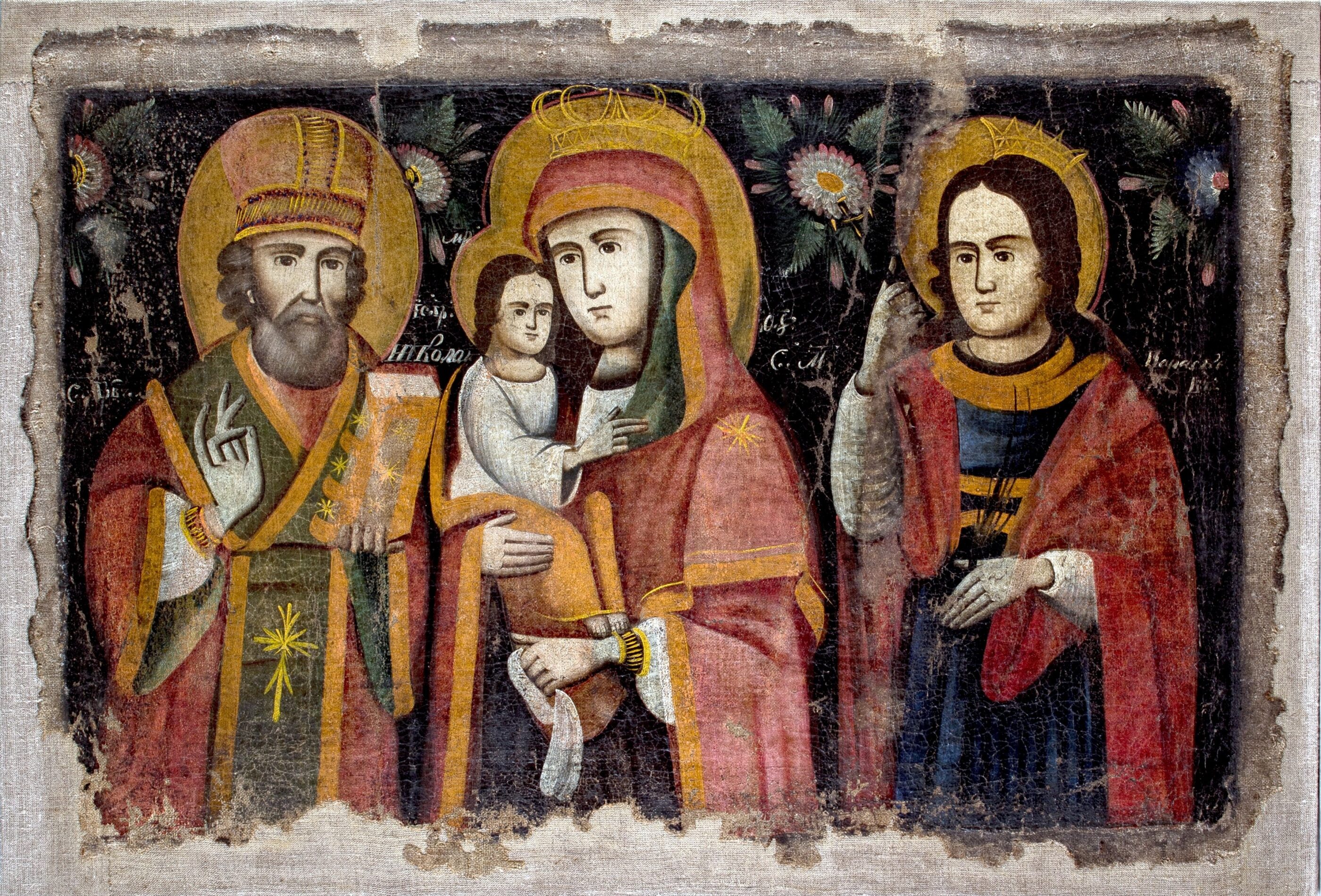
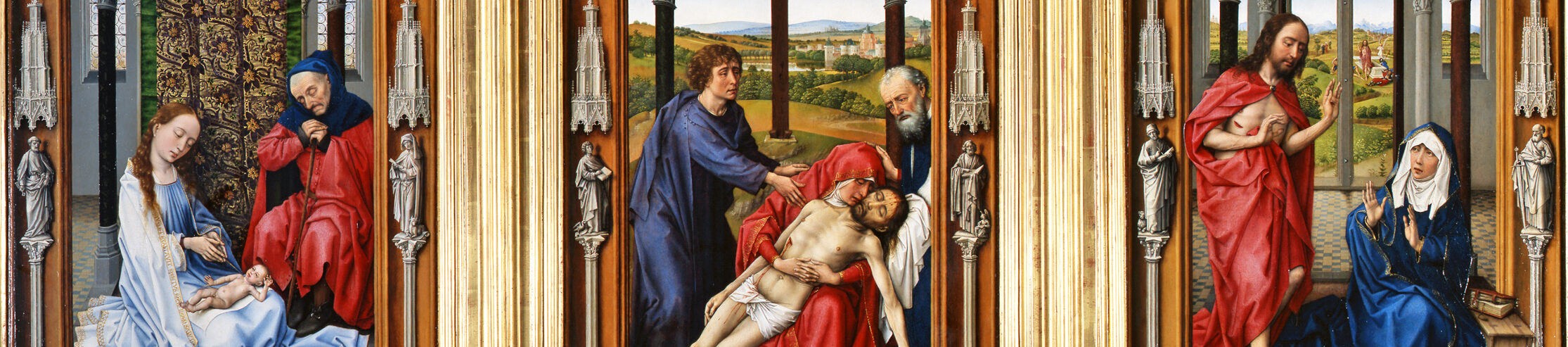
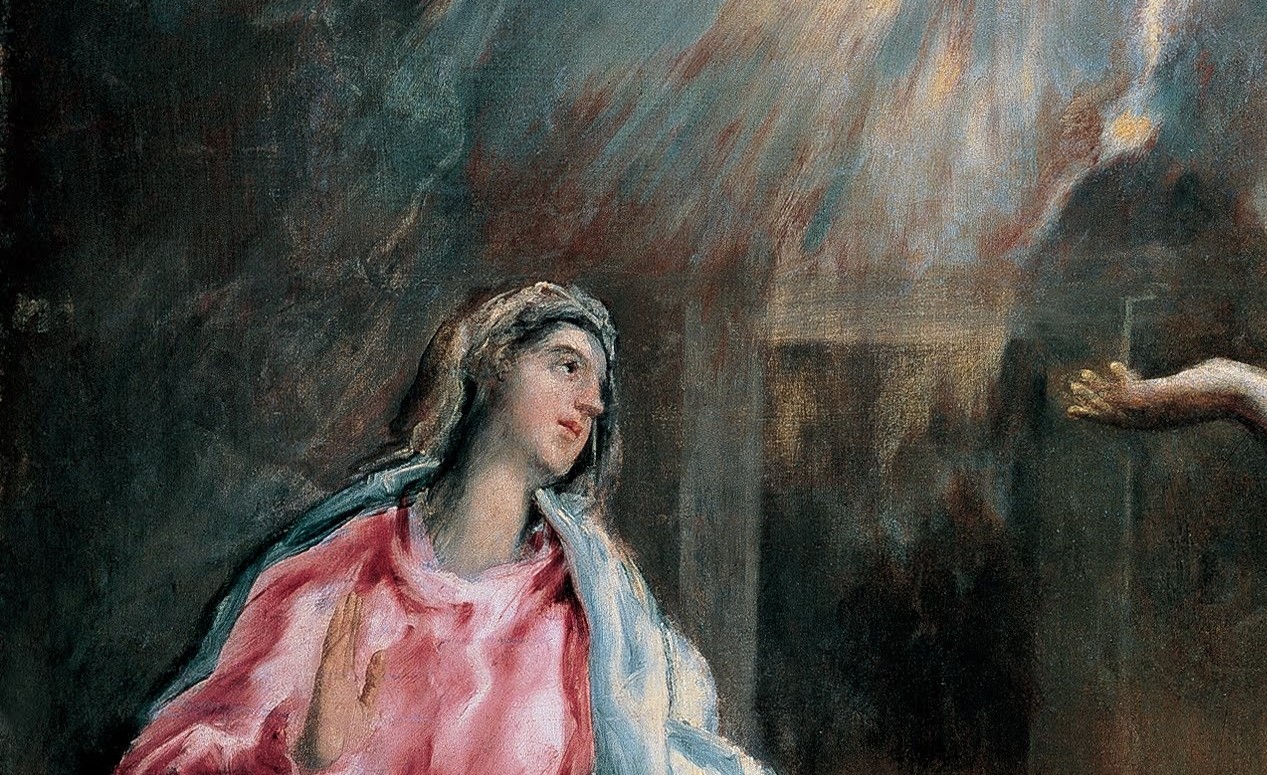


Responses