The virtuous woman and the talents: Prov 31, 1 Th 5, Mt 25
By Prof. Dr. Daniel C. Afonso · Updated
Euge, serve bone et fidelis: intra in gaudium domini tui.
Mt 25,21
The thirty-third Sunday of the Common Time of Year A articulates three texts around the fidelity that bears fruit of what was entrusted. Proverbs 31, 10-13.19-20.30-31 celebrates the virtuous woman who does not know idleness, extends her hands to the poor, and fears the Lord: beauty is deceptive, but her praise endures. 1 Thessalonians 5, 1-6 invites to be children of the light who do not sleep like the others, but are watchful and sober, ready for the Day of the Lord. Matthew 25, 14-30 tells the parable of the talents: the servants to whom more was entrusted produced more, and he who buried his lost even what he had. The three texts converge: fidelity is not preserving what was received, but making it grow. And vigilance is the active disposition of one who knows that the Lord will return.
I. The first reading: Prov 31:10-13, 19-20, 30-31
The final poem of Proverbs celebrates theCapable Woman“Mighty Woman”Who will find her? Her worth exceeds that of rubies.“She is entirely trustworthy; he who finds her will have no cause for fear” (Proverbs 31:10)Seek wool and flax and work diligently with your hands.(v.13). Stretches out His hands to the poor and opens His arms to the needy (vv.19-20). And the conclusion that reverses the world’s criteria:Beauty is deceiving and vanity is fleeting; but a woman who fears the Lord is to be praised.” (v.30). Praise is not based on appearance: it is founded on the fear of the Lord, which is the root of all wisdom and all faithfulness.”Give her the fruit of her hands, and praise her at the gates for her works.“A virtuous woman is praised not for titles but for her deeds.”
II. The second reading: 1 Thessalonians 5:1-6
Paul declares that he need not write about times and seasons, for the Thessalonians already know thatThe Lord’s Day will come like a thief in the night“Who shall we say?” (1Thessalonians 5:2)Peace and Security“You will be surprised by destruction, as labor surprises a woman with child. But the faithful are not in darkness: “You, however, brothers, are not in darkness, so that this Day should take you unawares like a thief. For you are all children of light and children of the day.“And the command: «”Let us not sleep, but be vigilant and sober.» (v.6). Vigilance is not anxiety: it is the serene disposition of one who lives as a child of light, having nothing to hide and nothing to fear from the Day that is to come.
III. The Gospel: Mt 25:14-30
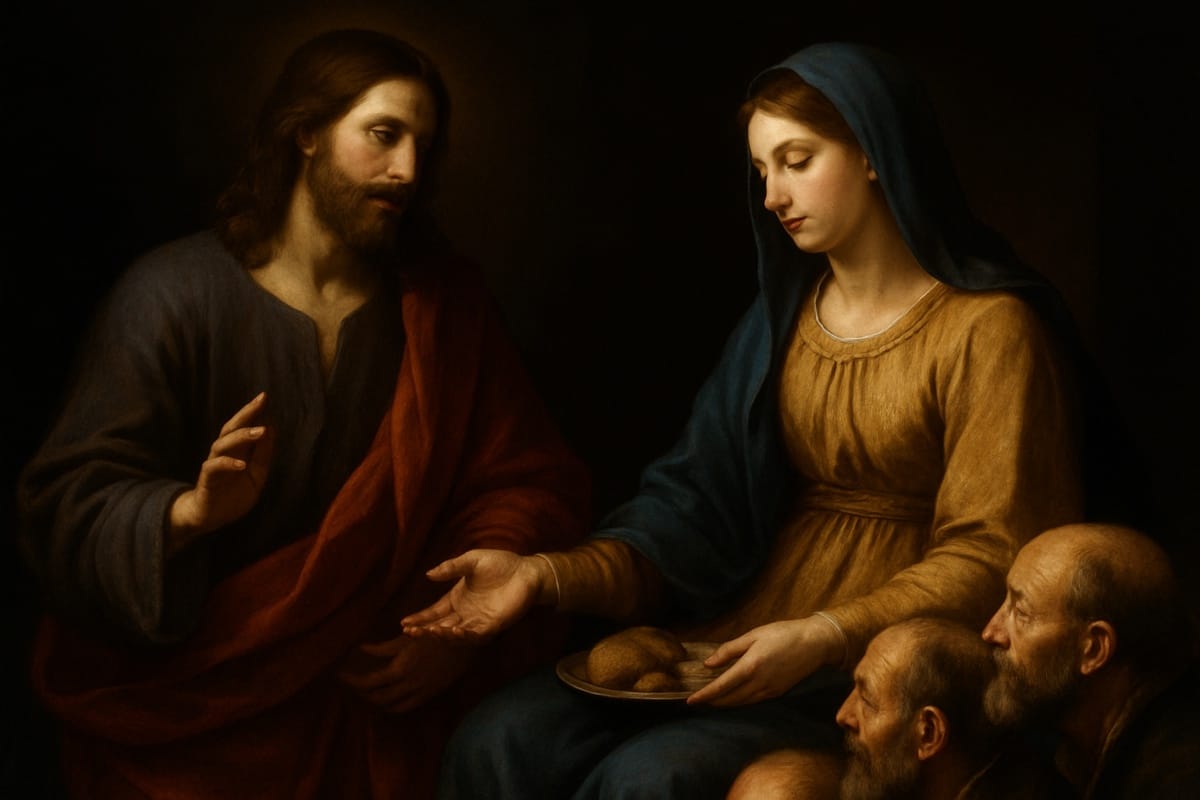
A man, before setting out on a journey, called his servants and entrusted them with his goods: five talents to one, two to another, one to the third.To each according to his ability“For after a long time, the Lord will return and settle accounts. He who had five talents gained five more” (Mt 25:15).Very well, good and faithful servant! Thou hast been faithful in little. I will trust thee with much. Enter into the joy of thy Lord.“Two became four: the same answer and the same invitation. He who had one talent says:”Did you know you were a stern man? I was afraid and hid your talent in the earth.” (v.25). The response is severe: ””Bad and lazy servant“The talent is taken away and given to him who has ten.”For to everyone who has, more will be given; and in abundance. But from him who does not have, even what he has will be taken away.» (v.29). The parable does not teach that God rewards the rich: it teaches that God’s gifts demand to be used. He who buries them out of fear is not cautious, but unfaithful. Faithfulness is active, not conservative.
IV. Mary and the woman who fears the Lord
The Church’s liturgy has early identified the virtuous woman of Pr 31 with Mary: “who will find her?” resounds with Mary’s singular election for a mission that no other creature received. The deceptive beauty of Pr 31:30 contrasts with Mary’s true grace: she is not beautiful for what she appears to be, but for what she is, for her response to the Lord. The praise for her works (v.31) is the praise anticipated in the Magnificat: “All generations will call me blessed” (Lk 1:48), not for any merit of her own, but because “the Mighty One has done great things in me” (v.49). In the parable of the talents, Mary is the servant to whom the most extraordinary gifts are entrusted—divine motherhood, full grace, cooperation in Redemption, and making them bear fruit completely. She did not bury anything: the Magnificat is the fruit of the talents sung, the Cross the fruit offered, Pentecost the fruit of perseverance. 1 Th 5 says that the faithful are children of light: Mary is the daughter of light par excellence, whom the angel greeted and from whom the Light of the world came.
Postgraduate specialisation in Mariology
Would you like to deepen your formation in Mariology? The Locus Mariologicus postgraduate programme is a specialisation that brings together theological rigour, spiritual life and the living tradition of the Church. The next class begins in 2027.
Responses