Mary in the Apostles’ Creed: Christ, faith, and the presence of the Virgin
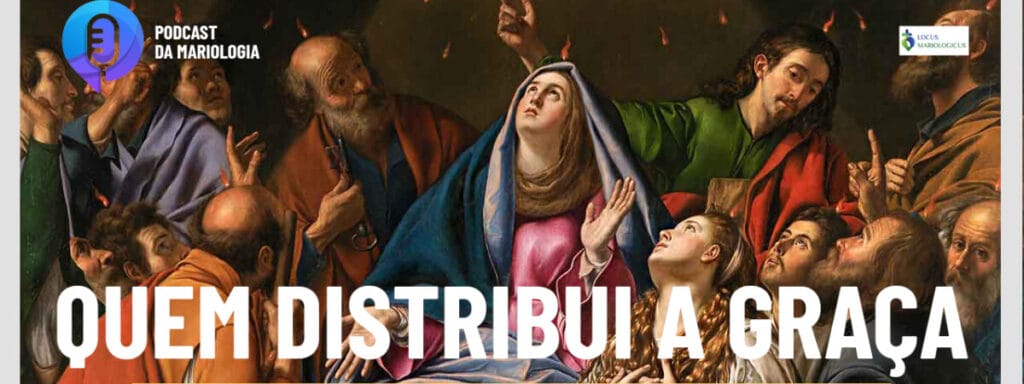
The Apostles’ Creed is the most ancient profession of faith of the Christian Church, and in it Mary occupies a place that is not accidental. In the third episode of the Mariology Podcast, Prof. Daniel Afonso explores the etymology of the very concept of symbol, the structure of the ecumenical professions of faith, and the theological weight of the formula “born of the Virgin Mary,” which the Apostles’ Creed has preserved since the first centuries of the Christian faith.
I. What is a symbol? Etymology and theological meaning
The word “symbol” comes from the Greek symbolon, derived from the verb sunballein, which means to gather, to place together, to articulate into a coherent whole. The Apostles’ Creed is not, therefore, merely a list of truths: it is the organic articulation of the mysteries of the faith in a single act of confession. Daniel Afonso stresses that this notion of symbol has an immediate Mariological resonance: the Gospel of Luke describes Mary “keeping all these things in her heart” with the Greek verb sunballein (Lk 2:19), the same root.
Mary is, in this sense, the first interpreter of the symbol of faith: she gathers in her heart the mysteries she contemplates, keeping them and pondering them before communicating them. Her relationship with the Apostles’ Creed is not merely exterior, as a figure mentioned in a formula. It is interior: her life is the living out of what the symbol proclaims.
II. The trinitarian structure of the creed and Mary’s place
The Apostles’ Creed has a trinitarian structure: we believe in the Father, in the Son, and in the Holy Spirit. The distinction that Daniel Afonso points out is significant: we say “I believe in God the Father,” “I believe in Jesus Christ,” but we say “I believe in the Church”; the preposition changes because faith in God is of a different nature from adherence to the Church. Mary appears in the second article, the Christological one: “born of the Virgin Mary.” Her name is inscribed at the heart of the Creed, at the moment when the Incarnation of the Son of God is confessed.
III. The creed of Nicaea (325): the first ecumenical profession
The first ecumenical symbol is that of Nicaea, formulated at the council of 325. Gathered to respond to Arianism, which denied the full divinity of the Son, the conciliar fathers drew up a profession of faith that explicitly affirmed that Christ is “of the same substance as the Father” (homoousios). The Apostles’ Creed of Nicaea includes the reference to the Virgin Mary as mother of the Incarnate One, anchoring the Christological confession in the historical reality of the Incarnation.
The inclusion of Mary in the Nicene symbol has an evident anti-Gnostic and anti-Docetic import: the Son of God did not merely appear to have a human body, but was truly born of a woman. Her name, Mary, is the sign of the historicity of the Incarnation. The Apostles’ Creed is, on this point, a simultaneously Christological and Mariological affirmation.
IV. The Niceno-Constantinopolitan creed (381): completed and deepened
In 381, the Council of Constantinople took up and completed the Nicene symbol, giving rise to the longer Apostles’ Creed, the “new” Creed that Portuguese-speaking communities usually call the Nicene Creed. This symbol adds a more developed reflection on the Holy Spirit, acknowledging Him as “the Lord and giver of life.” The articulation between the Holy Spirit and Mary thus becomes more explicit: the Son becomes incarnate “by the power of the Holy Spirit and was born of the Virgin Mary.”
V. The Holy Spirit and Mary in the creed
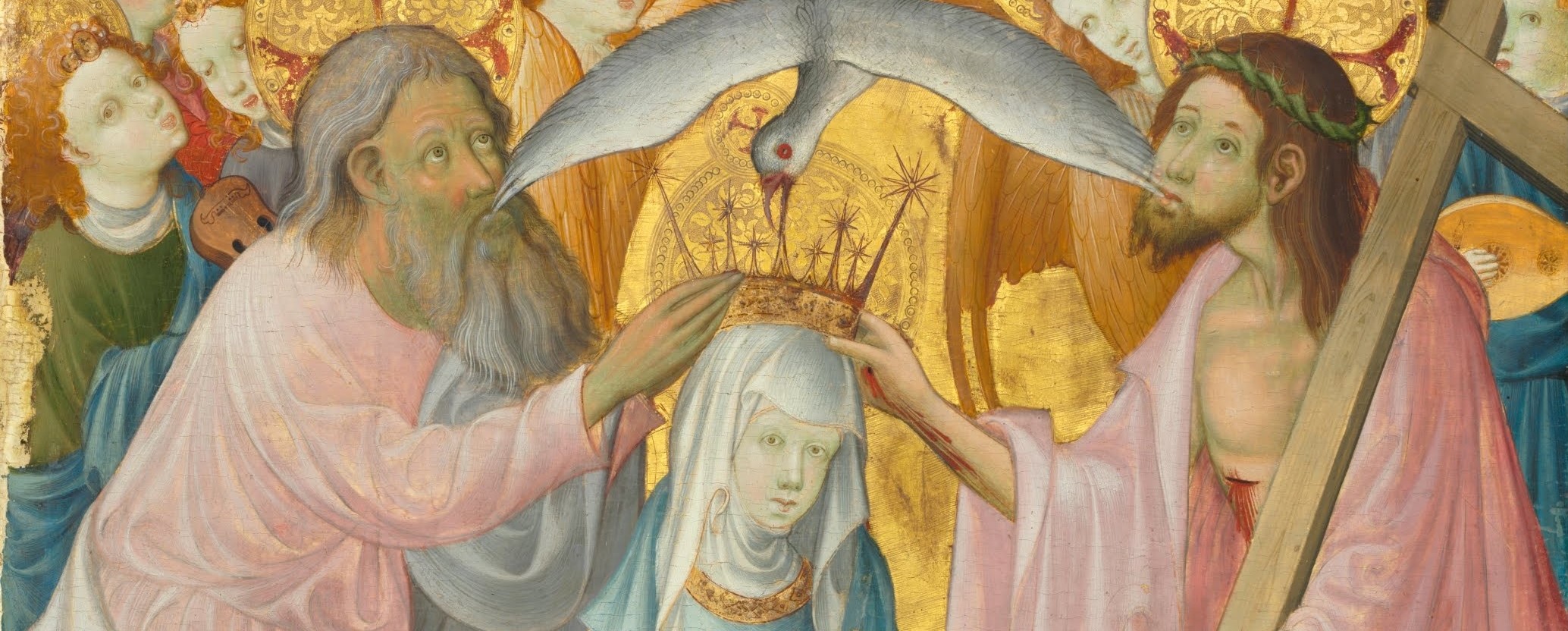
The formula “by the power of the Holy Spirit and was born of the Virgin Mary” is one of the most dense theological statements of the Apostles’ Creed. It unites the divine action of the Spirit with the human acceptance of Mary in a single event: the Incarnation. Daniel Afonso points out that contemporary Mariology, influenced by the pneumatological renewal of Vatican II, has not yet sufficiently explored this link between the action of the Spirit and the mission of Mary. It is an open field both in dogmatic research and in its applications for Christian spirituality.
VI. Mariological implications for Christian life
To pray the Apostles’ Creed is, for the believer, an act of communion with the Church of every century. When we pronounce “born of the Virgin Mary,” we confess at the same time the divinity of Christ and the divine motherhood of Mary. Mariology is not a devotional addition to the Creed: it is inscribed in its deepest structure. Whoever wishes to go deeper into this reflection will find at Locus Mariologicus the Postgraduate Program in Mariology, where the Mariological method and the reading of the symbols of faith are treated with the rigor they deserve. Cf. Lumen Gentium, no. 52: “Mary is inseparably united to the work of salvation accomplished by her Son”.
Postgraduate Program in Mariology
Would you like to deepen your formation in Mariology? Discover the Postgraduate Program in Mariology of Locus Mariologicus – an academic formation that unites theological rigor, spiritual life, and the living tradition of the Church.
Would you like to study Mariology seriously?
This article grows out of the works in the Locus Mariologicus library. The Postgraduate Program in Mariology takes you to the same source, with academic guidance: Scripture, the Fathers of the Church, and the Magisterium, from the first dogma to contemporary questions.




Responses