Directory on Popular Piety and the Liturgy (2002): Marian sections
The Directory on Popular Piety and the Liturgy: Principles and Guidelines, published by the Congregation for Divine Worship and the Discipline of the Sacraments on December 17, 2001 (with a preface by Cardinal Jorge Medina Estévez), is the reference document for understanding the relations between liturgy and popular piety, including popular Marian piety. Its Marian sections (especially chapters V and VII) are one of the richest magisterial texts on Marian devotional practices.
| Document | Directory on Popular Piety and the Liturgy |
| Author | Congregation for Divine Worship and the Discipline of the Sacraments |
| Date | December 17, 2001 (published in 2002) |
| Main Marian sections | Chap. V (nn. 183-247): Mary in the liturgical year | Chap. VII (nn. 274-323): Traditional Marian devotions |
Chap. V: Mary in the liturgical year (nn. 183-247)
Chapter V is a systematic analysis of the Marian feasts in the liturgical calendar, organized into four seasons:
Season of Advent (nn. 184-194)
Advent is the Marian season par excellence. Mary as the woman of Advent, the one who awaits Christ with ardent faith. Recommended practices: Akathistos (East), the Christmas Novena, the Septenary of the Seven Joys, the sequential Ave Maria.
Season of Christmas (nn. 195-203)
Christmas celebrates Mary as Mother of the incarnate Word. The feast of the Divine Motherhood (January 1) is the Marian culmination of the Christmas season, an inheritance of the Ephesian definition (see the Council of Ephesus).
Season of Lent (nn. 204-214)
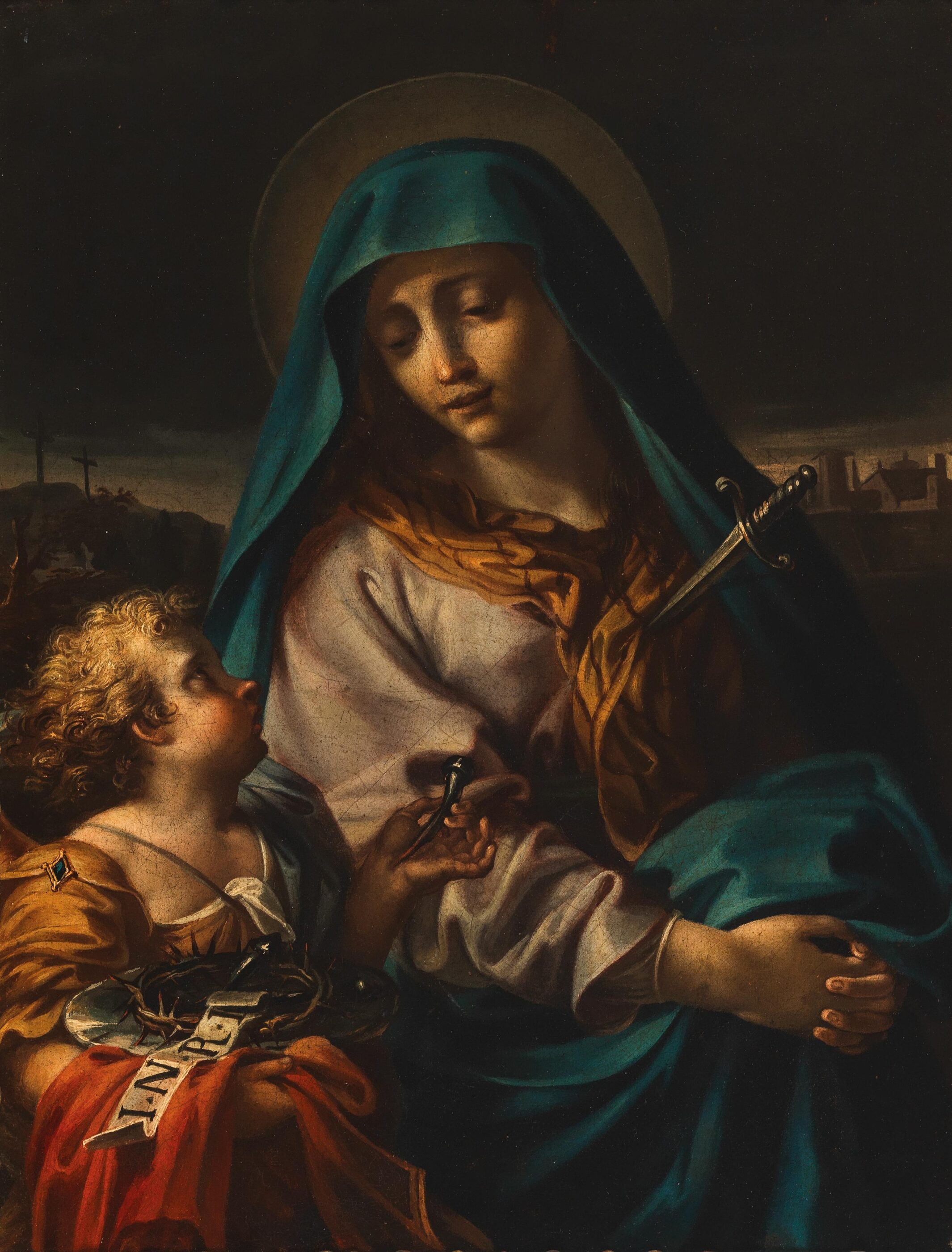
Lent includes the feasts of the Annunciation (March 25) and Our Lady of Sorrows (Good Friday). Recommended practices: the Stabat Mater (see post), the Via Matris, the Septenary of Sorrows.
Easter Season (nn. 215-225)
Easter celebrates Mary as the woman of the new Passover, the first to contemplate the victory of the Son. Feasts: the Assumption (August 15), the Immaculate Conception (December 8), Our Lady of the Rosary (October 7).
Ordinary Time (nn. 226-247)
Scattered Marian feasts (the Visitation, Our Lady of Sorrows, etc.) and the month of May as the Marian month par excellence.
Chap. VII: traditional Marian devotions (nn. 274-323)
This chapter is the most complete synthesis of the Church’s Magisterium on popular Marian devotions. Each devotion is analyzed in its historical, theological, liturgical, and spiritual dimension:
The Rosary (nn. 274-279)
A deepening of the theology of the Rosary, taking up the teachings of Marialis Cultus (Paul VI). Recitation is recommended in the family, in prayer groups, and in the Liturgy of the Hours.
The Angelus (n. 280-281)
A prayer said three times a day (morning, noon, evening) that commemorates the Annunciation. A tradition that began in the thirteenth century and became widespread in the sixteenth century.
The Carmelite scapular (n. 295-298)
A Carmelite devotion based on the vision of Saint Simon Stock (1251). The brown scapular is a sign of consecration to Mary.
The Miraculous Medal (n. 299-300)
A devotion based on the apparitions to Saint Catherine Labouré in Paris (1830). The medal bears the Marian inscription most used in nineteenth-century popular devotion.
Pilgrimages to Marian shrines (n. 287-291)
Lourdes, Fatima, Guadalupe, Aparecida, Częstochowa, Pompeii, Loreto, the principal shrines. The Directory recommends that pilgrimages include the Eucharistic liturgy, the reading of the Word, popular Marian devotion, integration of liturgy and popular piety.
Principles for integrating liturgy and popular piety
The Directory establishes three fundamental principles for integrating popular Marian piety with the liturgy:
- Primacy of the Liturgy: popular piety does not replace the liturgy but complements it
- Doctrinal Conformity: popular devotions must conform to the Magisterium
- Balanced Pastoral Care: neither devotional excess nor rationalist reduction
Pastoral significance
The Directory is the reference instrument for any parish, shrine, or Marian movement that wishes to integrate liturgy and popular piety correctly. Its guidelines avoid two extremes: the marginalization of popular piety (which was a tendency in some post-conciliar circles) and devotional excess without theological foundation.
Further reading
Mariology | Marialis Cultus | Rosarium Virginis Mariae | Sacrosanctum Concilium | Stabat Mater
Postgraduate Program in Mariology
Would you like to deepen your formation in Mariology? Discover the Postgraduate Program in Mariology of Locus Mariologicus – an academic formation that unites theological rigor, spiritual life, and the living tradition of the Church.
Would you like to study Mariology seriously?
This article grows out of the works in the Locus Mariologicus library. The Postgraduate Program in Mariology takes you to the same source, with academic guidance: Scripture, the Fathers of the Church, and the Magisterium, from the first dogma to contemporary questions.




Responses