The Listening Virgin in Advent

Mary, the Listening Virgin: a model for Advent
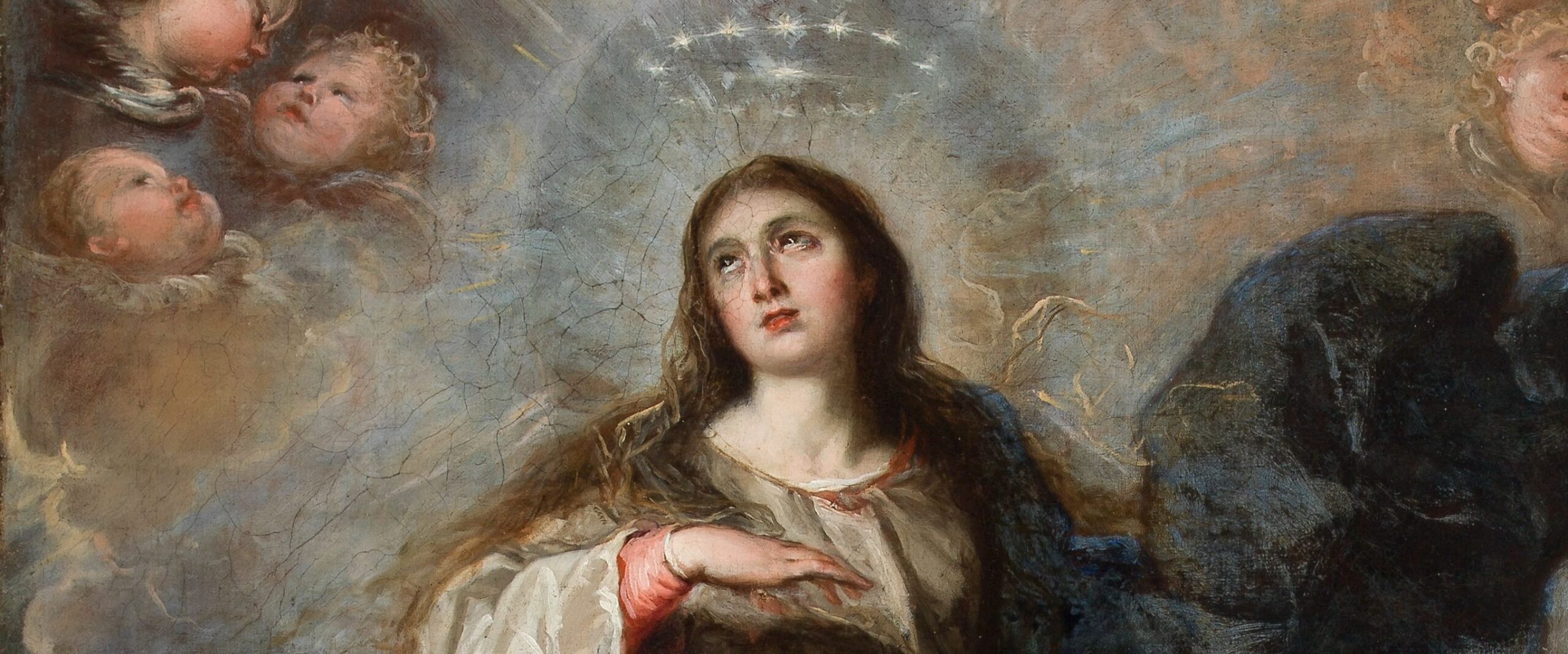
The Listening Virgin
Advent, in its role of preparation, already presents a very striking Marian doctrine. The presence of Mary in the Church’s worship during Advent is rooted in theological realities, at the center of which stand her vocation and her mission. The Mother is perfectly integrated into the celebration of the mystery of the Son, giving it a marked spiritual and contemplative character. It follows that Advent, and indeed the whole Christmas cycle, is the time when, more than in other periods of the liturgical year, the Virgin’s cooperation in the work of salvation is strongly emphasized. This happens not through devotional superimposition or excess of language, but in keeping with the unfolding of the divine economy.
Scripture helps us understand the scope of the fiat. In Advent the Virgin stands out as the emblematic figure of the people of God in listening, in prayer, and in offering.
Listening to the word of God has primacy over everything, and it is also the principle and foundation of the spiritual life and of holiness. Mary listens, welcomes, and ponders within herself, in order to bear fruit. This word, which requires faith, openness, humility, and promptness, is welcomed as the things of God must be welcomed. The word of Jesus must be acknowledged as applying to her: “Blessed are those who hear the word of God and keep it” (Lk 11:27).
This is how the Word does not come down from heaven as a man already made, with an adult body fashioned directly by God like Adam (cf. Gen 2:7), but comes into this world “born of woman” (Gal 4:4), in order to save it from within history. The Gospel passages with the genealogies of Jesus, read during this season, in which the last link is Mary, remind us of the mystery of the assumption of humanity and of the immersion of God in man.
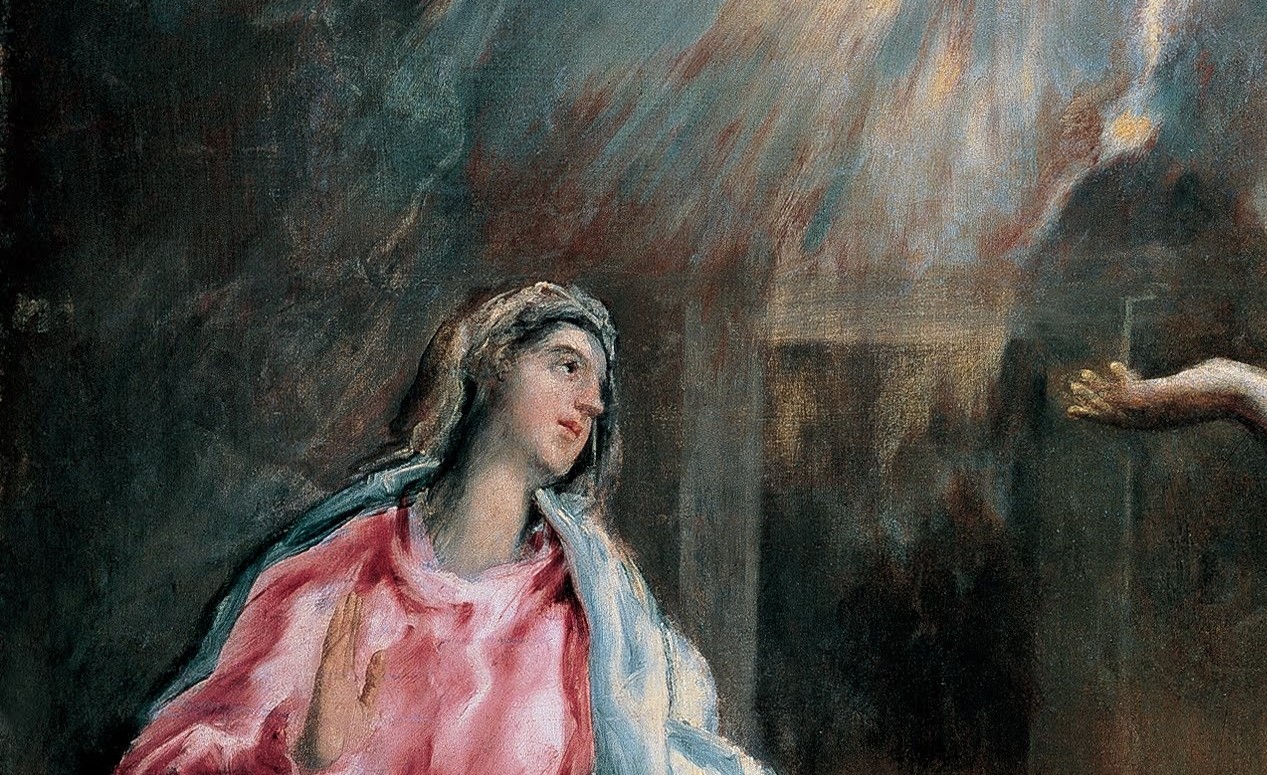
Mary’s motherhood is not first of all the result of a biological process. Above all, it is the fruit of adherence to the word of God. In reality, according to the divine plan, it is by virtue of her consent to the angel’s proposal that she welcomes Christ and gives Him to the world. Without making v. 38 (“Behold, the handmaid of the Lord: let it be done to me as you have said”) the high point of the Annunciation, Luke wished to highlight the exceptional quality of Mary’s act of faith. This consent is called faith, or the obedience of faith: she, “full of faith, conceived the flesh of Christ by faith”, says Saint Augustine (Sermo 215; Contra Faustum 24.4).
History passes through this historic moment of grace and freedom. Mary is the woman who knows how to make her choice, with a humble and complete decision, before the decisive word of God, taking upon herself not only her own destiny but also that of the world.
Mary’s assent proves to be all the broader when compared with the attitude of faith of Abraham, father of all believers. “Nothing is impossible for God”, the angel Gabriel had told her (Lk 1:37), using the same words that Abraham, faced with Sarah’s incredulity (Gen 18:13), had heard from God concerning the conception of Isaac (Gen 18:24). These words would later become, in the revelations to the prophets, a technical expression, almost a refrain.
Abraham believed that God was able to bring back to life Sarah’s barren and now dead womb: “He believed in the God who gives life to the dead and calls nothingness into existence” (Rom 4:17). It is no longer surprising that, just as through faith God made Abraham the father of a people as numerous as the dust of the earth (Gen 13:16), making him a living blessing for all peoples (Gen 12:2-3), so Mary, by the unequaled quality of her faith, possesses a supereminent fruitfulness with regard to the Church, as Tradition has unanimously recognized.
She is the faithful and obedient one, becoming the mother of the new Israel, the Church, that is, the universal mother of the faithful.
If the fruitfulness of Sarah, like that of Hannah and Elizabeth (whom Luke evokes), can already appear as a kind of creation, that is, a passage from nothingness to existence, then for Mary’s faith even greater is the fruitfulness that knew no man (cf. Lk 1:34). We stand before a singular and unique miracle. It was brought about by a fiat which, in the same evangelist, recalls that of Christ in Gethsemane (Lk 22:42).
There is an antithetical parallelism between the annunciation to Zechariah, who is rebuked because he did not believe the angel’s word (Lk 1:20), and the annunciation to Mary, who expresses a pondered yet wholly committed yes. Elizabeth, who is herself the object of God’s extraordinary action, looking at the Virgin, proclaims the first beatitude of the New Testament: “Blessed is she who believed that the words of the Lord would be fulfilled” (Lk 1:45). Mary makes an act of faith equal to the event announced to her, which now re-creates the world in the response born of listening to the Word.
She believed. Faith is first of all conversion, that is, entering into the horizon of God and of His works. Without conversion, which is always, as it was for Abraham and for the tribes of the Exodus, a leaving of the land (one’s plans, the evidence of reason, and the reassuring satisfaction of physical possession) in order to let oneself be guided solely by the voice and the word of God, the fulfillment of the divine plan in the course of history is not possible. It is not for nothing that the substance of John the Baptist’s preaching and the core of the Gospel call are metanoia.
What is metanoia? Fulfilling God’s plan in history
The biblical term for repentance, or the complete change of heart by which a person turns away from sin to serve the living God. The Old Testament prophets called for a conversion that would turn the people away from idolatry and from a purely superficial religious practice, so that they might faithfully live out God’s law and their social responsibilities (Is 1:10-20; Ezek 18:1-32).
John the Baptist, and then Jesus, preached a radical change of heart demanded by the coming of the Kingdom of God (Mt 3:1-12; Mk 1:15).
John’s baptism was a baptism of repentance (Mk 1:4; Acts 13:24; 19:4). In the name of Jesus, the Apostles invited people to be converted and baptized and thus to begin a new life in the Spirit (Acts 2:38).
The gift of authentic metanoia (cf. Ps 50:14) is so special that whoever exposes it to the risk of repeated sins can lose it forever (cf. Heb 6:4-6).
Faith is obscurity, mystery, and at the same time theological hope: it can involve hesitation and doubt, temptation and struggle. But one hopes that it may already glimpse the certainty of the outcome.
To explore more deeply the spirituality of Mary as the Listening Virgin in Advent, see Paul VI’s Apostolic Exhortation Marialis Cultus, on the titles and the cult of Mary in the liturgy.
Delve deeper into your studies: explore Mariology, Marian Theology, Marian apparitions, and the Postgraduate Program in Mariology.
Postgraduate Program in Mariology
Would you like to deepen your formation in Mariology? Discover the Postgraduate Program in Mariology of Locus Mariologicus — an academic formation that unites theological rigor, spiritual life, and the living tradition of the Church.
Would you like to study Mariology seriously?
This article grows out of the works in the Locus Mariologicus library. The Postgraduate Program in Mariology takes you to the same source, with academic guidance: Scripture, the Fathers of the Church, and the Magisterium, from the first dogma to contemporary questions.



Responses