The Virgin of Advent and Her Importance in the Liturgy

Advent, a significant season in the liturgical calendar of the Catholic Church, is marked by an active and hope-filled waiting that prepares the faithful for Christmas. This season is not merely a countdown to December 25, but a time of deep reflection and of waiting for the coming of Christ, representing the past as well as the present and the future of the Christian faith. In this context, the figure of the Virgin Mary takes on a central role, symbolizing the waiting that does not disappoint, availability, hope, and contemplation before the mystery of faith.
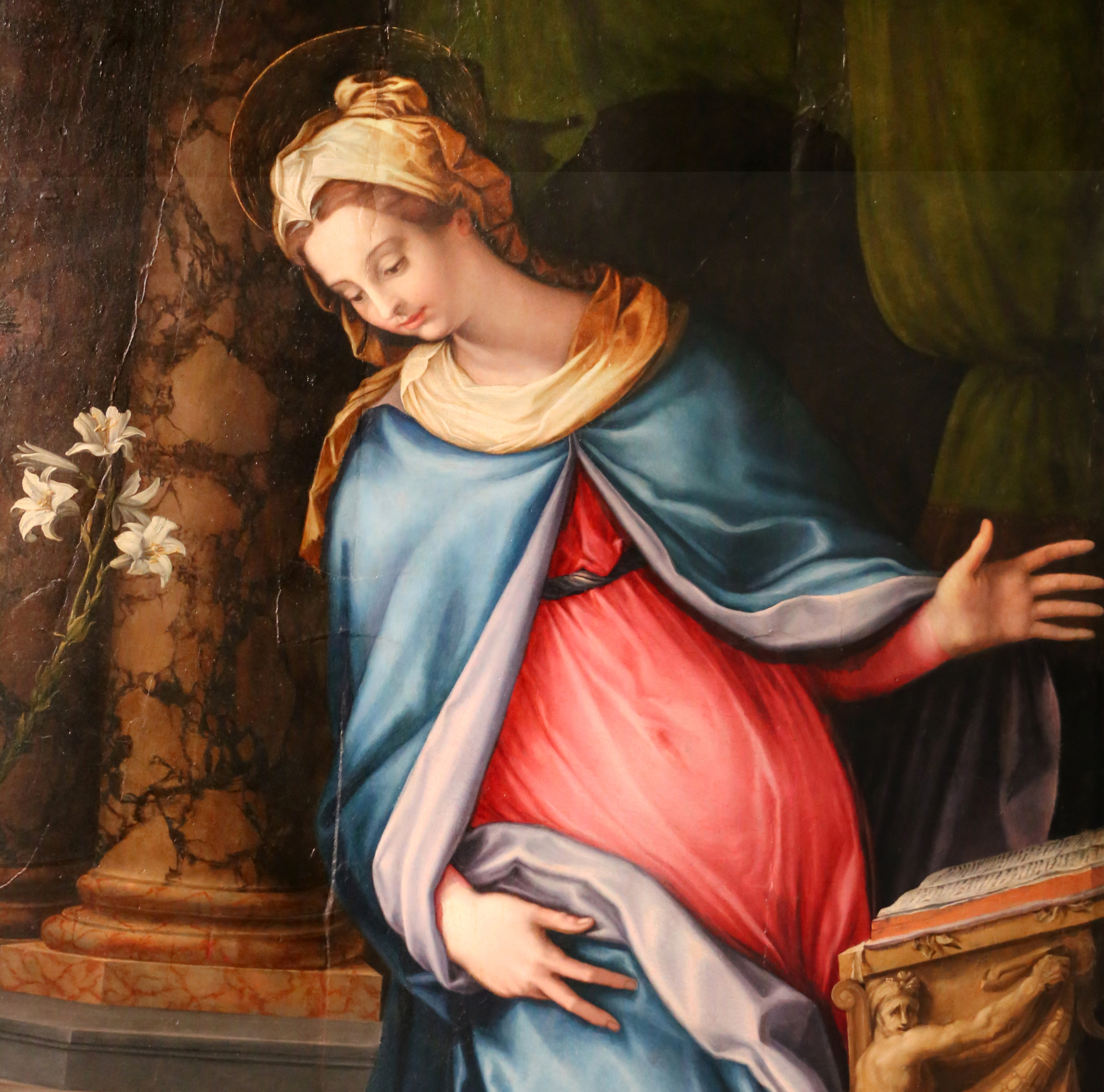
Mary in the Advent Liturgy
In the liturgy of Advent, Mary emerges as a central figure, illuminated through biblical texts and prayers. The prayers of the Missal, such as the “Collect”, the “Prayer over the Offerings”, and the “prayer of thanksgiving”, offer a way into a Marian spirituality rooted in liturgical prayer. These texts deepen the understanding of the faith and guide authentic Christian life. The Marian liturgy is not limited to the celebration of the Eucharist but also extends to the Liturgy of the Hours, with psalms, readings, hymns, and intercessions that highlight the Virgin.
Prophecies and Maternal Figures in Advent
Advent brings with it the proclamation of prophecies about the mother of the Messiah and Savior, such as those found in Genesis, Isaiah, and Micah, which foreshadow Mary’s singular motherhood. Besides the prophecies, the Advent liturgy celebrates maternal figures of the Old Testament, such as Ruth, the wife of Manoah, and Hannah, who prefigure Mary’s divine motherhood. These stories of miraculous motherhood, in which the barren woman becomes fruitful through divine grace, are reflections of Mary’s own motherhood.
Marian Symbols in Advent
The Advent liturgy is rich in symbols related to Mary: the earth, representing the maternal womb; the door, a symbol of passage and openness; the house, a place of protection and the dwelling of the incarnate Word; and the temple, representing the presence of God. These symbols invite the faithful to contemplate the figure of Mary in all her theological depth.
The Personal Celebration of the Virgin in Advent
The life of the Virgin Mary is celebrated in Advent as a central element of salvation history, transcending mere chronology to become a component of the mystery of the Christian faith. Events such as the Immaculate Conception, the Annunciation, and the Visitation to Elizabeth are highlighted in the liturgy of this season, emphasizing the preparation for the coming of the Messiah and Mary’s singular role in this mystery.
Advent thus becomes a time of intense reflection and celebration, not only anticipating the birth of Christ, but also recognizing and honoring the essential figure of Mary in salvation history. Through her active and expectant participation in the coming of Christ, Mary serves as a model for all the faithful during this sacred time of waiting and preparation.
The presence of Mary in the Advent liturgy is explored in depth in the Apostolic Exhortation Marialis Cultus of Pope Paul VI, which sets out Mary’s role in the liturgical calendar of the Church. Read the document at Marialis Cultus (Paul VI).
Deepen your studies: explore Mariology, Marian Theology, Marian apparitions, and the Postgraduate Program in Mariology.
Postgraduate Program in Mariology
Would you like to deepen your formation in Mariology? Discover the Postgraduate Program in Mariology of Locus Mariologicus, an academic formation that unites theological rigor, spiritual life, and the living tradition of the Church.
Would you like to study Mariology seriously?
This article grows out of the works in the Locus Mariologicus library. The Postgraduate Program in Mariology takes you to the same source, with academic guidance: Scripture, the Fathers of the Church, and the Magisterium, from the first dogma to contemporary questions.




Responses