Antonello da Messina: the Mariology of “Homo Novus”

Introduction
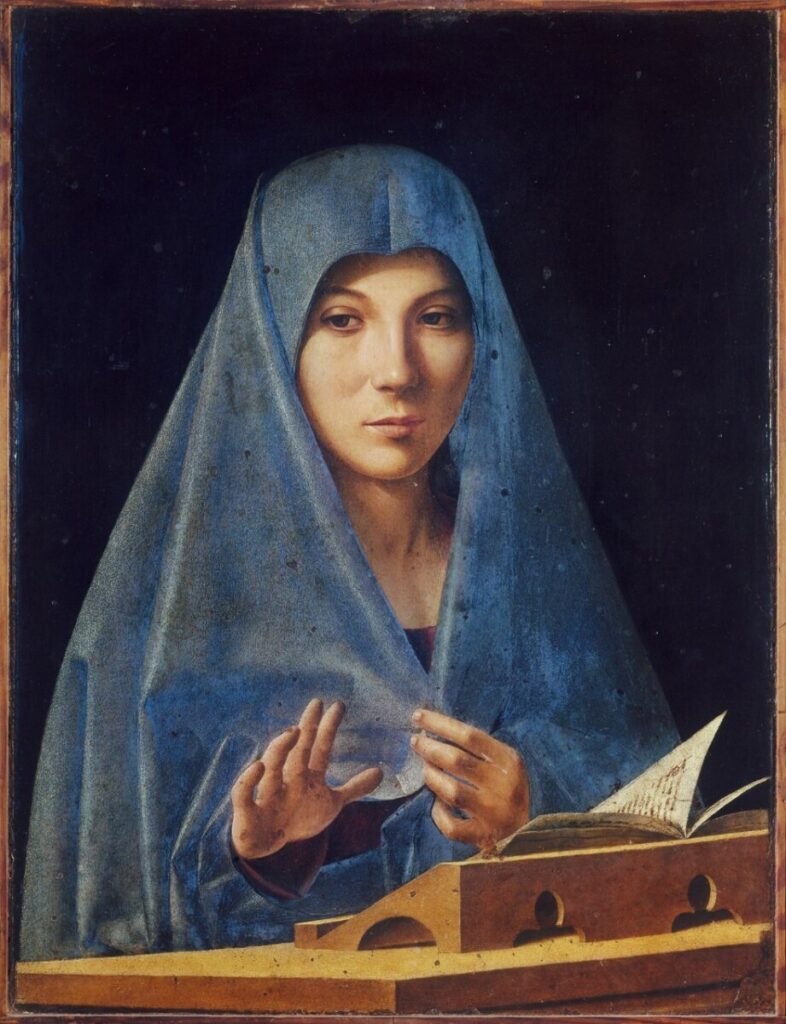
The merit of Antonello da Messina consists not only in having improved the condition of modern painting, spreading the refinement of the oil painting method, but also in having been one of the most valiant Italian painters of the fifteenth century. His sovereign merit is to move with tenderness, whether in the various subjects where he represents severity prevailing over sweetness, the magnificent over the pasto, sorrow over tenderness, or that tranquility of the most intimate and sweet affections of the soul.
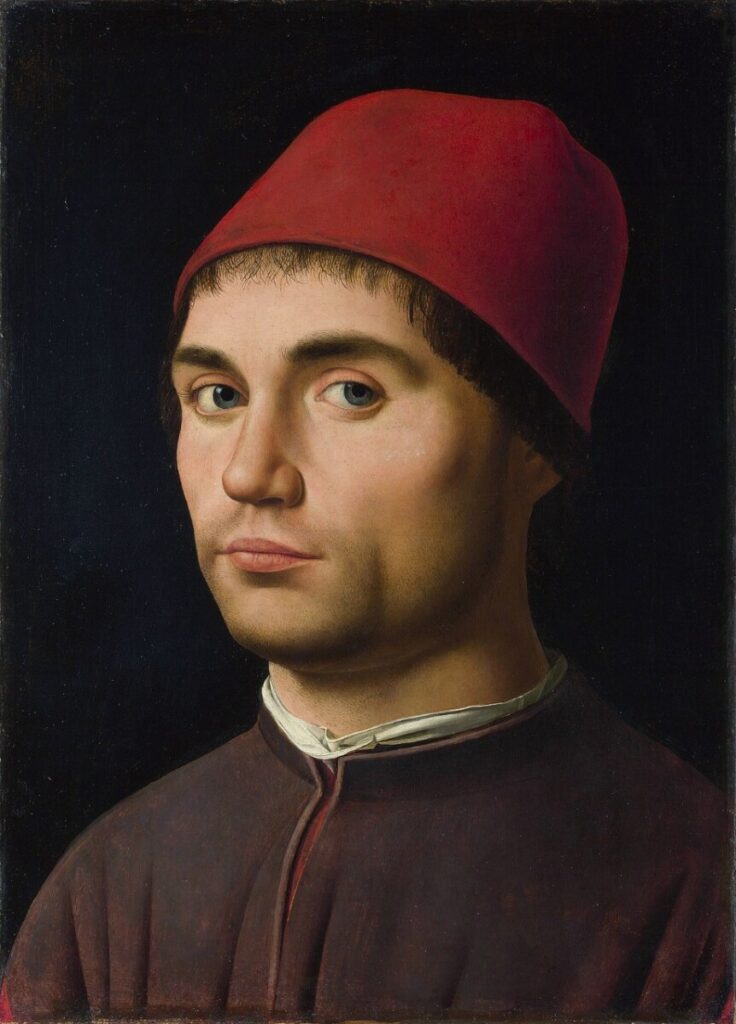
Born around 1430 in Messina, where he died in 1479, Antonello is one of the most enigmatic figures of Italian art, since, faced with the few testimonies handed down, he embodies a double identity as a local artist in the wake of tradition and as an international artist capable of revolutionary innovations. He admitted Flemish grammar into Italian syntax and gave to the humanity of his land, of his island, an absolute and eternal expression.
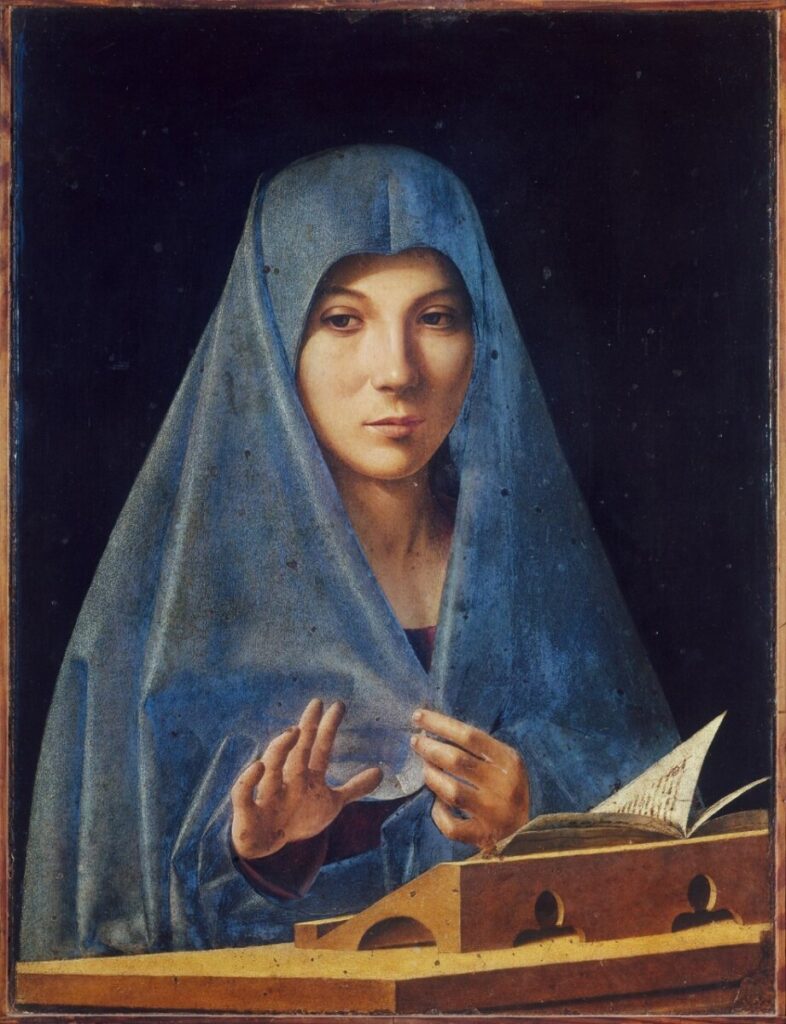
This is what his Portraits tell us, so ‘terribly Sicilian’ that one seems to hear them speak in dialect, the same in which his Annunciation speaks. That human adherence to the subject, that lyrical transfiguration of the most intimate, most ardent substance of humanity, which he proposes to form into absolutism, is the reason for the mysterious astonishment that seizes whoever looks at a work by Antonello.
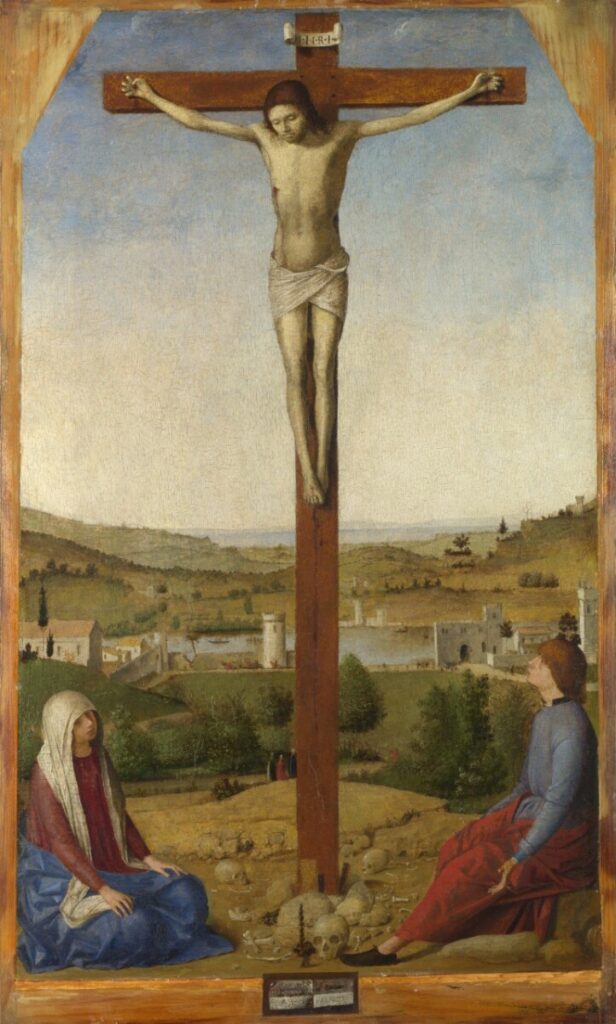
This is why the earthly figures of the Crucifixion of Sibiu seem to be burned by an internal flame, which consumes itself and disperses in the white heat of the sky of the landscape. This is why his saints and the Virgin assert their tender presence with so much suffering and simple nobility.
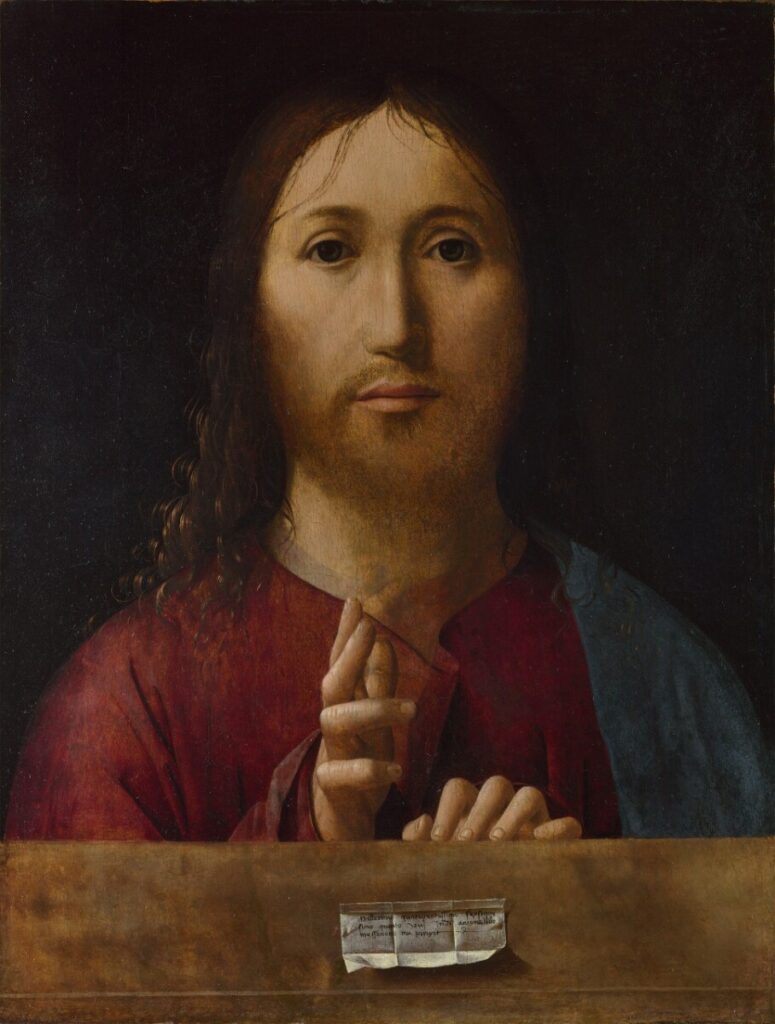
Antonello is the typical representative of the Homo Novus of the Renaissance, a wholly Italian phenomenon from Sicily to Venice. He is the symbol of that century, the fifteenth century, in which man recovered consciousness of himself to the point of crossing the immense ocean to discover the new World, in which the devotio moderna awaited an intimate and subjective religiosity in opposition to collective medieval piety.
The language of gestures
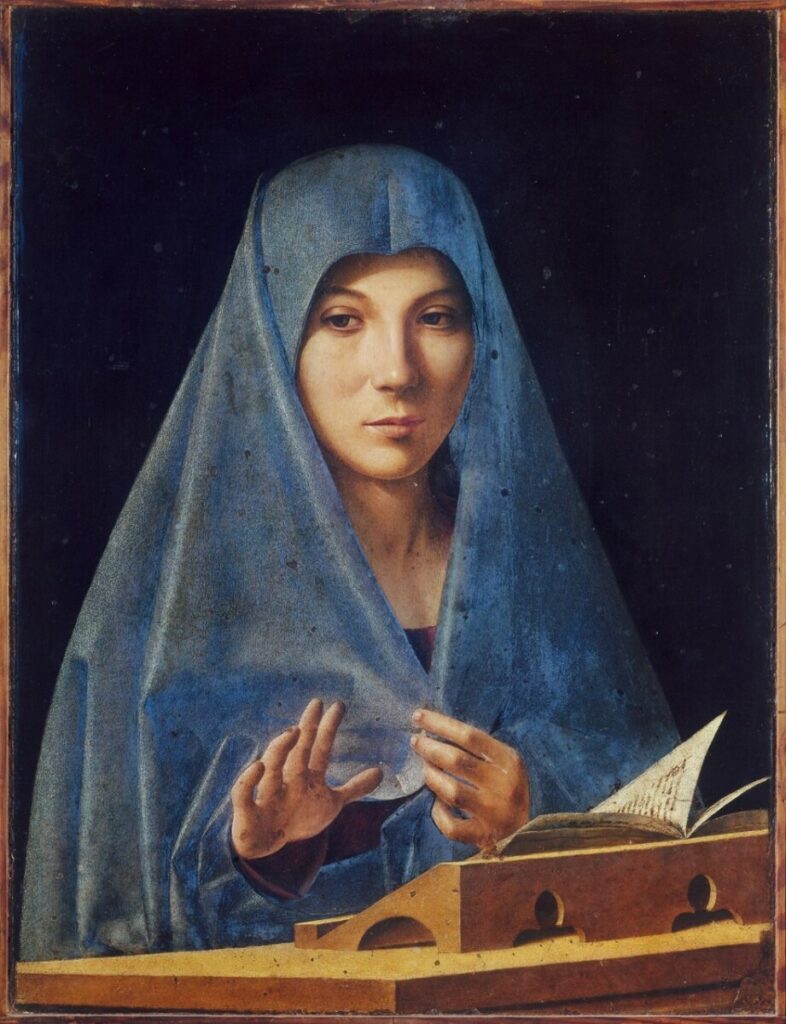
In the representation of the Virgin with the Child, the feminine counterpart of the numerous male portraits, Antonello da Messina draws inspiration from his own land. Both the physical appearance and the attitudes of Antonello’s Virgins, such as the hand that feigns the veil of the Annunciate in Palermo, recall Sicilian women.
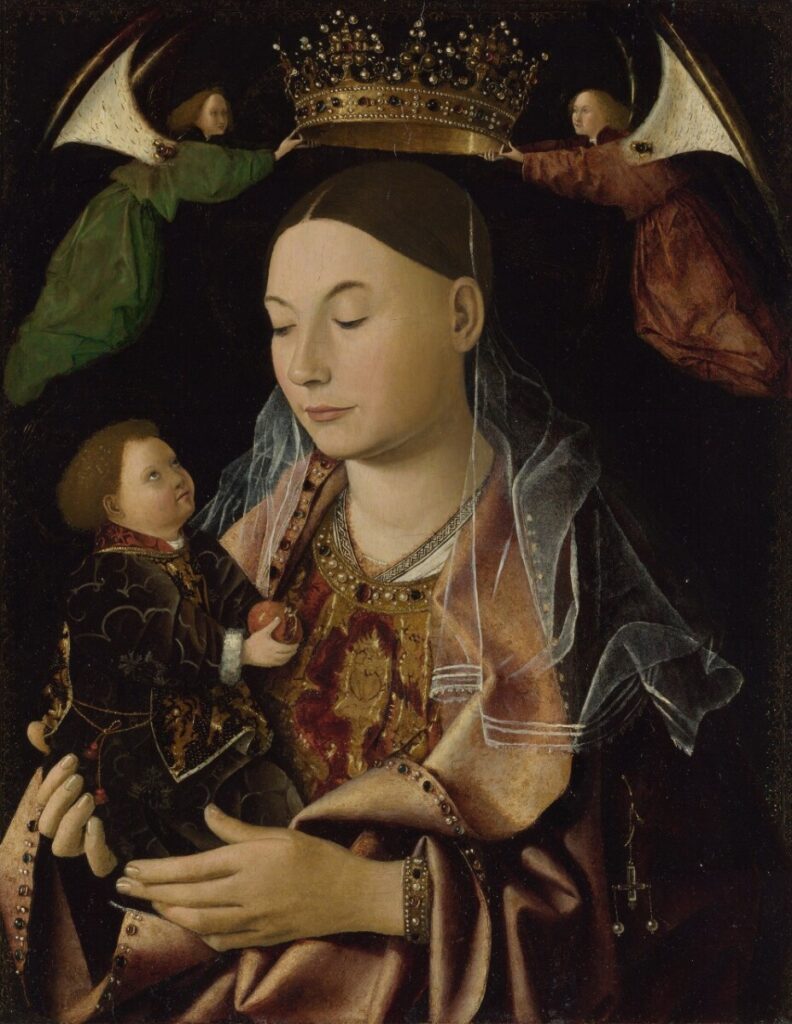
The first Virgins, such as the Salting Virgin or
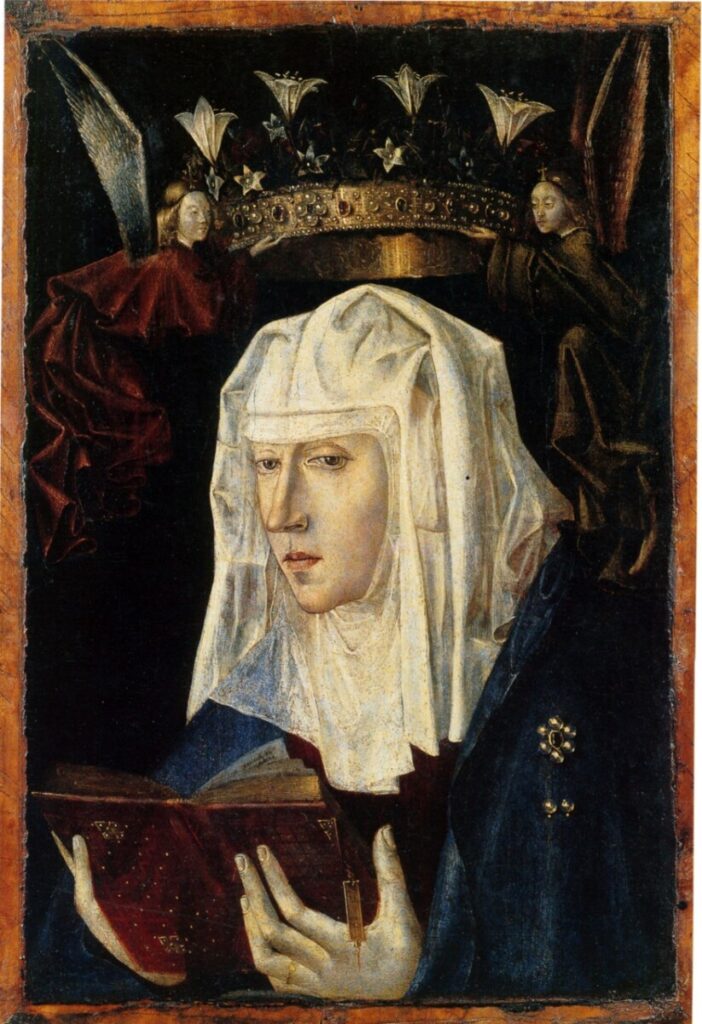
The Reading Virgin shows, against a flat monochrome background, the meticulous preciousness of the jewels and mantles, which point back to Antonello’s training with Colantonio, in Naples, where he had his first contact with Flemish art.
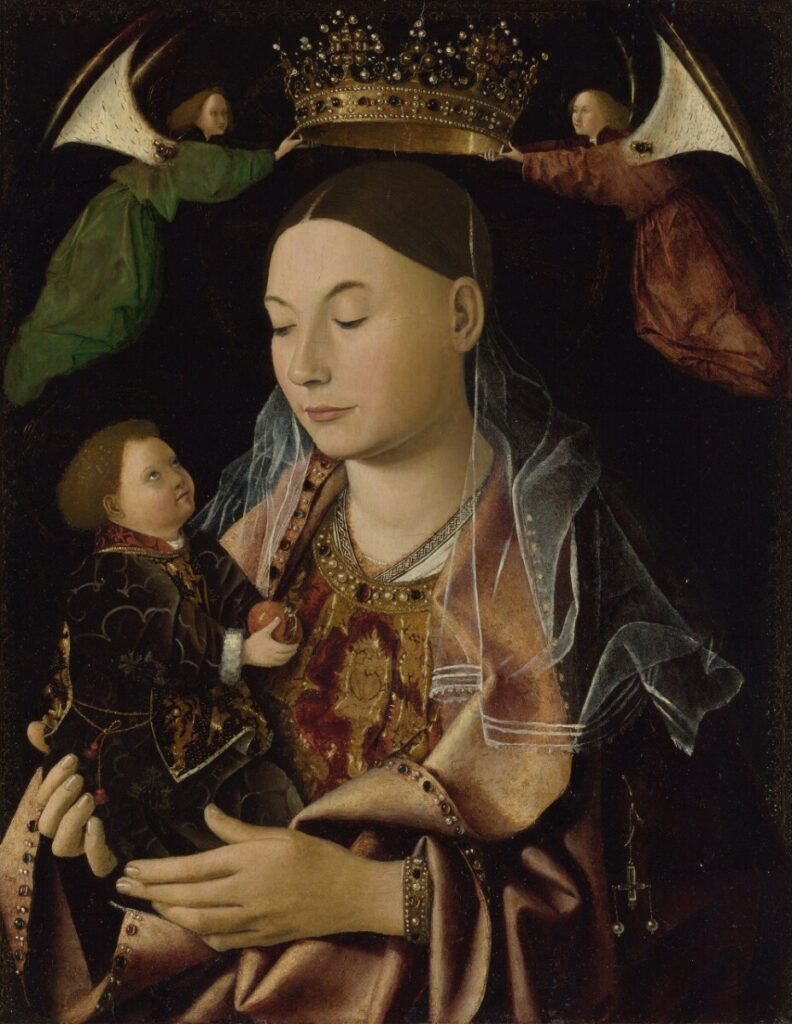
The Salting Virgin presents the Mother with the Child in her arms, crowned by two Nordic angels as Queen of Heaven. The small Gothic figure of Jesus holds in his hand a pomegranate, symbol of fertility and of Mary’s Queenship, but also of the Passion through the red of the seeds, like blood. The transparent veil of the Virgin represents a piece of high virtuosity, as does the beautiful description of the jewels and of the brocade.
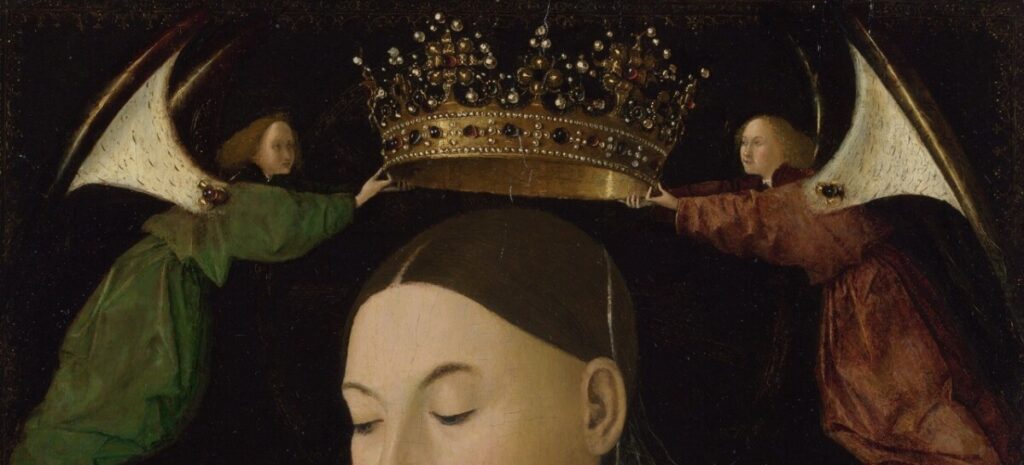
The angels, the dark background, the elaborate crown with effects of metallic sheen, the sharp white light point back to the Flemish art that Antonello knew how to mediate with Italian spatiality and monumentality.
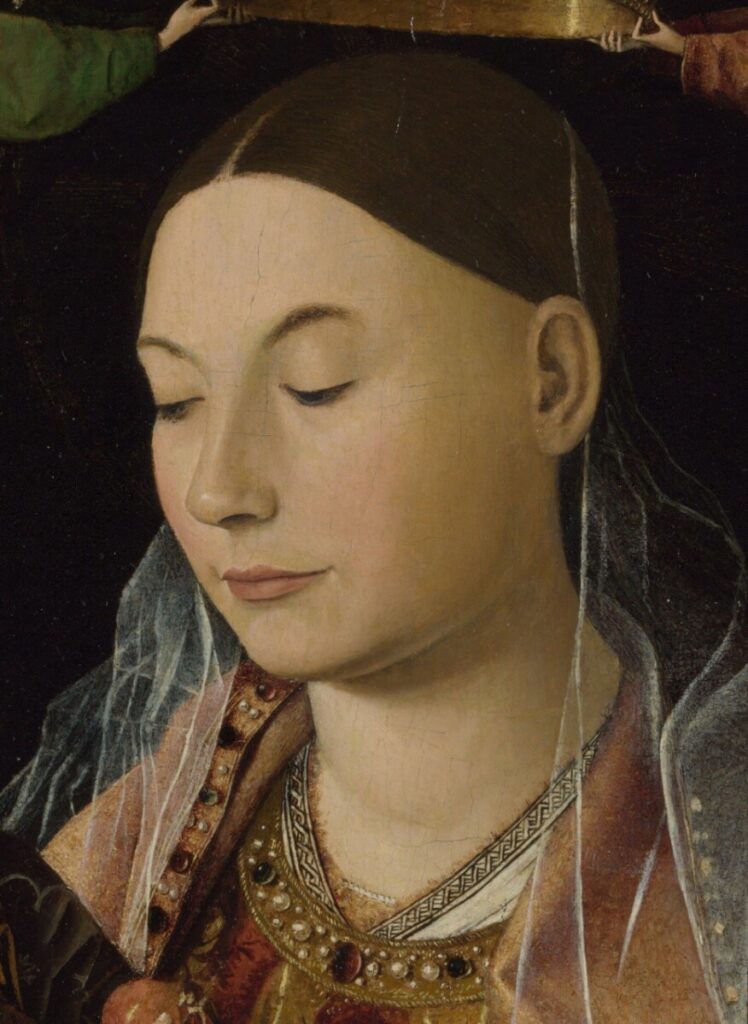
The firm and impenetrable face, where everything, from the dark bands of the hair to the pallor of the complexion, to the geometric marks of the eyebrows and of the eyes, to the mysterious mouth, to the perfect ear, seems to seek the motionless hardness of sculpture, freezes in its stylization of marble a warm type of beauty, still today recognizable among the women of Sicily.
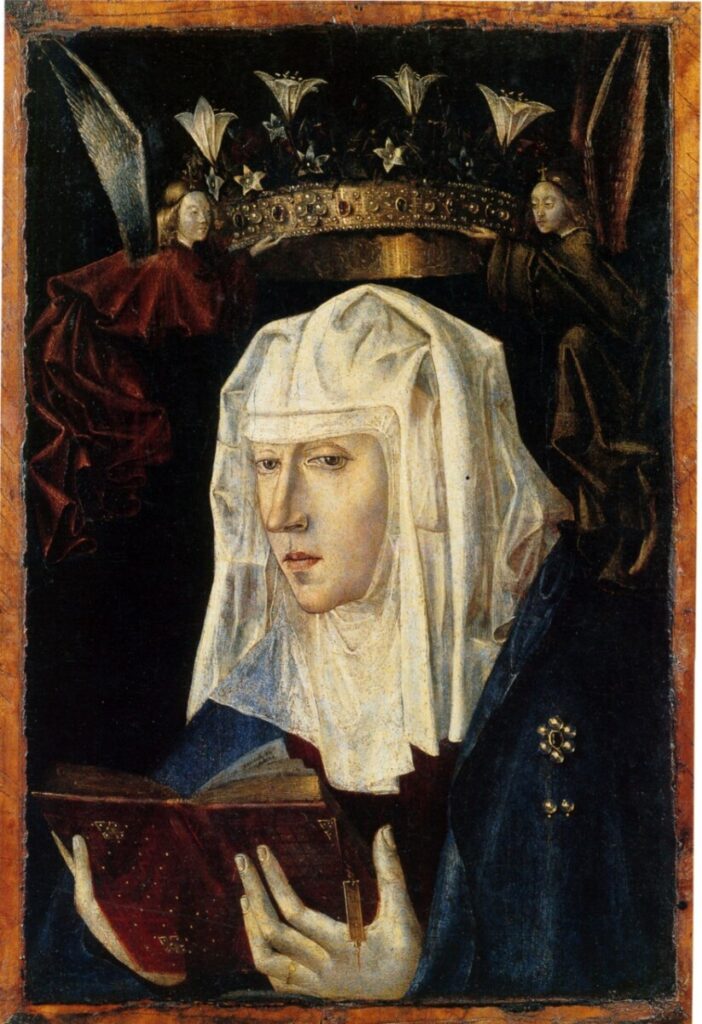
An iconographic bond links the Salting Virgin to the Reading Virgin, a truly close bond, so close that it cannot seem accidental and almost suggests the idea that the Child Jesus replaced at the last moment the open book in the Mother’s hands.
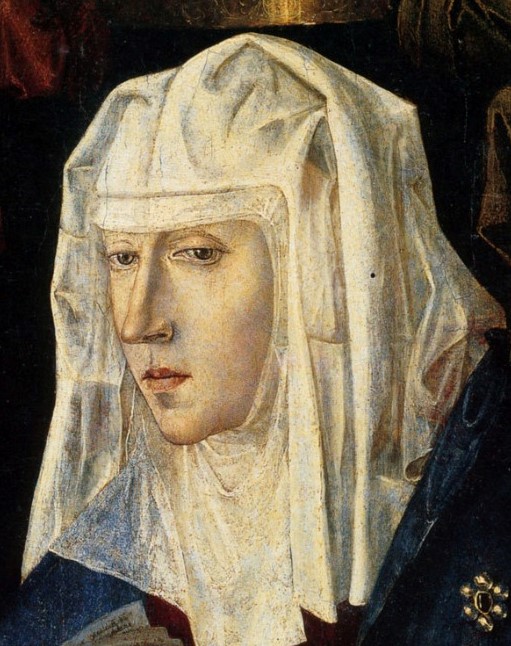
The Reading Virgin, whose white face seems to radiate light, because of the crown adorned with lilies and roses, and the open book in her hands, a youthful work of the man of Messina, which he defined as “a poignant creature, with a bitter mouth, long and almost predatory hands, with the face sealed in tormented bands”, responds to the countless requests for devotional panels of private piety.
To deepen the reflection on Mariology in sacred art and in Renaissance painting, consult the apostolic exhortation Marialis Cultus of Paul VI, which values artistic expressions as a privileged vehicle of Marian devotion and contemplation.
Deepen your studies: explore MariologyMarian TheologyMarian apparitions and the Postgraduate Program in Mariology.
Postgraduate Program in Mariology
Would you like to deepen your formation in Mariology? Discover the Postgraduate Program in Mariology at Locus Mariologicus, an academic formation that unites theological rigor, spiritual life, and the living tradition of the Church.
Would you like to study Mariology seriously?
This article arises from the works in the library of Locus Mariologicus. The Postgraduate Program in Mariology brings you to that same source, with academic guidance: Scripture, the Fathers of the Church, and the Magisterium, from the first dogma to contemporary questions.





Responses