The celebration of the Nativity of the Lord continues in the feast of the Epiphany, of the Baptism of the Lord and of His Presentation in the temple. With this last date the Christmas season ideally comes to a close, according to the mystery schema of Christmas and according to the ancient tradition of Jerusalem, attested by Egeria. In the current ordering of the liturgical Calendar, after the celebration of the Baptism of the Lord, Ordinary Time begins, on weekdays and on Sundays throughout the year.
This proposal already makes us touch upon the complexity of the liturgical Year. In the Epiphany the West celebrates the adoration of the Magi, though not exclusively. The East, on the contrary, celebrates the Baptism of the Lord, now taken up again in solemn fashion by the Roman liturgy on the Sunday after the Epiphany. But there is still the Presentation of the Lord in the temple, celebrated forty days after the solemnity of Christmas.
Historical roots
The feast of the manifestation (epipháneia) of the Lord, celebrated on January 6, is of Eastern origin. The Gnostics celebrated it in order to indicate that, in the Baptism of Jesus, Christ-man becomes Christ-God. In the Gospel of the Ebionites it is said that, as He came up from the river, a great light shone upon Him, in the manifestation of God.
The idea of an epipháneia of the Most Holy Trinity is correct and corresponds to the Gospel texts that unanimously attest the Baptism of Christ.
In the third century, Epiphanius mentions it. Ephrem the Syrian likewise considers it the feast of the coming of the Lord, of His birth and of the perfect incarnation. This means that, at the beginning, in the East, this feast also included the celebration of the birth of the Savior.
Around the end of the fourth century, the feast exists in Antioch under the name “ta hagia phōta,” the holy lights. The predominant attention falls upon the mysterious manifestation that occurs in the Baptism of the Lord on the part of the Father, the Son and the Holy Spirit, and upon the sanctification of the waters by Christ. It is the day of baptisms.
The pilgrim Egeria speaks to us of this feast in Bethlehem and in Jerusalem between 381 and 384 (Travel Diary IX,1 “By the happiest of coincidences for us, it happened that the day on which we arrived at the stage of Arabia was the eve of the most holy day of the Epiphany. On that same day the vigil was to be celebrated in the church”).
At the root of the date chosen for this celebration we find a pagan feast of light celebrated in Egypt from the most ancient times in honor of Aion, “time.” This took place at the culminating moment of the winter solstice, about two weeks after December 25. In Alexandria the goddess Kore was also celebrated, the Virgin who had brought forth the Sun-light. The theme of light and that of water, which on that day was drawn from rivers and springs, is therefore linked also to a cosmic element celebrated by pagan religiosity.
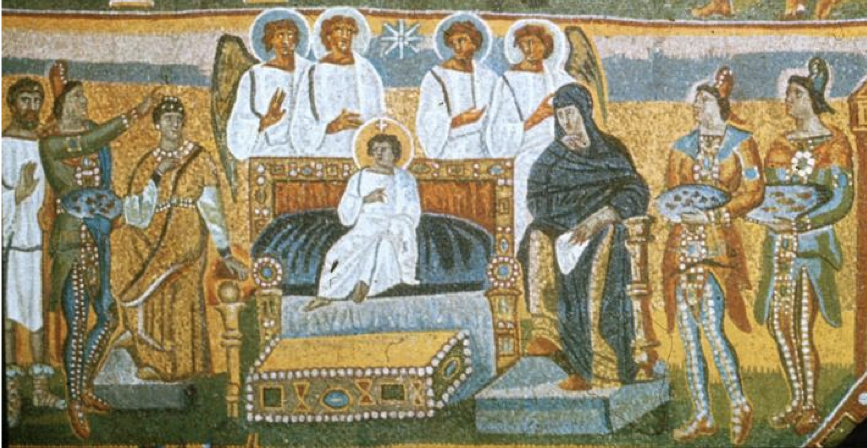
The feast of the Epiphany has been celebrated in Rome since the end of the fourth century. However, in it the commemoration of the manifestation of the Lord to the nations prevails, in the adoration of the three Magi guided by the star. Nevertheless, both in Rome and in other places, such as Spain, there are accumulations of meanings, such as the Baptism of the Lord, the wedding feast of Cana (themes still present in the hymns and antiphons) and even the multiplication of the loaves. The image of the adoration is very ancient: it is found in the catacombs and in the mosaics of Ravenna, where the names of the three figures are indicated.
In the current ordering of the liturgical Calendar, the Epiphany preserves its characteristic meaning of a manifestation to the nations through Christ, who is the light of the world.
The feast of the Baptism of the Lord, celebrated on the Sunday following the Epiphany, has acquired greater prominence in the Roman liturgy, both through the beautiful texts of the Mass and of the divine office, and also through the patristic readings of the season after the Epiphany, which recover some Eastern homilies on the mystery of the Baptism of Jesus.
We stand before an East-West integration in the texts and in the liturgical spirituality of this season.
The liturgical celebration
The word proclaimed
In the Roman feast of the Epiphany, the tone is set by the proclamation of the Gospel of Matthew on the adoration of the Magi (Mt 2:1-12). In former times the prostration during the chanting of the Gospel was ritualized in order to make the proclaimed mystery more vivid.
This Gospel text acquires the full meaning of the mystery in the light of the prophet Isaiah (Is 60:1-6), who sings of the glory of Jerusalem flooded with light, and of Psalm 72, royal and messianic. These two texts lie at the basis of the understanding of the Gospel narrative.
Paul (Eph 3:2-6) offers the theology of the manifestation to the nations, which is then taken up again in the prayers and in the preface of the solemnity.
In the celebration of the Baptism of the Lord, unified texts are read on the anointing of Jesus through the Spirit (Is 42:1-4, 6-7), and on the testimony of the Apostles concerning the episode of the Baptism (Acts 10:34-38). In the various cycles the Gospel of the Baptism is proclaimed according to the three Synoptics.
The prayer of the Church
Into the texts of the prayers of the Mass many themes proper to the mystery celebrated are inserted: the light and the glory of the revelation. The meaning of the offerings and of the exchange of gifts. The commitment of life and the expectation of the definitive manifestation of the Lord.
The Epiphany also has its own preface and proper texts in the Roman Canon.
On the Baptism of the Lord, the prayers take up the themes of the manifestation of Christ in the Jordan and of our baptism. Of the Lamb who washes the world of every stain. Of listening to and following Jesus so as to become His disciples.
Very beautiful is the preface centered on the mystery of the Baptism of Jesus, sign of the baptism of the Church, and on the consecration of the Servant with the anointing of the Spirit for His mission as priest, prophet and king.
Note on the Holy Theophany in the Byzantine rite
The celebration of the Epiphany in the East, in the Byzantine rite, is the feast of the Baptism of Jesus, with a rich theology that embraces the manifestation of the Trinity, the anointing of Christ, the theme of the baptism of Christians, the sanctification of the cosmos and of the waters in order to make them capable of the baptismal mystery, the descent that preludes the Passion and the descent into hell. To this day the water is solemnly blessed at the end of the divine liturgy, with the solemn text of Sophronius of Jerusalem (seventh century). The springs and the rivers are also blessed. It is the sanctification of the cosmos.
We transcribe an excerpt from the text of Sophronius, in which the liturgical “Hodie” of salvation resounds, becoming present and efficacious:
«Hodiernum gratia Spiritus Sancti descendit super aquas in forma columbae. Hodiernum fluctus Iordanis transformata sunt in medicamenta praesentia Domini. Hodiernum peccata hominum effunduntur in aquis Iordanis. Hodiernum Paradisus apertus est ante humanitatem et Sol iustitiae resplendet nobis. Hodiernum regnum caelorum accepimus… Festivitas Domini hodie vemos in Iordane… et dat mundo baptisma salutis».
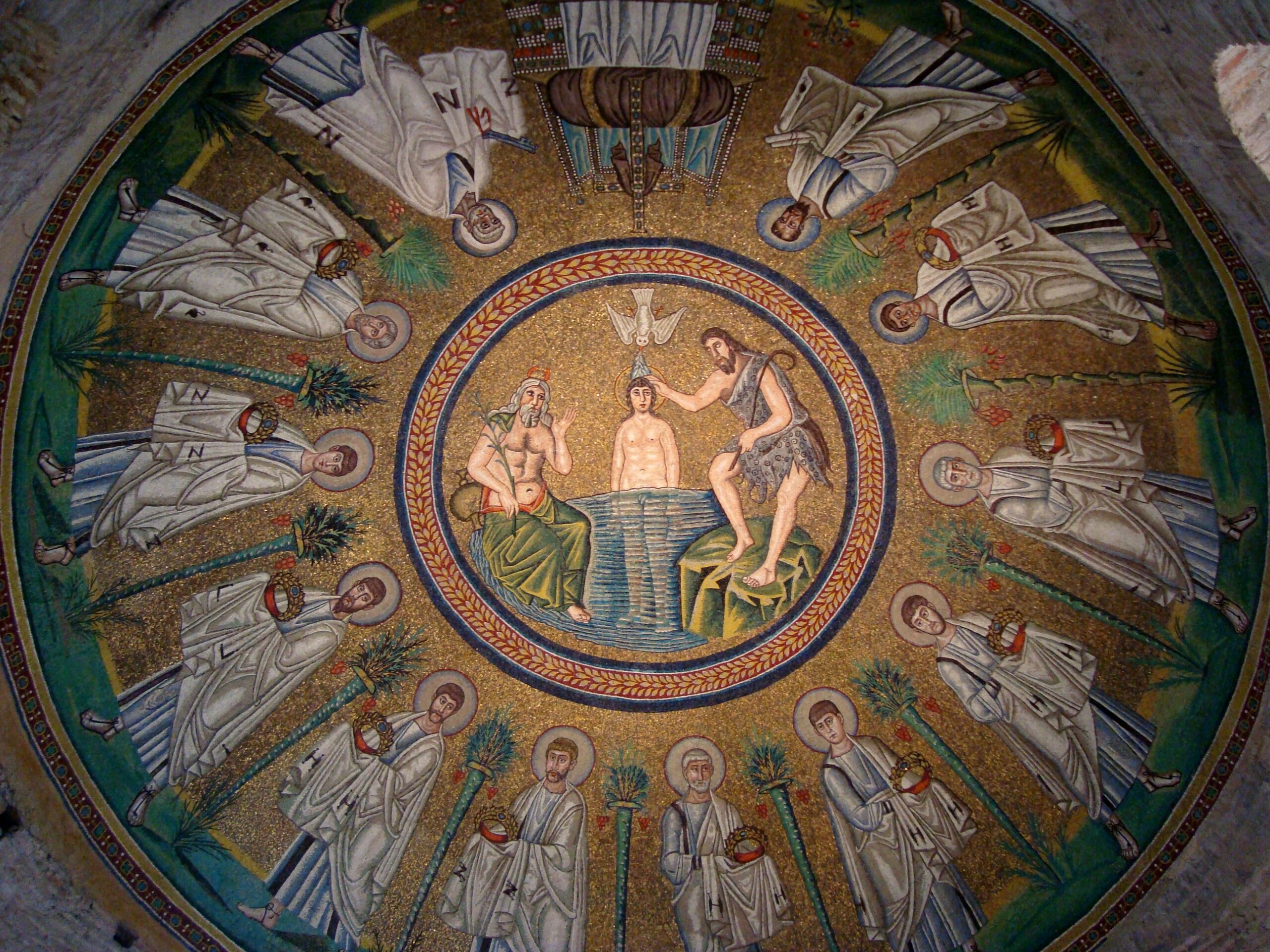
The icon of the Baptism of the Lord is very expressive. It is found also in Ravenna, in the two baptisteries, in precious mosaics of the two domes, with the Apostles alongside. In the iconographic representations, we find Christ entering the river Jordan and standing there as in a hollow. The water is transparent and allows His body to be seen.
Mariological spirituality of the Epiphany: Mary manifests the Son
Summarizing some lines of theology and of spirituality which, moreover, stand in doctrinal continuity with those of Christmas, we may thus offer a few notes:
1. From the light of Christ to baptismal illumination
In the Epiphany and in the Baptism of the Lord the theme of light prevails, so bound to the Gospel origins and to the pages of these feasts of the holy lights. The manifestation of the Lord is glorious because the glory, of which the star that guides the Magi is a sign, rests where Christ is present and is adored. The glory of God, which in the prophecy envelops Jerusalem like a cloud, now rests upon the humility of the hut where the Child lies with the Mother. The light reveals to all the reality of Christ, who is Lumen Gentium (Light of the nations). The light and the glory evoke faith, so well expressed by the Magi, who sought and found. Faith becomes a commitment of life in order to come to the contemplation of glory.
The Magi are, according to the Akáthistos hymn, the first illumined, the firstfruits of all the Gentiles called to share in the grace of baptismal illumination that leads to the contemplation of the mystery hidden in Christ Jesus.
Christ, in the Jordan, is the Illumined One and the Illuminator, who offers the baptismal light to those who receive Him.
2. The offering of the peoples to the king, priest and prophet
In its prayer the liturgy interprets the meaning of the gifts offered to Christ by the Magi: gold as to a King, incense as to a Priest, myrrh for His burial.
In the Baptism, Jesus is fully revealed by the Spirit with the priestly, prophetic and royal anointing, in which the Christian also shares, anointed with faith (according to an ancient theme of the Syro-Antiochene liturgy) and with the gift of the Spirit.
The gifts of the faithful are exchanged for the gift of Christ. In the eucharistic celebration, the bread and the wine are transformed into Christ, the gift of the Father.
In the adoration of the Magi we find a cultic attitude of profound respect, adoration and self-giving, which preludes and anticipates the worship in Spirit and truth of the baptized.
3. The mystery of the divine-humanity
As at Christmas, in the Epiphany and in the Baptism there is expressed the grace of the call to participation in the divine nature, of the re-creation according to the image of the Firstborn. The preface of the Epiphany, in continuity with that of Christmas, speaks of the assumption of mortal nature and of the gift of immortality communicated. Similar expressions are found in the Collect of the Baptism of the Lord.
4. From faith to witness: the missionary Church
The dynamic sense of faith is expressed in the call to bear witness, to announce to all the salvation experienced, like the Magi on their return from Bethlehem. The Church entrusts to the prayer of intercession its radiating of Christ, Light of the world, making Him also Light of the nations for the salvation of all the peoples of the earth, ideally represented by the Magi in Bethlehem.
The Baptism of Christ illumines, as the beginning of His mission of proclaiming the Kingdom, the Christian’s vocation to the missionary apostolate. The Epiphany is the feast of the missionary Church.
5. The Presentation of the Lord in the temple: the close of the Christmas cycle
In Jerusalem, forty days after the Epiphany, which at that time celebrated the Nativity of the Lord, the feast of the Meeting, or Hypapante, was held. It is the feast of the Presentation of the Lord, which today is celebrated forty days after December 25, the Nativity of the Lord.
It is the great feast of the entrance of Jesus into the temple, of His offering as firstborn, of His going up to Jerusalem, of the revelation as “Light of the nations” and also as a sign of contradiction. The opening lucernarium of the feast ritualizes the words of the elder Simeon.
Mary has a specific role in this feast as the Mother to whom the sword of sorrow is announced, the offering Virgin.
Ideally, this feast is placed at the end of the Christmas cycle and is already a prophecy of the Passion of the Firstborn, in close relation, therefore, with the paschal mystery in the twofold expression of the immolation and glorification of Christ.
A Byzantine text of the feast ideally unites the Incarnation and the Passion, the fulfillment of the Scriptures:
“Hail, full of grace, Virgin Mother of God: from you was born the Sun of Justice, Christ our God, who enlightens those who are in darkness. Rejoice, you also, righteous elder, taking into your arms the liberator of our souls, who grants the resurrection to all.”
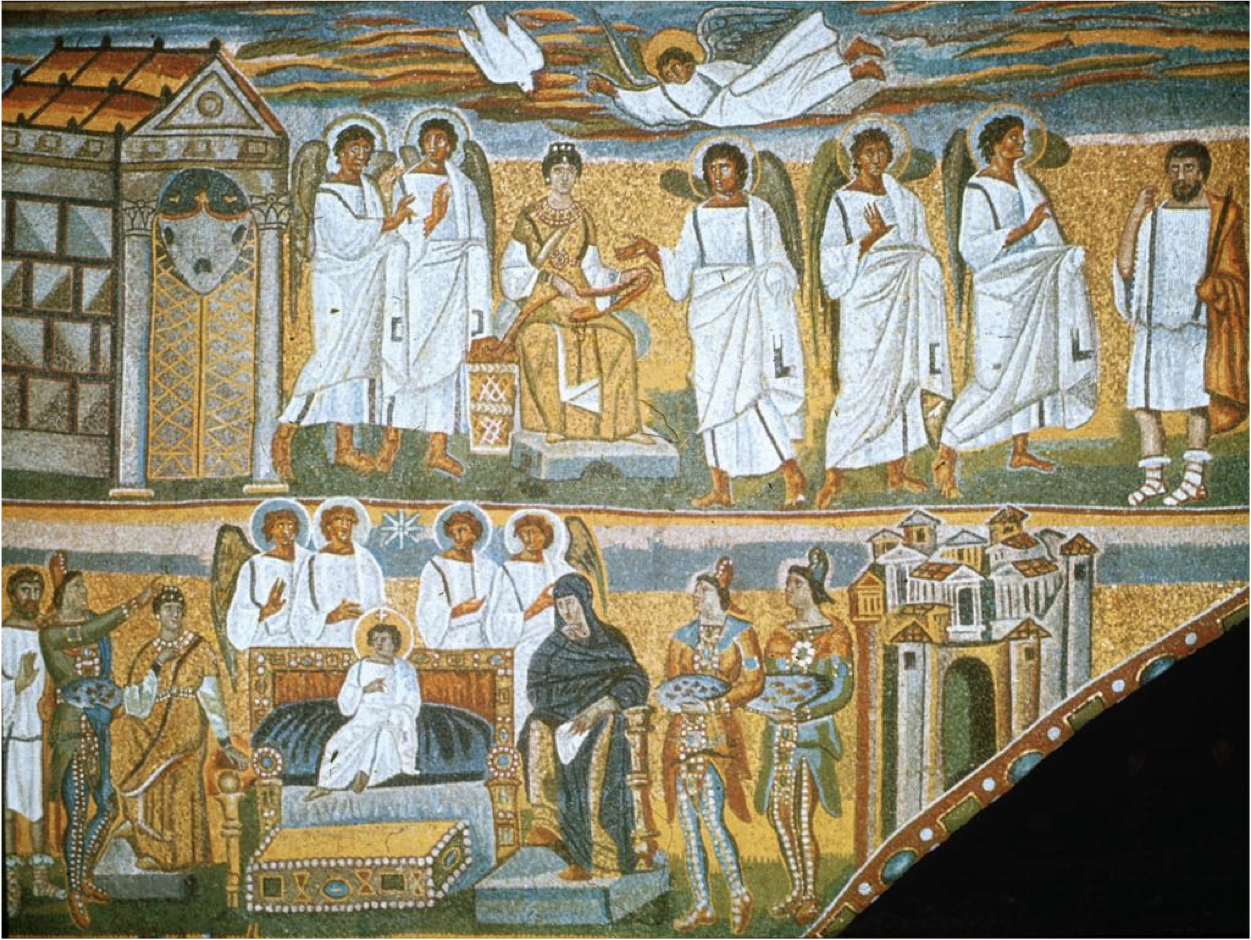
The icon of the Presentation of the Lord in the temple, which is found also in the Christmas cycle of the Triumphal Arch of Saint Mary Major, presents this mystery with simplicity and expressiveness, recalling Christmas and projecting it toward Easter.
For the doctrinal framework of Mary’s role in the liturgy and in the manifestation of Christ, chapter VIII of the Second Vatican Council’s Lumen Gentium situates Mary at the center of the mystery of the incarnation celebrated at the Epiphany.
In this way, Christmas is reconnected theologically and spiritually to the Passover of the Lord, which is the root and foundation of the whole liturgical Year.
To explore more deeply the role of Mary in the liturgy of the Epiphany and in Marian devotion throughout the liturgical year, consult the Apostolic Exhortation Marialis Cultus of Pope Paul VI.
Postgraduate Program in Mariology
Would you like to deepen your formation in Mariology? Discover the Postgraduate Program in Mariology of Locus Mariologicus – an academic formation that unites theological rigor, spiritual life and the living tradition of the Church.
This article is born of the works in the library of Locus Mariologicus. The Postgraduate Program in Mariology takes you to the same source, with academic guidance: Scripture, the Fathers of the Church and the Magisterium, from the first dogma to contemporary questions.
I. Mary’s Faith at the Annunciation: Theological Foundation The theological foundation of Mary’s faith lies in the episode of the Annunciation narrated by Luke (Lk…




Responses