Facilius est camelum: Saint Clare of Assisi, Evangelical Poverty, and Mary Mother of the Poor
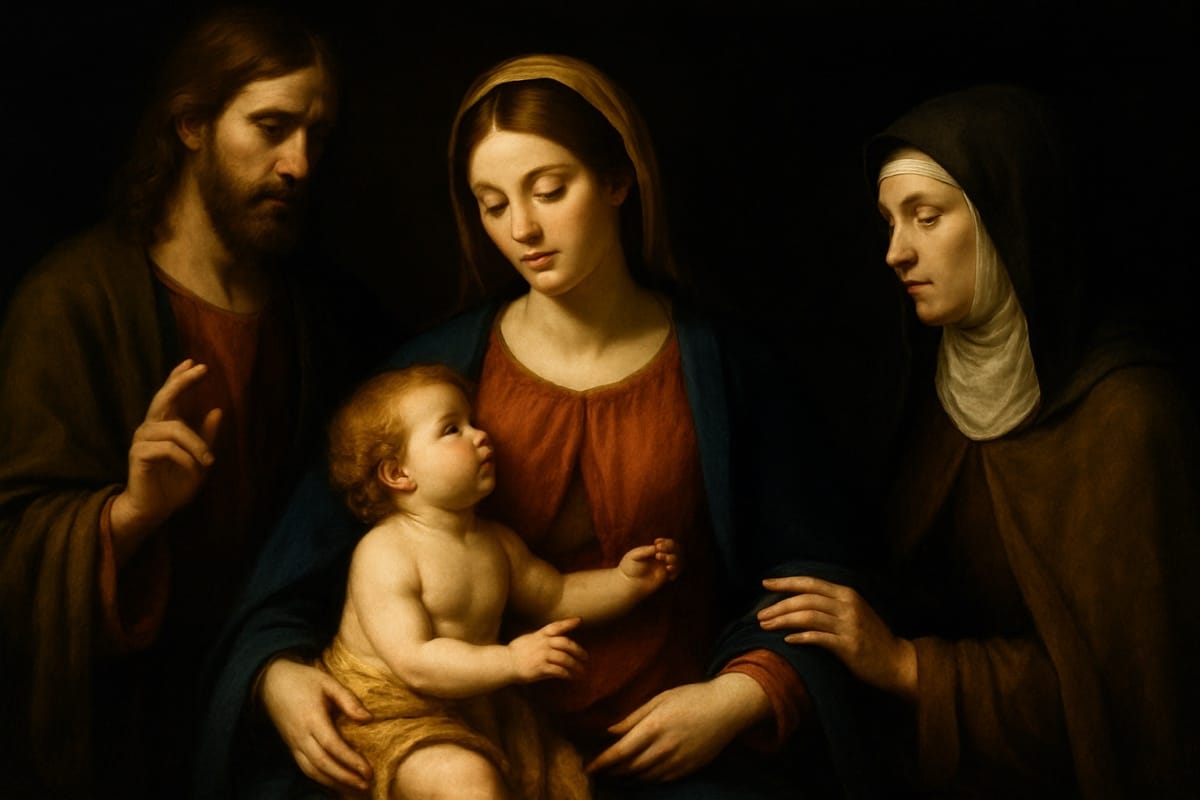
Amen dico vobis, quia dives difficile intrabit in regnum caelorum. Et iterum dico vobis: facilius est camelum per foramen acus transire, quam divitem intrare in regnum caelorum.
Mt 19:23-24
Mt 19:16-30 begins with the encounter with the rich young man (vv. 16-22) and concludes with the promise of the “hundredfold” for those who have left everything (vv. 27-30). Tuesday resumes from v. 23 onward: Jesus’ reflection on the difficulty the rich have in entering the Kingdom. The disciples’ question, “who then can be saved?” (Mt 19:25), is genuinely disconcerting: if even the rich (seen as blessed by God in the Judaism of that time) have difficulty, who can be saved? Jesus’ answer: “With men this is impossible, but with God all things are possible” (Mt 19:26), salvation is not a human achievement but a divine gift.
August 11 is the Memorial of Saint Clare of Assisi (1194-1253), foundress of the Poor Clares (Order of Poor Ladies) and disciple of Francis of Assisi. Clare lived radically what the rich young man refused: she left a wealthy and noble family of Assisi in order to embrace absolute poverty. The liturgical coincidence between the “facilius est camelum” of Mt 19:24 and the feast of the foundress of Franciscan poverty is the most eloquent word about Clare’s life: she passed through the “eye of the needle” because it was not she who passed but the grace of God that carried her.
I. “Difficile diti intrare”: The Logic of Poverty in the Kingdom
“A rich man will hardly enter the Kingdom of Heaven” (Mt 19:23), Jesus’ statement is not a condemnation of material wealth as such but a diagnosis of attachment: the rich man who identifies himself with his wealth carries a “load” that makes passage through the “narrow gate” (Mt 7:13) very difficult. The “camel through the eye of a needle” describes the real difficulty of interior detachment: not impossibility but the demand for a transformation that goes beyond human powers.
Jesus’ answer to the disciples’ consternation is the theological key: “With men this is impossible, but with God all things are possible” (Mt 19:26). The salvation of the rich man is not impossible, it is supernatural: it requires a grace that transcends the human capacity for detachment. Zacchaeus, the rich tax collector who received Jesus into his house and gave half of his goods to the poor (Lk 19:1-10), is the example of how grace works the transformation that human effort does not attain.
Peter, who asks “we have left everything and followed You” (Mt 19:27), receives the promise of the “hundredfold”: “everyone who has left houses, brothers, sisters, father, mother, children, or fields for My name’s sake will receive a hundredfold and will inherit eternal life” (Mt 19:29). The promise is not abstract: Saint Clare, who left everything, received the “hundredfold” of a spiritual fruitfulness that spans eight centuries and continues to bring forth vocations among the Poor Clares throughout the world.
II. Saint Clare: The Camel That Passed Through the Needle
Clare of Assisi was born in 1194 into a noble family. In 1212, at the age of eighteen, she heard Francis preach and decided to leave everything. She fled by night, cut her hair in the Church of the Portiuncula, and founded with other companions the community of the “Poor Ladies” at San Damiano, near Assisi. The most singular element of her spirituality is what she called the “privilege of poverty”: the right to own no property, not even as a monastery.
The popes of the time required women’s monasteries to hold property in order to guarantee their subsistence; Clare insisted for decades on absolute poverty, finally receiving the approval of Pope Innocent IV two days before she died (1253). This paradoxical “privilege”, poverty as privilege, reverses the logic of the rich young man: what the world regards as a disadvantage, Clare recognizes as the greatest freedom. The camel passed through the needle because it let itself be transformed by grace.
III. Mary Mother of the Poor: The Magnificat and the Anawim
Mary is, in the Magnificat (Lk 1:46-55), the spokeswoman of the “anawim”, the poor of Yahweh in the Old Testament: the Hannah of 1 Sam 2, the Psalms of the poor (Ps 34, 69, 86), Zephaniah 2:3 (“seek the Lord, all you humble of the earth”). Mary, who defines herself as the “humble handmaid” (Lk 1:48) and proclaims that God “has exalted the humble” and “has filled the hungry with good things”, is the voice of all who have nothing and place all their hope in God.
Mary’s poverty is not only spiritual, it is concrete and historical: the young woman of Nazareth belonged to the lowest strata of Galilean society. In Bethlehem, she found no place in the inn. At the Presentation in the Temple, she offered “a pair of turtledoves or two young pigeons” (Lk 2:24), the offering of the poor, according to Lev 12:8. The Holy Family, which lived in Nazareth on Joseph’s carpentry, is the historical realization of the Magnificat: God who makes Himself poor in order to exalt the poor.
Clare of Assisi saw in Mary the model of her vocation: the “Lady Poverty” whom Francis and Clare embraced had the face of Mary, she who had nowhere to lay her head in order to give birth to the Son of God. Franciscan Mariology, especially in Bonaventure and Duns Scotus, developed this intuition: Mary as the supreme “pauper Christi”, she who most fully lived the poverty of the Son.
IV. “Centuplum accipietis”: The Fruitfulness of Poverty
“You will receive a hundredfold and will inherit eternal life” (Mt 19:29), Jesus’ promise to those who have left everything has in Clare and in Mary its two most eloquent historical verifications. Clare, who left a noble family of Assisi, brought forth an Order with thousands of nuns throughout the world and produced mystics such as Saint Veronica Giuliani and Blessed Mary of Jesus of Ágreda. Clare’s “hundredfold” is a reality verifiable in time.
Mary, who left the plans of her own life in order to say “fiat”, received the most extraordinary “hundredfold” in history: the divine Maternity, the company of the Son for thirty years, her presence at the foot of the Cross, the Assumption into Heaven. Mary’s “hundredfold” is also ecclesial: she is Mother of all who believe, a spiritual motherhood that transcends the biological and the historical.
Saint Clare and Mary teach the same lesson to the disciple disconcerted by the “facilius est camelum”: evangelical poverty is not the suppression of life but its intensification. The camel that passes through the needle is not diminished, it is transformed. The life left behind for love of the Kingdom is not lost, it is multiplied a hundredfold. This is the “impossibility for men” that “God makes possible”: the metamorphosis of poverty into wealth, of loss into gain, of the dead grain into abundant fruit.
Postgraduate Program in Mariology
Would you like to deepen your formation in Mariology? Discover the Postgraduate Program in Mariology of Locus Mariologicus – an academic formation that unites theological rigor, spiritual life, and the living tradition of the Church.



Responses