“Do not take anything away from her path”: Father Pio, the necessary nourishment and baggage of Mary
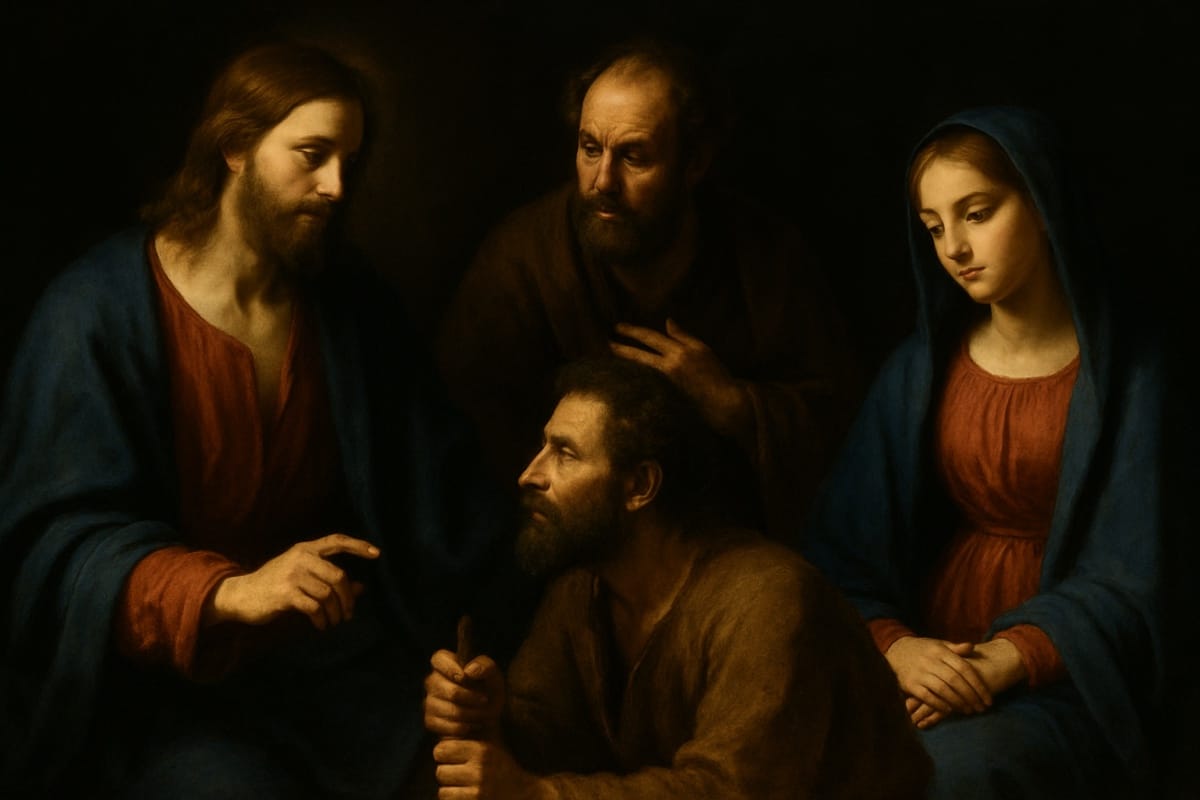
“Do not take anything on your journey. […]. Give me neither poverty nor riches, but give me only what is necessary for life.” (Luke 9:3, Proverbs 30:8)On the Wednesday of the Twenty-Fifth Week of Ordinary Time, when the Church commemorates Saint Pius of Pietrelcina, an ancient prayer for sufficiency is joined with a mission without baggage. Agur, the wise man of Proverbs, asks God not to give him neither poverty nor wealth, but only the necessary food. Jesus sends the Twelve without staff, without bag, without bread and without money. A text calls for a just measure. The other takes away from the missionary even that measure.
I. The first reading: Prov 30:5-9
The passage begins with a principle about the Word and ends with a personal prayer, and the two parts are linked. “Every word of God is proven, it is a shield for those who take refuge in it” (v.5), says the wise man, and immediately adds the warning: “Do not add to his words” (v.6). The oldest religious temptation is not to abandon revelation, but to augment it with demands and certainties that it did not give.
There follows one of the few personal prayers in the book, and it is notable for its carefully calculated modesty. “Two things I ask of you, Lord” (v.7), says Agur. The first is truth, “Keep me from fraud and lying.” The second is material measure: “Do not give me poverty or wealth, but give me only what I need” (v.8). The reason is not comfort, but clarity about oneself: in abundance, he could deny God by asking, “Who, after all, is the Lord?” (v.9), and in poverty, he could steal and profane God’s name (v.9). Agur knows both threats and knows that the second does not make him more virtuous than the first. Poverty does not sanctify automatically. It also tries.
II. The gospel: Lk 9:1-6
Jesus gives the Twelve “power and authority over every demon and to heal every disease” (v.1) and immediately after strips them of everything else. The list of prohibitions is detailed: “Neither staff, nor bag, nor bread, nor money, and do not take two tunics” (v.3). None of these things was superfluous for those walking in Galilee. The staff served for the road and for dogs, the extra tunic served for cold nights.
The following instruction is equally practical. “When you enter a house, stay there until you leave” (v.4), which forbids seeking better lodging and obliges the missionary to accept whatever is first offered to him. And the final gesture, shaking the dust off one’s feet before those who do not receive (v.5), is not a curse, but a constatement. Not everything depends on the sender. There are rejections before which the only response is to move on.
The sense of all this dispossession is clear. He who comes with nothing depends on those who receive him, and this dependence is part of the message. A self-sufficient messenger would announce a Kingdom that does not need anyone.
III. Saint Pius and the necessary food
Today’s commemoration fits well into these readings, more than it might seem. Francesco Forgione (1887-1968), a Capuchin friar from Pietrelcina, is known for the extraordinary phenomena that accompanied his life, and it is precisely for this reason that it is fitting to look at what he did every day. He spent hours in the confessional, celebrated Mass, and founded a house for the relief of the sick in San Giovanni Rotondo. He was canonized by John Paul II in 2002.
There is a fact that is more significant than the miracles. For years, he was forbidden from celebrating publicly and confessing, by decision of the very ecclesiastical authority investigating the phenomena, and he obeyed without defending himself. It is the gesture of one who shakes the dust off his feet without bitterness, and it is the only solid proof that what happened to him came from God. Extraordinary gifts do not occur because of their spectacular nature, but because of the obedience of those who receive them. Agur asked for neither too much nor too little. Father Pio received much and lived as if he had nothing.
IV. Mary, Who Only Took What Was Necessary
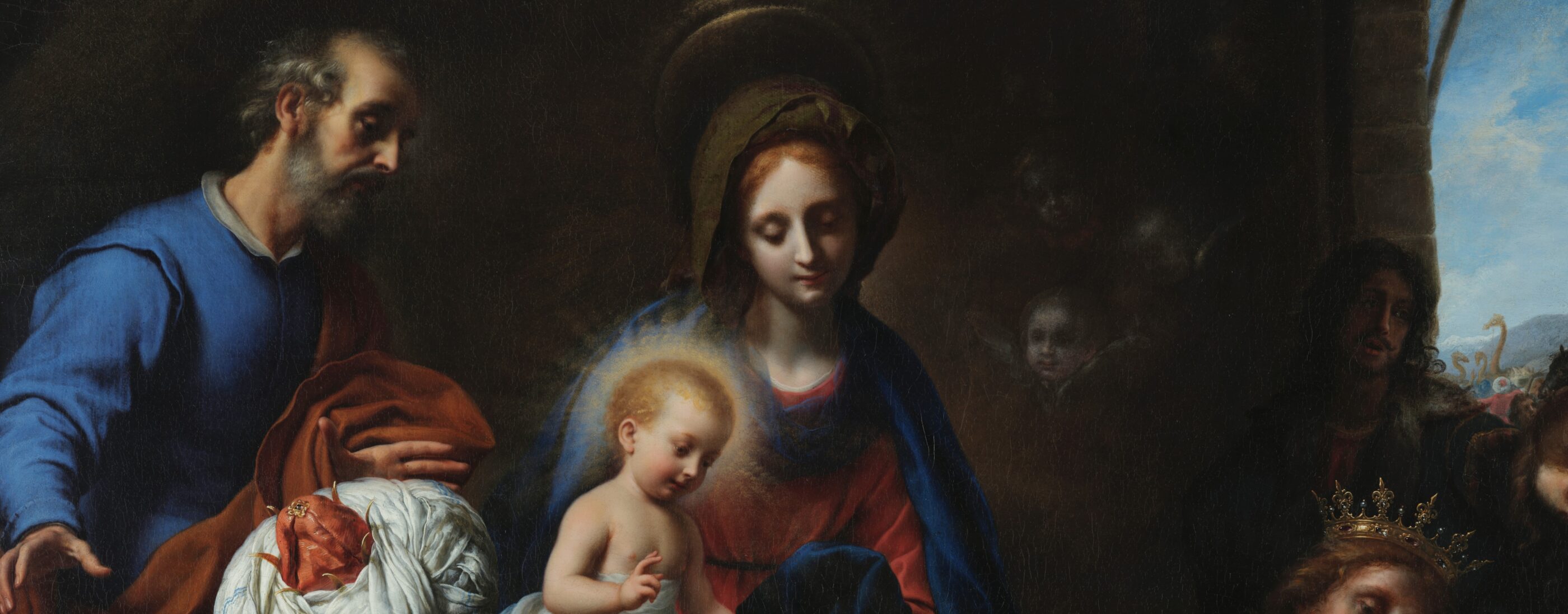
Agur’s prayer finds in Scripture a fulfillment that devotion does not always associate with it. When Mary and Joseph presented the Child in the Temple, they offered “a pair of turtledoves or two young pigeons” (Lk 2:24), which was the offering provided for those who could not afford a lamb. It is not a choice of poverty for asceticism, but the real condition of a family of artisans, and Luke records it without comment.
Mary belongs to what the Council calls the humble and poor of the Lord, who trust in him for salvation (LG 55). She had no wealth that would lead her to ask, “Who is the Lord?” nor poverty that would lead her to profane his name. She had the necessary sustenance, and she sang for it: “He has filled the hungry with good things, and sent the rich away empty” (Lk 1:53). It is Agur’s prayer transformed into a song, with a decisive difference. Agur asks to be spared from two temptations. Mary announces that God is already reversing the order that produces them.
And there is the mandate to leave without baggage. Luke shows her rising and hurrying to the mountain shortly after the Annunciation (Lk 1:39), without mentioning any preparations. Then in Bethlehem, without a home. Then in Egypt, without a homeland. Then in Nazareth, without a name. Her entire life is the itinerary of one who did not take a staff or a pack, and arrived where she had to.
Therefore, the Thursday of the 25th Week leaves a disconcerting question for those who already have everything organized. What in our life exists primarily to spare us from depending on anyone? Because it is probably this that Jesus would tell us to leave at home.
Postgraduate Program in Mariology
Would you like to deepen your formation in Mariology? Discover the Postgraduate Program in Mariology at Locus Mariologicus – an academic formation that combines theological rigor, spiritual life, and the living tradition of the Church.
Would you like to study Mariology seriously?
This article draws on the works of the Locus Mariologicus library. The Postgraduate Program in Mariology takes you to the same sources with academic guidance: Scripture, the Church Fathers and the Magisterium, from the first dogma to contemporary questions.




Responses