The Crucifixion of Christ and the Agony of Mary: A Liturgical Tapestry of Salvation and Hope

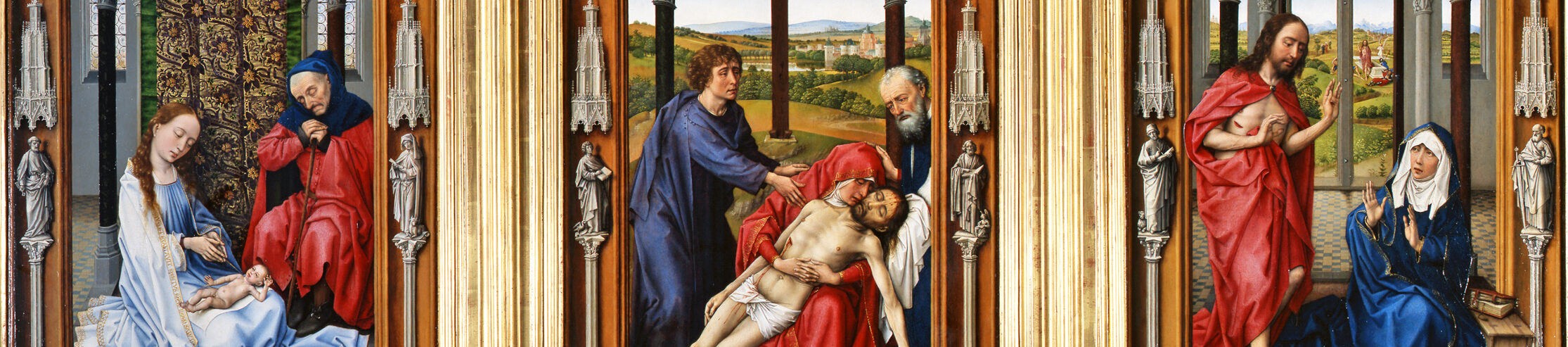
The liturgical memorial of the Blessed Virgin Mary of Sorrows, celebrated on September 15, offers the contemporary reader a reflection that transcends private devotion. This memorial constitutes a hermeneutical key for understanding the indissociable relationship between a mother’s sorrow and the redemptive sacrifice of her son.
The liturgical calendar: Mary and the order of salvation
The General Liturgical Calendar is not reducible to a succession of festivities. It constitutes, rather, a symbolic structure of the history of salvation. By placing the memorial of Our Lady of Sorrows immediately after the feast of the Exaltation of the Cross, it offers the faithful a unitary vision of the paschal mystery. Paul VI, in his apostolic exhortation Marialis Cultus, emphasized that this memorial provides a “propitious occasion for reliving a decisive moment in the history of salvation and for venerating the Mother associated with the Passion of the Son and close to Him raised up on the cross“.
The theology of sorrow: Mary and Christ in redemptive symbiosis
The proximity of the two dates, September 14 and 15, transcends liturgical symbolism. It attests that Mary’s sorrow cannot be separated from the sacrifice of Christ. The liturgy, in conformity with the conciliar constitution Lumen gentium, exhorts us to avoid “a false exaggeration” or “an excessive narrowness” in the consideration of the singular dignity of Mary. We are, therefore, called to understand Mary not only as the Mother of Jesus, but as the Mother of the Church, the Mother of all the faithful.
The Eucharist: Mary in the dialogue between heaven and earth
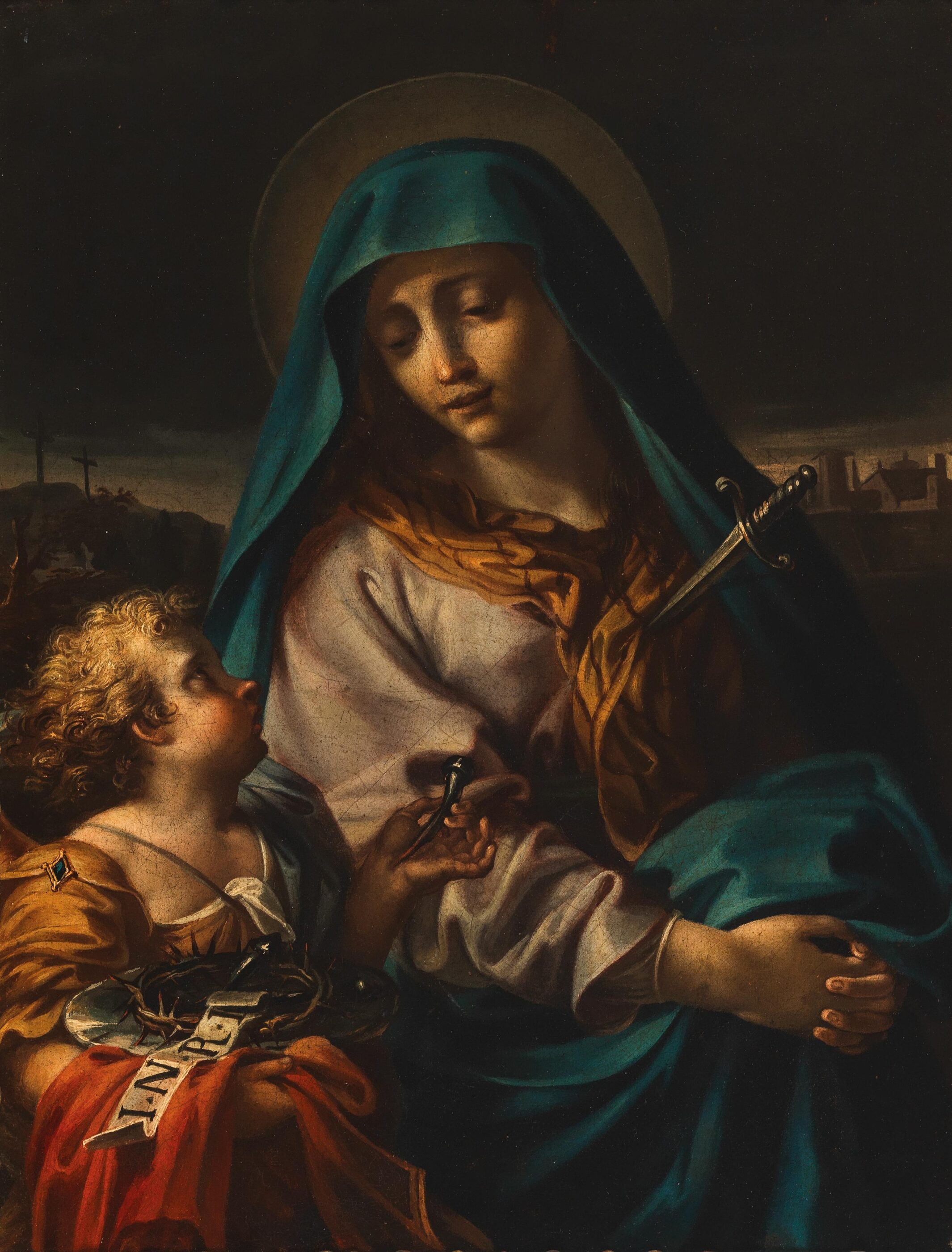
The current form of the Mass offers liturgical texts of singular theological density. The Entrance Antiphon, taken from Lk 2:34-35, presents Simeon prophesying that Mary would be pierced by a sword of sorrow. The assembly is thus invited to receive the proclaimed Word in contemplative depth. The first reading, taken from the Letter to the Hebrews, recalls that Christ, “in the days of His earthly life“, offered “prayers and supplications” to God. Mary emerges here not only as the sorrowful mother, but as the mother of humanity, calling the faithful to obedience and to perfection in Christ.
The Gospel and Mary: the revelation of the mystery of salvation
The Gospel of John offers a scene of singular dogmatic density: Mary at the foot of the cross, where Jesus entrusts her to the beloved disciple as the mother of all. In this moment, Mary takes on the figure of the New Eve, the mother of the living, and the image of the Church.
Euchological prayers: the Church in union with Mary
The prayers of the Holy Mass recall that Mary, by the will of the Father, remains close to the Cross of Christ. The Collect asks that the Church, “associated with Mary in the passion of Christ, may share in the glory of the resurrection“. The Prayer over the Offerings and the Prayer after Communion reinforce this mystical union between Mary and the Church, recalling the vocation of the faithful to complete in themselves “what is lacking in the passion of Christ“.
Mary, the crucifixion of Christ, and the call to faith
The liturgical memorial of the Blessed Virgin Mary of Sorrows goes beyond devotional celebration. It constitutes an appeal to the contemplation of the mystery of the cross and of the resurrection, to the understanding of Mary’s singular role in that mystery, and to the exercise of an authentic and committed faith. This memorial challenges the contemporary faithful to recognize and to proclaim the perennial truth: pain and suffering, when united to the sacrifice of Christ, become sources of grace, salvation, and eternal hope.
Mary’s association with the passion and crucifixion of Christ finds a profound theological foundation in the encyclical Redemptoris Mater (John Paul II), which contemplates Mary as co-redemptrix associated with the redemptive sacrifice of her Son.
Deepen your studies: explore Mariology, Marian Theology, Marian apparitions, and the Postgraduate Program in Mariology.
Postgraduate Program in Mariology
Would you like to deepen your formation in Mariology? Discover the Postgraduate Program in Mariology at Locus Mariologicus – an academic formation that unites theological rigor, spiritual life, and the living tradition of the Church.
Discover the oldest Marian image in the Catacomb of Priscilla.
Would you like to study Mariology seriously?
This article is born of the works in the library of Locus Mariologicus. The Postgraduate Program in Mariology takes you to the same source, with academic guidance: Scripture, the Fathers of the Church, and the Magisterium, from the first dogma to contemporary questions.
Responses