The Banquet of the Nations: Is 25:6 and the Parable of the Royal Banquet in Mt 22
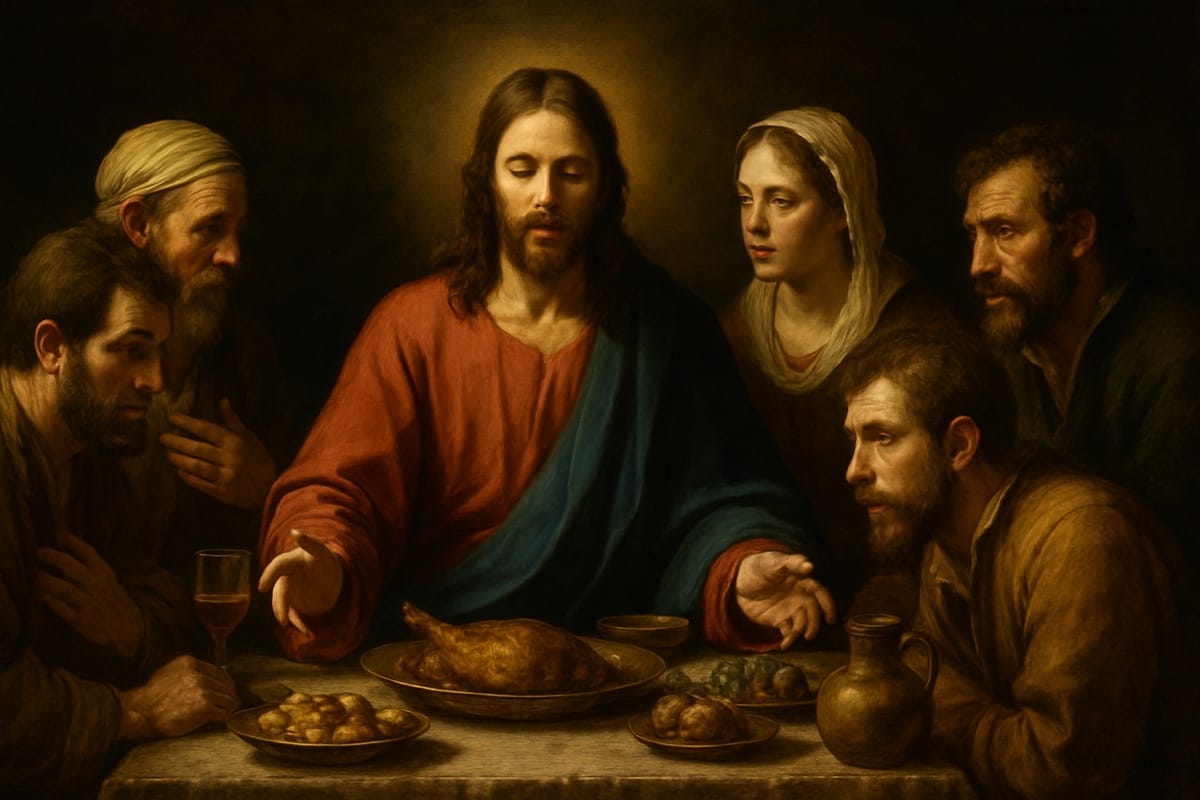
Quotation:
“Many are called, but few are chosen.” (Mt 22:14)
The twenty-eighth Sunday of Ordinary Time, Year A, weaves together three texts about God’s banquet that is prepared but not everyone accepts. Isaiah 25:6-10a prophesies the eschatological feast for all peoples, the destruction of the veil covering the nations, and the complete elimination of death. Philippians 4:12-14, 19-20 describes Paul’s learning the secret of being content in every circumstance, as his God will provide for all his needs. Matthew 22:1-14 tells the parable of the king’s feast where guests repeatedly decline the invitation; the king then invites everyone found at crossroads, but one without wedding attire is cast out. The three texts converge: the feast is prepared and abundant, the invitation is universal, but reception requires availability and the proper attire.
I. The First Reading: Isaiah 25:6-10a
The prophet describes God’s final feast: “The Lord of hosts will prepare a feast for all peoples, on this mountain; a feast of rich food, a feast of aged wine, rich food satisfying the soul, aged wine on the lees finely refined” (Is 25:6). The feast is not for one people but for all. What follows the feast is even greater: “He will destroy on this mountain the bow and the spear, the shield and the sword, and he will make a feast of them, a feast called the Feast of the Lord of hosts” (vv.7-8). Death is destroyed, tears are wiped away—a description of the Apocalypse (Rev 21:4), foreshadowed by Isaiah. The guests’ response: “On that day they will say, ‘Behold, God is with us! We have waited for this, and he has saved us'” (v.9). The feast is not a reward but the culmination of God’s love that waited for all.
II. The Second Reading: Philippians 4:12-14, 19-20
Paul shares his secret for peace: “I have learned to be content in any and every circumstance. I know how to live in poverty and I know how to live in abundance. I have been trained in every way and I am able to do anything through him who strengthens me” (Phil 4:12-13). The word “trained” (memyēmai) is technical; Paul uses the language of Hellenistic mysteries to describe a deep spiritual initiation. The foundation of all: “I can do all things through him who strengthens me” (v.13). It’s not self-sufficiency but radical dependence on Christ. The promise for the community: “My God will meet all your needs according to his abundance in Christ Jesus” (v.19). The feast in Isaiah 25 is real; God who prepared the feast also provides what is needed to reach it.
III. The Gospel: Mt 22:1-14
Jesus tells the parable of the king who celebrates his son’s wedding. He invites those who had been called, but they either ignore the invitation or refuse to come, some going to the fields and others to their business. Some even arrest and kill the messengers. The enraged king destroys the murderers and burns their city. He then sends his servants to the crossroads: «Invite everyone you find to the feast» (Mt 22:9). The hall fills with guests. But when the king enters to observe the guests, he notices a man without a wedding garment. «Friend, how did you get here without a wedding garment?» The man has no answer. The king orders the servants to bind him and throw him out into the darkness. And the conclusion: «Many are called, but few are chosen» (v.14). The parable has two moments: the initial universal invitation (everyone at the crossroads) and the requirement of the wedding garment. The call is free. Acceptance takes form. Entering the feast is not enough; one must be appropriately dressed, which means having accepted the transformation that the invitation entails.
IV. Mary and the Wedding Garment
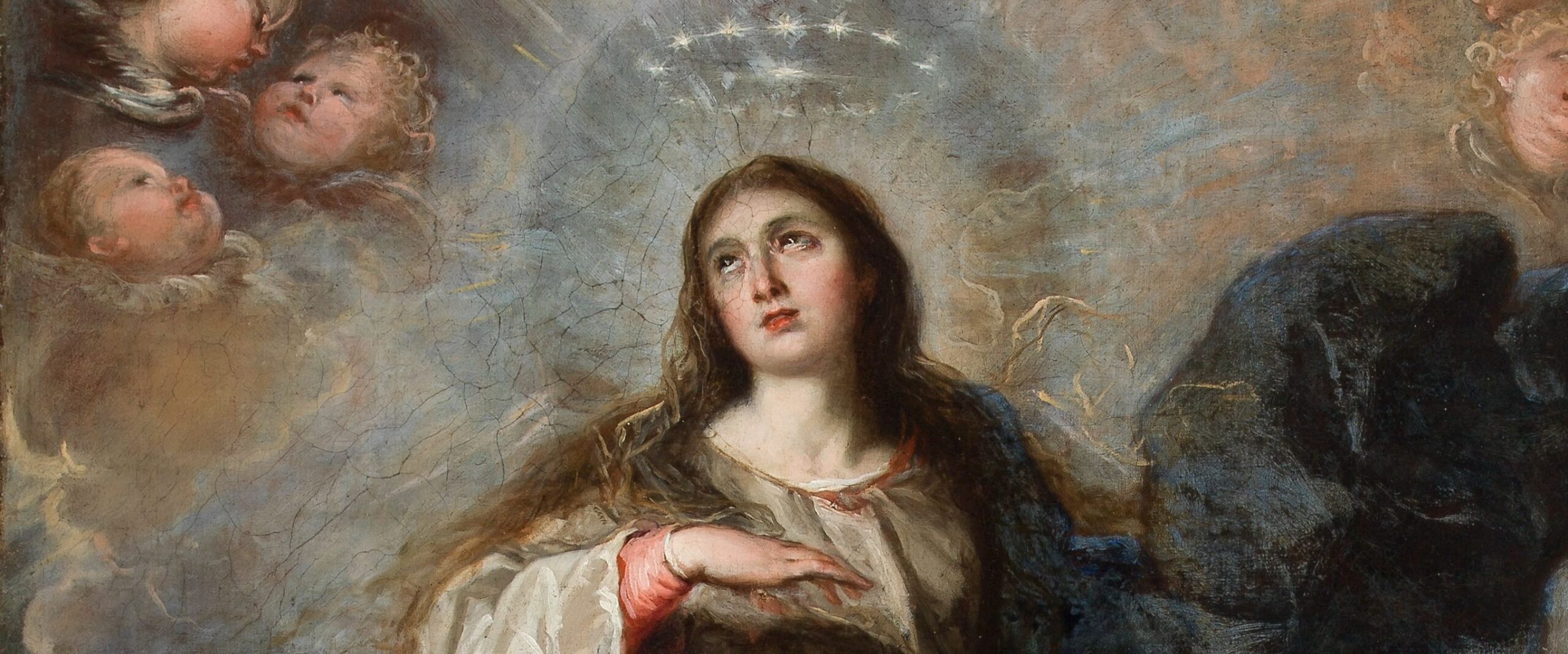
The feast in Is 25 destroys the shroud that enveloped all nations. Mariological tradition saw in the Assumption of Mary the first fulfillment of this promise: Mary was not wrapped in the shroud of corruption. Death did not hold her. In terms of Is 25, she was the first to sit at the feast where death was destroyed and tears were wiped away. Phil 4:13 says «I can do all things in him who strengthens me»: Mary lived this total dependence from the Annunciation. Everything she did, conceiving the Son, accompanying the Passion, persevering in the Cenacle, was possible not by her own strength but by what God gave her. The wedding garment in Mt 22 is the grace that transforms one who accepts the invitation. Mary entered the feast wearing the full grace that the angel recognized in his greeting («full of grace», Lk 1:28). Not due to accumulated merit, but by the king’s generosity who provides all that is necessary to enter.
Postgraduate specialisation in Mariology
Would you like to deepen your formation in Mariology? The Locus Mariologicus postgraduate programme is a specialisation that brings together theological rigour, spiritual life and the living tradition of the Church. The next class begins in 2027.




Responses