The seal of the Spirit and the sparrows counted by God
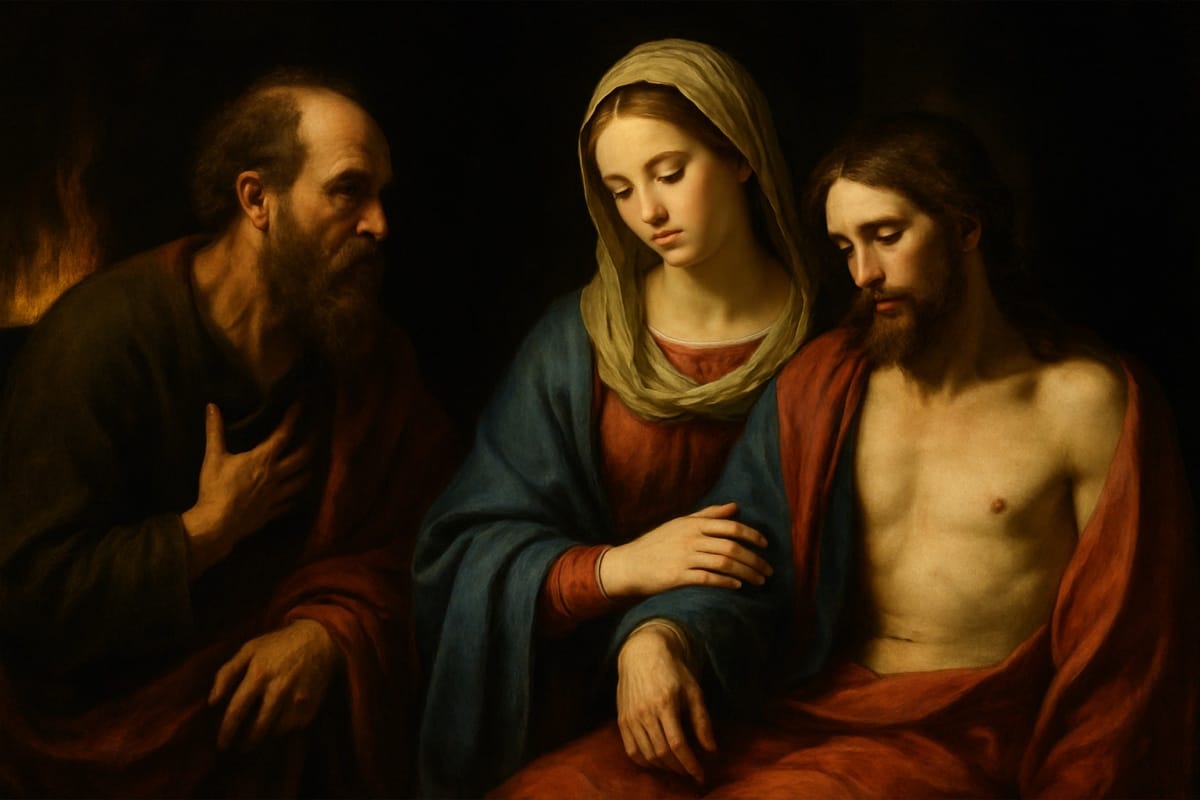
In quo et vos, cum audissetis verbum veritatis, Evangelium salutis vestræ, in quo et credentes signati estis Spiritu promissionis Sancto.
Ef 1,13 e Lc 12,7
The liturgy of this Friday of the 28th Week of Ordinary Time presents us with a single mystery viewed from two perspectives. On one hand, the grand structure of eternal election, as Paul describes it to the Ephesians. On the other, the delicate, almost domestic, Christ speaking of sparrows sold for a few coins. Yet, between the eternal decree and the insignificant bird, there runs a single thread, and that thread is God’s care for each one of His own. Faith does not live on the grandeur of themes, but on the certainty of being known.
I. The first reading: Ef 1:11-14
The hymn that opens the letter to the Ephesians does not describe an idea, it celebrates an event. Paul does not argue about predestination, he sings it, and the song has a specific direction, «in quo etiam et nos sorte vocati sumus prædestinati“This is to say, ‘in that in which we too were chosen by lot, predestined.’ The choice does not rest on our merits, but on Christ, and only through Him do we attain it. Here is the difference between ancient fatalism and faithful hope. The pagan feared the blind fate of the Fates, the faithful knows himself called for a purpose.”According to his purpose, he works all things.“For it is according to the design of Him who works all things that history of salvation is not governed by chance. It is governed by a will that loves.”
The text advances and flows into a verb of immense density, You are marked.“You have been sealed.” In ancient times, a seal was a mark of ownership, a guarantee, and a protection. A document was sealed to prevent forgery, and a flock was marked to prevent theft. What then does it mean to be sealed by the Holy Spirit? Paul “The Annunciation is that the Holy Spirit is this seal impressed upon the faithful.”By the Holy Spirit’s promise“We do not receive a distinct outer sign, but we receive a presence. And this presence is called a pledge.” “Engagement” em grego, Pledge “A foreshadowing in the Old Testament of an inheritance yet to come.” The Spirit is not a prize, but the anticipation of the prize. St. Augustine reads here the whole economy of grace, what we already possess is the guarantee of what we still hope for. Therefore, we live between the already and the not yet, marked, guaranteed, but pilgrims.
II. The Gospel: Lk 12:1-7
The Gospel of Luke arises from a scene of pressure. The crowd crushes itself to the point of trampling on one another, and it is in this turmoil that Christ chooses to speak of leaven, of darkness, of roofs. The first warning is against the hypocrisy of the Pharisees, «who are the leaven», because nothing is hidden that will not be revealed. The Greek word for hypocrite is HypocriteThe actor who speaks behind a mask. Christ unravels the theatre of false religion. Before God there are no stage sets, no shadow that can withstand, no word whispered in the ear that is not proclaimed from the rooftops.
And then, when the discourse might crush under the weight of judgment, comes the most tender relief from the page.Nonne quinque passeres veneunt dipondio, et unus ex illis non est in oblivione coram Deo?“Isn’t five sparrows sold for two coins of silver? And not one of them is forgotten before God.” The sparrow was the currency of the poor, the food of those who had nothing, a bird of no market value. Christ takes precisely that nothing and builds the greatest of securities upon it. If God does not forget the sparrow, how could He forget His Son? The proof culminates in an image of startling precision, “capilli capitis vestri omnes numerati sunt“, ‘until the very hairs on your head are all numbered’. God’s loving care is not a vague benevolence, but a particular, detailed, individual knowledge. That’s why the order, “Do not therefore fear,” does not rest on optimism, but on an accounting of love. “God does not number the hairs of those He does not love.”
III. The Certainty of Divine Care
The two readings say, in opposite records, the same truth. Paul starts from high, from eternity, from a design prior to the centuries. Luke starts from below, from the sparrow, the copper, the hair. And both meet at the point where faith really needs to rest, that of our being known. The predestination of Ephesians is not a cold calculation about anonymous names, but the same loving knowledge that, in the Gospel, counts hairs. Sealing and counting are the same gesture of a God who does not take His eyes off what is His.
This certainty, however, does not dispense from vigilance, it demands it. The seal of the Spirit does not annul freedom, it empowers it. The sealed faithful is not a passive object waiting for heaven, but a call to holiness, to justice, to the courage not to fear those who kill the body. The trust that Christ asks for is not the serenity of one who risks nothing, but the firmness of one, knowing themselves counted by God, who can face the judgment of men. Providence does not put the faithful to sleep, it awakens them. Who knows that their inheritance is guaranteed lives freely to spend their life without fear of losing it.
IV. The Seal of Hope and the Sealed Virgin
Mary does not appear in today’s readings, but it is in her that both are fulfilled in advance. If the Spirit is the seal of the promise, no creature was sealed as was the one from Nazareth, on whom the same Spirit descended not as a pledge of a future inheritance, but as a present fullness, “Spiritus Sanctus superveniet in te
“, the Holy Spirit will come upon you.” What in us was a beginning, in her was a completion. The predestination that Paul sings to the Church is accomplished eminently in the Immaculate One, chosen in Christ before the creation of the world, preserved to be a worthy dwelling place for the Word.
And if the Gospel teaches that God does not forget the sparrow, Mary is the supreme witness that God’s gaze rests on the small. She herself proclaimed it, “He looked upon the humility of his servant.” The unknown young woman became the one all generations would call blessed, because the God who counts the hairs elevated the one who was counted as nothing in the eyes of the powerful. The Lumen Gentium reminds us that the Virgin, united to the work of salvation, remains a figure and a primacy of the pilgrim Church. In her, we contemplate what we will be, fully sealed, fully known, fully free from fear.
May the Virgin’s prayer, sealed by the Spirit, teach us to live from the pledge we have already received. Do not fear those who threaten the body. Do not feign before God who reveals all. Trust that we are counted, each one, in the heart of the Father. And walk, under this seal, until the promised inheritance becomes eternal possession.
Postgraduate specialisation in Mariology
Would you like to deepen your formation in Mariology? The Locus Mariologicus postgraduate programme is a specialisation that brings together theological rigour, spiritual life and the living tradition of the Church. The next class begins in 2027.





Responses