Leonardo da Vinci and the Luminosity of Mary’s Womb
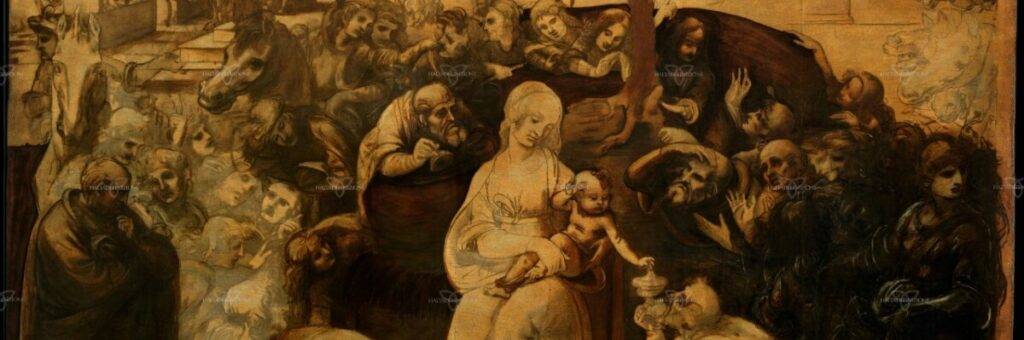
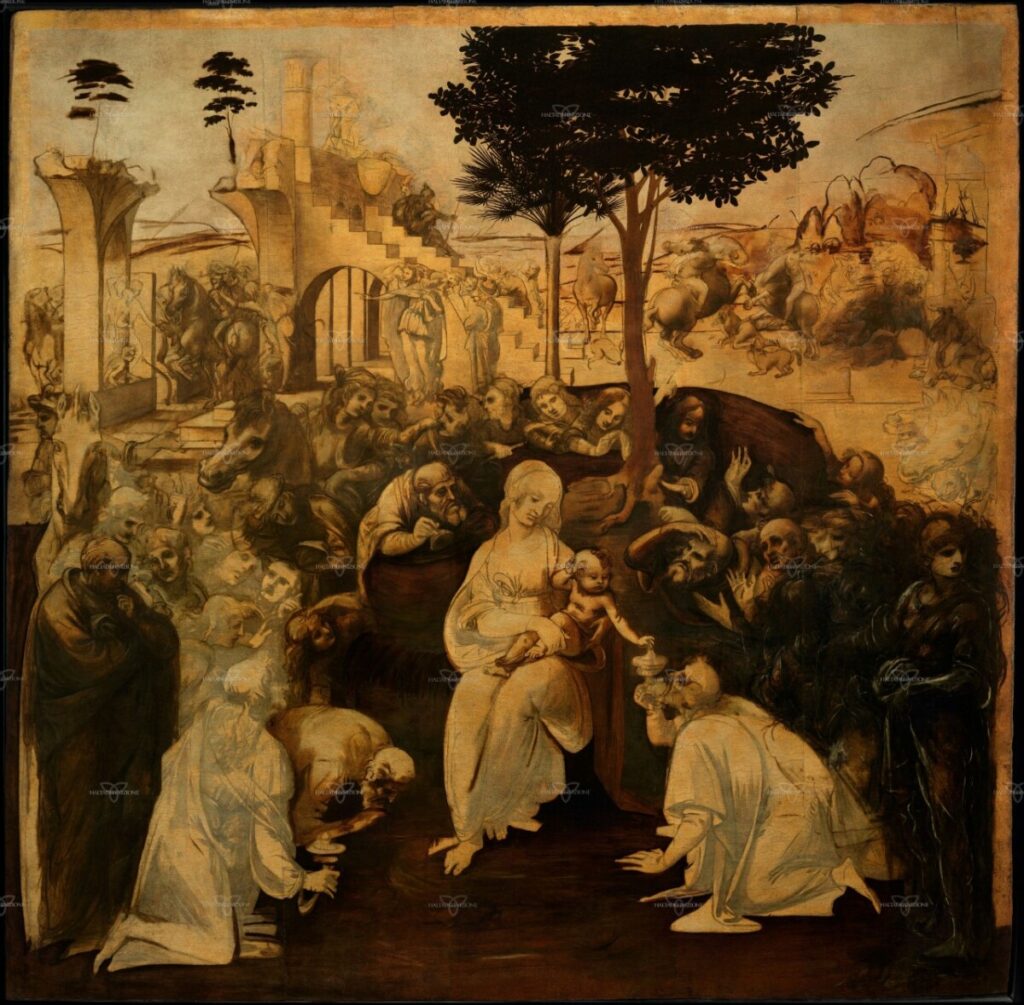
Around 1481, the friars of the convent of San Donato in Scopeto entrusted Leonardo with an Adoration of the Magi, now in the Uffizi Gallery in Florence. Leonardo depicts humanity’s burst of joy at the coming of the Redeemer, a wave of ardor toward God.
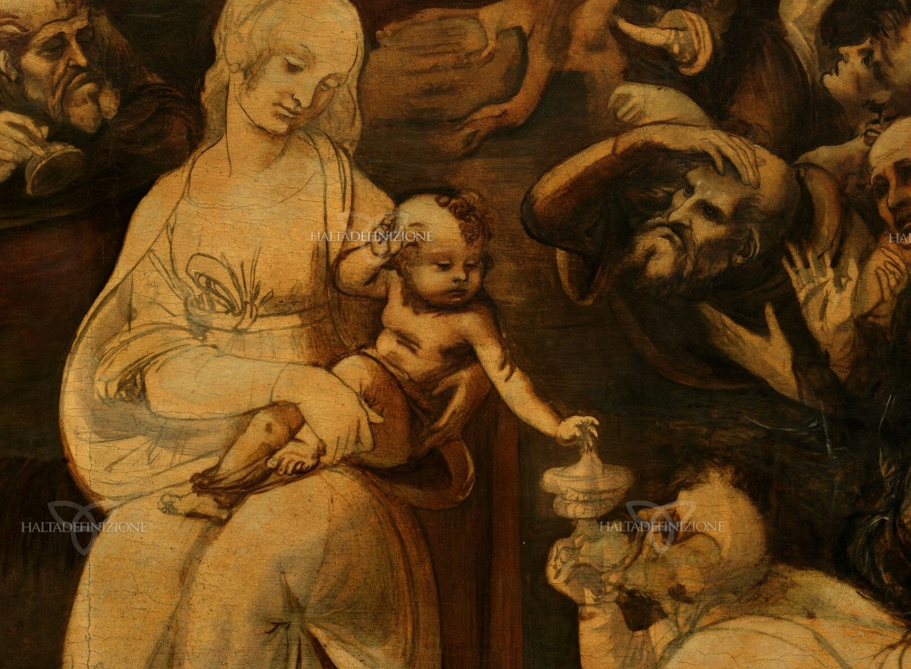
The Child Jesus radiates light, seated on His Mother’s lap.
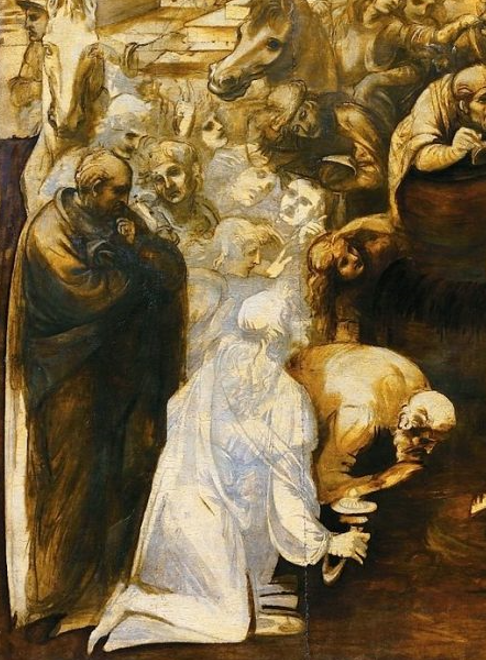
The wise men approach Him with holy fear, sensing His supernatural greatness.
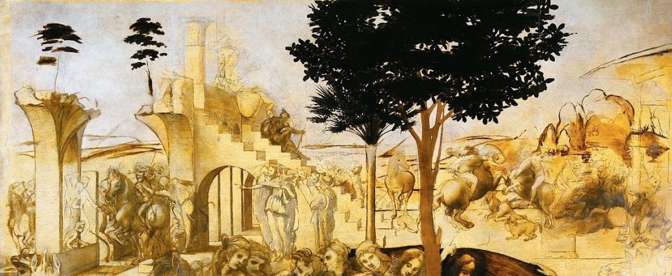
The shepherds, transfigured by enthusiasm, seem to come from distant worlds. In the background are the ruins of arcades and palaces, a sign of vanquished paganism, and among the ruins stands the new humanity that welcomes the good news.
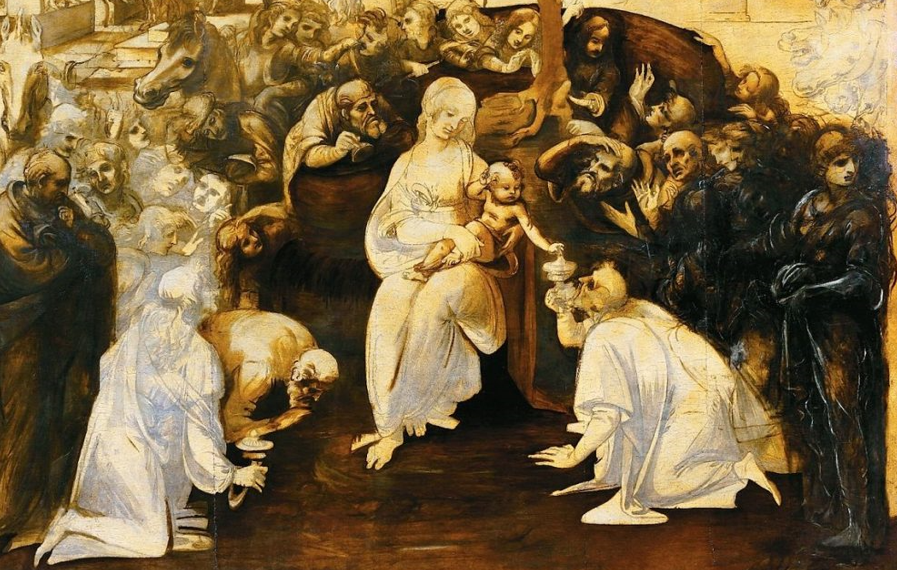
The hut has fallen. The donkey and the ox disappear. For the Virgin Mother, the structure forms a niche and shelters the crowd, stirred by the light that takes shape out of the evening shadows.
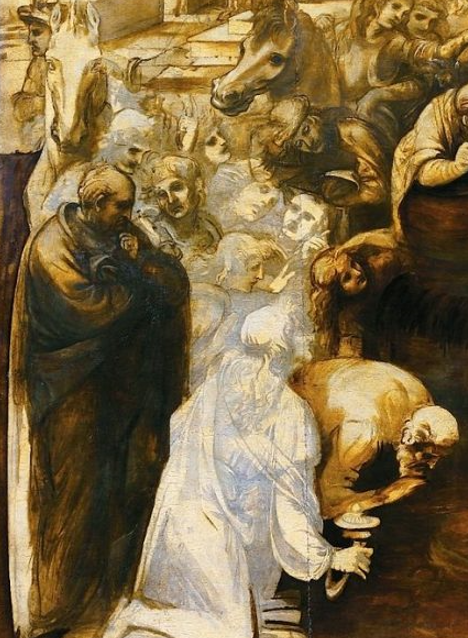
Of the adoring Joseph, of the magi and the shepherds, every line of the upturned heads, every lock of hair, every outstretched hand is a flame, a will-o’-the-wisp that stretches out and winds through the shadows: a flash of light that has come to rest in the splendor of the Virgin’s fire, in the midst of the group.
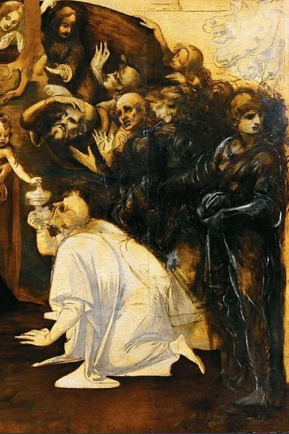
The nocturnal effect is heightened on the right, where the figures bend, stretch, and coil, endlessly varying the flickering of the lights.
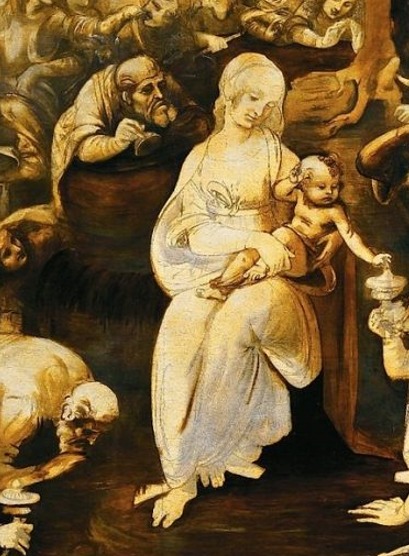
Between the Virgin, who holds the Child in her arms, and the swaying crowd there is an interval of shadow: the king bearing his offering stops at the edge of the circle that forms a halo for Mary, and only one other king advances, prostrate, kissing the ground within the sacred enclosure.
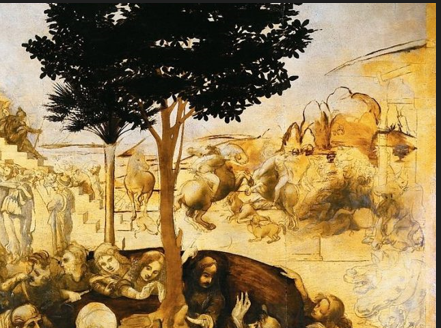
Bushes in the wind, horses, and ruins suspended on fragile arches form the backdrop.
Leonardo in Milan
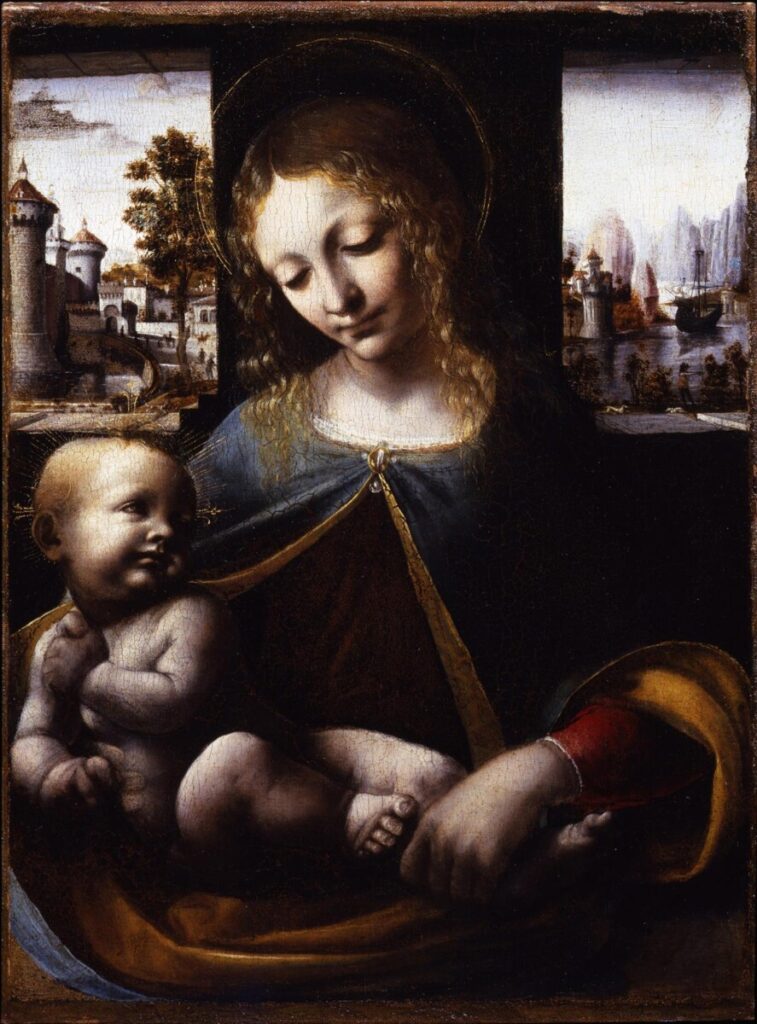
Leonardo left the Adoration of the Magi unfinished because of his departure for Milan. As soon as he arrived, the artist was employed on countless assignments for the court, from the equestrian monument to Francesco Sforza to the decoration of the Sala delle Asse in the Castle, from the portraits of the mistresses of Duke Ludovico il Moro to the costumes and sets for festivities, from the construction of canals to military works. The master had little time to devote to painting small devotional pictures, and the pressing requests of clients were partly met by the numerous pupils of his workshop, who executed them using his old drawings as models.
Moreover, some very promising pupils worked for him: Marco d’Oggiono, Giovanni Boltraffio, Ambrogio de Predis, and Francesco Galli, known as “the Neapolitan” because of his origins. And the latter is thought to have been the material executor of the Madonna Litta, which clearly echoes the London Virgin of the Rocks and repeats its pattern: the position of the Virgin and that of the Child, almost identical to those in the London work, and very similar elements such as the windows, the gray stone parapet, and the landscape.
The Madonna Litta is a symbol of the dialogue, at once universal and intimate, of a Mother, the Mother par excellence, who fills her Child, the Son of Man, with tenderness and love, reminding us of the sweet bond that unites them beyond time and beyond space.
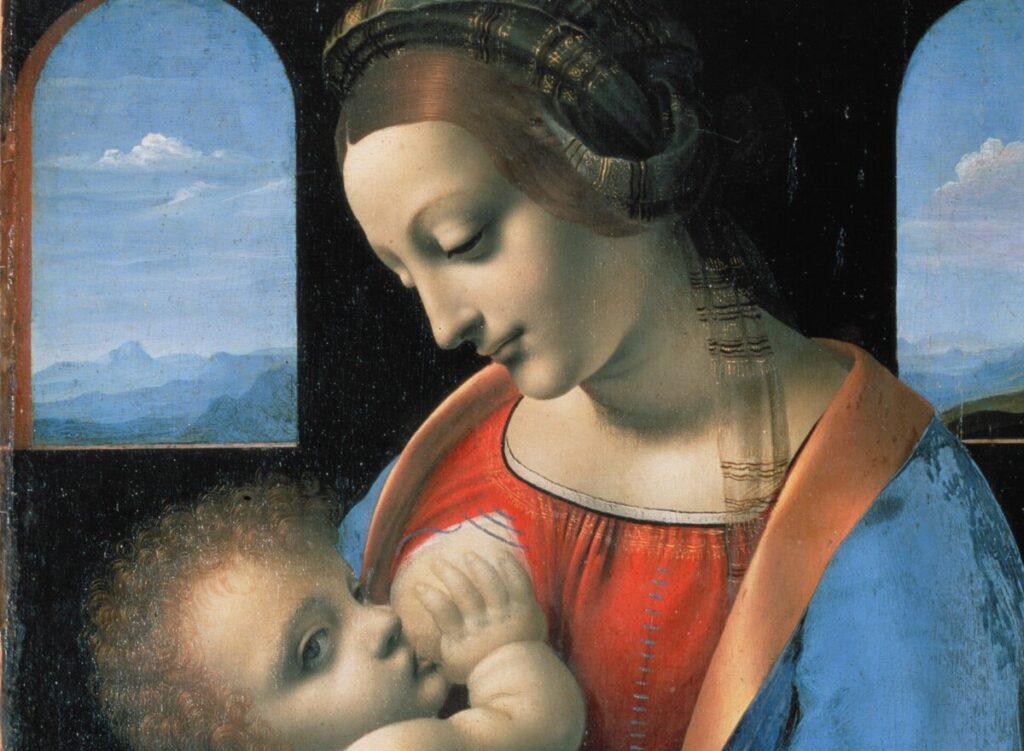
A beautiful painting, embellished by a scene that is profoundly human even in its sacredness, and by limpid color. Leonardo was 38 years old when he decided to paint the Madonna Nursing the Child. He had recently settled in Lombardy, at the court of the Visconti, for which he also organized impressive architectural and road works, such as the ingenious and complex system of the Navigli, the navigable canals that, starting from the Ticino River, were to bring in goods and building materials and then return the water to the Po, near Pavia. In particular, Leonardo was very busy looking for a way to even out the water level of the Navigli, which at the time was not compatible with river navigation. But on his excursions through the Lombard countryside, he was also struck by the colors of nature around Milan.
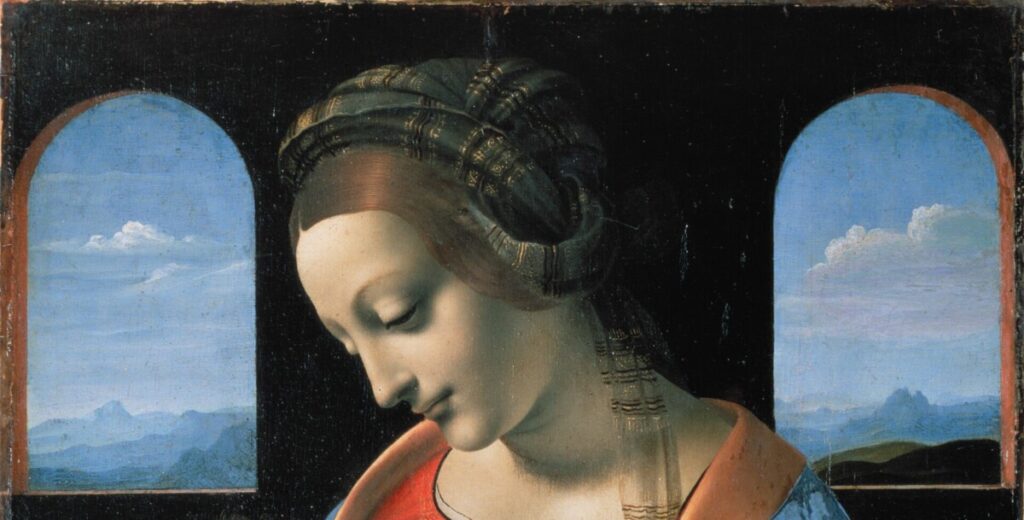
He saw a spectacular blue sky on clear days and vegetation far more sparkling than what he had admired in Tuscany and in other parts of the Peninsula he already knew. It was with this stylistic intuition, the Lombard vividness of color in painting, that he set about creating, on a small wooden panel, the Virgin Mary Nursing the Child, a work of stupendous chromatic purity, moving beauty, and simplicity. The Madonna Litta best reflects the great Leonardesque mystery, made of subtle charm and meditative stillness.
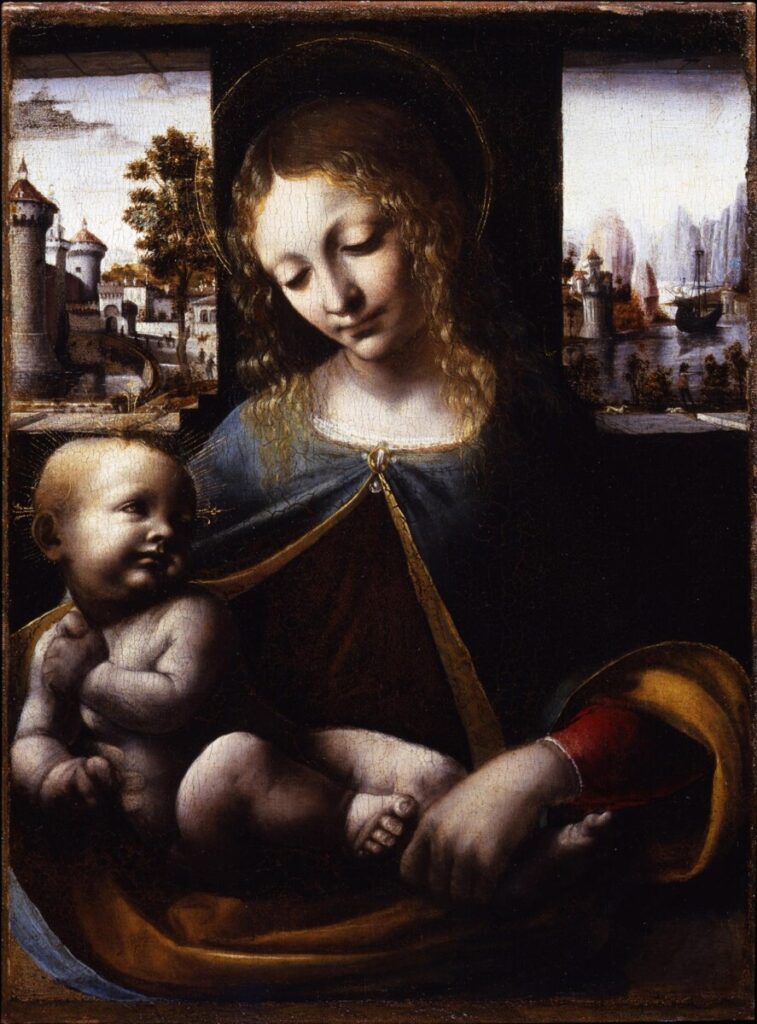
Thanks to Milan, we should remember that Leonardo continually alternated periods of intense and total creative fury with moments of meditative pause, in which he did not work materially on the painting but prepared to correct it according to new intentions born during its elaboration; these modes of execution seem to allow a comparison with the Madonna Litta.

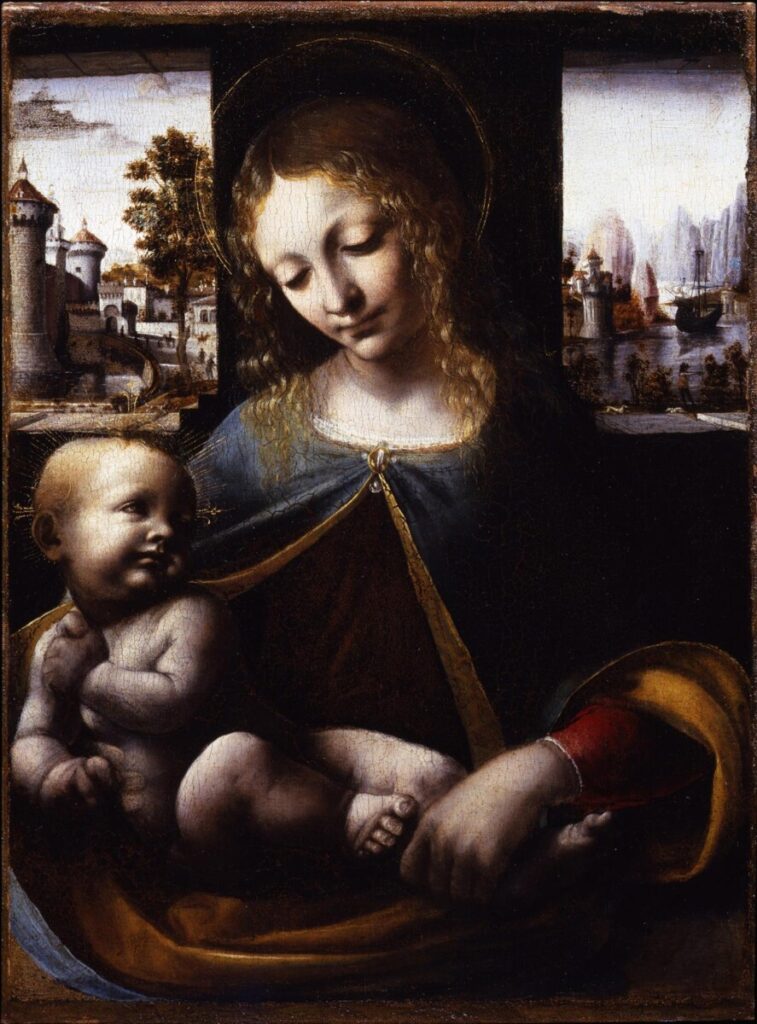
The vividness of the images, so clear in Verrocchio’s style, as in Leonardo’s Annunciation, and the nuance that models the sublime, though now badly damaged, head of Christ proclaiming the imminent betrayal by one of the Apostles, are found in analogous terms in the figurative formulation of the Madonna Litta.

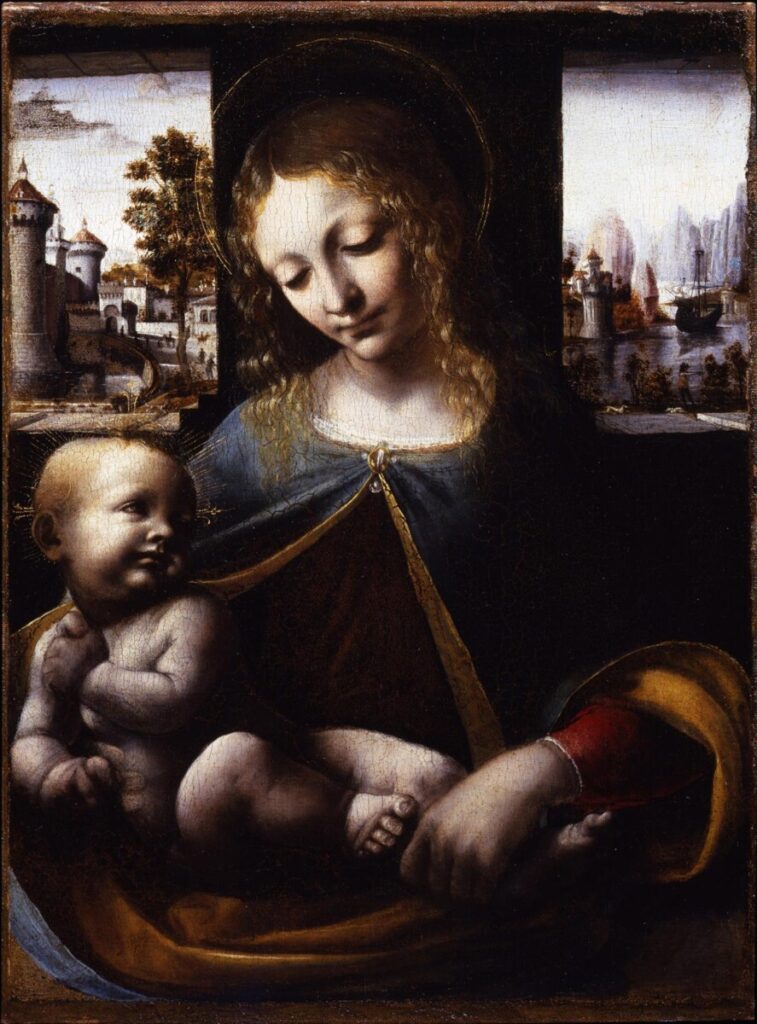
Thus, Our Lady’s profile seems almost superimposable on that of the Apostle Philip in the Last Supper, precisely because of the analogous configuration of the figure, full of pictorial matter that is in turn filled with a strong, clear, and limpid light, which makes the image tangible and charged with intense emotion, while the light filtering in from the background of the Virgin and Child seems to be conceived with the same airy impalpability with which the light of the Cenacle floods the scene within a formidable perspective structure.
Postgraduate Program in Mariology
Would you like to deepen your formation in Mariology? Discover the Postgraduate Program in Mariology of Locus Mariologicus—an academic formation that unites theological rigor, spiritual life, and the living tradition of the Church.
Would you like to study Mariology seriously?
This article grows out of the works in the Locus Mariologicus library. The Postgraduate Program in Mariology takes you to the same source, with academic guidance: Scripture, the Fathers of the Church, and the Magisterium, from the first dogma to contemporary questions.





Responses