“Unless a grain of wheat falls and dies, it remains alone”
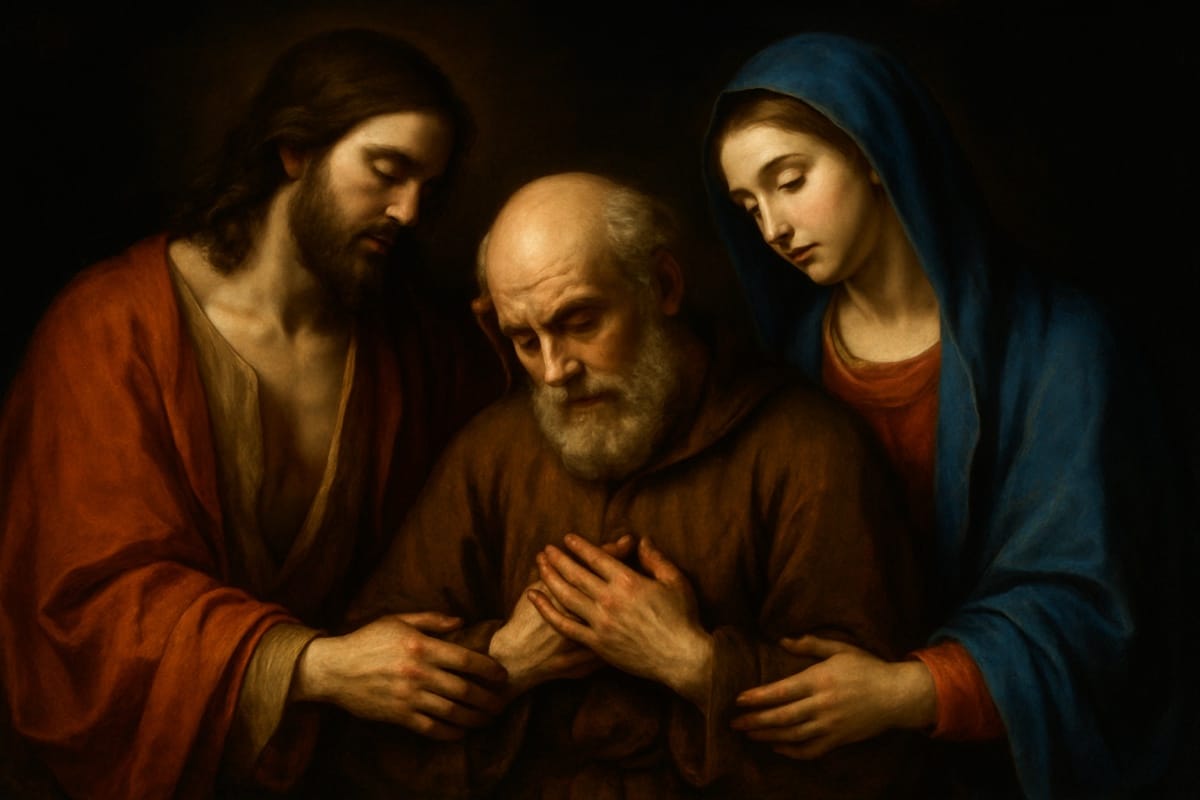
“Unless a grain of wheat falls to the ground and dies, it remains alone; but if it dies, it bears much fruit.” (John 12:24)
The memory of Saint Ignatius of Antioch (October 17, martyr, †107) joins Fl 3, where Paul describes the “enemies of the cross of Christ” whose end is damnation, and the Christians whose “citizenship is in heaven” (Phil 3:17-4:1), to Jo 12, where Jesus proclaims the law of the grain: “if I die, I bear much fruit” (John 12:24). Ignatius, who wrote to the communities asking them not to prevent his martyrdom because “it is good for me to die for Christ” (Ignatius, Letter to the Romans), is the embodiment of this law. Mary, who accepted Jesus’ death as the necessary grain, is the model of faith that believes in the fruit of death.
I. The first reading: Phil 3:17-4:1
Paul sketches two portraits: the “enemies of the cross of Christ” whose “God is their belly, and their glory is in their shame” (v.18-19), and the disciples whose “citizenship is in heaven” and of whom they await the Savior, the Lord Jesus Christ (v.20). The contrast is not between good and evil but between those who have their horizon on earth and those who have their horizon in heaven. Ignatius, who begged the communities not to deprive him of martyrdom, is the disciple whose citizenship is celestial: his earthly death does not frighten him because his “end” is not damnation but resurrection.
“We await our Savior, the Lord Jesus Christ, who will transform our humble body into conformity with his glorious body” (v.20-21): Paul’s celestial citizenship includes the hope of resurrection of the body. Ignatius, who prayed to be “crushed by the teeth of wild beasts”, knew that crushing the grain is not the end but the beginning: the crushed body is the seed of the glorious body.
II. The Gospel: John 12:24-26
“In truth, in truth I tell you, unless a grain of wheat falls to the ground and dies, it remains alone. But if it dies, it bears much fruit” (v.24): Jesus enunciates the fundamental law of the Kingdom. Death is not the end of fertility but its condition. The law of the grain is not a poetic metaphor but theology: Jesus himself is the Grain that dies (Jn 12:33 identifies this speech with the death on the Cross) to produce the fruit of salvation.
“Whoever loves his life loses it, but whoever hates his life in this world will keep it for the life to come” (v.25): the law applies to the disciple. “Where I am, there will my servant be also” (v.26): discipleship includes discipleship until death. Ignatius understood this verse literally: he wanted to be where Jesus was, at the center of martyrdom which is the center of the Gospel.
III. The Grain that Falls: Ignatius and the Law of Fruit
Phil 3 and Jo 12 describe the same Kingdom law from two angles. Paul: celestial citizenship liberates from the fear of death because the horizon is the transformation of the glorious body. Jesus: the law of the grain teaches that death is the condition of fruit. Ignatius lived both realities simultaneously: he was a citizen of heaven who did not fear death and was the grain that surrendered to produce fruit.
The memory of Ignatius of Antioch is the memory that the Church lives from the law of the grain: every martyr who died for the Gospel produced fruit that endures. His seven letters, written on his way to martyrdom, are proof that the grain that fell continues to produce fruit nineteen centuries later.
IV. Mary: The Grain that Accepted Death for Fruit
Mary understood the law of the grain before anyone else. When she accepted to be the Mother of God’s Son, she implicitly accepted the law that Jesus enunciates in Jn 12:24: the Son she conceived was the Grain that had to die. The sword of Simeon (Lk 2:35) announced from the beginning that Mary’s motherhood was the acceptance of the law of the grain, to receive life knowing that that life had to die to produce eternal fruit.
Mary at the foot of the Cross is the perfect image of Jn 12:24: she saw the Grain fall to the earth and die. Her faith was the faith of one who believes that the grain that died will produce much fruit, a faith confirmed by the Resurrection. The citizenship in heaven of Phil 3:20 was achieved by Mary before all others: her body was transformed into conformity with the glorious body of Jesus (Assumption). The Saturday of Week 29 invites us to contemplate in Ignatius and Mary the two ways of living the law of the grain that falls to the earth and dies.
Postgraduate specialisation in Mariology
Would you like to deepen your formation in Mariology? The Locus Mariologicus postgraduate programme is a specialisation that brings together theological rigour, spiritual life and the living tradition of the Church. The next class begins in 2027.




Responses