The fire in the bones and the cross: Jer 20, Rom 12, and the logic of discipleship in Mt 16
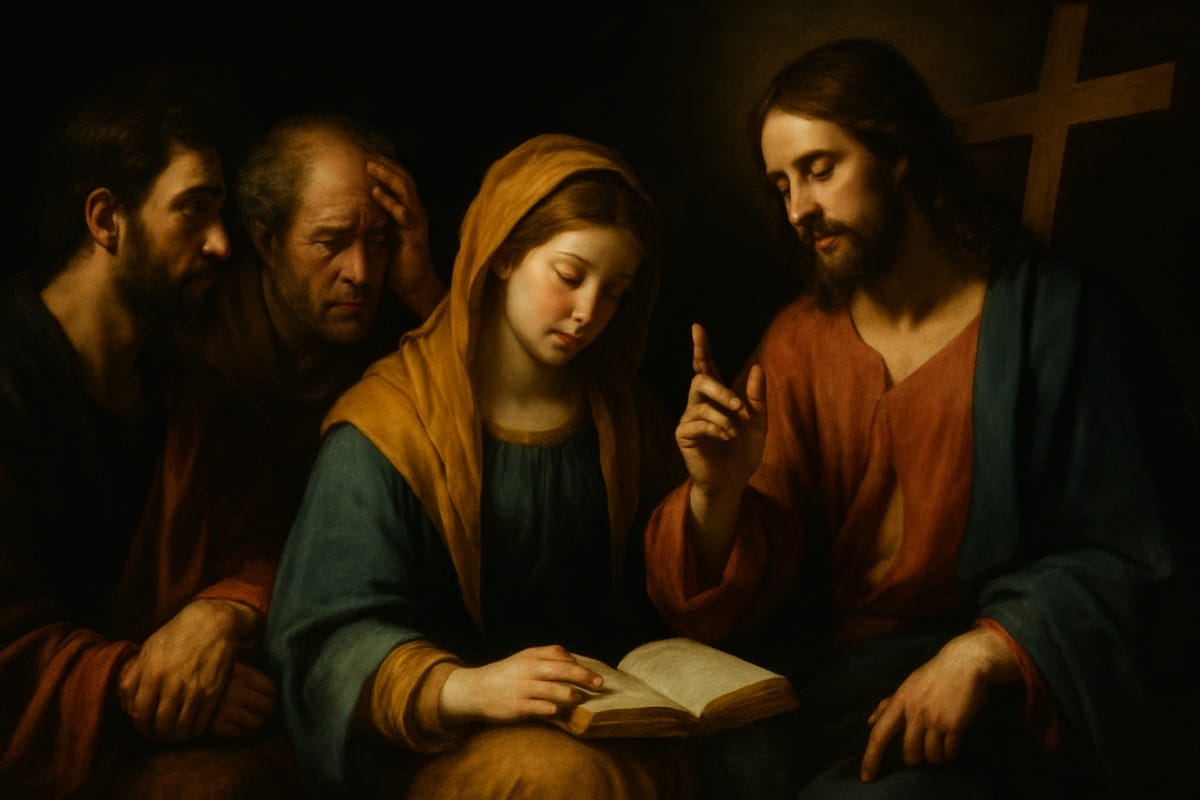
Qui enim voluerit animam suam salvam facere, perdet eam.
Mt 16:25
The Twenty-Second Sunday in Ordinary Time of Year A brings three texts together around the paradoxical logic of following God: to lose in order to gain, to suffer in order to live, to fall silent but not be able to. Jer 20:7-9 presents Jeremiah in crisis: the Lord has seduced him, and he cannot silence the word, even though it brings him derision. Rom 12:1-2 invites us to offer the body as a living sacrifice and to be transformed by the renewal of the mind, refusing conformity to the present age. Mt 16:21-27 recounts the first announcement of the Passion and Jesus’ response to Peter’s reaction: “Get behind me, Satan”. And the invitation to deny oneself, to take up the cross and to follow, because whoever wishes to save his life will lose it, and whoever loses it for love of Christ will find it. The three texts describe the same grammar of divine love: it is a love that costs, that spares neither the prophet nor the apostle nor the disciple, but that turns what it costs into life.
I. The first reading: Jer 20:7-9
Jeremiah addresses God with an accusation whose honesty is shocking: “You seduced me, Lord, and I let myself be seduced. You were stronger than I, and you prevailed” (Jer 20:7). The prophet feels deceived: he did not foresee the price. The result is derision: “I am an object of derision all day long; everyone laughs at me” (v. 7). He resolves to keep silent, to speak no more in the name of the Lord. But he cannot: “I feel in my heart something like a burning fire shut up in my bones. I struggle to hold it in, but I cannot” (v. 9). God’s fire cannot be held in: it comes out. Jeremiah is no hero of sheer will: he is a man who tried to resist his vocation and could not. His confession is at once lament and praise: God’s love is stronger than the fear of derision, stronger than the will to spare oneself.
II. The second reading: Rom 12:1-2
Paul formulates the fundamental imperative of the Christian life: “I appeal to you, brethren, by the mercy of God, to offer your bodies as a living sacrifice, holy and pleasing to God: this is your spiritual worship” (Rom 12:1). The body, which Hellenistic culture disparaged, is the place of the sacrifice. Not a sacrifice of death but of life: the body that is offered remains alive, it goes on acting in the world, but now on the basis of God’s logic and not that of the age. The condition: “Do not be conformed to this age, but be transformed by the renewal of your mind, so that you may discern what the will of God is: what is good, what is pleasing to him, what is perfect” (v. 2). The renewal of the mind is the condition of discernment: whoever thinks according to the age cannot recognize what God wants. Jeremiah’s fire and Paul’s renewal of the mind describe the same process: the interior transformation that makes a person able to bear what is costly and to want what sets free.
III. Evangelium: Mt 16:21-27
Immediately after Peter’s confession, Jesus begins to reveal what that confession implies: “From that day on, Jesus Christ began to tell his disciples that he had to go to Jerusalem and suffer greatly at the hands of the elders, the chief priests, and the scribes, and be put to death, and rise on the third day” (Mt 16:21). Peter, who had just received the keys of the Kingdom, rebukes the Master: “May this never happen to you, Lord!” (v. 22). Jesus turns to Peter: “Get behind me, Satan! You are a scandal to me, for you are not thinking according to God, but according to men” (v. 23). The harshness is proportionate to the danger: Peter is trying to turn Jesus away from the Father’s will, like Satan in the desert. And Jesus opens the paradox: “If anyone wishes to come after me, let him deny himself, take up his cross, and follow me” (v. 24). The logic is inverted: “Whoever wishes to save his life will lose it. Whoever loses his life for my sake will find it” (v. 25). And then the question that cuts: “What does it profit a man to gain the whole world if he loses his soul?” (v. 26).
IV. Mary and the living sacrifice
Simeon said to Mary: “A sword will pierce your soul” (Lk 2:35). This sentence is the Mariological parallel to the fire in Jeremiah’s bones: something that burns within, that cannot be held in, that transforms whoever undergoes it. Mary did not choose the sorrow of Calvary the way one chooses a voluntary suffering: she was led there, as Jeremiah was led into derision. But just as Jeremiah could not silence the fire in his bones, Mary could not fail to stand at the foot of the Cross: she stayed. Rom 12:1 asks that bodies be offered as a living sacrifice. Patristic and medieval theology saw in that offering the type of Mary’s participation in the Son’s sacrifice: her body, which conceived him, nourished him, raised him, and followed him, stood beneath the Cross in the silent oblation that completes in her the sacrifice of the head. “Whoever loses his life for my sake will find it” (Mt 16:25): Mary lost the Son in the death of Calvary and received him back in the Resurrection and in the Assumption, finding life in its fullness. The logic of the Gospel was fulfilled first in her.
Postgraduate Program in Mariology
Would you like to deepen your formation in Mariology? Discover the Postgraduate Program in Mariology of Locus Mariologicus – an academic formation that unites theological rigor, spiritual life, and the living tradition of the Church.




Responses