Visitation: The Mother of the Living Gospel
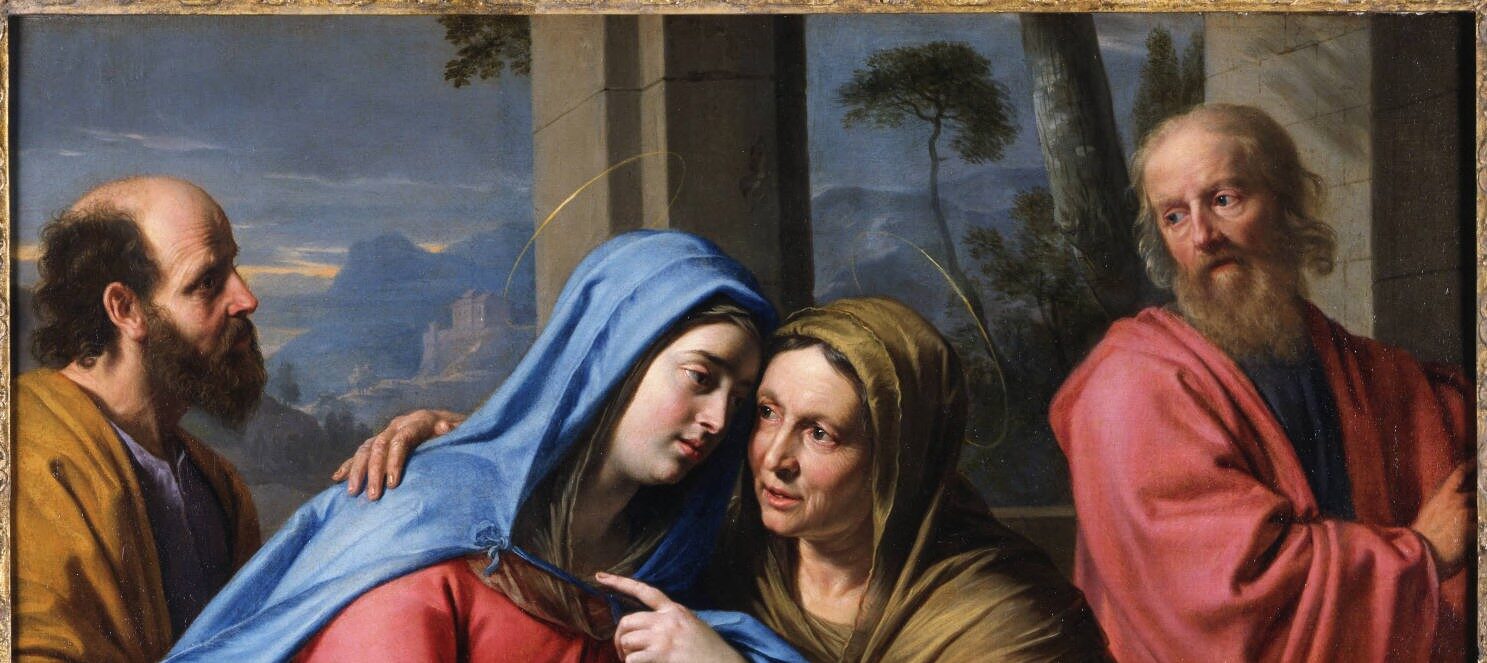
Mary, Mother of the Living Gospel: The Joy of the Visitation
Pope Francis taught that the Virgin Mary is the “Mother of the living Gospel, wellspring of joy for the little ones” (Apostolic Exhortation Evangelii Gaudium, no. 287). The living Gospel is not, therefore, a set of theoretical things to know and to teach, a doctrine, a program subject to free elaboration, or an ideology. The Gospel is the joyful news of the presence of Him who became flesh and dwelt among us. The Gospel is a proclamation of joy, because the living Gospel, which must be proclaimed with firmness and joy, is Christ Himself. The Son of the Virgin Mary is the living Gospel, who must be proclaimed to all the little ones.
In Mary too, the joy that surrounds her coincides with the presence of Jesus in her life. Jesus is the joy of Mary. She receives the joy that is her own incarnate Son, who in this way anticipates in her the gift He will later give to all His disciples: “I have told you these things so that my joy may remain in you and your joy may be complete” (Jn 15:11). This is the living Gospel that must be joyfully proclaimed: through Mary, Jesus is in our midst. He is Emmanuel. He is with us until the end of time.
The account of the meeting between Mary and Elizabeth, as Saint Luke narrates it (cf. Lk 1:39-45), highlights precisely this dimension of the joy of the Gospel, which marks the life of the Mother of Jesus and the life of those who encounter her. In truth, the great gift that Mary brings to Elizabeth is Jesus Himself, who, still hidden in His Mother’s womb, is a source of joy. With Jesus in her womb, the greeting Mary addressed to Elizabeth makes John the Baptist leap for joy in Elizabeth’s womb. For this very reason, John the Baptist, before being born, he too still hidden in his mother’s womb, teaches that before Mary joy is always renewed. With his joy, the Precursor bears witness and teaches that wherever the Virgin Mary enters, as she entered his home, there is joy.
The Joy of Mary in the Presence of Jesus: Biblical Roots
Already in the Old Testament, joy is the immediate consequence of the presence of God. God, in fact, must be received with joy, and where God is, everything sings and shouts for joy. As the prophet Zephaniah exhorted: “Shout for joy. The Lord your God is in your midst, a mighty Savior” (Zep 3:14, 17). When Mary entered the house of Zechariah and Elizabeth, even without speaking, she made the words of Zephaniah resound clearly: “The Lord your God is in your midst.” The Visitation of the Holy Virgin Mary is the fulfillment of all that had been announced. God is in the midst of His people. God has visited His people, and joy has flooded the earth.
When we let Mary into our homes, our parishes, our occupations, we let in the joy that no one can take from us. The Virgin Mary is the Mother of the living Gospel. We are called to imitate her. Like her, we will be witnesses of the joy of the Gospel, witnesses of the risen Christ. And joy will flood the earth.
Rev. Dr. João Paulo Queltas Domingues
Chaplain of the Shrine of Fátima
The scene of the Visitation and Mary’s role as “Mother of the living Gospel” are explored in depth in Pope Francis’s Apostolic Exhortation Evangelii Gaudium, where Mary appears as a model of evangelization and Christian joy.
Deepen your studies: explore Mariology, Marian Theology, Marian apparitions, and the Postgraduate Program in Mariology.
Formation in Mariology: The Locus Mariologicus Institute offers the Postgraduate Program in Mariology, articles, and academic resources on Mariology, Marian apparitions, and Marian Theology.
To deepen your reflection on Mary and the Visitation, consult Pope John Paul II’s Encyclical Redemptoris Mater.
Postgraduate Program in Mariology
Would you like to deepen your formation in Mariology? Discover the Postgraduate Program in Mariology of Locus Mariologicus – an academic formation that unites theological rigor, spiritual life, and the living tradition of the Church.
See our complete guide to Catholic Angelology.
Would you like to study angelology and demonology in depth?
This article comes from the Locus Mariologicus library. The postgraduate specialisation in Angelology and Demonology (360 hours, fully online) studies angels and demons in Scripture, the Fathers and the Magisterium, with a whole area on practical demonology, exorcism and deliverance prayer. The new class begins on 18 January 2027. Classes are taught in Portuguese.



Responses