The Exorcism of Anthony of Lyon (1790-1871) and the Demonic Testimony about the Virgin Mary
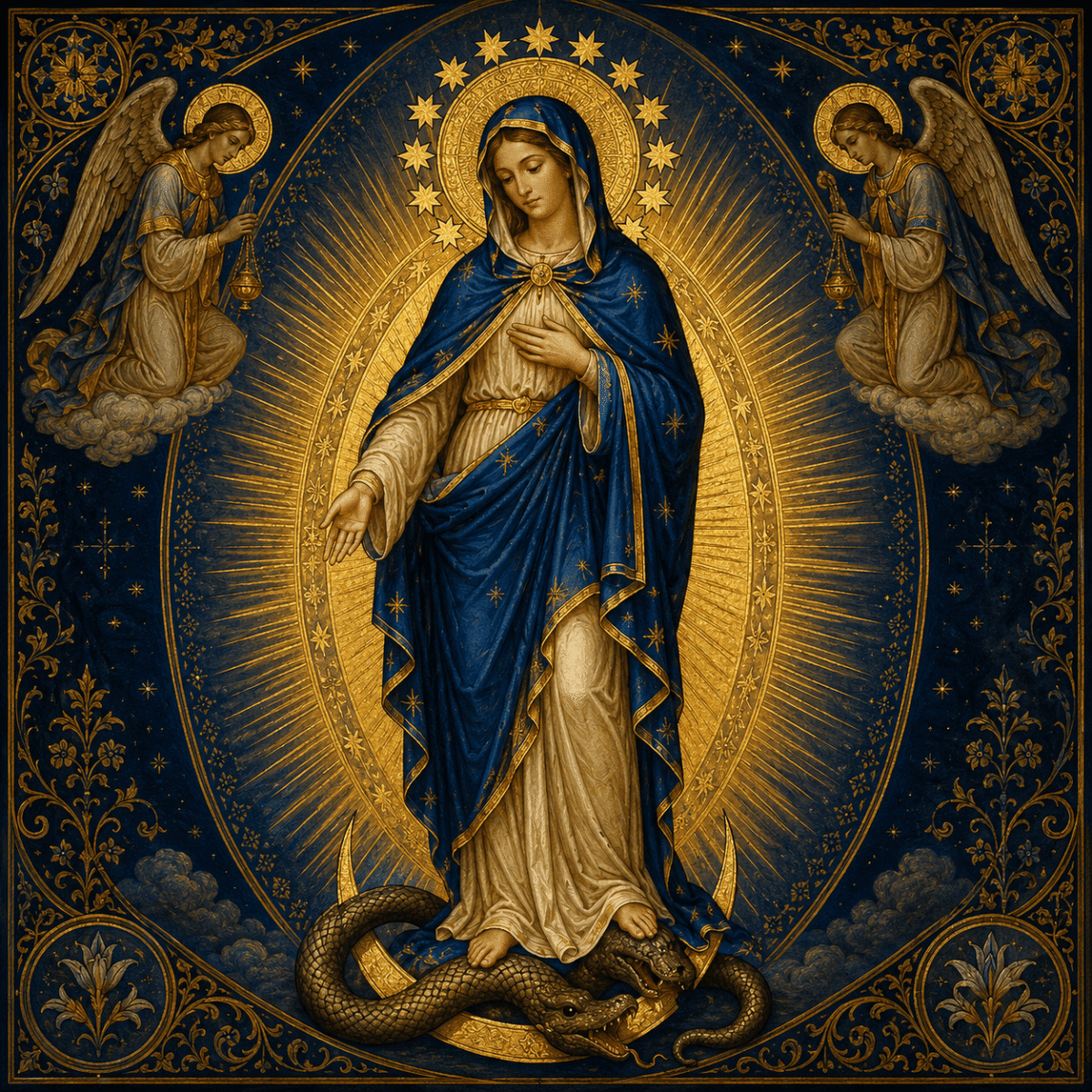
In the history of Mariology, there are testimonies that come from unexpected sources. Among the most disturbing and theologically rich are the declarations made by demonic entities about the Virgin Mary in the context of exorcisms duly documented and examined by the Church. The case of the Exorcism of Anthony of Lyon, a French carpenter of the nineteenth century who lived between 1790 and 1871, is one of these testimonies. Examined by psychiatrists and physicians of the time before any religious intervention, the case of Anthony of Lyon constitutes a document of exceptional historical and theological value, inasmuch as the devil was constrained to proclaim about Mary, rather than to silence it, confirming and enriching the Marian doctrine that the Church professes by faith.
I. The Case of Anthony of Lyon: Historical and Medical Framework
Anthony of Lyon, a skilled carpenter and a man of pious life, entered a convent around 1820, but for reasons of health he returned to secular life in Lyon, where he lived until 1871. From a certain point in his life, he began to manifest phenomena that the medical language of the time could not classify. The Cardinal Archbishop of Lyon decided to submit him to a medical and psychiatric examination before any religious intervention, a practice that the Church recommends precisely in order to distinguish psychic pathology from the phenomenon of possession. The medical opinion was clear: Anthony of Lyon “enjoyed perfect health of body and spirit, with an unusual rectitude of judgment and reasoning that never suffered the slightest alteration, not even in the crises that recurred in him under the influence of an unknown cause, not assessable by the means of the medical art”.
This protocol of prior medical examination is fundamental to the theological credibility of the case. The Church does not accept declarations from exorcisms as theologically significant without first excluding, as far as possible, explanations of a natural order. In the case of Anthony of Lyon, the medical science of the time attested that the phenomena observed went beyond what medicine could explain, and that the mental state of the patient was one of exceptional lucidity even during the crises.
II. The Demonic Testimony about Mary and Its Theological Significance
What makes the case of Anthony of Lyon particularly relevant to Mariology is the content of the declarations made by the demonic entity during the exorcisms. Compelled by the authority of the exorcist, the devil was constrained to proclaim truths about Mary that contradict his own nature and mission. This paradox, which the theological tradition recognizes as inverted or extorted testimony, has a precise apologetic value: when the enemy of humanity is forced to confess the greatness of the Virgin, such a confession cannot be attributed to subjective devotion or to pious enthusiasm.
The theology of exorcism teaches that the devil, under the authority of Christ exercised by the exorcist, can be constrained to tell the truth. The declarations about Mary drawn out in this context, concerning her power of intercession and her singular position in the economy of salvation, constitute, within this framework, a negative but authentic testimony. The hatred with which the devil refers to Mary is, in itself, a revelation of her greatness: the enemy does not hate what does not threaten him. The intensity of the demonic aversion to the Virgin is, in the logic of the Christian faith, an index of her spiritual power.
III. Mary and the Devil: The Biblical and Patristic Foundation
The hostility between Mary and the devil is not an invention of popular piety: it has its foundation in the biblical text itself. The verse of Genesis 3:15, the so-called Protoevangelium, proclaims: “I will put enmity between you and the woman, between your offspring and hers. She shall crush your head, and you shall strike her heel”. The exegetical tradition from the Fathers of the Church onward, passing through Saint Justin Martyr and Saint Irenaeus of Lyon, who identified Mary as the New Eve, read in this passage a reference to the radical enmity between the Virgin and the serpent, between Mary and the prince of evil.
In the context of the case of Anthony of Lyon, this biblical and patristic enmity finds a documented historical expression. The devil constrained to speak through the mouth of the possessed man is the serpent of Genesis 3:15 forced to acknowledge the woman who crushes his head. The tradition of documented historical exorcisms, of which the case of Anthony of Lyon is a nineteenth-century example, shows a remarkable consistency on this point: the Virgin Mary is invariably presented as the most formidable obstacle that demonic action encounters in its resistance to the plan of God.
IV. Ecclesial Discernment: Faith and Reason in the Examination of Cases of Possession
The case of Anthony of Lyon is exemplary also from the methodological point of view. The Church, in requiring a prior medical and psychiatric examination before any declaration about possession or exorcism, demonstrates an epistemology consistent with its affirmation that faith and reason do not contradict each other but complement each other. The protocol that led to the examination of Anthony of Lyon by the physicians of the time is the same one that the Church continues to require today: demonic possession is an extraordinary phenomenon that can be affirmed only after the natural explanations have been exhausted.
This epistemological prudence has an important theological consequence: when the Church recognizes a case such as that of Anthony of Lyon, such recognition has behind it a rigorous process of discernment. What the devil was forced to declare about Mary in this context is not accepted naively but only after it has been verified that the phenomena observed had no known medical explanation. Mariology here finds, in an unexpected way, an ally that speculative treatises did not foresee.
V. The Mariological Legacy of the Historical Testimonies of Exorcism
The demonic testimonies about Mary, obtained in duly documented contexts of exorcism such as the case of Anthony of Lyon, constitute a peculiar genre of source for Mariology. They are not primary sources in the sense in which biblical, patristic, or magisterial texts are. They are, however, extorted testimonies that, by their very contradictory nature, illuminate Mariological doctrine by way of negation: what the devil hates in Mary is precisely what the faith professes about her.
Marian devotion does not need this kind of testimony in order to be grounded: Sacred Scripture, Tradition, and the Magisterium offer sufficient foundations. But in periods of doubt and of theological relativism, the consistency of the inverted testimony of the exorcisms across the centuries, from the medieval accounts to the case of Anthony of Lyon in the nineteenth century, cannot but be regarded as a sign of the living tradition that confesses the singular position of Mary in the history of salvation. Cf. Redemptoris Mater, John Paul II, 1987. The study of the relationship between Mary and the mystery of evil is part of the curriculum of the Postgraduate Program in Mariology at Locus Mariologicus.
Postgraduate Program in Mariology
Would you like to deepen your formation in Mariology? Discover the Postgraduate Program in Mariology of Locus Mariologicus, an academic formation that unites theological rigor, spiritual life, and the living tradition of the Church.





Responses