“Nothing new under the sun”: The curiosity of Herod and the only novelty
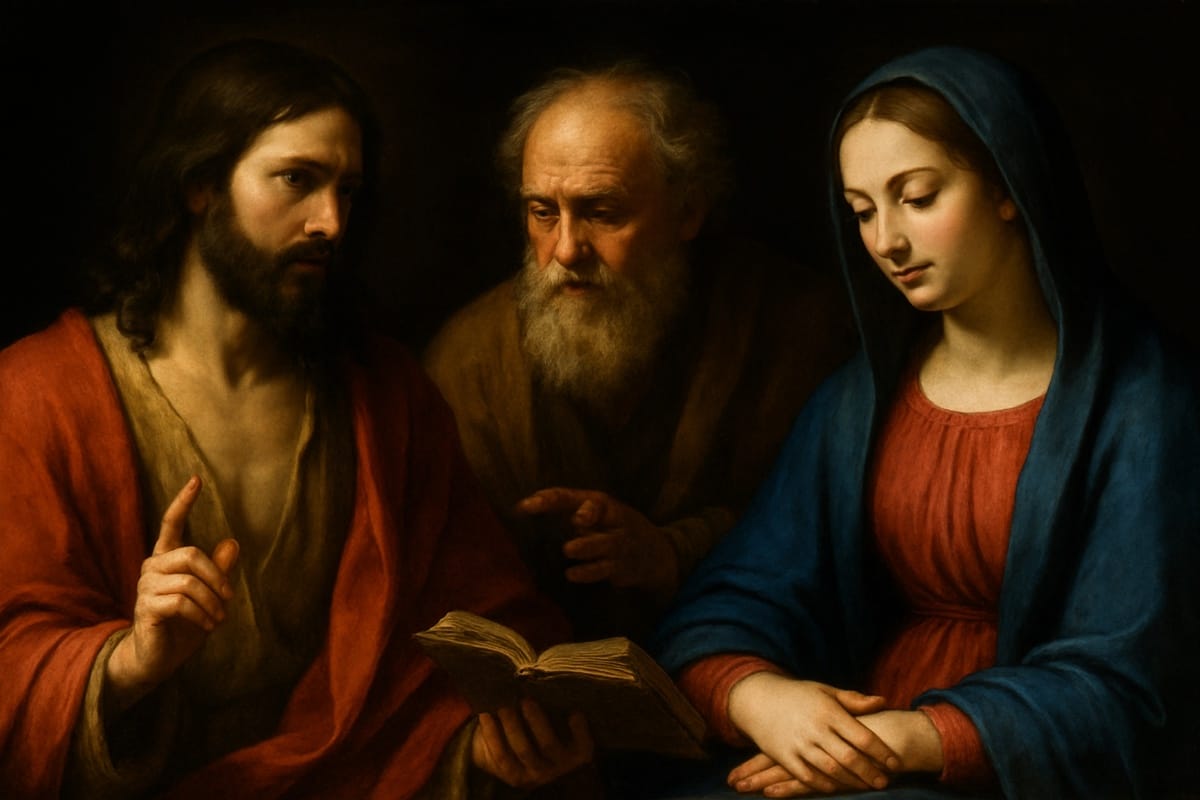
“Nothing new under the sun. […]. Who then is this of whom I hear such things? And he sought to see him.”
Ecclesiastes 1:9 and Luke 9:9
Thursday of Week 25 of Ordinary Time places before us the most disillusioned book of the Bible and a king who cannot perceive what is happening in his realm. Ecclesiastes declares that everything is vanity and that there is nothing new under the sun. Herod hears of Jesus, is perplexed, and the phrase with which Luke sends him off is one of the saddest in the Gospel: “and he sought to see Jesus” (v. 9). One text says there is nothing new. The other shows a man before the absolute novelty, unable to recognize it.
I. The first reading: Ecclesiastes 1:2-11
The Hebrew word translated as vanity is hebel, which means literally breath, vapor, something that dissipates as soon as it forms. “Vanity of vanities, all is vanity” (v. 2) is not a moral insult to the world, but a constatation about its consistency. Nothing of what humans build has enough substance to endure.
Ecclesiastes demonstrates this with a series of natural cycles that go nowhere. The sun rises and sets and returns to the same place. The wind blows from the south and then from the north, “in an endless cycle” (v. 6). Rivers flow to the sea, but the sea never fills up. And from there to the conclusion: “All things are vanity, for in the realm of the dead, to which you go, there is neither working nor planning nor knowledge nor wisdom” (v. 9). The final blow is oblivion: “No memory of former things, nor will there be any remembrance of things to come by those who come after” (v. 11).
It is important not to domesticate this text. It is in Scripture as it is, and the Church reads it without adding consolation. Its function is to destroy the hope that humans place in what they do under the sun, so that true hope is not built on sand.
II. The Gospel: Luke 9:7-9
Herod Antipas, the tetrarch, hears the reports and is perplexed. The hypotheses that circulate are all of the same type: John the Baptist resurrected, Elijah reappeared, one of the old prophets returned (v. 7-8). In essence, it is the thesis of Ecclesiastes applied to religion. Nothing new.
Herod’s objection is of a remarkable coldness: “I had John beheaded” (v. 9). He knows what he did and mentions it without any sign of remorse, as if he were eliminating an explanation for technical reasons. And he ends with the right question, “Who is this man of whom I hear such things?”, followed by what cancels everything: “and he sought to see Jesus”.
Luke will keep the outcome for the Passion. Herod will end up seeing Jesus, and he will rejoice greatly, because “he had hoped to see some miracle from him” (Lk 23:8). He interrogated Jesus at length, and Jesus did not answer him a thing. He who seeks to see out of curiosity ends up before silence, and silence is the exact answer to that search.
III. Curiosity that is not faith
The distance between Herod and a disciple is not measured by information. Herod was well-informed, he heard all that was said, he formulated the correct Christological question and even sought to see with his own eyes. What he lacked was what transforms curiosity into faith, and that is the disposition to be changed by what one encounters.
That is why the cynicism of Ecclesiastes and the perplexity of Herod are so similar. Whoever has already decided that nothing new can happen under the sun will organize all the information he receives within that assumption. The court’s hypotheses, a resurrected John or an Elijah who has reappeared, are precisely attempts to fit the unprecedented into existing categories. And the unprecedented, when it appears, never fits into them.
If “nothing new under the sun” accurately describes human history left to itself, then it is appropriate to say where the Scriptures affirm the contrary. And the place is a house in Nazareth. What happened there is not a cycle that repeats nor a prophet who returns. It is the Word who became flesh and dwelt among us (John 1:14), and it has no precedent in the series of events.
The patristic tradition found the correct formulation for this novelty by calling Mary the new Eve. The Council takes up this theme and recalls that the ancient Fathers affirmed that the knot of Eve’s disobedience was untied by Mary’s obedience, and that what the virgin Eve bound through unbelief the Virgin Mary untied through faith (LG 56, citing St. Irenaeus). It is not a new cycle. It is a knot untied, and an untied knot does not return to what it was.
There is also the contrast with Herod, which Luke seems to construct on purpose throughout his Gospel. Both hear about things they do not understand. Herod seeks to see, and he remains outside. Mary, however, in the face of what she also does not understand, does something else: “She kept all these things, pondering them in her heart” (Luke 2:19). To keep is not to understand. It is to accept carrying within herself something whose explanation has not yet arrived. Thus, the novelty found someone in whom it could reside.
Therefore, the Thursday of the 25th Week leaves a question that separates two very similar attitudes on the surface. We seek to see, or we seek to be changed? Because the first thing Herod also wanted, and he remained silent.
Postgraduate Program in Mariology
Would you like to deepen your formation in Mariology? Get to know the Postgraduate Program in Mariology from Locus Mariologicus – an academic formation that combines theological rigor, spiritual life, and the living tradition of the Church.
Register or learn more → Would you like to study Mariology seriously?
This article draws on the works of the Locus Mariologicus library. The Postgraduate Program in Mariology takes you to the same sources with academic guidance: Scripture, the Church Fathers and the Magisterium, from the first dogma to contemporary questions.




Responses