Marian Popular Piety in Advent

Introduction: Mary and Popular Piety in Advent
Advent, a season of profound expectation and preparation for Christmas, is also marked by a rich tapestry of devotional practices dedicated to Holy Mary. We will examine the dimension of Marian popular piety in Advent, highlighting how this tradition is expressed and enriches the spiritual experience of the faithful during this liturgical season.
Marian Devotion at the Heart of Advent
Marian devotion in Advent is not reduced to a series of rituals. It is, rather, a living expression of the Catholic faith. These practices, rooted in history and in tradition, provide a tangible connection with the spirituality of Advent and with the figure of Mary as a model of faith and hope.
Practices Recommended by the Directory
The Directory on Popular Piety and the Liturgy, an important source of guidance for liturgical and devotional practice, suggests various ways of venerating Mary during Advent. Among these practices are the Advent wreath, processions, the “Tempora d’inverno”, the Christmas novena, and the nativity scene. Each of these traditions has a special meaning and helps the faithful to connect more deeply with the history and symbolism of Advent. See also: the meaning of the Advent wreath.
The Novena of the Immaculate: A Central Practice of Advent
The Novena of the Immaculate, held in anticipation of the feast of the Immaculate Conception, is a central point of Marian devotion in Advent. The Directory, at number 102, underscores the importance of this practice, which is not merely a tradition, but a moment of intense spiritual experience. During the novena, the faithful reflect on Mary’s purity and grace, on her being chosen by God to be the mother of Jesus, and on what this means for our own journey of faith.
The Meaning of the Angelus Domini in Advent
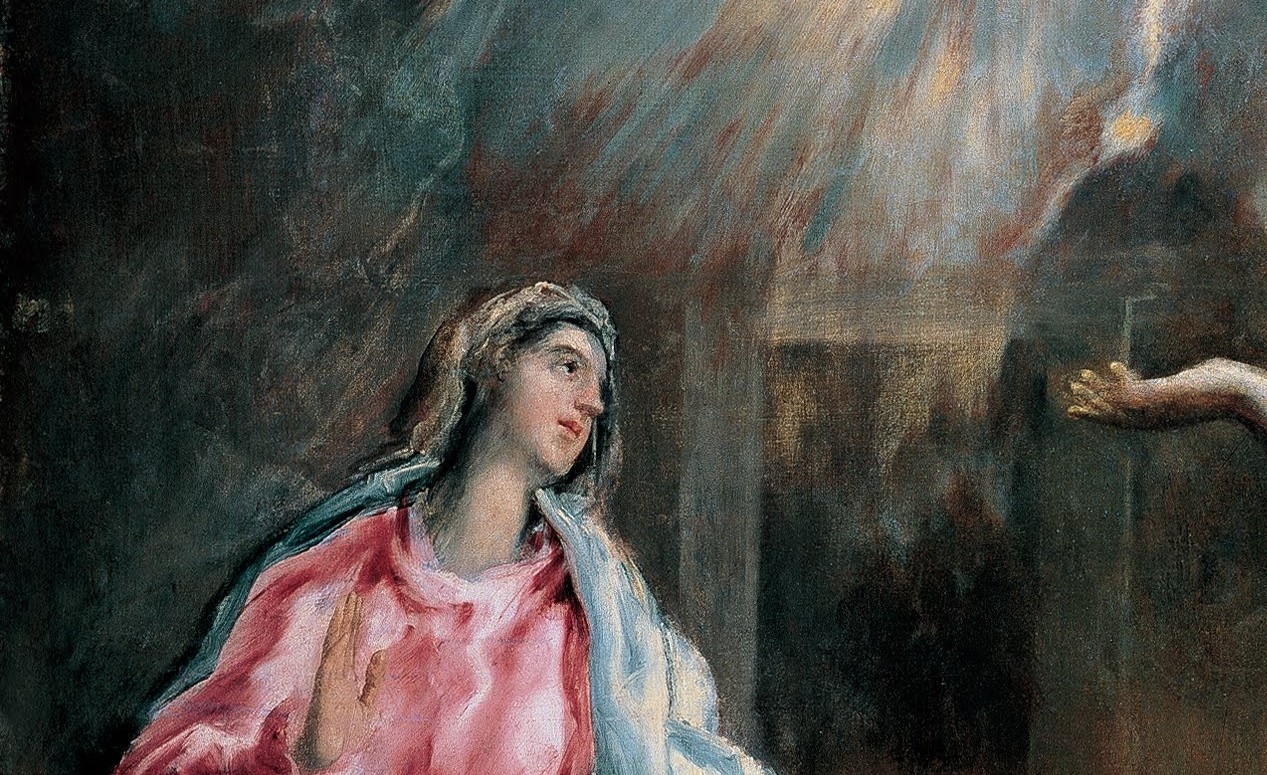
Another devotional practice during Advent is the Angelus Domini. This prayer, recited three times a day, recalls the announcement of the angel Gabriel to Mary. The Angelus is a theologically rich prayer that encapsulates the incarnation of Christ and the response of Mary’s faith. In Advent, this practice helps the faithful to align themselves with the attitude of waiting and hope that Mary exemplified.
The Litany of Holy Mary of Hope
A tradition particularly relevant for Latin American communities is the celebration of Our Lady of Guadalupe, which coincides with the season of Advent. The Litany of Holy Mary of Hope is an expressive form of prayer that celebrates Mary as a symbol of hope and faith. This litany invites the reader to reflect on Mary not only as the Mother of God, but also as an example of unshakable faith and hope.
Mary and the Journey of Advent
The veneration of Mary during this season is not merely a tradition, but a vital part of the spiritual journey of Advent. The practices highlighted offer the faithful an opportunity to connect with sacred history and to live Advent in a deeper and more meaningful way. Mary, as the archetype of waiting and hope, serves as a beacon for all of us in the preparation for the coming of Christmas.
Marian popular piety in Advent finds guidance in the Magisterium of the Church. The apostolic exhortation Marialis Cultus of Pope Paul VI offers guidelines for Marian devotion in the context of the liturgical year. Read the document at Marialis Cultus (Paul VI).
Deepen your studies: explore Mariology, Marian theology, Marian apparitions, and the Postgraduate Program in Mariology.
Postgraduate Program in Mariology
Would you like to deepen your formation in Mariology? Discover the Postgraduate Program in Mariology of Locus Mariologicus, an academic formation that unites theological rigor, spiritual life, and the living tradition of the Church.
Would you like to study Mariology seriously?
This article is born from the works in the library of Locus Mariologicus. The Postgraduate Program in Mariology takes you to the same source, with academic guidance: Scripture, the Fathers of the Church, and the Magisterium, from the first dogma to contemporary questions.



Responses