Mary’s contemplation in her heart for her mission
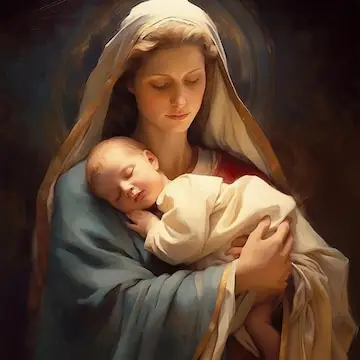
The Missionary Context of Mary’s ContemplationThe announcement of the “Gospel” to the poor: “Do not be afraid, for behold, I bring you good news of great joy, which shall be for all the people. For unto you is born this day in the city of David a Savior, who is Christ the Lord” (Luke 2:10-11). “And they went with haste, and found Mary and Joseph, and the child lying in a manger” (Luke 2:16). The announcement of the Gospel to all peoples: “We saw your star in the east and came to worship you” (Mt 2:2). “And entering the house, they saw the child with Mary, his mother” (Mt 2:11).The announcement of the Gospel in the synagogue of Nazareth: “He went to Nazareth, where he had been brought up, and on a Sabbath day he entered the synagogue, as was his custom, and stood up to read. It was given to him the book of the prophet Isaiah. Opening it, he found the place where it was written: ‘The Spirit of the Lord is upon me, because he has anointed me to proclaim good news to the poor, to proclaim liberty to the captives, and to the blind to recover their sight, to set at liberty those who are oppressed, and to proclaim a year of favor from the Lord’” (Lk 4:16-18). “Isn’t this the carpenter, Mary’s son?” (Mk 6:3).Mary’s contemplative and mission-oriented attitude“Mary, however, kept all these things, pondering them in her heart” (Lk 2:19). “He went down with them to Nazareth and was subject to them. And his mother kept all these things in her heart” (Lk 2:51).At the Annunciation, Mary assumes an attitude of silent contemplation and openness to God’s plans (Lk 1:29), expressed in faithfulness to the divine Word (Lk 1:38). The attitudes expressed in the Magnificat can be summarized in biblical poverty manifested as praise, gratitude, and hope (Lk 1:46ff). In response to Simeon’s prophetic words, Mary, along with Saint Joseph, proclaims her admiration for God’s designs (Lk 2:33-34). Mary’s silent contemplation (in Bethlehem and in the temple) indicates an attitude of adoration and offering (Lk 2:19. 2:51). Mary’s question upon finding Jesus in the temple will be an occasion for Jesus to refer to the redemptive mystery (Paschal mystery) (Lk 2:48). At Cana, Mary displays a supplicant or intercessory charity, attuned to the needs of her brothers, always in the perspective of God’s salvific plans (Jo 2:3ff).“Before the prayerful reader of the Word of God, the ideal profile of Mary, the Mother of the Lord, is revealed, who ‘kept all these things, pondering them in her heart’ (Lk 2:19. Cf. 2:51), that is, as the Greek original expresses it, finding the deep bond that joins seemingly disconnected events, actions, and things within the grand divine design” (Final Message of the Synod on the Word, n.9).”The dialogue, when referring to Revelation, entails the primacy of God’s Word addressed to man. Man responds to God in full freedom with the obedience of faith (cf. Rom 1:5; 2 Cor 10:5-6; DV 5). Mary, Mother of Jesus, exemplifies this obedience of faith, serving as the archetype of the Church’s faith that listens and embraces God’s Word.” (Bishop’s Synod, Proposal 4: The Dialogical Dimension of Revelation).“Mary, a model of lived faith” (TMA 43). “We should imitate Mary’s contemplation, who, after a pilgrimage to the holy city of Jerusalem, returned to her home in Nazareth, meditating in her heart the mysteries of the Son (cf. Lk 2:51).” (NMi 59).A journey to unify the heart: “lectio divina,” a Marian dimension. A unified heart that transforms life into a hymn of love and peace (Magnificat: Lk 1:46-55). The joy of belonging to God’s salvific designs (Lk 1:46-47). Mary is surprised by God (cf. Lk 1:29) and makes life a “yes” (Lk 1:38). Not putting anything before God. In harmony with the needs of the brothers (Jn 2:3: “they had no more wine”). In harmony with Jesus (Jn 2:5: “do whatever he tells you”). The “woman” associated with Christ the Redeemer (Jn 2:4; Jn 19:26). Mary’s contemplative silence (in Bethlehem and in the Temple) reveals an attitude of adoration and offering. A journey learned from Scripture: “Your word is the joy of my heart” (Jr 15:16). “I will portion out for me your words” (Ps 119:57).”The Contemplative Mission of the Church to Imitate MaryThe Church, in its evangelizing mission, finds in Mary an exemplary model of contemplation that impels action. Just as Mary meditated and kept in her heart the mysteries of Christ’s life, the Church is called to deeply contemplate God’s Word and the mysteries of faith, so that, strengthened and illuminated by this reflection, it can proclaim the Gospel to the world with zeal and fidelity. Contemplating Mary did not isolate her, but prepared her for the mission of being the Mother of the Redeemer and a collaborator in the work of salvation. Similarly, the Church, when contemplating the mysteries of Christ, is called to go beyond itself on mission, bringing the message of salvation to all peoples. Prayer, meditation, and listening to the Word are fundamental for the Church, like Mary, to discern God’s will and respond with generosity and courage.Mary, present at all crucial moments in Christ’s life, from the Annunciation to Pentecost, teaches the Church that true mission arises from contemplation. It is in intimacy with God, in attentive listening, and in prayerful silence that one finds the strength to be a faithful witness of Christ in the world.Therefore, imitating Mary, the Church is called to unite contemplation and action, ensuring that its mission is always rooted in prayer and deep communion with God, so that it may bring salvation to every corner of the Earth.The Church’s mission, inspired by Mary’s contemplation“The Church, contemplating Mary in the light of the Word made flesh, penetrates with reverence and ever more deeply into the highest mystery of the Incarnation and conformes itself more and more to its Spouse” (Lumen Gentium 65). Mary is at the heart of the Church (Redemptor Munus 27). “Let Mary’s soul magnify the Lord in each one of us, let her spirit exult in God in each one of us” (St. Ambrose). “The Church is the cradle where Mary lays down Jesus and entrusts him to the adoration and contemplation of all peoples” (Ineffabilis Deus 11).Mary, “Mother through the Church” (Redemptor Munus 24, Lumen Gentium 65). “The Church learns its own motherhood from Mary” (Redemptor Munus 43). The Marian apostolate is characterized by attitudes such as fidelity (to the Word, to the Holy Spirit), espousal association with Christ, oblation, and hope.“I have often presented her and invoked her as ‘the Star of the New Evangelization’ during these years. I continue to point to her as the luminous dawn and sure guide on our path” (Nostra Aetate 58).Therefore, “just as the Apostles after Christ’s Ascension gathered in the Cenacle ‘with Mary, the Mother of Jesus’ (Acts 1:14), to pray for the Spirit and to obtain strength and courage to fulfill the missionary mandate” (Redemptor Missio 92).The presence of Mary on the missionary path of the Church is a continuation of the evangelical event narrated by John after the miracle at Cana: “Jesus performed this first sign at Cana in Galilee, revealing his glory, and his disciples believed in him. Afterwards, he and his mother, his brothers, and his disciples went down to Capernaum” (John 2:11-12). The sequential evangelization, aiming to share Christ’s apostolic life, is a result of Mary’s invitation: “Do whatever he tells you” (John 2:5).According to the conciliar doctrine of Vatican II, Mary “precedes” the missionary path of the Church and “thus, on earth, she now shines as a sign of certain hope and consolation before the pilgrim People of God” (Lumen Gentium 68). Therefore, “all the faithful should earnestly pray to the Mother of God and Mother of Men, so that, having assisted at the birth of the Church through her prayers, she may also now, exalted in heaven, intercede with her Son, until all families of the nations be brought together as one people of God, to the glory of the most holy and indivisible Trinity” (Lumen Gentium 69).The evangelizing action of the Church bears and manifests its Marian and maternal reality, as the Church imitates Mary “who gave birth to Christ, conceived by the Holy Spirit and born of the Virgin, so as to grow also in the hearts of the faithful through the Church” (Lumen Gentium 65).The Synod, aimed primarily at renewing the Church’s faith in the Word of God, looks to Mary, the Virgin Mother of the Word Incarnate, who, with her ‘yes’ to the Word of the Covenant and its mission, perfectly fulfills the divine vocation of humanity. The Synodal Fathers suggest that the prayer of the Angelus be promoted among the faithful as a daily remembrance of the Word Incarnate, and the Rosary be encouraged.The Church of the New Testament lives where the incarnate Word is welcomed, loved, and served with full availability to the Holy Spirit. Mary’s faith develops in love as she accompanies the growth and mission of the Word Incarnate. Under the cross of the Son, faith and love become the hope with which Mary accepts to become the Mother of the beloved disciple and of redeemed humanity.Devout and loving attention to the figure of Mary as a model and archetype of the Church’s faith is of capital importance for achieving a concrete paradigm shift in the Church’s relationship with the Word, both in the attitude of prayerful listening and in the generosity of commitment to mission and announcement. The Synodal Fathers, united with the Holy Father in prayer for the Synod “to bring about a genuine renewal in every Christian community” (Benedict XVI, Angelus in Pompeii, October 19, 2008), invite pastors and faithful to look to Mary and ask the Holy Spirit for the grace of a living faith in the Word made flesh (Synod of Bishops, Proposal 55: Maria Mater Dei et Mater Fidei).Deepen your studies: explore Mariology, Marian theology, Marian apparitions, and the Postgraduate program in Mariology.Pope John Paul II delves into the contemplative and missionary role of Mary in the encyclical Redemptoris Mater, an essential reference for understanding Mary as a model for the Church.Deepen your studies: explore Mariology, Marian theology, Marian apparitions, and the Postgraduate program in Mariology.
 The announcement of the Gospel to all peoples: “We saw your star in the east and came to worship you” (Mt 2:2). “And entering the house, they saw the child with Mary, his mother” (Mt 2:11).The announcement of the Gospel in the synagogue of Nazareth: “He went to Nazareth, where he had been brought up, and on a Sabbath day he entered the synagogue, as was his custom, and stood up to read. It was given to him the book of the prophet Isaiah. Opening it, he found the place where it was written: ‘The Spirit of the Lord is upon me, because he has anointed me to proclaim good news to the poor, to proclaim liberty to the captives, and to the blind to recover their sight, to set at liberty those who are oppressed, and to proclaim a year of favor from the Lord’” (Lk 4:16-18). “Isn’t this the carpenter, Mary’s son?” (Mk 6:3).Mary’s contemplative and mission-oriented attitude“Mary, however, kept all these things, pondering them in her heart” (Lk 2:19). “He went down with them to Nazareth and was subject to them. And his mother kept all these things in her heart” (Lk 2:51).At the Annunciation, Mary assumes an attitude of silent contemplation and openness to God’s plans (Lk 1:29), expressed in faithfulness to the divine Word (Lk 1:38). The attitudes expressed in the Magnificat can be summarized in biblical poverty manifested as praise, gratitude, and hope (Lk 1:46ff). In response to Simeon’s prophetic words, Mary, along with Saint Joseph, proclaims her admiration for God’s designs (Lk 2:33-34). Mary’s silent contemplation (in Bethlehem and in the temple) indicates an attitude of adoration and offering (Lk 2:19. 2:51). Mary’s question upon finding Jesus in the temple will be an occasion for Jesus to refer to the redemptive mystery (Paschal mystery) (Lk 2:48). At Cana, Mary displays a supplicant or intercessory charity, attuned to the needs of her brothers, always in the perspective of God’s salvific plans (Jo 2:3ff).“Before the prayerful reader of the Word of God, the ideal profile of Mary, the Mother of the Lord, is revealed, who ‘kept all these things, pondering them in her heart’ (Lk 2:19. Cf. 2:51), that is, as the Greek original expresses it, finding the deep bond that joins seemingly disconnected events, actions, and things within the grand divine design” (Final Message of the Synod on the Word, n.9).”The dialogue, when referring to Revelation, entails the primacy of God’s Word addressed to man. Man responds to God in full freedom with the obedience of faith (cf. Rom 1:5; 2 Cor 10:5-6; DV 5). Mary, Mother of Jesus, exemplifies this obedience of faith, serving as the archetype of the Church’s faith that listens and embraces God’s Word.” (Bishop’s Synod, Proposal 4: The Dialogical Dimension of Revelation).“Mary, a model of lived faith” (TMA 43). “We should imitate Mary’s contemplation, who, after a pilgrimage to the holy city of Jerusalem, returned to her home in Nazareth, meditating in her heart the mysteries of the Son (cf. Lk 2:51).” (NMi 59).A journey to unify the heart: “lectio divina,” a Marian dimension. A unified heart that transforms life into a hymn of love and peace (Magnificat: Lk 1:46-55). The joy of belonging to God’s salvific designs (Lk 1:46-47). Mary is surprised by God (cf. Lk 1:29) and makes life a “yes” (Lk 1:38). Not putting anything before God. In harmony with the needs of the brothers (Jn 2:3: “they had no more wine”). In harmony with Jesus (Jn 2:5: “do whatever he tells you”). The “woman” associated with Christ the Redeemer (Jn 2:4; Jn 19:26). Mary’s contemplative silence (in Bethlehem and in the Temple) reveals an attitude of adoration and offering. A journey learned from Scripture: “Your word is the joy of my heart” (Jr 15:16). “I will portion out for me your words” (Ps 119:57).”The Contemplative Mission of the Church to Imitate MaryThe Church, in its evangelizing mission, finds in Mary an exemplary model of contemplation that impels action. Just as Mary meditated and kept in her heart the mysteries of Christ’s life, the Church is called to deeply contemplate God’s Word and the mysteries of faith, so that, strengthened and illuminated by this reflection, it can proclaim the Gospel to the world with zeal and fidelity. Contemplating Mary did not isolate her, but prepared her for the mission of being the Mother of the Redeemer and a collaborator in the work of salvation. Similarly, the Church, when contemplating the mysteries of Christ, is called to go beyond itself on mission, bringing the message of salvation to all peoples. Prayer, meditation, and listening to the Word are fundamental for the Church, like Mary, to discern God’s will and respond with generosity and courage.Mary, present at all crucial moments in Christ’s life, from the Annunciation to Pentecost, teaches the Church that true mission arises from contemplation. It is in intimacy with God, in attentive listening, and in prayerful silence that one finds the strength to be a faithful witness of Christ in the world.Therefore, imitating Mary, the Church is called to unite contemplation and action, ensuring that its mission is always rooted in prayer and deep communion with God, so that it may bring salvation to every corner of the Earth.The Church’s mission, inspired by Mary’s contemplation“The Church, contemplating Mary in the light of the Word made flesh, penetrates with reverence and ever more deeply into the highest mystery of the Incarnation and conformes itself more and more to its Spouse” (Lumen Gentium 65). Mary is at the heart of the Church (Redemptor Munus 27). “Let Mary’s soul magnify the Lord in each one of us, let her spirit exult in God in each one of us” (St. Ambrose). “The Church is the cradle where Mary lays down Jesus and entrusts him to the adoration and contemplation of all peoples” (Ineffabilis Deus 11).Mary, “Mother through the Church” (Redemptor Munus 24, Lumen Gentium 65). “The Church learns its own motherhood from Mary” (Redemptor Munus 43). The Marian apostolate is characterized by attitudes such as fidelity (to the Word, to the Holy Spirit), espousal association with Christ, oblation, and hope.“I have often presented her and invoked her as ‘the Star of the New Evangelization’ during these years. I continue to point to her as the luminous dawn and sure guide on our path” (Nostra Aetate 58).Therefore, “just as the Apostles after Christ’s Ascension gathered in the Cenacle ‘with Mary, the Mother of Jesus’ (Acts 1:14), to pray for the Spirit and to obtain strength and courage to fulfill the missionary mandate” (Redemptor Missio 92).The presence of Mary on the missionary path of the Church is a continuation of the evangelical event narrated by John after the miracle at Cana: “Jesus performed this first sign at Cana in Galilee, revealing his glory, and his disciples believed in him. Afterwards, he and his mother, his brothers, and his disciples went down to Capernaum” (John 2:11-12). The sequential evangelization, aiming to share Christ’s apostolic life, is a result of Mary’s invitation: “Do whatever he tells you” (John 2:5).According to the conciliar doctrine of Vatican II, Mary “precedes” the missionary path of the Church and “thus, on earth, she now shines as a sign of certain hope and consolation before the pilgrim People of God” (Lumen Gentium 68). Therefore, “all the faithful should earnestly pray to the Mother of God and Mother of Men, so that, having assisted at the birth of the Church through her prayers, she may also now, exalted in heaven, intercede with her Son, until all families of the nations be brought together as one people of God, to the glory of the most holy and indivisible Trinity” (Lumen Gentium 69).The evangelizing action of the Church bears and manifests its Marian and maternal reality, as the Church imitates Mary “who gave birth to Christ, conceived by the Holy Spirit and born of the Virgin, so as to grow also in the hearts of the faithful through the Church” (Lumen Gentium 65).The Synod, aimed primarily at renewing the Church’s faith in the Word of God, looks to Mary, the Virgin Mother of the Word Incarnate, who, with her ‘yes’ to the Word of the Covenant and its mission, perfectly fulfills the divine vocation of humanity. The Synodal Fathers suggest that the prayer of the Angelus be promoted among the faithful as a daily remembrance of the Word Incarnate, and the Rosary be encouraged.The Church of the New Testament lives where the incarnate Word is welcomed, loved, and served with full availability to the Holy Spirit. Mary’s faith develops in love as she accompanies the growth and mission of the Word Incarnate. Under the cross of the Son, faith and love become the hope with which Mary accepts to become the Mother of the beloved disciple and of redeemed humanity.Devout and loving attention to the figure of Mary as a model and archetype of the Church’s faith is of capital importance for achieving a concrete paradigm shift in the Church’s relationship with the Word, both in the attitude of prayerful listening and in the generosity of commitment to mission and announcement. The Synodal Fathers, united with the Holy Father in prayer for the Synod “to bring about a genuine renewal in every Christian community” (Benedict XVI, Angelus in Pompeii, October 19, 2008), invite pastors and faithful to look to Mary and ask the Holy Spirit for the grace of a living faith in the Word made flesh (Synod of Bishops, Proposal 55: Maria Mater Dei et Mater Fidei).Deepen your studies: explore Mariology, Marian theology, Marian apparitions, and the Postgraduate program in Mariology.Pope John Paul II delves into the contemplative and missionary role of Mary in the encyclical Redemptoris Mater, an essential reference for understanding Mary as a model for the Church.Deepen your studies: explore Mariology, Marian theology, Marian apparitions, and the Postgraduate program in Mariology.
Graduate Studies in Mariology
Do you want to deepen your formation in Mariology? Get to know the Graduate Program in Mariology from Locus Mariologicus – an academic formation that combines theological rigor, spiritual life, and the living tradition of the Church.Serious about studying mariology?
This article arises from the works in the Locus Mariologicus library. The Postgraduate Mariology program takes you to the same sources, with academic guidance: Scripture, the Fathers of the Church, and the Magisterium, from the first dogma to contemporary issues.





Responses