The intercession of Mary at the cross (1987): the demonic testimony, according to Father Giovanni Bamonte
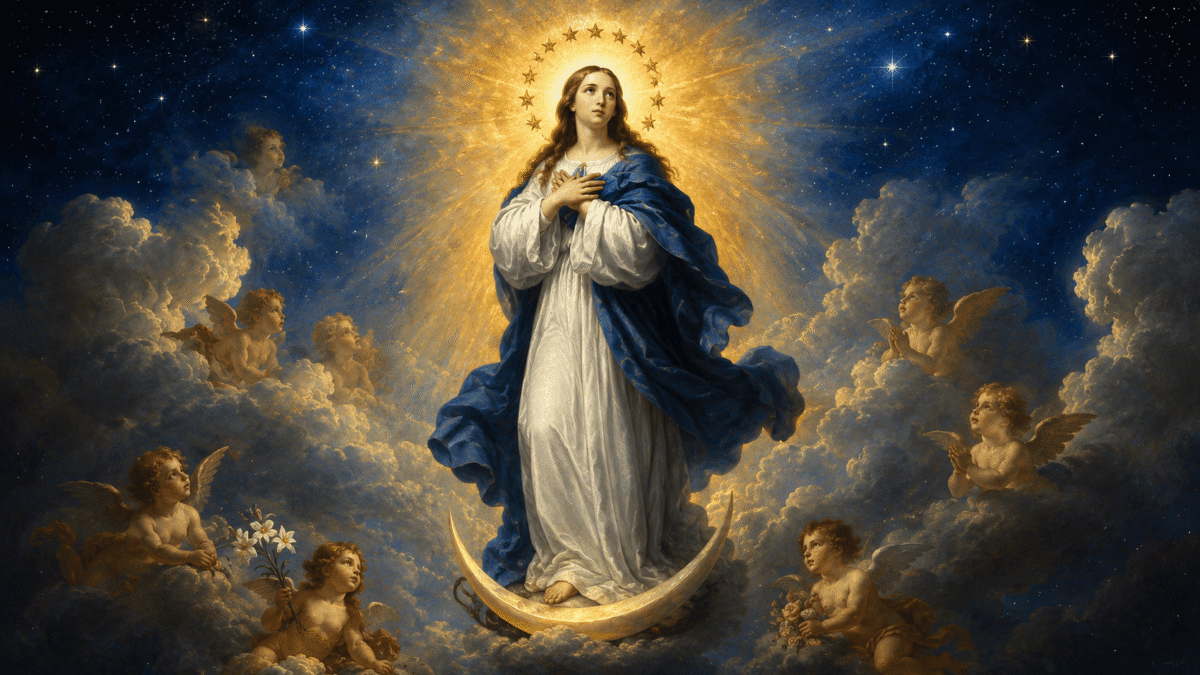
The doctrine of the intercession of Mary constitutes one of the richest and at the same time most precisely delimited domains of dogmatic Mariology. Its scriptural basis is found at Calvary, where Mary’s presence at the foot of the Cross is not a marginal biographical detail but a theological act of soteriological density: the Mother, present at the moment when the Son offers the redemptive sacrifice, co-offers with Him what is hers, participating in the logic of the oblation that lies at the heart of the Paschal mystery.
The records of exorcisms documented by the Italian priest Giovanni Bamonte offer at this point an involuntary testimony of singular precision, confirming by the negative way what dogmatic Mariology affirms by the positive way: the intercession of Mary is real, permanent, and operatively efficacious in the economy of salvation.
I. Mary at the cross: the biblical foundation of intercession
The biblical foundation of the intercession of Mary is concentrated in two narrative moments in John: the wedding at Cana (Jn 2:1-11) and Calvary (Jn 19:25-27). At Cana, Mary’s intercession brings about the first public manifestation of Jesus’ power: in the face of the human need that she anticipates and presents to her Son, Christ’s response inaugurates the cycle of signs that John’s Gospel sets out as a progressive revelation of the identity of the Word.
At Calvary, Mary’s silent presence at the foot of the Cross completes the arc: she was present at the beginning of the redemptive work and remained present at its fulfillment. The exegetical tradition, from Origen to Benedict XVI, identified in this presence not merely a datum of a sentimental order but an active participation in the mystery that was being consummated.
Patristic theology developed this datum in the direction of an understanding of the intercession of Mary as a structural dimension of the economy of salvation. Irenaeus of Lyons, in formulating the Eve-Mary antithesis, already implied that Mary’s obedience was not merely momentary but enduring: just as Eve continued to exercise her influence upon humanity after original sin, so Mary continues to exercise her cooperation in the redemption after the oblation of Calvary. The spiritual motherhood that Christ conferred upon her on the Cross is not extinguished by physical death: it dilates into a permanent intercession for the humanity that He recapitulated in Himself.
II. The co-offering at Calvary: Mary as a participant in the redemptive oblation
Dogmatic Mariology progressively developed the understanding of Mary’s presence at Calvary as a co-offering. The concept of Co-redemption, which remains an object of theological debate as to its definitive formulation, affirms in its substance that Mary was not at Calvary as a passive spectator but as an active participant in the logic of the oblation. Lumen Gentium, in number 58, affirms that Mary “suffered deeply with her only-begotten Son and united herself with a maternal heart to the sacrifice of Christ”. The language is precise: union with the sacrifice implies a participation that, without being confused with the unique and unrepeatable mediation of Christ, is theologically significant.
The records of exorcisms documented by Bamonte confirm this dimension by a radically unexpected route. Faced with a prayer that invoked the redemptive power of the Cross, the demonic entity, compelled to answer, declared of Mary: “what she offered and, beneath her cross, she suffered”. The confession, wrested from the adversary, identifies in Mary’s presence at the foot of the Cross an act of offering that he recognizes as theologically decisive.
Mary’s suffering at Calvary is not merely the natural grief of a mother who sees her son die: it is, in the logic of this involuntary confession, an oblation that the enemy of humanity registered as his own defeat. Father Bamonte recorded the demonic reaction to the words that recalled this co-offering: “enough, do not let me remember, stop, it is burning me”.
III. The Immaculate Heart as an instrument of universal intercession
The Mariological tradition after the seventeenth century developed the devotion to the Immaculate Heart of Mary as an expression of the intercession of Mary in its affective and volitional dimension. The heart, in biblical anthropology, designates the center of the person, the place where intentions are formed and decisions are exercised. The Immaculate Heart of Mary is, within this framework, the symbol of the totality of her person oriented toward God and toward humanity: her will, her love, her suffering, and her joy, all gathered into a permanent oblation that constitutes the substratum of her intercessory activity.
The demonological testimonies documented by Bamonte converge in a remarkable way at this point. In one of the most frequently cited sessions, the demonic entity, constrained by the authority of the exorcism, affirmed: “the Immaculate Heart of Mary will save the whole world. Only her Immaculate Heart”. This statement has a theological density that the context of its origin does not permit us to dismiss. The adversary of humanity, forced to speak about Mary, identifies the instrument of universal salvation not in a doctrinal abstraction but in a concrete personal reality: the Heart that the Church has defined as Immaculate. The demonic proclamation echoes, in a register of hatred and constraint, what Fatima and the Marian Magisterium of the twentieth century affirmed in the register of revelation and faith.
IV. The demonic testimony on the permanent intercession of Mary
Bamonte’s records include a set of statements about Mary’s prayer and its intercessory efficacy which constitute, in their consistency and precision, an apologetic testimony of considerable weight. The first of them describes the relation between Mary’s praying activity and demonic operation with an image of violence: “she prays always, she does not fall silent for a single moment, and we are scourged by her prayers”. The second formulates the relation between the intercession of Mary and the destiny of each soul with a precision that treatises of Mariology rarely attain: “because she reads hearts and justifies before God”.
The statement “she reads hearts and justifies before God” is theologically dense. To read hearts is a divine attribute: Jesus, in the Gospel, knows the thoughts of men. That Mary should share in this capacity, even if in a participated and subordinate manner, is not an affirmation foreign to the theological tradition: the beatitude of the divine vision, which the Church affirms of Mary as definitively realized in her Assumption, implies a participation in the divine knowledge that makes possible an intercession informed by the reality of each soul.
The hatred with which the demon formulates this reality is, once again, the index of its theological greatness: the adversary does not fear what does not threaten him. The intercession of Mary as a permanent activity directed toward the salvation of each soul is, from the enemy’s perspective, a real and permanent threat.
V. The theological legacy of Mary’s maternal intercession
The doctrine of the intercession of Mary received in the conciliar and post-conciliar Magisterium a formulation that precisely balances its affirmation with the safeguarding of the uniqueness of Christ’s mediation. Lumen Gentium no. 62 affirms: “Mary’s motherhood in the order of grace endures without interruption, from the consent that she faithfully gave at the Annunciation and that she maintained without wavering beneath the Cross, until the perpetual consummation of all the elect”. Mary’s intercession is, within this framework, the permanent expression of her spiritual motherhood: she does not cease to intercede for the children whom Christ entrusted to her at Calvary, and the duration of this intercession is that of the history of salvation itself.
The demonological testimony gathered by Bamonte adds nothing new to this Magisterium. It does, however, confirm it in a way that theological argument on its own could not reproduce: with the voice of the adversary who acknowledges, with terror and constraint, what faith professes with love and hope. “Every pain, every suffering offered to that Heart of Mary is a sweet tenderness of profound charity which she receives and offers with her hands and raises to the light of that Creator”: this statement, wrested from the demon by the weight of the exorcism, is the exact demonological translation of the doctrine of vicarious oblation that Mariology teaches.
What the adversary confesses with hatred, the Church professes with gratitude. Cf. Lumen Gentium, nos. 58-62 and Redemptoris Mater (John Paul II, 1987). In-depth study of the intercession of Mary forms part of the curriculum of the Postgraduate Program in Mariology at Locus Mariologicus.
Postgraduate Program in Mariology
Would you like to deepen your formation in Mariology? Discover the Postgraduate Program in Mariology at Locus Mariologicus – an academic formation that unites theological rigor, spiritual life, and the living tradition of the Church.





Responses