Saint Anthony the Great and the demons: what the “Life of Anthony” teaches about spiritual combat
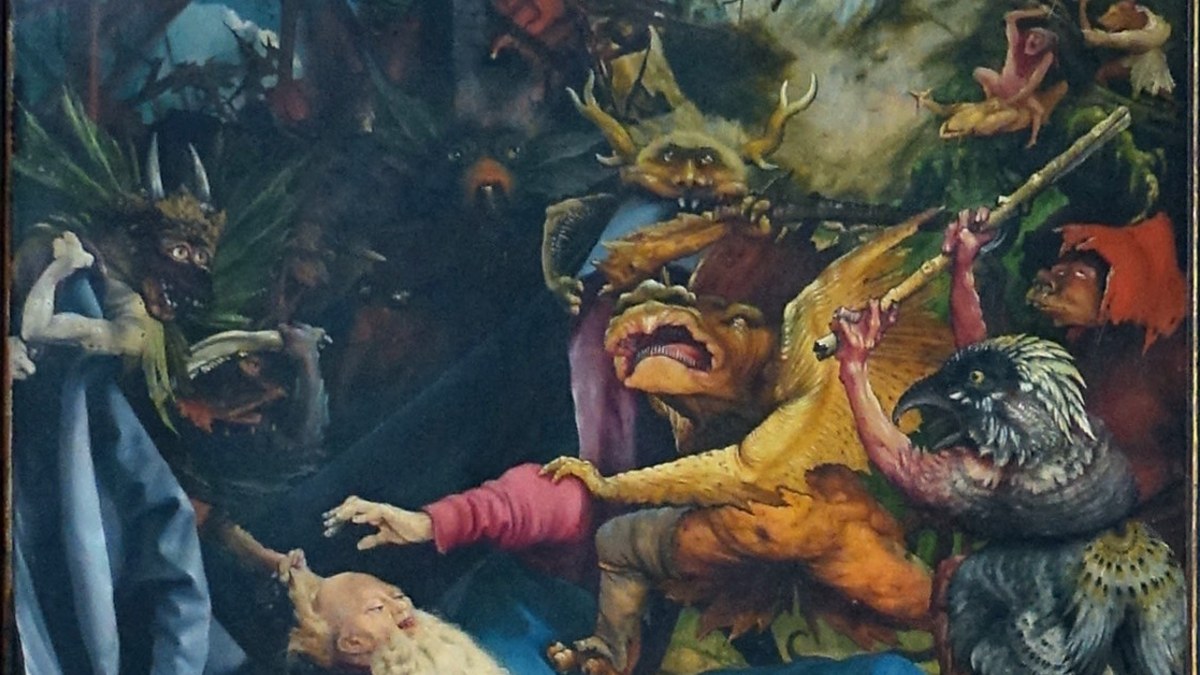
Exsurgat Deus, et dissipentur inimici eius, et fugiant qui oderunt eum a facie eius (Let God arise, and let his enemies be scattered, and let those who hate him flee from his face)
Ps 67:2 (Vulgate), the psalm that Saint Anthony the Great sang amid the assault of the demons, according to the Life of Anthony 13
The cross, faith and the discernment of spirits in the Egyptian desert, and the woman who crushes the head of the serpent
Meditation on patristic Demonology based on the Life of Anthony by Saint Athanasius of Alexandria
Few Christian books have been read as widely as the Life of Anthony (Saint Anthony the Great), written by Saint Athanasius in the fourth century. The editors of the Lorenzo Valla Foundation call it, without exaggeration, a great success of ancient Christian literature, present in hundreds of codices and translated into Latin, Coptic, Syriac, Armenian and Georgian. And yet many of those who cite it pass quickly over the pages that give it its shape: those on the combat against the demons.
The scholar Christine Mohrmann warns against this haste. “We must not hide the evident reality of this struggle by transferring it to a purely psychological plane,” she writes, and adds that “the struggle against the demons is an essential element of desert life” (MOHRMANN. Introduction to Vita di Antonio. 1974, p. LXXXI). Catholic Demonology finds in this work not a repertoire of hauntings but a pedagogy: what the enemy is, what power he has, and how the faithful overcome him.
I. Three combats, three stages of the journey
Mohrmann observes that Anthony’s three great combats against the demons coincide with the three stages that lead him into solitude: when he withdraws to a tomb (Life 8), when he settles in an abandoned fort in the nearby desert (Life 12-13), and when he reaches the desert by the Red Sea (Life 51-52). Each time, Anthony hears the demons cry out: “Withdraw from our place. What have you to do with the desert?” (MOHRMANN, 1974, p. LXXXI).
The observation has spiritual reach. The adversary attacks with more force when the faithful advances. Whoever settles into comfort does not disturb him. The Lord himself was led by the Spirit into the desert to be tempted (Matt 4:1), and Anthony, a disciple of the Gospel, follows him there. Temptation is not a sign that God has withdrawn: it is often a sign that the soul has begun to walk.
II. “They are nothing”: the apparitions and their weakness
In his great discourse to the monks, Anthony describes the enemy’s tactics with almost clinical precision. When they cannot seduce the heart through pleasure, the demons form images, transfigure themselves, and imitate women, wild beasts, serpents, gigantic bodies and ranks of soldiers. But the conclusion is serene: “Not even their images are to be feared. They are nothing and quickly vanish, above all if we fortify ourselves with faith and with the sign of the cross” (Life 23.3-4, in ATHANASIUS. Vita di Antonio. 1974, p. 55).
To say who the enemy is, Anthony turns to the book of Job. The demons often appear, he says, as the Lord showed the devil to Job, with eyes like the morning star and flames coming out of his mouth (Life 24.1, citing Job 41). But it is from the same book that he draws the decisive lesson. The commentary of the Sources Chrétiennes edition summarizes it this way: the story of Job teaches, says Anthony, that the devil can do nothing without God’s permission (Life 29), and “when he found Job fortified, the Enemy withdrew from him” (Life 42.8) (BARTELINK. Introduction to ATHANASIUS. Sant’Antonio abate, la sua vita. 2013, p. 58). This is a fundamental rule of Catholic Demonology: the demon is a creature, powerful but limited, and never a rival of God.
III. The cross as a wall
There is a scene in the Life that seems written for our own time. Anthony’s acquaintances came to visit him at the fort and, since he would not let them in, stayed outside for days and nights. They heard a tumultuous crowd inside, shouting. Full of fear, they called for him. Anthony came to the door and told them not to be afraid: “Make the sign of the cross with confidence, go, and let these mock themselves.” And they departed, says the text, “girded by the sign of the cross as by a wall” (Life 13, in LAVATORI. Scritti sul diavolo, p. 468). And Anthony went on singing the psalms: “Let God arise, and let his enemies be scattered” (Ps 67:2, Vulgate).
The theologian Cecilia Fluerăș explains why the cross drives away the demons: because it is the expression of Christ’s victory over them and over death. And she cites the Life itself: the demons “fear the sign of the Lord’s cross, because through it the Savior stripped them and triumphed over them” (Life 13 and 35, in FLUERĂȘ. De pugna daemonum. 2019, p. 108). Athanasius is reading Saint Paul, who says of Christ on the cross: “he stripped the principalities and powers and exposed them publicly to ridicule, triumphing over them” (Col 2:15). The sign of the cross is not an amulet: it is the abbreviated confession of the victory of Calvary.
IV. The discernment of spirits and the woman who defeats the serpent
The gift that the Life most admires in Anthony is the discernment of spirits. Those who heard him left persuaded to despise the machinations of the demons, “admiring the grace given by the Lord to Anthony for the discernment of spirits” (Life 44.1, in ATHANASIUS. Sant’Antonio abate, la sua vita. 2013, p. 287). Mohrmann stresses that it is a gift received from God, to recognize the demons even when they transfigure themselves into angels of light (MOHRMANN, 1974, p. LXXXII), as Saint Paul had already warned (2 Cor 11:14). Anthony does not conquer by the strength of his arm or the courage of his temperament. He conquers because grace makes him lucid, and because his life, as Fluerăș says, is a virtuous life according to the Gospel, to which God grants victory over the demons (Life 30).
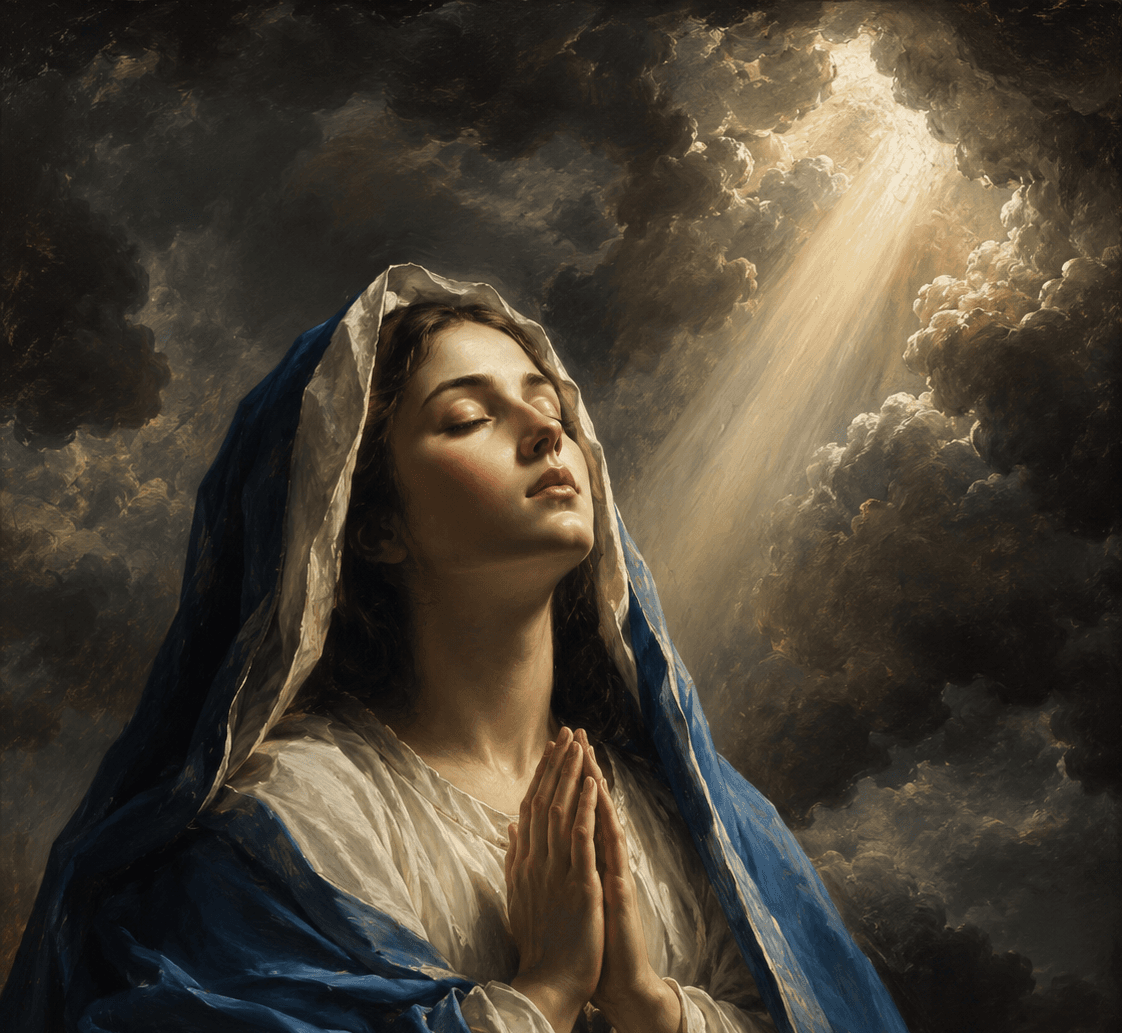
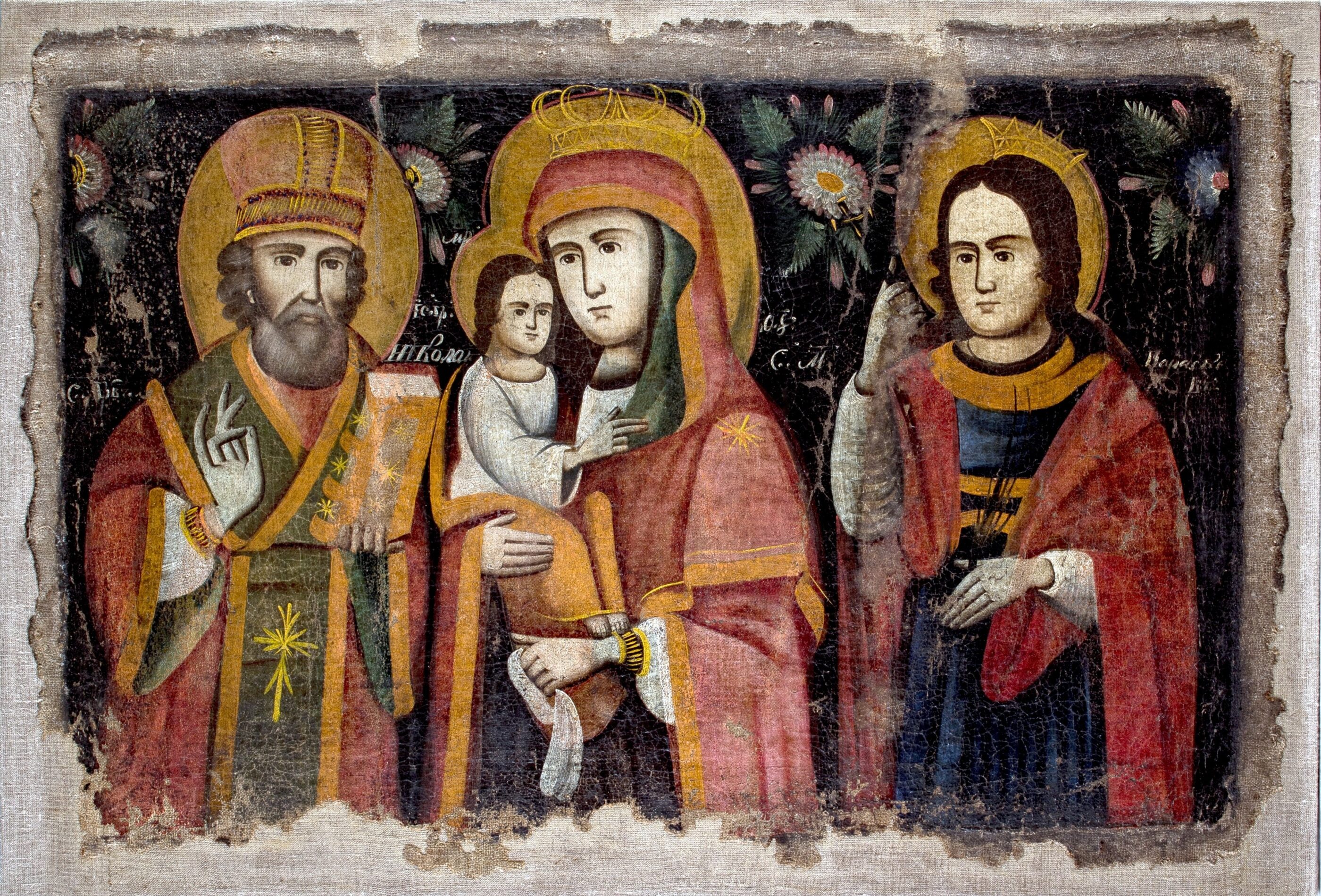
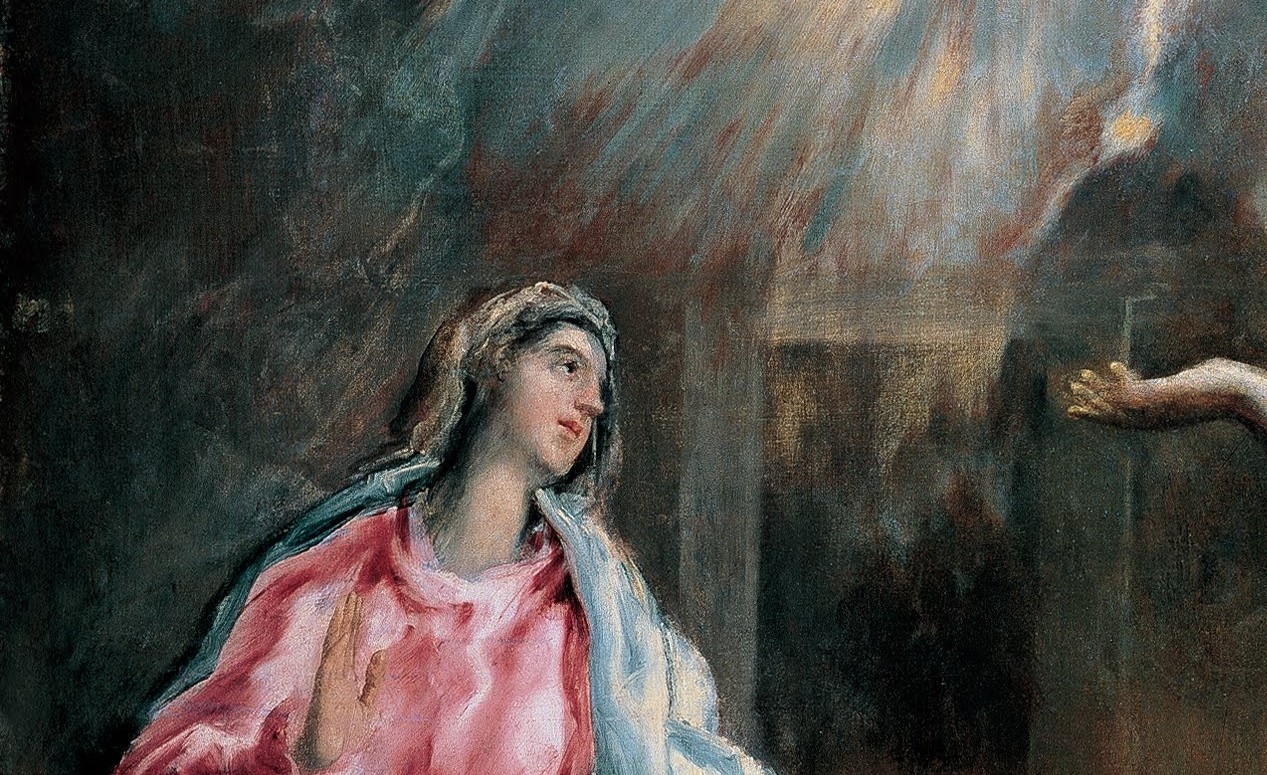
The Life of Anthony does not speak of Mary, and it would be dishonest to put into Anthony’s mouth what he did not say. But his victory is the victory of Christ, and that victory was announced from the beginning with a woman at the center: “I will put enmity between you and the woman, between your offspring and hers. She will crush your head” (Gen 3:15). The Apocalypse takes up the same struggle in the Woman clothed with the sun whom the dragon pursues and cannot defeat (Rev 12:1-17). The monk who girds himself with the cross and the Virgin who tramples the serpent are on the same side of one single battle. For this reason Catholic tradition unites the spiritual struggle with confidence in the Mother of the Redeemer: she is the creature in whom the enemy never found a door.
* * *
The Demonology that arises from the Life of Anthony is sober and luminous. It does not feed fear, nor fascination with the occult. It tells the faithful that the enemy exists, that he is weak before Christ, and that he is overcome by faith, prayer, the psalms, the sign of the cross and a life according to the Gospel. Locus Mariologicus invites the reader to rediscover the sign of the cross made with awareness, morning and evening, and to place his daily struggle under the protection of her who crushes the head of the serpent.
Prof. Dr. Daniel Cerqueira Afonso
President of Locus Mariologicus
Rome, October 22, 2026
Main references
ATHANASIUS OF ALEXANDRIA. Vita di Antonio. Introduction by Christine Mohrmann, critical text and commentary by G. J. M. Bartelink, translated by Pietro Citati and Salvatore Lilla. Fondazione Lorenzo Valla, Arnoldo Mondadori Editore, 1974. (Vite dei Santi, 1).
ATHANASIUS OF ALEXANDRIA. Sant’Antonio abate, la sua vita. Introduction, critical text, notes and index by Gerhardus Johannes Marinus Bartelink, Italian translation by Luca Bruzzese. Bologna: Edizioni San Clemente, Edizioni Studio Domenicano, 2013. (Sources Chrétiennes, 400, Italian ed.).
FLUERĂȘ, Cecilia. “De pugna daemonum” nella “Vita Antonii” di Atanasio di Alessandria. Studia Universitatis Babeș-Bolyai. Theologia Catholica, Cluj-Napoca, vol. 64, no. 1-2, p. 85 and following, 2019.
LAVATORI, Renzo (ed.). Scritti sul diavolo: tutti i testi sul demonio del primo millennio di storia della Chiesa. Verona: Fede & Cultura.
Responses