Saint Mary, the new woman
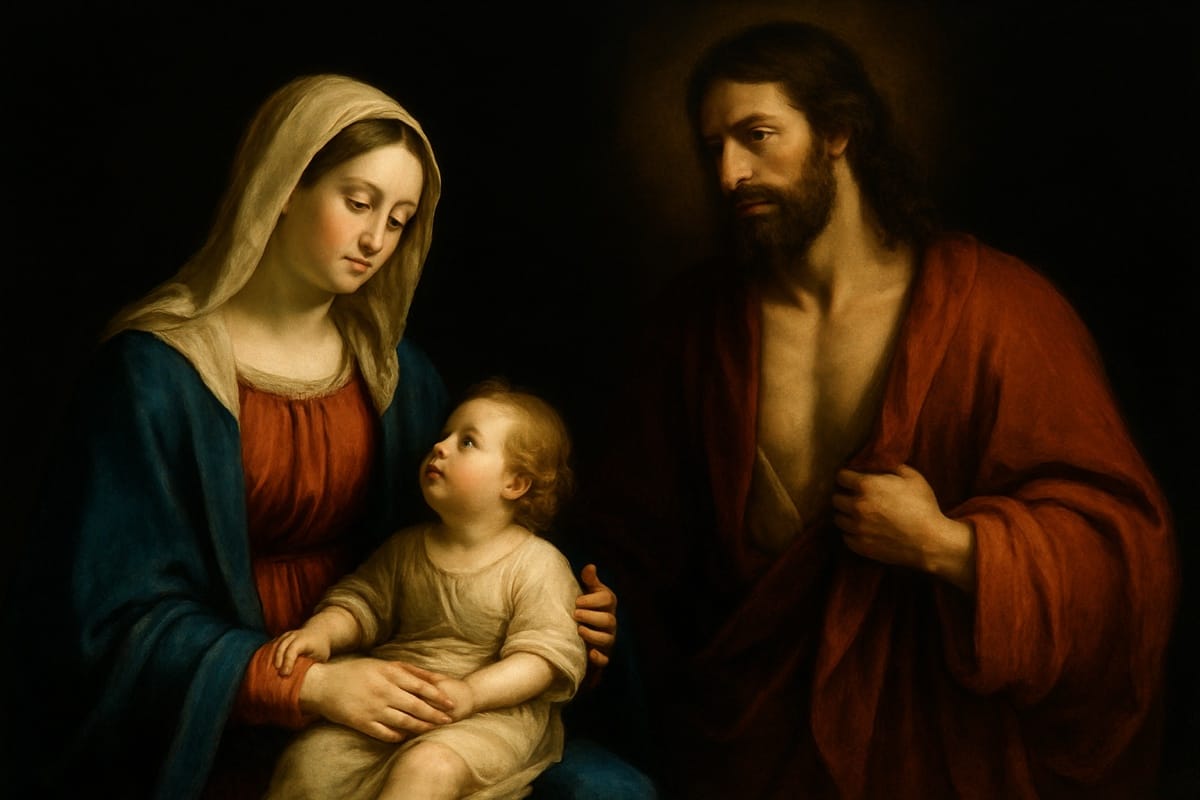
“Behold, I make all things new.” (Rev 21:5)
I. The New Creation and the New Woman
The Apocalypse vision that opens this Mass, with the divine announcement that “all things” are made new, is not an abstract promise about an undefined future: it is the revelation of what the Incarnation of the Son has already begun to accomplish. The “new creation” of Paul (2 Cor 5:17) and the “new Jerusalem” of John (Rev 21:2) converge in a single affirmation: the coming of Christ in flesh inaugurated a new order that will never retreat. The “old” that has passed is not merely the regime of sin: it is the condition of all humanity before the Incarnation, the state of a creation waiting “with groaning” for the revelation of God’s children (Rom 8:22).
The “new woman” that Mary represents in the economy of salvation is the female correlate to the “new man” who is Christ. Just as Jesus is the new Adam who restores what the first Adam had corrupted (cf. 1 Cor 15:45), Mary is the new Eve who says “yes” where the first Eve said “no,” who obeys where Eve disobeyed, who welcomes God’s Word where Eve listened to the serpent. This parallel of Eve-Mary, established by Justin Martyr and Irenaeus of Lyons already in the second century, is not a late speculation: it is inscribed in the typological logic of the New Testament, which presents Christ and Mary as the definitive fulfillment of what Genesis had begun.
II. From Corrupted Creation to Restored Creation
“All things new” in Revelation presumes an “old” that needed renewal: a creation wounded by original sin, a humanity fragmented by disobedience, a history marked by violence and death. The Incarnation is God’s response to this situation: not the destruction of the old and its replacement with something entirely different, but the restoration of the old from within, the transfiguration of the creature by the Creator who became creature. And Mary is the first fragment of this new creation, the most fully restored creature, the most completely renewed humanity by the Spirit of the Son who dwelt in her.
The Immaculate Conception, defined as a dogma by Pius IX in 1854, is the theological formulation of this intuition: Mary was preserved from all stain of original sin in anticipation of Christ’s merits, becoming thus the first full fruit of Redemption before any other human being. She is the “new creation” before all others, the new woman who anticipates what all redeemed humanity is called to be. Revelation proclaims what has already happened in Mary and is happening in all who allow themselves to be renewed by the Spirit of the Risen One.
III. “Full of Grace”: The Novelty of the Announcement
The angel Gabriel’s greeting to Mary, “full of grace” (kecharitomene), confirms the novelty she represents. The perfect passive participle indicates a state already achieved prior to this moment: Mary has already been transformed by grace, renewed by divine gift, and is the “new woman” before receiving the announcement of her divine motherhood. The grace that fully inhabits her is not an external addition to her humanity but the transfiguration of her humanity from within, making her the most fully human among all creatures because she is the most fully divine in participating in God’s life.
Mary’s “fiat” is the act of the quintessential new woman: where Eve said “no” to God’s command upon hearing the serpent’s deceptive promise, Mary says “yes” to God’s command by embracing the true promise of the angel. The parallelism is musical in its precision: the Garden of Eden tree, the serpent, the woman, and the word that defines humanity’s destiny. In the Garden, the word was one of refusal and opened the door to death. In Nazareth, the word was one of acceptance and opened the door to life. A new creation began in a simple Galilean room when a young woman said “yes” to God who had been waiting for this response since before the foundation of the world.
IV. Mary, Primices of the New Humanity
The twentieth Mass in the Collecta contemplates Mary as the “new woman” representing what all redeemed humanity is called to be: a creature fully transformed by grace, fully available to the Spirit, and fully integrated into God’s universal renewal plan. She is not an exception in salvation history; she is the model, the primacy, and the anticipation of what the “all things new” of Revelation will accomplish in all who allow themselves to be renewed.
The Church celebrating this Mass is invited to recognize in Mary the image of its own destiny: not a progressive degradation and definitive death but a growing transfiguration and fullness of life. The “new Jerusalem” descending from heaven, “like a bride adorned for her husband,” is the image of finally converted, finally surrendered, and finally made what it was created to be. And Mary, the new woman who anticipated this destiny, stands at the center of this glorified community as the one who most fully revealed what consists in being a creature renewed by God’s love.
Postgraduate Program in Mariology
Would you like to deepen your formation in Mariology? Discover the Postgraduate Program in Mariology from Locus Mariologicus – an academic formation that combines theological rigor, spiritual life, and the living tradition of the Church.



Responses