Magisterium and Private Revelations
The Magisterium of the Church in the Face of Mary’s Private Revelations
Magisterium and Particular Revelations
The decree by which Pius XI declared the virtues of Saint Gemma Galgani heroic contains the following clause:
(Congregatio Rituum, Lucen in Italy: Beatificationis et canonizationis Servae Dei Gemmae Galgani Virginis saecularis. Super dubio. Anconstet de virtutibusin Acta Apostolicae Sedis 24 (1932), 57).
“with this decree no judgment is passed, as in the past, on the supernatural charisms of the Servant of God”
In this expression, the incidental clause has a singular importance that goes beyond the specific cause with which the decree deals. It attests to the customary reserve of the Hierarchy of the Church regarding those phenomena that can be believed with merely human faith. The practice established by Benedict XIII distinguishes between virtues and charisms and entails, on the part of the Hierarchy, in the procedure for the canonization of a servant of God, a judgment limited to the heroic character of the virtues, positively excluding visions, apparitions, and private revelations from its sphere.
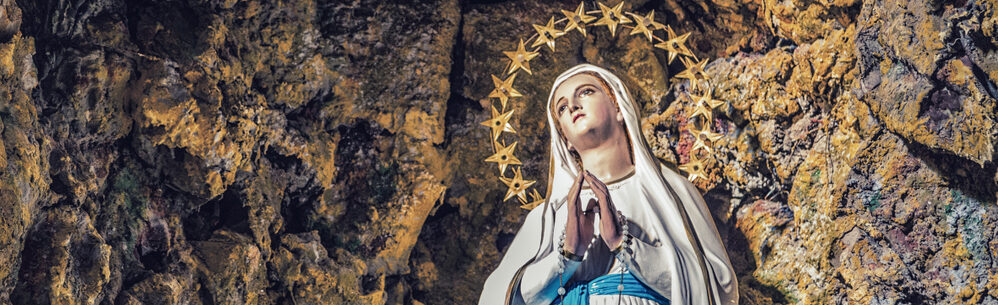
Nevertheless, in some cases the Magisterium intervenes by granting an approval far more cordial and broad than the one it usually offers, which consists in permitting adherence, according to the rules of prudence, to probably authentic private revelations. The mind turns spontaneously to the revelations made by the Lord Jesus Christ to Saint Margaret Mary Alacoque and by the Mother of God to Saint Bernadette Soubirous (Lourdes).
In these two cases, for example, the Magisterium produced such an abundance of documents of a universal character that its approval can hardly be explained as a generic permission, a sort of nihil obstat. In the two cases cited, there was certainly, on the part of the Magisterium, a commitment to uphold both the fact of the two revelations and their authenticity, so much so that some theologians, in this regard, even spoke of infallibility. Without affirming wholesale what they affirm, but also without forgetting the authoritative teaching of Vatican II on the doctrinal function:
(Lumen Gentium 25).
“religious submission of will and intellect is due in a special way to the authentic magisterium of the Roman Pontiff, even when he is not speaking ex cathedra, in such a way that his supreme magisterium is reverently acknowledged and sincere adherence is given to the teachings that emanate from him, according to his mind and will. These are made known above all either by the character of the documents, or by the frequent repetition of the same doctrine, or by the manner of speaking”
It seems to us that in the cases of Paray-le-Monial (the Sacred Heart of Jesus) and Lourdes (the Immaculate Conception), the authority of the Magisterium committed itself in a solemn, or even infallible, way. Consequently, on the part of the faithful, an a priori rejection of the two facts would certainly not be heretical, since it is only a matter of human faith, but it would always be gravely rash, considering the assent granted to them by the Magisterium of the Church.
With regard to private revelations, therefore, the Magisterium performs a twofold function:
- negative norm: when it ensures that a given private revelation contains no elements contrary to public Revelation and to any definitions of it, thus guaranteeing the genuineness of the private revelation.
- positive norm: when it recognizes the authenticity of the revelation and promotes its message and its spirit for the benefit of the Church.
The prudence of the Hierarchy in the face of particular revelations, and more generally in the face of any charismatic manifestation, does not stem from a desire to raise itself above the Spirit, as though summoning Him before its tribunal, but from respect for the divine Spirit, whose authentic manifestations can be separated from ever-imminent fanaticism only through prolonged examination and much prayer.
The prudence of the Church is expressed in her conscious surrender to the sole, gradually luminous evidence of the work of God.
The position of the Magisterium regarding private revelations and the role of Mary in the history of salvation are explored in depth in John Paul II’s encyclical Redemptoris Mater, which sheds light on the journey of Mary’s faith and her place in divine Revelation.
Deepen your studies: explore Mariology, Marian Theology, Marian apparitions, and the Postgraduate Program in Mariology.
Postgraduate Program in Mariology
Would you like to deepen your formation in Mariology? Discover the Postgraduate Program in Mariology of Locus Mariologicus—an academic formation that unites theological rigor, spiritual life, and the living tradition of the Church.





Responses