Maria vidit: Saint Mary Magdalene and Mary of Nazareth, Witnesses of the Resurrection
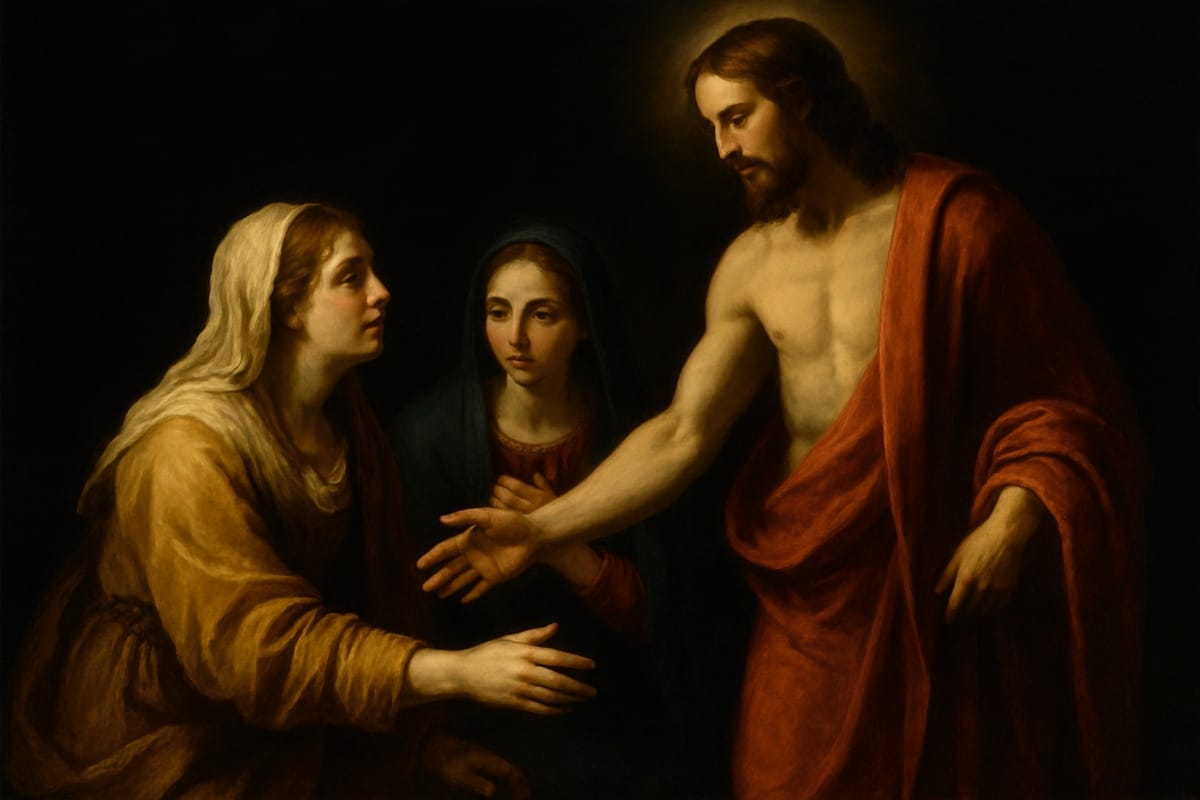
Maria Magdalene venit et annuntiat discipulis: Vidi Dominum, et haec dixit mihi.
Jn 20:18
The feast of Saint Mary Magdalene, celebrated on July 22, today has the rank of a feast in the Roman calendar (raised from a memorial to a feast by Pope Francis in 2016), recognizing this woman’s centrality in the history of the Resurrection: she was the first to see the Risen Lord, the first to recognize Him by name, the first to be sent as a messenger to the apostles. Patristic tradition called her “apostola apostolorum,” apostle of the apostles, precisely because she was sent by the Risen Lord Himself to announce the Resurrection to the Twelve.
The text of the Gospel of John (Jn 20:1-2, 11-18) recounts with rare psychological precision Mary Magdalene’s encounter with the Risen Lord: the error in recognition (“thinking that He was the gardener,” Jn 20:15), the reversal brought about by the simple name (“Mary!” Jn 20:16), the answer in Aramaic (“Rabboni!” Jn 20:16), the attempt to hold back the Risen Lord (“do not hold on to me,” Jn 20:17), the sending as a messenger (“go to my brothers and tell them,” Jn 20:17). The scene is the Gospel model of the recognition of the Risen Lord: it comes about not through objective proof but through being called by name.
I. “They Have Taken the Lord Out of the Tomb”: The Mourning of the Early Morning
“On the first day of the week, Mary Magdalene went to the tomb early, while it was still dark” (Jn 20:1): the dark early morning in which Mary Magdalene goes to the tomb is the early morning of the mourning that admits no consolation: she goes to the tomb not to find the Risen Lord (she does not expect the resurrection) but to remain close to the dead man. The love that led her to stand at the foot of the Cross (Jn 19:25) is the same love that leads her to the tomb “while it was still dark.”
“They have taken the Lord out of the tomb, and we do not know where they have laid Him” (Jn 20:2): Mary Magdalene’s initial interpretation is the interpretation of mourning: the disappearance of the body is theft, not resurrection. This interpretation persists in Jn 20:11-15: “if you have carried Him away, tell me where you have laid Him.” Mary Magdalene’s “blindness” before the Risen Lord is not a lack of faith; it is the fidelity of a love that does not abandon even when everything seems lost. The love that does not abandon the dead man is the one that will be the first to meet the Risen Lord.
Mary of Nazareth was certainly present in that early morning of mourning, not in the Gospels but in the devotional tradition that always places her close to her Son. The “Holy Saturday” of Mary of Nazareth and the “dark Sunday” of Mary Magdalene are different expressions of the same fidelity: the women who did not abandon Him when everything seemed lost are the first to receive the announcement of the victory. Fidelity in mourning precedes the joy of the Resurrection, not because it merits the Resurrection but because it is the disposition that does not close the heart to God’s surprise.
II. “Rabboni!”: Recognition by Name
“Jesus said to her: Mary! She, turning, said to Him in Hebrew: Rabboni!” (Jn 20:16): Mary Magdalene’s recognition of Jesus comes about by name. Not by His visible appearance (she did not recognize Him at first), not by the proof of the empty tomb (which only confirmed the disappearance), not by the arguments of the angels (“why are you weeping?” Jn 20:13), but by the simple calling of the name: “Mary!” This scene recapitulates the theology of the Good Shepherd: “the shepherd calls the sheep by name” (Jn 10:3), “the sheep know his voice” (Jn 10:4).
“Rabboni,” “My Master,” is the answer to being called by name: not a formula of doctrinal faith but the relational recognition of one who is called and recognizes the one who calls. Mary Magdalene’s paschal faith is born of a personal encounter, of being called by name and of recognizing in the voice the Shepherd who had called her before. This structure of paschal recognition, calling by name and answering with a relational title, is the model of all faith: not the intellectual acceptance of a doctrine but the personal recognition of a relationship.
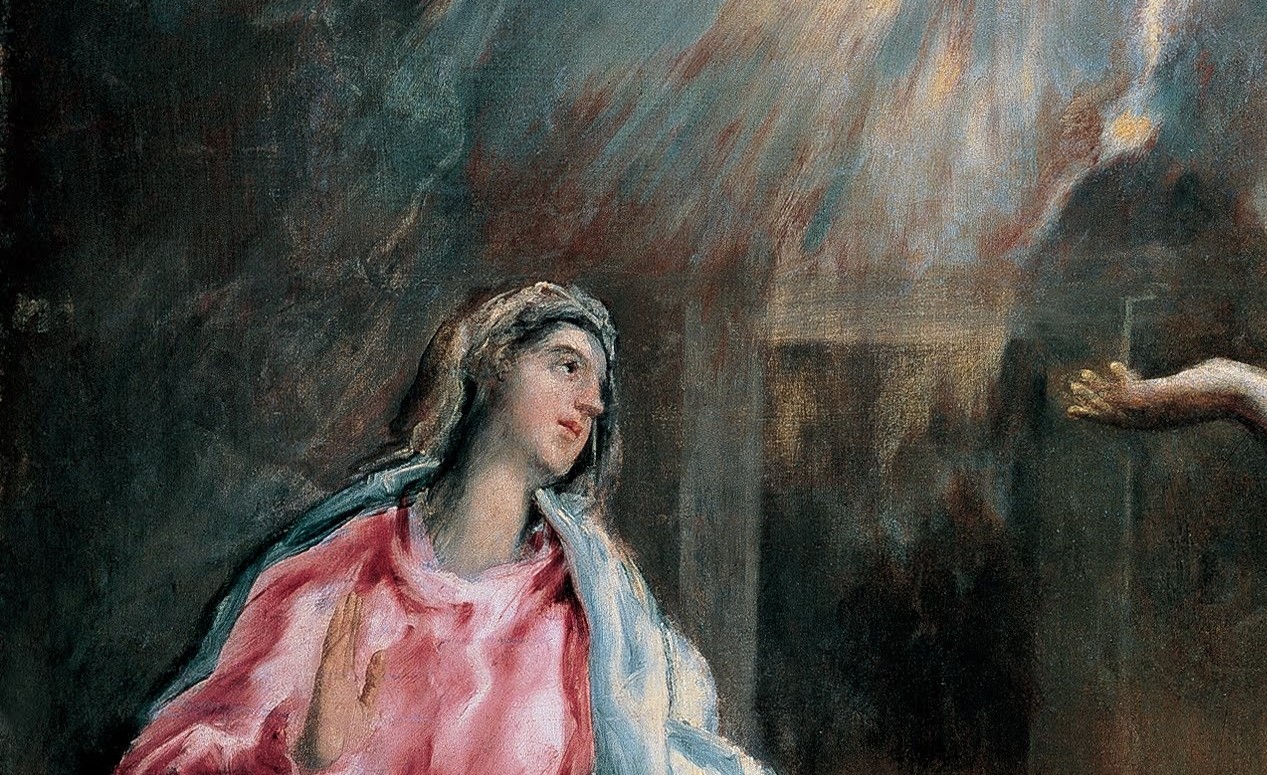
Mary of Nazareth lived an analogous “recognition” at the Annunciation: the angel called her (“Hail, full of grace, the Lord is with you,” Lk 1:28) and she answered with the relational title (“Behold the handmaid of the Lord,” Lk 1:38). Mary Magdalene’s “Rabboni!” and Mary of Nazareth’s “Behold the handmaid” have the same structure: to be called by God and to recognize the relationship that the call establishes. Both Marys are, in this sense, models of faith as an answer to the divine call.
III. “Go to My Brothers”: The Emissary of the Resurrection
“Go to my brothers and tell them: I am ascending to my Father and your Father, to my God and your God” (Jn 20:17): the sending of Mary Magdalene as a messenger of the Resurrection is the foundation of the title “apostola apostolorum.” Jesus did not merely reveal the Resurrection to Mary Magdalene; He sent her with a precise message for the apostles. The content of the message, “my Father and your Father,” reveals the Trinitarian dimension of the Resurrection: the Risen Lord ascends to the Father and invites the disciples to share in the same filiation.
The choice of a woman as the first messenger of the Resurrection is theologically significant: in first-century Jewish law, the testimony of women was not admitted in court. Jesus chose precisely the one whom the world did not consider a valid witness to be the first witness of the greatest truth in history. The logic of “hiding from the wise and revealing to the little ones” (Mt 11:25) applies to the Resurrection: the paschal revelation comes first to the most faithful women, not to the apostles who fled.
Mary of Nazareth and Mary Magdalene are, together, the two great women witnesses of the history of salvation: Mary of Nazareth was the witness of the Incarnation (the one who said “fiat” and made possible the entrance of the Word into history), Mary Magdalene was the witness of the Resurrection (the one who announced “I have seen the Lord” and made public the fulfillment of the promise). The Incarnation and the Resurrection, the two poles of the mystery of salvation, have as their first witnesses two women, two Marys.
IV. Mary Magdalene and Mary of Nazareth: Two Loves, One Lord
The medieval Western tradition, chiefly from Gregory the Great onward, identified Mary Magdalene with the “sinful woman” of Lk 7:36-50 and with Mary of Bethany (Lk 10:38-42; Jn 11-12). This identification, today held to be inaccurate by exegesis, created the composite figure of the “Magdalene”: the penitent who loved much because she had been much forgiven, who anointed the feet of Jesus, who listened to the Word seated at the Lord’s feet. Modern exegesis distinguishes the three figures, but the medieval fusion reveals a profound spiritual intuition: the love that is born of forgiveness (Lk 7), contemplative listening (Lk 10), and fidelity to the Risen Lord (Jn 20) are dimensions of one and the same relationship with Christ.
The comparison between Mary of Nazareth and Mary Magdalene is not one of superiority but of complementarity: Mary of Nazareth received the Word before the Passion. Mary Magdalene met the Risen Lord after the Passion. One is the witness of the origin. The other, the witness of the fulfillment. One says “fiat” before understanding it all. The other says “Rabboni” after everything seemed lost. Both teach that the relationship with Christ does not depend on the intellectual understanding of the mystery but on the faithful love that perseveres in the darkness.
July 22, the feast of Mary Magdalene, is, in popular devotion, a day for honoring the “witnesses of the Resurrection.” Marian devotion that associates Mary of Nazareth with the Resurrection (the “Regina Caeli” as the paschal hymn, the glorious mysteries of the Rosary, which begin with the Resurrection) finds on this day its complement: to honor the “apostola apostolorum” who, alongside Mary of Nazareth, was among the first to confess the risen Lord.
Postgraduate Program in Mariology
Would you like to deepen your formation in Mariology? Discover the Postgraduate Program in Mariology of Locus Mariologicus – an academic formation that unites theological rigor, spiritual life, and the living tradition of the Church.
Would you like to study Mariology seriously?
This article is born from the works in the Locus Mariologicus library. The Postgraduate Program in Mariology takes you to the same source, with academic guidance: Scripture, the Fathers of the Church, and the Magisterium, from the first dogma to contemporary questions.
Responses