The Plural Presence of Mary in the Church
Introduction
Saint Pius X, in his encyclical letter “Ad diem illum,” wrote: “it can be said that Mary, in carrying the Savior in her womb, also carried all those whose life was contained in the life of the Savior. All of us, therefore, who are united to Christ and who, as the Apostle says, are ‘members of His Body, of His flesh and of His bones’ (Eph 5:30), came forth from the womb of Mary, after the likeness of a body united to its head. Thus, for a wholly spiritual and mystical reason, we are called children of Mary, and she is the mother of us all.”
The Virgin Mary, therefore, is not only a “hearer” of the Word, as every man is, but is also the full acceptance of the Word of God in faith, in the body, and in the whole of her own existence. She, therefore, more than any other creature, shares and cooperates in the work of Salvation accomplished by the Son and is fully inserted into the mystery of the Church, that is, of those who believe in Him and follow Him on the path of life, fulfilling the will of the Father, moved by the Spirit, in discipleship. She is the first in whom this profound and transforming bond with the Triune God is realized, which also makes her, in the fullness of meaning, the mother of a multitude of children, to whom she points out by her example and maternal solicitude the way to follow.
Mary’s Bond with the Triune God
Mary’s profound bond with the Most Holy Trinity, fundamental for understanding her relationship with the Church, is manifested in a substantial attitude of availability toward God and docility to His grace, through which she becomes a triadic icon of the merciful goodness of the Father, of the redemptive obedience of the Son, and of the sanctifying work of the Spirit. She is the one consecrated to God in a perfect way, the Virgin of listening, the Virgin who believed, the offering Virgin who, welcoming and accepting the Word, offers herself to God the Trinity.
This relationship with God, essentially based on faith, was not passive, but stirred in her a dynamic involvement in the Son’s mission as mother, disciple, and associate: her faith became love and maternal work, a continual “doing” whose source always remains her being “formed” by the Most Holy Trinity. Already before the creation of the world, Mary is present in the mystery of Christ as the one whom the Father chose as the mother of His Son in the Incarnation and whom the Son also chose, entrusting her to the Holy Spirit. Through her obedience of faith to the Father, her communion with the Son, and her correspondence to the Holy Spirit, Mary cooperates with the whole Trinity in our Salvation.
Her perfect obedience to the Father first entailed full abandonment to the divine will in an active faith that was like a constant and uninterrupted dialogue between God’s call and Mary’s response, between election and fidelity, grace and freedom. In this abandonment of faith to the will of the Father, the Virgin’s existence was like a journey toward an ever deeper union with God. In this, Mary, in the fullness of her filial experience, becomes the model of Christian spirituality: to live as children of the Father.
Obedience to the Father meant for Mary above all to beget in time the Son whom He begot from eternity, as mediator between God and men. She thus becomes the merciful and maternal image of God, the “mediatrix” of the Son’s saving incarnation. In welcoming the Son and living with Him, Mary becomes an integral part of the incarnation of the Word, the privileged witness of this mystery and of the true humanity of Christ. Mary brought the Son of the Father into history, guided Him, educated Him, followed Him. For this reason that welcome and that life shared with Christ was for her a wonderful experience of joy and tenderness, but also a daily and laborious knowledge of the Son in faith and through faith.
As we have already emphasized, hers was a weariness of the heart, like the crossing of a veil, through which she drew near to the invisible and lived in intimacy with the mystery. For this reason Mary, besides being mother, is also, from the Annunciation to Calvary, above all a disciple of Christ. Her life is a continual learning from the Son and understanding of the Son. For this she had to set aside creaturely patterns in order to enter into God’s perspective, so that her existence was like a dynamic adventure of discovering the true face of the Son in history and in humanity. Mary, intimately united to Christ, is therefore the perfect icon not only as mother, but above all as a faithful and persevering disciple.
Mary’s relationship with the Trinity is completed by her perfect correspondence to the grace of the Holy Spirit. Mary is, as it were, molded by the Spirit, who made her a new creature. In welcoming the Spirit, she lived in the Spirit and according to the Spirit, thus becoming the “spiritual creature” par excellence, the “All Holy.” The Spirit filled her completely with His gifts, whose fruits of holiness are love, joy, goodness, peace, patience, faithfulness, gentleness, self-control.
Mary is not understood without the relationship with the Father, with the Most High who sends her the eternal Word, without the continual relationship with the Only-Begotten Son who becomes her son, without the reference to the Spirit who, as the dynamism of love, makes possible the conception of Christ in her virginal womb. This Trinitarian frame of reference is grasped by Vatican II, which calls Mary “Mother of the Son of God, and therefore the beloved daughter of the Father and the Temple of the Holy Spirit” (Lumen Gentium 53).
The Plural Presence of Mary in the Church
The reference to the Most Holy Trinity grounds the profound bond that Mary has with the faithful Church, with humanity, and with history. The ineffable closeness to the Trinity and to the Incarnate Word, and Mary’s singular and exemplary Christiformity, cause the splendid martyrial faith of the Mother of the Redeemer to remain in the Church, by virtue of her “maternal presence” and of her “example.” The Church, in proclaiming, celebrating, and bearing witness to the faith and the acceptance of the Triune God revealed in Christ, in history and on her journey toward the salvific eschaton, manifests her apostolic and Petrine dimension, as well as her undeniable Marian profile.
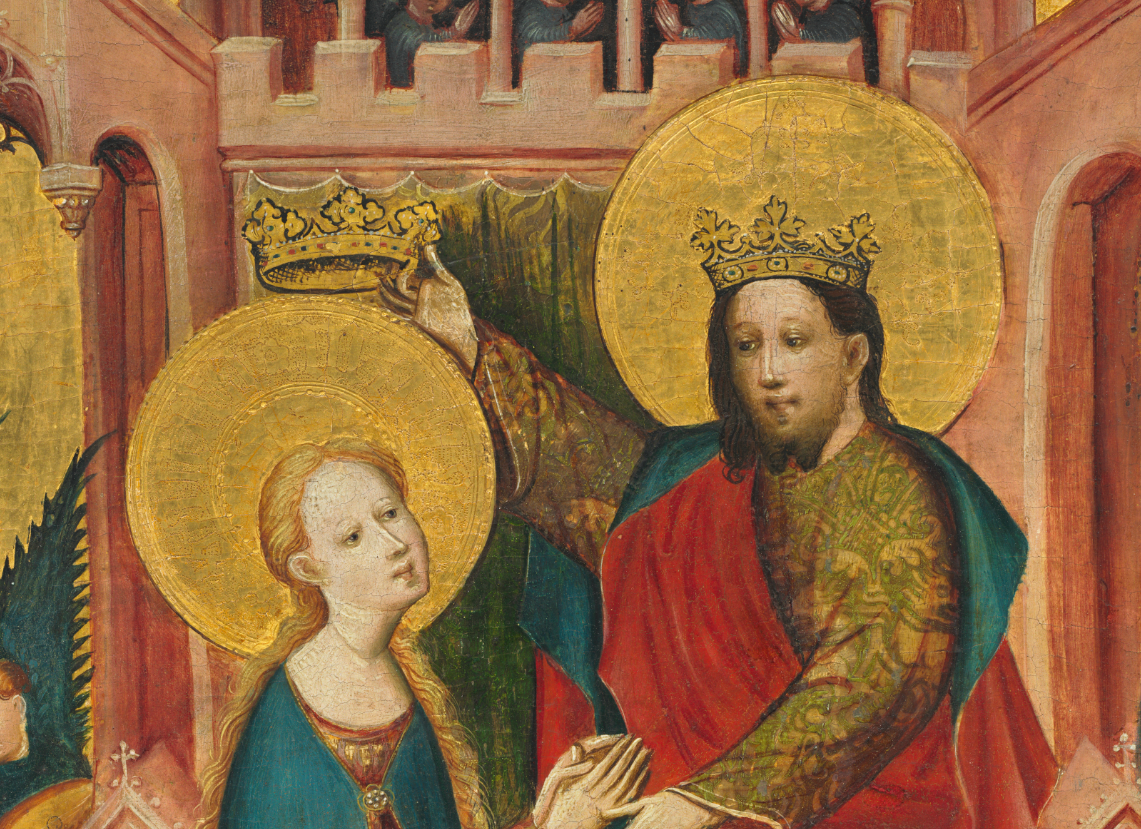
Already in Sacred Scripture, Mary is prefigured as the Daughter of Zion, the representative of the whole people of Israel, so that, at the moment of the Incarnation of the Word, her personal “yes” becomes humanity’s “yes” to God who was coming to save it. This “yes” was reaffirmed by Mary beside the Cross, where, by the will of the Crucified One, she became the spiritual mother of the disciples, gathered in the new Jerusalem that brings together the scattered children of God, which is the Church, of which she is, as we shall see, the perfect icon and the first and most noble member.
The sensus fidei of the faithful of every age has always perceived Mary’s close bond with the People of God, and Paul VI solemnly confirmed it on November 21, 1964, proclaiming the Mother of the Lord also “Mother of the Church.” The Second Vatican Council sees precisely in Mary’s divine motherhood and in her cooperation in Salvation the foundation of this ontological bond of hers with the Church, whose bases, in summary, are these: it arises from Christ’s command on the Cross. It follows from the divine motherhood. It is a prolongation of the biological motherhood of Christ the Head in His spiritual Body, which is the Church.
Although Mary is the mother of the individual disciples whom she begets and forms in collaboration with the Holy Spirit, her motherhood is exercised in the Church as such and therefore must not be interpreted only in an individualistic sense, but in a communal perspective. The Preface of the Mass of Mary, Virgin Mother and Spiritual Teacher, states: “intimately associated with the mystery of Christ the Redeemer, she continues to beget with the Church new children whom she draws to you by her example, and by the power of her love leads to perfect charity. In her school the reader rediscovers the model of a life according to the Gospel, learns to love you above all things with his heart and to contemplate with his spirit your Word made man, in order to serve Him with the same solicitude in his brothers.”
We can then affirm that the Church, looking to the mother who is model and perfect icon, deepens her fidelity to the Lord. Following the creativity and the dynamism of the virgin-mother, she too intends to be a mother entirely of Christ and entirely for humanity. Gathering under the gaze of Mary her mother, she discovers that she is a single family. Imitating the mother, she too seeks to be faithful to her Lord, persevering in faith unto the Cross. Taking up Mary’s song of liberation, she serves the liberation of every human being, helping him to be fulfilled as a son of God, freeing him from injustices and promoting him integrally.
Assumed into heaven and placed in a unique and singular condition with her glorified and therefore incorruptible, glorious, powerful, and pneumatic body, Mary is fully invested with the power of the Holy Spirit and can act on behalf of the Church in an effective and even miraculous way, for she shares in the glory and the power of the very glorious body of Christ. This complete transformation of hers in the Spirit allows her to be a “presence” in different historical times and cultural spaces, without being circumscribed and limited to individual places, and allows her to carry on the constant exercise of her spiritual motherhood on behalf of all men, for nothing impedes the universality of influence in the communication of divine grace.
Mary therefore shines before the Church and the world as the perfect icon of the new humanity recreated by divine grace, in which, in place of the “heart of stone,” the “heart of flesh” is realized, new, meek, and merciful like that of Christ. She is the creature recreated according to God’s original plan, the New Eve, alongside the new Adam, for she was the first among creatures to live with this new heart, whose fullest expression is love.
To have, like Mary, a “new heart” means to have the same sentiments as Jesus, that is, to love life and the gift of life. To proclaim the kingdom of God through the concrete signs of universal love, of an attitude of welcome and mercy toward all; to live and suffer, like Jesus and with Him, an innocent and redemptive passion; to give one’s life for the Lord, bringing about, in the virginal and total gift, universal motherhood. Mary, woman of the new heart, is, in her very being, the image of the Heart of Christ, the model of renewed humanity which, led back by grace to its primordial dignity, renews the face of the earth and inaugurates the coming of the “last times” in which all men will enjoy before God the same dignity as children.
This presence of Mary in the Church, so articulated and so profound as to permeate its very ontological nature, its very way of believing and its very path of fidelity to the Lord, can be defined as a multiform “transversal” presence. The Virgin is the transversal presence because throughout the centuries Mary has always been present in the Church, running through her life, as a member, as a sister who goes before her on the path of faith, as a mother who cooperates in the birth of every man and every woman to the life of grace and in their education and spiritual growth, as a guide who points out the way to the homeland, as a pleading voice and a comforting patroness.
Only in heaven will the reader be able to understand clearly and profoundly what the Church owes to Mary as regards the understanding of the faith; but even now, simply by showing herself, she introduces us into the mystery of what the Church is in her essence: a pure work of the grace of the Triune God.
Mary and the Apostolic Mission of the Church
Mary’s cooperation in Salvation and her multifaceted presence in the Church have an aspect of apostolic life and action, since her spiritual experience is oriented outward, toward others, as expressed in the visit to Saint Elizabeth and at the wedding feast of Cana. Mary does not act only within the Church, but extends throughout the history of humanity, so that by her presence she shows herself not only as Mother of the Church and of Christians, but also as universal Mother, the real model of every human being. Aware of this apostolic and universal “mission” of hers, the Virgin urges and encourages everyone, Christians and non-Christians, to follow her examples and to do what God asks of humanity.
For us, the Church, Christians and non-Christians, the knowledge, the contemplation, and the encounter with Mary are embodied in a style of life that makes our action “Marian,” not only individual but also ecclesial. The essential lines of this style of life are: the “sacramental line,” since by following Mary’s example we learn to collaborate with grace and, trusting in her guidance and help, we live intensely our union with Christ through an intense sacramental life.
The “line of communion in the Church,” since by following Mary’s example and with her help we promote an attitude of communion among the baptized, made up of readiness for dialogue, spiritual solidarity, understanding, and union of all the members of the Mystical Body of Christ.
The “line of life,” since together with the Virgin, who welcomed and defended the life of Christ, we will create a culture of life, made up above all of maternal virtues, that is, love, tenderness, welcome of others, in contrast with the culture dominant in the world of merciless harshness, war, tensions, hatred, death, division, and violence.
The “line of the paschal experience,” since by following Mary’s example we will accept pain, suffering, and death as elements that faith regards as instruments of salvation, and we will be moved to adopt solutions of life where pain reigns and death opens its threatening gates.
The “line of mission and Gospel fruitfulness,” since, animated by the same apostolic impulse of Mary, who brought the newly conceived Christ to Elizabeth and presented to the shepherds, to the Magi, and to the world the Son of God who came to save men, we will demonstrate by our actions the reality of the beatitudes and the real and visible effectiveness of the Gospel, thus fostering its acceptance.
Conclusion
The Mother of the Lord has a close and indissoluble bond with the spiritual and Christian life of the Church and with its socio-anthropological commitment, since the “dogmatic constitutive” and the “ethical constitutive” cannot be separated. Precisely the division between the teaching of the faith and the practice of life is, according to the pastoral constitution Gaudium et spes, one of the most serious errors of our time. The nodal point that brings about the symbiosis between the datum of faith and life, between Mary and commitment-witness, is openness to dialogue with the Triune God, accompanied by going out to meet the man in need of spiritual and social salvation and by an active contribution to his liberation and full realization.
With her help and with our identification with the Virgin, the Church and each Christian must live the Christian experience in a spiritually fruitful way, pouring into the world the sap of Christian life. Becoming living pages of the Gospel, for they will learn from her and like her to treasure in the heart the words and the deeds of Jesus in order to live them and carry them out in individual, social, and ecclesial history. The “Marian” style will thus appear as the supreme fulfillment of being Christian, that is, of persons and communities, a truly Christian Church.
Deepen your studies: explore Mariology, Marian Theology, Marian apparitions, and the Postgraduate Program in Mariology.
On the plural presence of Mary in the life of the Church, see the Encyclical Redemptoris Mater of Pope John Paul II.
Postgraduate Program in Mariology
Would you like to deepen your formation in Mariology? Discover the Postgraduate Program in Mariology of Locus Mariologicus, an academic formation that unites theological rigor, spiritual life, and the living tradition of the Church.
Would you like to study Mariology seriously?
This article is born from the works in the library of Locus Mariologicus. The Postgraduate Program in Mariology brings you to the same source, with academic guidance: Scripture, the Fathers of the Church, and the Magisterium, from the first dogma to contemporary questions.




Responses