The Virgin-Mother, prophet and Church in Advent

Mary: Virgin-Mother, prophet and image of the Church in Advent
Mary is the woman of the fullness of time (cf. Gal 4:4-7): she closes an era and opens the future.
The merciful and faithful power of God had manifested itself before the Virgin, just as in former times He had given charismatic sons to barren women, called to save the people:
- Isaac of Sarah,
- Samson of the wife of Manoah,
- Samuel of Hannah,
- John of Elizabeth.
Luke evokes the birth of John the Baptist (cf. Lk 1:7 “but they had no children, because Elizabeth was barren. And both were advanced in years”) in order to bring out the incomparable exceptionality of Mary’s election: to be the mother no longer of a savior, but of the Savior (Lk 1:32-33 “He will be great and will be called Son of the Most High. The Lord God will give Him the throne of His father David, and He will reign forever over the people of Jacob. His Kingdom will never end”).
In this way the divine motherhood stands out as the splendid expression of the sovereign love of God “for us men and for our salvation”. Wishing to redeem our humanity in its depths, God made Himself one with us in all things, entering the lineage of Adam and passing through Mary.
For this reason the Church, since the Council of Ephesus (431), confesses that the Virgin is the Mother of God: this is the realism and the concreteness with which she acknowledges the humanity of the Word, in which God comes down to touch every man in what is deepest and most intimate, where all are wounded.
Prophetic Virginity
Mary accomplished the anticipation of celibacy for the kingdom of God not in the sense of a vow but in consent to a fullness of life of which she is the permanent witness that her Son is God and man. It is not a question of legal or even moral purity, or of flight from the world as the Essenes practiced, or of the Asian spirit of asceticism.
The meaning of virginity must be placed at the summit of the impetus and of the eschatological tension of the movement aroused by prophecy. Thus, Mary was the first to experience full freedom and opened the way for whoever renounces the things of the world in the perspective of the hundredfold that, here on earth, is found in God (cf. Mt 19:29 “and everyone who has left houses, or brothers, or sisters, or father, or mother, or wife, or children, or lands, for the sake of my name, will receive a hundredfold, and will inherit eternal life”). This hundredfold is made up of the messianic goods, that is, the Son, God-with-us, already symbolized in YHWH present in the ark of the covenant.
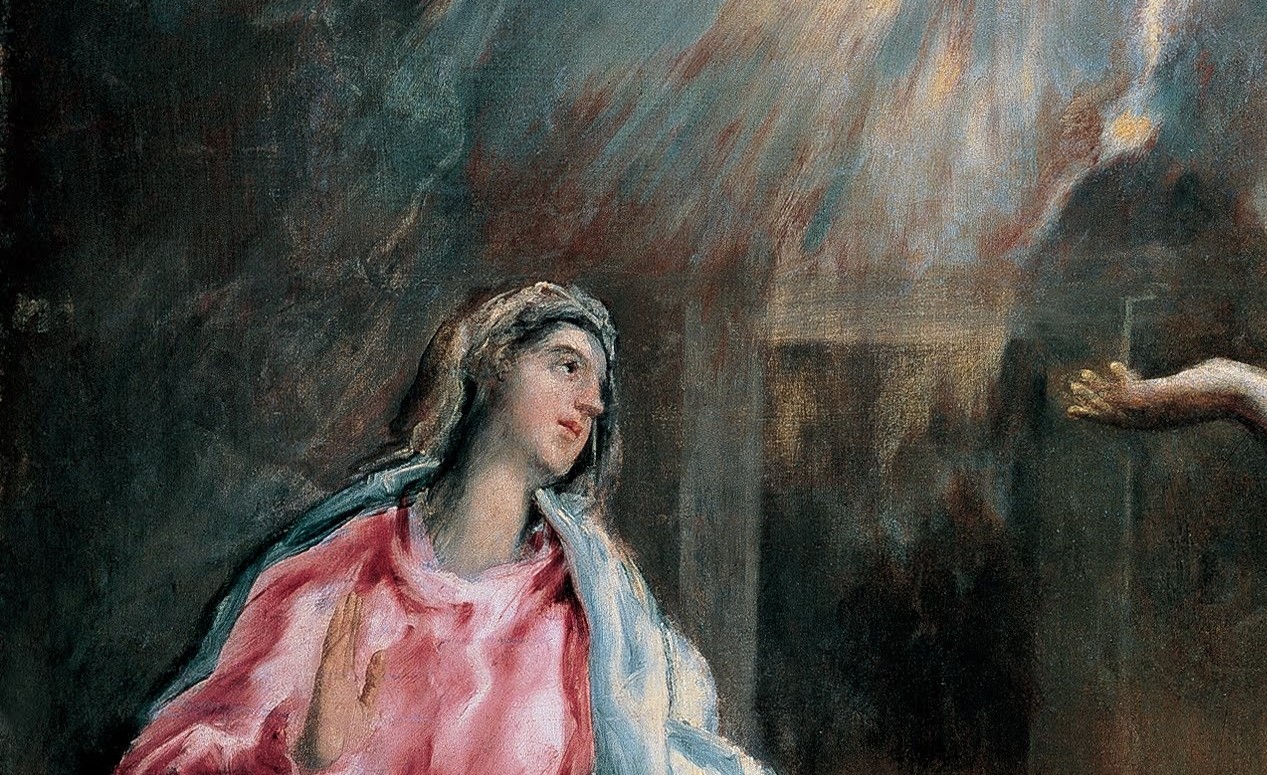
Annunciation and Incarnation are the components that determine the life of Mary, impressing upon her an indelible character. They are facts that demand of her an absolute virginity, of which physical integrity is the sign. The virginity of the Mother of God implies a radical and exclusive giving of her whole person to God, in total availability, which allows the Spirit to shape her body and her heart. Having become pure availability, the Virgin can be the temple of the new covenant, so as to illumine the world and history with a new light.
As happened with the Virgin, purified and sanctified by the Spirit from the moment of her conception and filled with blessing and sanctification by the Spirit from the angel’s announcement, so it must be for the Church and for Christians. The virginity of Mary, which reflects the existence of Christ, is the mirror into which the faithful must look in order to conform their life to the promptings of the Spirit. Indeed, despite the best possible preparation, the word-will of God always breaks in, unsuspected and unexpected, with unforeseeable demands that in any case call for unprecedented responses. It is not possible, in the light of reason and with human strength alone, to understand and accept the divine realities down to their ultimate consequences. Mary, with her fiat, after the existential obedience of Jesus (cf. Heb 10:5ff), reached the highest point.
The Virgin-Mother, type of the Church
In the fulfillment of the prophetic expectation, after the prolonged and intense dialogue between God and man, there stands the faith of Mary, which welcomes the word, conceives the Word of God, and becomes the beginning and the sign of the redeemed, the reality and the model of the Church.
In contemplating the wonders that God has worked in her, the Church in some way searches out its own being and its own history. If there is a moment in which the Virgin Mother is clearly manifested as the type of the Church, it is during the Christmas cycle. This theme will be developed above all in the Easter season and in the great Marian feasts.
The infancy gospel in Luke closely resembles the infancy gospel of the Church, the Acts of the Apostles:
- the Spirit who brings about the first Pentecost upon Mary (Lk 1:35 “the Holy Spirit will come upon you, and the power of the Most High will overshadow you. Therefore the Holy One who is to be born of you will also be called the Son of God”), and it is the same Spirit who comes to rest upon the apostles (Acts 1:8 “but you will receive power when the Holy Spirit comes upon you, and you will be my witnesses in Jerusalem, in all Judea and Samaria, and to the ends of the earth”).
- Mary sets out in haste (Lk 1:39 “in those days Mary arose and went with haste to a town in the hill country of Judea, where she entered the house of Zechariah and greeted Elizabeth”) and the disciples come out of the upper room and begin to proclaim the word of God and the resurrection of the dead because they cannot keep silent about what they have seen and heard: Acts 5:20 “Go, stand in the temple and proclaim to the multitudes all the words of Salvation!”
The visit to Elizabeth answers the impulse that derives from this proto-Pentecost: Mary is the model of availability to the Spirit for the mission for the sake of the Gospel. The impulse that animates her lies at the root of the fundamental impulse of the Son who comes into the world, as availability for life and for death, precisely because He is moved by the Spirit (cf. Lk 3:2 “And he went through all the region around the Jordan, preaching a baptism of repentance for the forgiveness of sins”. Lk 4:1 “And Jesus, full of the Holy Spirit, returned from the Jordan and was led by the Spirit into the desert”).
The infancy gospels also highlight, in their own way, the work of the Spirit. We find this action above all in relation to the fruitful virginity of Mary. The Virgin who believes the Archangel and conceives is already the origin of the Church, even before Pentecost. Virginity becomes the sign that characterizes the new age, the age of the Spirit. From the beginning, through Mary, the Church receives this spiritual connotation together with that of mother, constituting herself as Virgin by God’s election and as Mother by the adoptive children, through the Spirit in Christ, whom she begets by Baptism.
Closing prayer
Hymn of the Solemnity of Holy Mary, Mother of God
The Jewish root now flowers,
the virgin mother gives birth.
Mary offers to the world
the one who comes to save it: Jesus.
In her blue mantle she shelters
and enfolds the Son of God.
She lays down in a crib of straw
the one who with His Father made the heavens.
He who once gave us the law
is born beneath the law.
He waits for His mother’s milk,
the king becomes a slave.
A more fruitful sun is dawning,
it melts the fetters of death.
Mary brings God to the world,
come and adore Him, O nations!
United to the Father and the Spirit,
Son of God, light from light.
Granted to us through a virgin mother,
we adore You, Jesus!
To go deeper into the titles of Mary as Mother, Prophet and image of the Church, consult the encyclical Redemptoris Mater of John Paul II, on the mission of Mary in the life of the Church.
Deepen your studies: explore Mariology, Marian Theology, Marian apparitions and the Postgraduate Program in Mariology.
Postgraduate Program in Mariology
Would you like to deepen your formation in Mariology? Discover the Postgraduate Program in Mariology of Locus Mariologicus, an academic formation that unites theological rigor, spiritual life, and the living tradition of the Church.
Would you like to study Mariology seriously?
This article is born of the works in the library of Locus Mariologicus. The Postgraduate Program in Mariology takes you to the same source, with academic guidance: Scripture, the Fathers of the Church, and the Magisterium, from the first dogma to contemporary questions.


Responses