Mary in the Bible: Old Testament typology, exegesis of the Gospels and the method of Lumen gentium
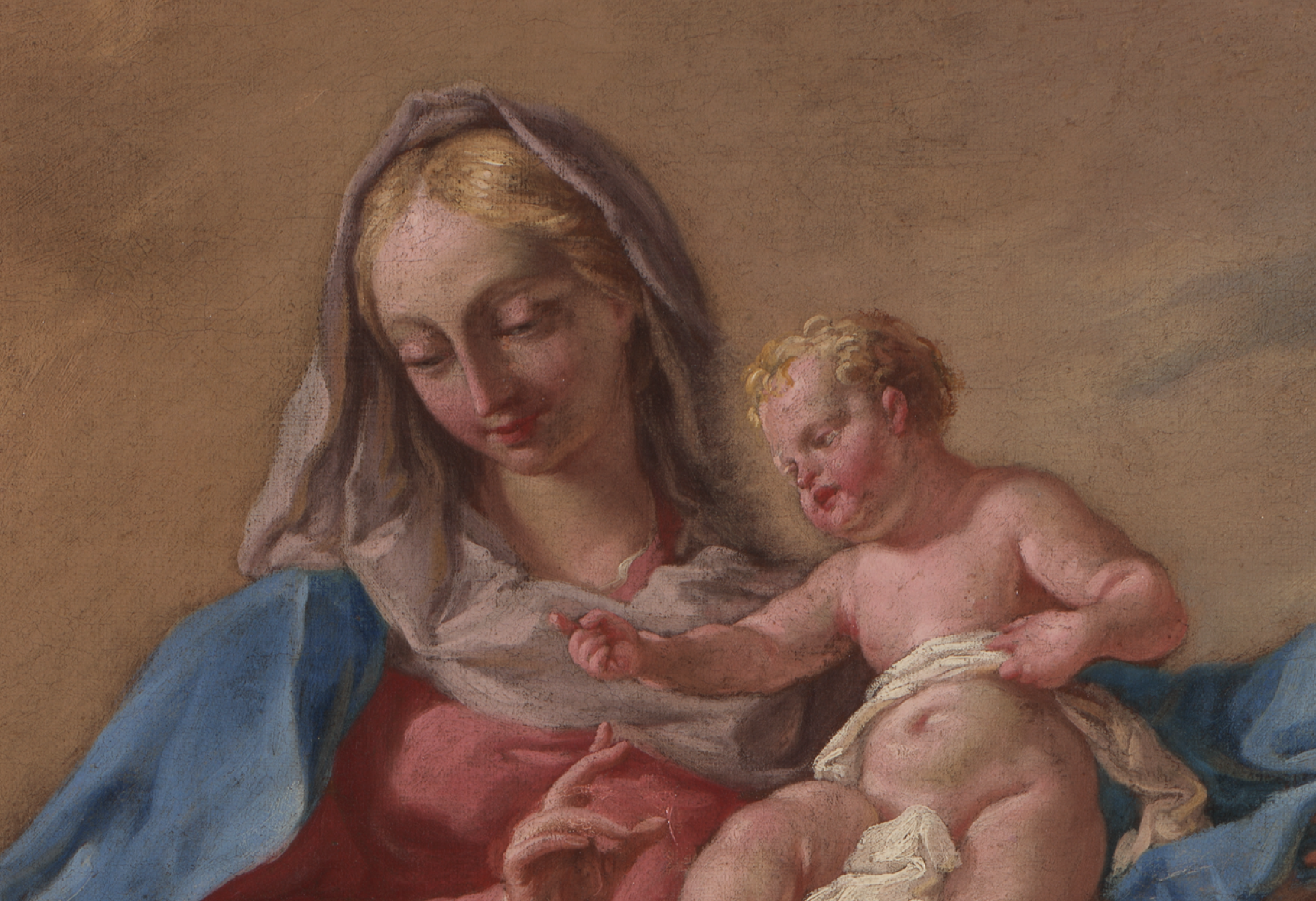
In the four Gospels, the name of Mary appears in a concentrated way at decisive moments in the history of salvation: the Incarnation, the beginning of the public ministry at Cana, Calvary and the Upper Room of Pentecost. This quantitatively modest datum nevertheless contains a theological density that is revealed only through a precise method of reading, articulated between Old Testament typology, the historical-critical exegesis of the Gospels and the ecclesial hermeneutic codified in chapter VIII of Lumen Gentium.
The impression that Sacred Scripture does not offer abundant information about Mary results from an uncritical judgment, indeed from a prejudice that fails to recognize the non-quantitative but qualitative character of the Word of God and its historical-salvific purpose. Scripture, unlike apocryphal and devotional literature, is not directly interested in the biography and the particular history of the mother of Jesus, but rather in her role and significance within the context of the plan of salvation.
Statistically, the explicit passages about the mother of Jesus are not numerous, but neither are they scarce. In any case, they are strategic texts of exceptional density. Strategic, because they are located at the fundamental turning points of the history of salvation: the Incarnation, the Paschal Mystery, Pentecost. Of extraordinary density, because they are vitally inserted into those mysteries, from which they derive their value and meaning.
Because of her intimate participation in the history of salvation, Mary must be studied throughout the whole Bible, not only in the explicit passages, but also in those of the Old Testament where the Mother of the Redeemer is prefigured. It is thus understandable why the subject of the present reflection is relevant for those who live their Christian vocation following in the footsteps of Mary, the mother of the Lord and our mother.
The Mariological reading of Scripture: hermeneutical foundations and the principle of Lumen gentium
The Conciliar Constitution Dei Verbum no. 24 states: “Sacred theology rests, as on a perennial foundation, upon the written word of God, together with sacred tradition, and in it is constantly consolidated and rejuvenated, examining in the light of faith all the truth contained in the mystery of Christ. The Sacred Scriptures contain the word of God and, since they are inspired, they are truly the word of God. The study of the sacred pages must be, as it were, the soul of sacred theology”.
In this sense, Sacred Scripture is also the source of Mariology. If we wish to know the true face of Mary, the first fundamental and unavoidable step is to study in depth the biblical passages that speak of her. Sacred Scripture is the word divinely revealed and inspired under the guidance of the Holy Spirit. The truth contained in the Bible is grounded in this element of divine revelation. Therefore, the Marian texts of the Bible are reliable points of reference.
The Fathers of the Church also traveled a path of discovery of the biblical truth about Mary and handed on to us the elements that constitute Marian theology in the tradition of the Church, such as the Eve-Mary antithesis, the divine motherhood, the perpetuity of her virginity, her sublime holiness, her powerful intercession, her participation in the kingship of Christ, among others. The tradition of the Church drew upon biblical sources in order to celebrate the central events of her life in the liturgy.
There is a tendency to claim that Mary is seen as a point of division among the various Christian confessions. However, Mary does not divide. It is her children who divide over her. Often, we divide among ourselves in relation to her. For ecumenical dialogue among the different churches concerning Mary, the mother of Jesus, it is imperative to return to the Bible. The Bible should be our first point of reference for an ecumenical Mariology. Sacred Scripture is certainly not the only source of divine revelation, but it is the principal source.
Typology and historical-critical exegesis: the two methods for reading the Mariological verses
Reading Sacred Scripture properly is not an easy thing. There are various methods of reading, and this variety is a true richness. Biblical hermeneutics has become a very important art and science among scholars of the Bible. Over the last 40 years, many Catholic exegetes have devoted their skills to promoting the study and the knowledge of biblical Mariology. In this regard, some statements made by the Pontifical International Marian Academy (The Mother of the Lord, no. 24) deserve consideration as guidelines worthy of attention:
“In our times, exegetes resort to a variety of methods for approaching the Bible. This variety is clearly legitimate, for, while avoiding any fundamentalism, on the one hand the literal sense of Scripture must not be neglected, its identification having been greatly facilitated by the historical-critical method, and, on the other hand, the peculiar character of the Bible must not be underestimated, as the inspired word of God, transmitted in human language by many sacred writers over the course of many centuries, received by a community of faith, with a theological purpose (the self-revelation of God) and a soteriological purpose (the salvation of humanity!). Within this variety of approaches, the principle enunciated by Vatican II retains its value unaltered: Sacred Scripture must be read and interpreted with the help of the same Spirit by whom it was written. In order to draw out with precision the sense of the sacred texts, due attention must be paid to the content and the unity of the whole of Scripture, taking into account the living tradition of the whole Church and the analogy of faith.
In Mariology, the principle of the “unity of the whole of Scripture” can have fruitful applications, considering it as a single Book, since one is the Author, one is the people to whom it is addressed, and one is the purpose it sets forth. This principle makes it possible, for example, to connect in a non-arbitrary way the Woman of Gen 3:15 with the Woman of Rev 12:1.
As well as highlighting the continuity of the ‘blessing’ granted to the women who had a liberating mission in Israel: Deborah (cf. Judg 5:24), Judith (cf. Jdt 15:9, 10), Mary of Nazareth (cf. Lk 1:42). The reference to the “living tradition of the whole Church” should persuade the reader not to neglect patristic exegesis in Mariological research: the Fathers of the Church are the founders of that tradition and are also unsurpassed masters of an ecclesial theological reading, carried out with an authentic Christian spirit and of inestimable value.
It would be advisable not to repeat constantly, like a refrain, that Sacred Scripture says little about the Mother of the Lord. In this regard, Pope John Paul II has already observed that “the Blessed Virgin is […] after the Apostle Peter and John the Precursor, the figure most frequently mentioned in the canonical Gospels”.
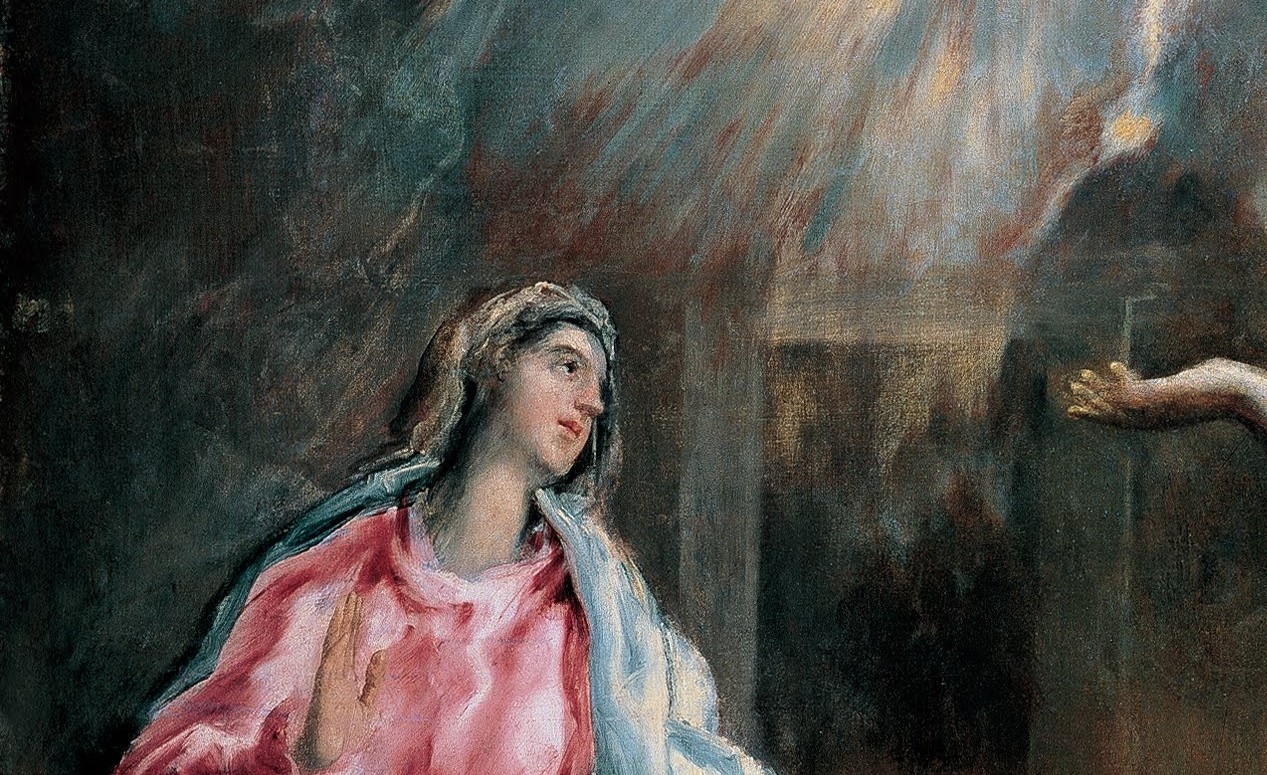
In the Gospel testimony about the Virgin Mary, one must consider the quality of the accounts more than their quantity. The narrative of the Annunciation (Lk 1:26-38), of the Visitation (Lk 1:39-56), of the wedding at Cana (Jn 2:1-12), of the mutual entrusting of the Disciple to the Mother and of the Mother to the Disciple (Jn 19:25-27) are among the loftiest and densest pages of the Gospels.
Mary in the Old Testament: typological prefiguration, the daughter of Zion and the exegetical debate
Before answering this question, I would like to offer an introduction. The evangelists, in narrating the identity of Jesus Christ and His redemptive mission, also draw upon the Scriptures of the Old Testament. The risen Jesus did the same when speaking with the two disciples at Emmaus: “Beginning with Moses and all the Prophets, He explained to them what was written about Himself in all the Scriptures” (Lk 24:27).
Jesus did the same when He appeared to all the disciples gathered in Jerusalem, saying: “These are the words I spoke to you while I was still with you: everything written about Me in the Law of Moses, the Prophets and the Psalms had to be fulfilled. Then He opened their minds to understand the Scriptures” (Lk 24:44-45). Just as the identity of Jesus was understood in the first Christian community on the basis of the Old Testament, so too it is necessary to understand the true identity of Mary without neglecting the Old Testament.
Which passages of the Old Testament implicitly foretell or prefigure Mary?
How does the Old Testament help us to understand the identity of the mother of the Savior?
Several women described by the authors of the Old Testament prefigure Mary. For example: Sarah, the wife of Abraham (Gen 16:1-2; 17:3-8, 15-19; 18:10-14; 21:1-7), and Hannah, the wife of Elkanah, are barren women who conceive by the work of YHWH. In the Magnificat the evangelist Luke relates the hymn of thanksgiving pronounced by Hannah (1 Sam 2:1-10) to the mystery of Mary. In cases such as these, and in others in which YHWH intervenes in the history of the salvation of Israel, these women reflect the vocation of Mary.
The women mentioned in the genealogy of Jesus are four: Tamar, Rahab, Ruth and Bathsheba (Mt 1:3, 5, 6). What is the prophetic-messianic connection between these four women and Mary in the conception and birth of Jesus?
There are various interpretations. Some claim that Mary, a humble and holy woman, stands in contrast to these four women who entered the lineage of Jesus as foreigners, presented by Matthew at the beginning of his Gospel as a descendant of David and Abraham. Others argue that these four women played important beneficial roles in the history of the people of Israel. The peculiar stylistic change in Mt 1:16b deserves attention. In that verse, Matthew alters the style of the stereotyped and unchanging formula (A begot B, B begot C, etc).
Why this sudden change?
Because in the birth of Jesus there is a singular and unique exception. Jesus has no human father. Mary conceived by the work of the Holy Spirit (Mt 1:18). This exemplifies how the mystery of Mary must be interpreted in the light of the Old Testament.
Passages such as Gen 3:15, Is 7:14 and Mic 5:2 are very important for understanding the vocation of Mary as Mother of the Redeemer. The evangelist Matthew refers to the text of Is 7:14 and makes clear to his readers the virginity of Mary. Furthermore, there are three books of the Old Testament (Ruth, Esther and Judith) that present cases of feminine vocations participating in different ways in the saving plan of God in the history of Israel. These three women are mediators between God and the people of Israel and are distant figures of Mary, who was called to fulfill the plan of God for the salvation of humanity. In moments of danger for the people, God chooses these women to save the lives of the people. These feminine figures anticipate and define the mission of Mary.
In addition to these classic passages, there are numerous allusions and references to the titles attributed to Mary: the burning bush (Ex 3:2), the enclosed garden, the sealed fountain (Song 4:12), the daughter of Zion, the ark of the covenant, among others. The prefigurations of Mary are found in the following texts: Sarah (Gen 17:16-19. 18:10-14), Rebekah (Gen 24:12-16), Miriam (Ex 15:20-21), Hannah (1 Sam 1:2-10). These passages of the Old Testament that we have mentioned explain how the mystery of Christ is hidden in the old Covenant and also explain how the mystery of Mary, Mother of the Redeemer, must be discovered and interpreted in the light of the Old Testament.
Mary in the New Testament: from memorizing the Marian texts to the rigorous exegesis of Mk, Mt-Lk and Jn
We almost all already know by heart the New Testament Marian passages, since we have read or heard them several times. Now we do not wish, nor are we even able, to go deeper into these Marian passages from the exegetical-theological point of view: we simply wish to mention them and to offer a key for reading, briefly presenting their spiritual message for us today.
Absence of the figure of the mother of Jesus in the Pauline corpus?
In the ancient Christological hymn of Philippians (2:7), we find an indirect mention of the mother of Jesus: the gesture of the Son of God, who assumes the human condition, takes place through the birth from a woman who declares herself the ‘handmaid’ of the Lord. The obedience of Jesus to the Father and the obedience of Mary take place in the same event of the incarnation. The oldest Marian text of the New Testament is Gal 4:4: “but when the fullness of time came, God sent His Son, born of a woman, born under the law”.
At first sight, this verse seems to refer to the mother of Jesus in an indirect and superficial way. However, when the text is placed in its context and a careful exegetical-theological analysis is made, it becomes clear that this Pauline text contains ‘a Mariology in germ’.
The woman, whose name is not even mentioned, is entirely at the service of the saving event that involves the Trinity and benefits all men. The time of the end is the time in which the divine beginning of our existence, Jesus Christ, penetrates it. The appearance of Jesus Christ in this eon is based on the act of sending and consists in the Incarnation. The Son of God thus sent inserts Himself into human nature, determined by the woman.
Mary in Mk 3:31-35 and 6:3: the family of Jesus, the “brothers of the Lord” and the exegetical debate
The evangelist Mark refers to Mary in two texts: 3:31-35 and 6:3. These two passages speak of the family of Jesus. The expression ‘brothers of Jesus’ in the Gospel of Mark raises several problems. For example, Protestants say that if Jesus had brothers, we cannot believe that Mary remained a virgin after giving birth. The virginity of Mary is called into question. Another problem raised is this: if Jesus Himself rejected Mary, saying ‘who is my mother?’, why should we give importance to Mary?
These questions are superficial. The word ‘adelphoi’ used by the evangelist does not necessarily mean the blood brothers of Jesus, but in Semitic idiom it means the cousins of Jesus. As for the question of Jesus who is my mother?, who are my brothers?, Jesus in no way rejects His mother. On the contrary, He does not wish to limit His relationship with her to the biological level, but places her on a higher level: He presents His mother as the one who first heard the word of God and put it into practice in her collaboration with God for the salvation of the world.
Mary in Matthew and Luke: the infancy gospels (Mt 1–2, Lk 1–2), the Matthean genealogy and Is 7:14
The first chapters of Matthew and the first two chapters of Luke are very important for understanding the true identity and mission of Mary, the mother of Jesus. Only these evangelists speak of the infancy of Jesus: for this reason they are called the ‘infancy gospels’. Matthew begins his gospel with the genealogy. Mary is related to the four women in the list of the genealogy, and he shows how Mary conceived Jesus by the work of the Holy Spirit. Invoking Is 7:14, Matthew highlights the virginity of Mary. In the Matthean account of the infancy of Jesus, Mary is an obedient, silent woman who carries out the commands of the heavenly Father. The narrative part of the second chapter, the adoration of the magi, offers a clear image of Mary as the queen: because her Son Jesus is adored as the King who will save all humanity (Mt 2:1).
Among the synoptics, Luke is the evangelist who offers a more historical and detailed view of the life of Mary in reference to the infancy of Jesus in the first two chapters of his gospel: the Annunciation, the Visitation, the Magnificat, the birth of Jesus, the presentation of Jesus in the temple, the prophetic announcement of the sorrows of Mary, the adolescent Jesus found in the temple of Jerusalem. Luke speaks of Mary also in the Acts of the Apostles (1:14). Mary prays with the apostles in the upper room.
“The mother of Jesus” in John: the absence of the proper name in Jn 2:1-11 and Jn 19:25-27 and the Johannine exegetical debate
John never writes the name of Mary in his Gospel. He always calls her by the expression ‘mother of Jesus’. The two Marian passages of the Fourth Gospel are: the first sign of Jesus at the wedding at Cana (2:1-12) and Mary at the foot of the cross on Calvary (19:25-27). Jesus calls His mother ‘woman’ in these passages. This echoes the woman of Gen 3:15. This word ‘woman’ of the gospel can be connected with the ‘woman’ of Revelation 12. The Marian theology of the evangelist John is rich and dense. Some exegetes interpret the ‘woman’ of Revelation as the persecuted Church of Asia Minor, others see the image of Mary in this ‘woman’. Both interpretations (ecclesiological and Mariological) are not exclusive or incompatible, but complementary. One interpretation enriches the other.
Some exegetes say that Jn 1:13, read with the verb in the singular (he was begotten, not they were begotten), alludes to the virginal conception and the virginal birth of Jesus, and consequently to the virginity of Mary. All the ancient manuscripts read this verse in the plural, that is, they refer to the baptismal birth of the faithful. However, the testimony of some Fathers of the Church (Latin and Eastern) for the reading of the verse in the singular is older than the manuscripts we have today. The question of the textual criticism of this verb is still open to discussion.
The biblical reading of Mary finds a masterly synthesis in the encyclical Redemptoris Mater of John Paul II, which traverses the great texts of the Old and New Testament in order to reveal the face of Mary in Scripture.
We can say that Sacred Scripture offers us the most reliable testimony about the person and mission of Mary, the mother of Jesus. It is said that ignorance of the Scriptures is ignorance of Christ. This means that ignorance of Scripture is also ignorance of Mary. Let us therefore read the Bible with reverence and devotion, but with appropriate methods. In this way we will be able to know Mary better and to follow in her footsteps, fulfilling the will of God.
Deepen your studies: explore Mariology, Marian Theology, Marian apparitions and the Postgraduate Program in Mariology.
Postgraduate Program in Mariology
Would you like to deepen your formation in Mariology? Discover the Postgraduate Program in Mariology of Locus Mariologicus, an academic formation that unites theological rigor, spiritual life and the living tradition of the Church.

Responses